SPACE/COSMOS
ESA may be forced to axe or freeze planned missions amid proposed NASA budget cuts
The European Space Agency isn’t ruling out the cancellation or freezing of some space exploration programmes if budget cuts to NASA are passed by the US Congress.
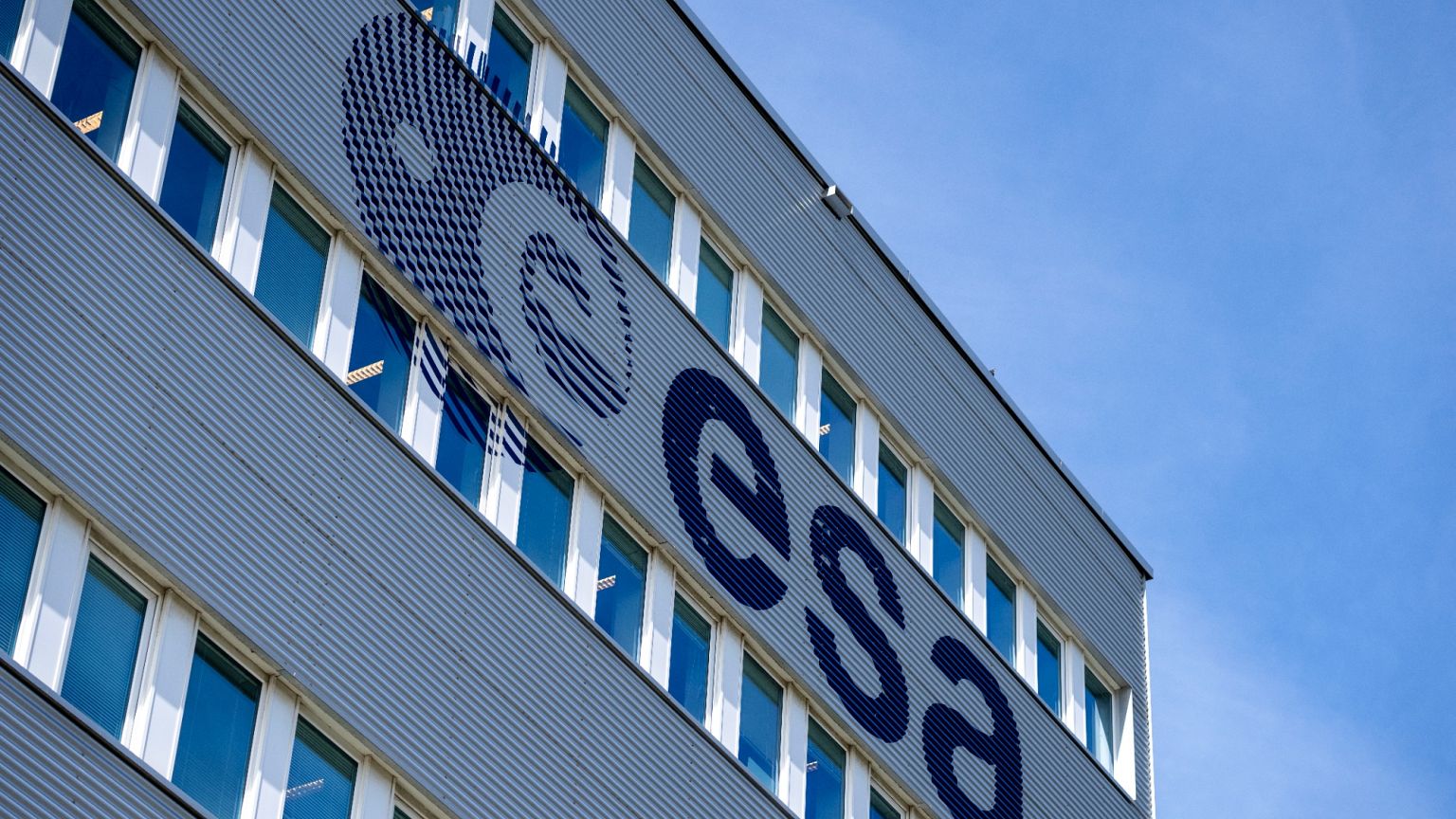
Copyright Oliver Stratmann/picture-alliance/dpa/AP Images
By Anna Desmarais
Published on 12/06/2025 -
Which projects could be affected?
Carole Mundell, ESA’s director of science, said the agency had determined 19 research projects could be impacted by the proposed NASA budget cuts.
Mundell said ESA and its international partners could mitigate the damage to all but three of them: the Laser Interferometer Space Antenna (LISA), a space probe that measures gravitational waves, Envision, ESA’s first mission to Venus to measure its different atmospheres, and NewAthena, the world’s largest X-Ray observatory.
LISA and Envision have already been approved by the ESA council for funding, and NewAthena will come before the council but is expected to pass in 2027.
RelatedDonald Trump withdraws nomination of Elon Musk associate as his choice to lead NASA
ESA also supplies NASA with certain key parts for the NASA-led Artemis missions that would see humans return to the surface of the Moon for the first time since the 1960s.
The ESA builds European Space Modules (ESMs) that provide electricity and oxygen to Orion, the spacecraft picked by NASA for the Artemis missions to the surface of the Moon.
The ESA is also in charge of the Argonaut, Europe’s lunar lander programme that would ultimately support these missions.
It is also contributing three key elements for Gateway, the first international space station to be built around the Moon.
The proposed NASA budget said that it will sustain funding for the Artemis II mission, scheduled for early 2026, and the Artemis III mission in 2027, but future missions would cancel the Gateway and retire Orion in the name of finding a more “sustainable and cost-effective” lunar exploration strategy.
Daniel Neuenschwander, ESA’s director of human and robotic exploration, said the agency continues to fulfill its Gateway and ESM contracts with NASA.
Even if cuts are approved, Argonaut and these European capabilities would still be used to support ESA missions, he added.
Preparing for Europe’s autonomy
Neuenschwander said ESA was now exploring with industry how some replacement technologies could be built in the EU.
For example, the NASA cuts target the Rosalind Franklin ExoMars Rover mission, an ESA programme that drills down to the surface of the Red Planet to dig up organic material for further scientific study.
NASA supplies three parts of the rover’s technology, including the Mars Organic Molecule Analyzer (MOMA), an astrobiology instrument that does the sample extraction, and an americium radioisotope heater unit (RHU) to power the vehicle.
Related‘You cannot live without space in 20 years’: What does the future of Europe’s economy look like?
Both technologies are not currently available to be produced in Europe, Neuenschwander said, but that engagement is starting to build them. The RHU in particular can also be used for future ESA lunar surface exploration missions, he added.
Neuenschwander said ESA could rely on other partners, like the Canadian Space Agency (CSA), in the short term to supply technologies like the MOMA or RHU, but ultimately the goal is to build the necessary technology in Europe.
Copyright Oliver Stratmann/picture-alliance/dpa/AP Images
By Anna Desmarais
Published on 12/06/2025 -
NASA’s 2026 technical budget request, which was released last week, details possible cuts to 19 European space research programmes and could impact key technologies that ESA supplies to American Moon missions.
The bill still needs Congress’ approval, likely to come this autumn.
RelatedElon Musk threatens to withdraw SpaceX's crucial Dragon capsule in feud with Donald Trump
Josef Aschbacher, ESA’s director general, told journalists on Thursday that the council is “doing its homework” to analyse what the impacts of possible NASA budget cuts could be and how investments made by its member states could be “used in the most efficient way,” to respond.
Aschbacher assured that no cuts or cancellations were coming until the US "finalised" its position, but that no matter the decision made by Congress, ESA would be "ready" and "well-prepared" to react.
The bill still needs Congress’ approval, likely to come this autumn.
RelatedElon Musk threatens to withdraw SpaceX's crucial Dragon capsule in feud with Donald Trump
Josef Aschbacher, ESA’s director general, told journalists on Thursday that the council is “doing its homework” to analyse what the impacts of possible NASA budget cuts could be and how investments made by its member states could be “used in the most efficient way,” to respond.
Aschbacher assured that no cuts or cancellations were coming until the US "finalised" its position, but that no matter the decision made by Congress, ESA would be "ready" and "well-prepared" to react.
Which projects could be affected?
Carole Mundell, ESA’s director of science, said the agency had determined 19 research projects could be impacted by the proposed NASA budget cuts.
Mundell said ESA and its international partners could mitigate the damage to all but three of them: the Laser Interferometer Space Antenna (LISA), a space probe that measures gravitational waves, Envision, ESA’s first mission to Venus to measure its different atmospheres, and NewAthena, the world’s largest X-Ray observatory.
LISA and Envision have already been approved by the ESA council for funding, and NewAthena will come before the council but is expected to pass in 2027.
RelatedDonald Trump withdraws nomination of Elon Musk associate as his choice to lead NASA
ESA also supplies NASA with certain key parts for the NASA-led Artemis missions that would see humans return to the surface of the Moon for the first time since the 1960s.
The ESA builds European Space Modules (ESMs) that provide electricity and oxygen to Orion, the spacecraft picked by NASA for the Artemis missions to the surface of the Moon.
The ESA is also in charge of the Argonaut, Europe’s lunar lander programme that would ultimately support these missions.
It is also contributing three key elements for Gateway, the first international space station to be built around the Moon.
The proposed NASA budget said that it will sustain funding for the Artemis II mission, scheduled for early 2026, and the Artemis III mission in 2027, but future missions would cancel the Gateway and retire Orion in the name of finding a more “sustainable and cost-effective” lunar exploration strategy.
Related
Daniel Neuenschwander, ESA’s director of human and robotic exploration, said the agency continues to fulfill its Gateway and ESM contracts with NASA.
Even if cuts are approved, Argonaut and these European capabilities would still be used to support ESA missions, he added.
Preparing for Europe’s autonomy
Neuenschwander said ESA was now exploring with industry how some replacement technologies could be built in the EU.
For example, the NASA cuts target the Rosalind Franklin ExoMars Rover mission, an ESA programme that drills down to the surface of the Red Planet to dig up organic material for further scientific study.
NASA supplies three parts of the rover’s technology, including the Mars Organic Molecule Analyzer (MOMA), an astrobiology instrument that does the sample extraction, and an americium radioisotope heater unit (RHU) to power the vehicle.
Related‘You cannot live without space in 20 years’: What does the future of Europe’s economy look like?
Both technologies are not currently available to be produced in Europe, Neuenschwander said, but that engagement is starting to build them. The RHU in particular can also be used for future ESA lunar surface exploration missions, he added.
Neuenschwander said ESA could rely on other partners, like the Canadian Space Agency (CSA), in the short term to supply technologies like the MOMA or RHU, but ultimately the goal is to build the necessary technology in Europe.
ESA at 50: looking back and launching forward
Paris – The European Space Agency marked its 50th anniversary in May, kicking off a landmark year of mission launches and strategic planning. With the ESA Ministerial Council set to meet in November, Director General Josef Aschbacher reflected on five decades of progress and outlined the agency’s future in exploration, climate science, navigation, and global collaboration.
Issued on: 09/06/2025 - RFI

By: Dhananjay Khadilikar and David Roe
Since its founding in 1975, ESA has contributed to a broad range of scientific and technological areas. One of its most notable moments came in 2014 with the Rosetta mission, when the Philae lander became the first human-made object to land on a comet. The event drew global attention and is considered a major milestone in robotic space exploration.
Copernicus and Galileo
ESA has also developed long-running programmes such as Copernicus and Galileo, which continue to serve scientific, environmental, and practical purposes. Copernicus, the European Union’s Earth observation programme, uses satellite data to monitor environmental changes. According to ESA Director General Josef Aschbacher, “Without those satellites that we have built - and Europe has built many of those - we would not understand the extent of climate change.”
Meanwhile, Galileo, ESA’s satellite navigation system, now in its 30th year, has become a key infrastructure for location and timing services. Aschbacher described it as “the most accurate navigation system in the world,” with wide applications across transport, telecommunications, and emergency services.
Over the years, ESA has also expanded its international cooperation. It works with agencies in the United States, Japan, India, the UAE, and Australia, among others, across a range of missions and projects. “Partners want to work with us. We have something interesting to offer,” Aschbacher said, referring to ESA’s role in collaborative initiatives.
New objectives?
Looking to the months ahead, a major point of focus is the ESA Ministerial Council, to be held in November. Occurring every three years, the council allows ESA’s 22 member states to allocate funding to various programmes. Unlike some international agencies, ESA operates on a voluntary contribution model. “I have to make proposals that are very attractive that member states want to participate and want to put money in. Otherwise, I’m not succeeding,” said Aschbacher.
The funding proposals being prepared for the Council span a wide range of domains, including Earth observation, satellite navigation, telecommunication, astronaut missions, launch systems, and planetary exploration, including the Moon and Mars.
ESA also has a busy launch schedule for 2025, with over ten missions planned. These include new Sentinel satellites under the Copernicus programme, further Galileo satellites, as well as the April launch of Biomass Earth Explorer mission, which will measure tropical forest biomass as part of broader efforts to monitor carbon cycles.
Several smaller missions based on CubeSats and micro-satellites are also in development, incorporating onboard artificial intelligence to process data in orbit more efficiently.
ESA is placing increased emphasis on the role of space-based technologies across different sectors. In Aschbacher’s view, their relevance is likely to expand significantly in coming decades.
“Space today already has many applications… but in 20 years from today, you cannot live without space technology,” he said, comparing the trajectory of space tech to the early development of the internet.
As ESA reaches the 50-year mark, attention is focused not just on past achievements but also on how space technologies might be integrated more deeply into scientific research, infrastructure, environmental monitoring, and industry in the years ahead.
Paris – The European Space Agency marked its 50th anniversary in May, kicking off a landmark year of mission launches and strategic planning. With the ESA Ministerial Council set to meet in November, Director General Josef Aschbacher reflected on five decades of progress and outlined the agency’s future in exploration, climate science, navigation, and global collaboration.
Issued on: 09/06/2025 - RFI
The Ariane 6 rocket lifts off from Europe's spaceport, on a delayed mission to carry a French military observation satellite towards orbit, in its first commercially operational launch, in Kourou, French Guiana March 6, 2025. via REUTERS - @ESA_CNES_Arianespace_ArianeGrou
By: Dhananjay Khadilikar and David Roe
Since its founding in 1975, ESA has contributed to a broad range of scientific and technological areas. One of its most notable moments came in 2014 with the Rosetta mission, when the Philae lander became the first human-made object to land on a comet. The event drew global attention and is considered a major milestone in robotic space exploration.
Copernicus and Galileo
ESA has also developed long-running programmes such as Copernicus and Galileo, which continue to serve scientific, environmental, and practical purposes. Copernicus, the European Union’s Earth observation programme, uses satellite data to monitor environmental changes. According to ESA Director General Josef Aschbacher, “Without those satellites that we have built - and Europe has built many of those - we would not understand the extent of climate change.”
Meanwhile, Galileo, ESA’s satellite navigation system, now in its 30th year, has become a key infrastructure for location and timing services. Aschbacher described it as “the most accurate navigation system in the world,” with wide applications across transport, telecommunications, and emergency services.
Over the years, ESA has also expanded its international cooperation. It works with agencies in the United States, Japan, India, the UAE, and Australia, among others, across a range of missions and projects. “Partners want to work with us. We have something interesting to offer,” Aschbacher said, referring to ESA’s role in collaborative initiatives.
New objectives?
Looking to the months ahead, a major point of focus is the ESA Ministerial Council, to be held in November. Occurring every three years, the council allows ESA’s 22 member states to allocate funding to various programmes. Unlike some international agencies, ESA operates on a voluntary contribution model. “I have to make proposals that are very attractive that member states want to participate and want to put money in. Otherwise, I’m not succeeding,” said Aschbacher.
The funding proposals being prepared for the Council span a wide range of domains, including Earth observation, satellite navigation, telecommunication, astronaut missions, launch systems, and planetary exploration, including the Moon and Mars.
ESA also has a busy launch schedule for 2025, with over ten missions planned. These include new Sentinel satellites under the Copernicus programme, further Galileo satellites, as well as the April launch of Biomass Earth Explorer mission, which will measure tropical forest biomass as part of broader efforts to monitor carbon cycles.
Several smaller missions based on CubeSats and micro-satellites are also in development, incorporating onboard artificial intelligence to process data in orbit more efficiently.
ESA is placing increased emphasis on the role of space-based technologies across different sectors. In Aschbacher’s view, their relevance is likely to expand significantly in coming decades.
“Space today already has many applications… but in 20 years from today, you cannot live without space technology,” he said, comparing the trajectory of space tech to the early development of the internet.
As ESA reaches the 50-year mark, attention is focused not just on past achievements but also on how space technologies might be integrated more deeply into scientific research, infrastructure, environmental monitoring, and industry in the years ahead.
08:11
No comments:
Post a Comment