Explainer
A global investigation into industrial egg farming found hens were kept in cramped and filthy cages in more than 35 countries, raising animal welfare and public health concerns. Global animal rights coalition the Open Wing Alliance shares the results of its investigation in a FRANCE 24 exclusive.
Issued on: 16/06/2025 -
FRANCE24
By:Joanna YORK
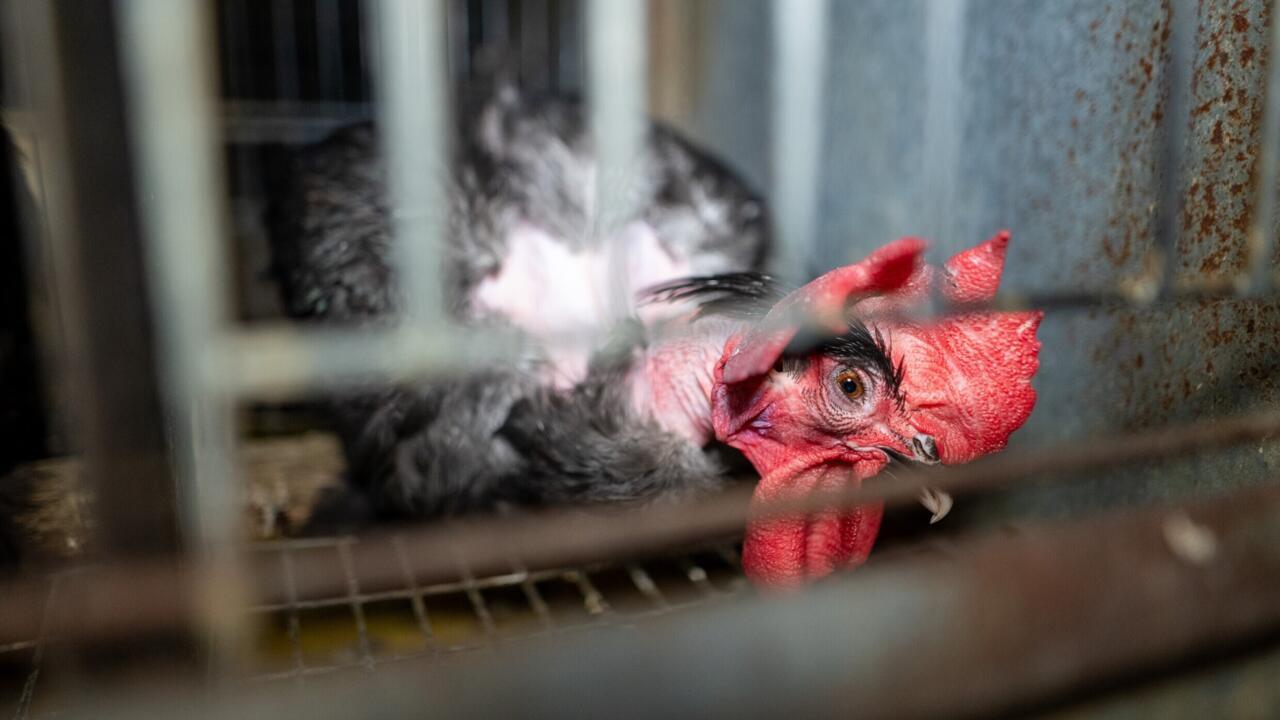
An egg-laying hen kept in a cage on a farm in France.
© Association L214, Open Wing Alliance, We Animals
Before they even looked inside the farm building, the animal welfare investigator knew there was a problem. “The second I opened the door, the smell hit me … but the worst part was the heat – this thick, sticky air that clings to your skin,” they said.
Inside the barn, located in Spain, conditions were “disgusting”, with bird cages stacked from floor to ceiling, and the ground covered in animal faeces, feathers and mouldy feed scraps.
The caged hens did not have enough space to spread their wings, and many appeared to be suffering health problems.
“They looked half-plucked, some with raw, red skin and open sores,” the investigator said. “Others were dead, just left there among the living because nobody bothered to remove them.”
Such conditions are present throughout industrialised egg production, according to an investigation seen by FRANCE 24 ahead of its release on June 17, by The Open Wing Alliance, a global coalition of nearly 100 organisations established by animal rights non-profit, The Humane League, in collaboration with We Animals and Reporters for Animals International.
The group spent over three years collecting onsite photo and footage via farm workers, local investigators and drones. In France, animal welfare organisations L214 and Anima are members of the global coalition.
The investigation found egg-laying hens in more than 35 countries were trapped in filthy, overcrowded cages, with injured birds, rotting carcasses and disease-ridden conditions.
It found poor egg farming practices persist, even as major corporations and governments have committed to phasing out battery farming and removing cages from their egg supply chains.
Factory farming conditions are also likely to exacerbate the ongoing global bird flu pandemic, which has seen cases jump from farmed birds to wild animals and humans.
Read moreFirst severe human case of bird flu in US sparks pandemic concerns
“This isn’t just an animal welfare scandal – it’s a ticking time bomb for public health and corporate risk,” said Ellie Ponders, senior director of global corporate engagement at The Open Wing Alliance.
“Cramming sick, stressed hens into filthy cages is the perfect breeding ground for disease,” she added. “This investigation lays bare the truth: systemic suffering, global inaction, and a betrayal of public trust. It’s a global crisis.”
Mistreatment
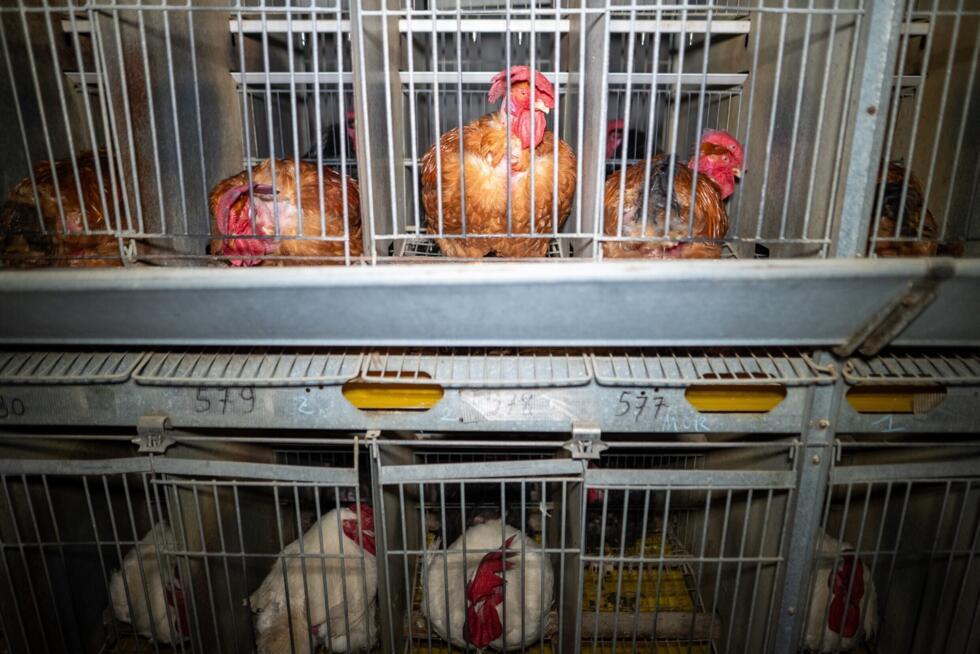
On all the farms they visited, investigators found birds confined in small cages, either in groups or individually, often leaving them unable to stand upright or spread their wings.
Despite a 2012 European Union law largely banning battery cages – meaning animals in individual cages stacked on top of each other are given less space than an A4 piece of paper – footage collected in France clearly shows hens are still being kept in these conditions.
Before they even looked inside the farm building, the animal welfare investigator knew there was a problem. “The second I opened the door, the smell hit me … but the worst part was the heat – this thick, sticky air that clings to your skin,” they said.
Inside the barn, located in Spain, conditions were “disgusting”, with bird cages stacked from floor to ceiling, and the ground covered in animal faeces, feathers and mouldy feed scraps.
The caged hens did not have enough space to spread their wings, and many appeared to be suffering health problems.
“They looked half-plucked, some with raw, red skin and open sores,” the investigator said. “Others were dead, just left there among the living because nobody bothered to remove them.”
Such conditions are present throughout industrialised egg production, according to an investigation seen by FRANCE 24 ahead of its release on June 17, by The Open Wing Alliance, a global coalition of nearly 100 organisations established by animal rights non-profit, The Humane League, in collaboration with We Animals and Reporters for Animals International.
The group spent over three years collecting onsite photo and footage via farm workers, local investigators and drones. In France, animal welfare organisations L214 and Anima are members of the global coalition.
The investigation found egg-laying hens in more than 35 countries were trapped in filthy, overcrowded cages, with injured birds, rotting carcasses and disease-ridden conditions.
It found poor egg farming practices persist, even as major corporations and governments have committed to phasing out battery farming and removing cages from their egg supply chains.
Factory farming conditions are also likely to exacerbate the ongoing global bird flu pandemic, which has seen cases jump from farmed birds to wild animals and humans.
Read moreFirst severe human case of bird flu in US sparks pandemic concerns
“This isn’t just an animal welfare scandal – it’s a ticking time bomb for public health and corporate risk,” said Ellie Ponders, senior director of global corporate engagement at The Open Wing Alliance.
“Cramming sick, stressed hens into filthy cages is the perfect breeding ground for disease,” she added. “This investigation lays bare the truth: systemic suffering, global inaction, and a betrayal of public trust. It’s a global crisis.”
Mistreatment
On all the farms they visited, investigators found birds confined in small cages, either in groups or individually, often leaving them unable to stand upright or spread their wings.
Despite a 2012 European Union law largely banning battery cages – meaning animals in individual cages stacked on top of each other are given less space than an A4 piece of paper – footage collected in France clearly shows hens are still being kept in these conditions.
Egg-laying hens are kept in cages on a farm in France.
© Association L214 / Open Wing Alliance / We Animals
Along with France, the investigations found examples of mistreatment in nine EU countries (Bulgaria, Estonia, Finland, Italy, Poland, Portugal, Romania, Slovenia, Spain) and countries in Asia, Australasia, Africa, and North and South America.
Other footage shows how the automation of farming systems such as feeding and ventilation has reduced in-person monitoring and eroded welfare conditions.
In some videos, dead bird carcasses are trapped in cages with living hens. In others, hens that escaped their cages are abandoned in manure pits used to gather bird droppings.
Some mistreatment may be due to negligence, but there are also inherent problems in the cage farming system, said Mia Fernyhough, senior director of global animal welfare at the Open Wing Alliance.
“A big problem with caged systems is that you've got huge numbers of birds stacked in rows, some very high and some at shin level. It's very difficult to see the birds in certain parts of the system, and so birds get missed,” she said.
“There might be a bird that is suffering that otherwise would be removed, but they’re left, then they die, and they're still left there,” Fernyhough added.
Risk of bird flu
In most of the footage, hens are kept in dark, cramped conditions, surrounded by filth and the racket of countless other birds – an unsanitary and stressful environment that provides fertile conditions for the spread of disease and viruses such as bird flu.
While bird flus are endemic in wild populations, they are much harder to control among large concentrations of genetically similar species living in tight quarters.
“Then you get a virus with tons of hosts, so it is mutating all of the time,” said Fernyhough.
Mutations have already enabled the current bird flu pandemic to pass to humans, most of whom worked on farms in close contact with infected animals.
But, Fernyhough said, “if there is a mutation that means the virus can pass from human to human, then there's a really serious risk of a pandemic.”
The World Health Organisation said in a 2022 report that pandemics were becoming increasingly common, in part, due to the intensification of agriculture.
It called for “behaviour and industry change” in settings, such as industrial farms, where animal-to-human disease spill over is common.
Enriched cages
European consumers may believe a 2012 ban on battery cages meant an end to cages altogether, but much of the mistreatment documented in the Open Wing Alliance investigation is permissible under EU law.
“A lot of what is in the footage is legal, and that's probably the most shocking thing about it,” Fernyhough said.
In Europe, battery cages were banned in favour of enriched cages, which place groups of birds in slightly larger spaces with materials to allow for natural behaviours such as a nesting area, perch and litter.
While lauded as a humane progression, enriched cages do not ensure access to natural light or fresh air. They are also still a form of battery farming in that cages can be stacked one on top of another in battery formation.
In practice, they are “ever so slightly larger cages that have a few resources in them but are still entirely inadequate in terms of being able to scratch, forage, or lay an egg in a secluded nest", Fernyhough said.
“There are still millions of hens still trapped in these cruel systems,” added Loretta Piare, Europe regional lead for the Open Wing Alliance.
Animal rights network End the Cage Age estimates there are 300 million farmed animals, including hens, quails, ducks, geese and rabbits, currently kept in cages across the EU.
The European Commission has pledged to completely phase out cages by 2027, But, Piare said, “there's still so much work to be done to get there”.
Consumer choice
There is evidence that most consumers in France back a total ban on cages.
In many countries, egg stamps and labelling on egg boxes allow consumers to make informed choices about whether they buy eggs produced by caged hens.
In France, 80% of the eggs bought in supermarkets in 2023 and 2024 were from organic, free-range or barn hens – three methods that the Open Wing Alliance see as viable and humane alternatives to battery and enriched cage farming.
The number of eggs sold in France that were produced caged birds has dramatically decreased in the past ten years from 70% in 2015 to less than a quarter today.
However, of the nearly 15 million eggs produced in France each year, 55% are used in products like pre-packaged pasta and cakes or in restaurants, where labelling is much more opaque.
Such eggs are generally bought in vast quantities by corporations, putting them in a position of control over conditions on the ground.
While the ban that the EU is proposing would be “ideal, because it's universal, unfortunately, it feels very precarious”, Fernyhough said. “There's a very loud and quite successful industry that will fight against it.”
Many corporations may prioritise their bottom lines over animal welfare, but the impact of one major company enacting change in a positive way can be monumental.
In May 2025, McDonalds said it had achieved a 100% switch to cage-free eggs in its US restaurants – transforming the supply chain for nearly 2 billion eggs each year.
The company is now exploring how to end use of cages across its branches in Asia, starting with a trial in South Korea.
The Open Wing Alliance believes the onus falls on consumers to push corporations to do more.
“It's so important that we campaign against these companies who still permit these systems,” Fernyhough said.
“We can demand more from corporations,” added Piare. “Consumers should be told the truth about what they're buying.”
Along with France, the investigations found examples of mistreatment in nine EU countries (Bulgaria, Estonia, Finland, Italy, Poland, Portugal, Romania, Slovenia, Spain) and countries in Asia, Australasia, Africa, and North and South America.
Other footage shows how the automation of farming systems such as feeding and ventilation has reduced in-person monitoring and eroded welfare conditions.
In some videos, dead bird carcasses are trapped in cages with living hens. In others, hens that escaped their cages are abandoned in manure pits used to gather bird droppings.
Some mistreatment may be due to negligence, but there are also inherent problems in the cage farming system, said Mia Fernyhough, senior director of global animal welfare at the Open Wing Alliance.
“A big problem with caged systems is that you've got huge numbers of birds stacked in rows, some very high and some at shin level. It's very difficult to see the birds in certain parts of the system, and so birds get missed,” she said.
“There might be a bird that is suffering that otherwise would be removed, but they’re left, then they die, and they're still left there,” Fernyhough added.
Risk of bird flu
In most of the footage, hens are kept in dark, cramped conditions, surrounded by filth and the racket of countless other birds – an unsanitary and stressful environment that provides fertile conditions for the spread of disease and viruses such as bird flu.
While bird flus are endemic in wild populations, they are much harder to control among large concentrations of genetically similar species living in tight quarters.
“Then you get a virus with tons of hosts, so it is mutating all of the time,” said Fernyhough.
Mutations have already enabled the current bird flu pandemic to pass to humans, most of whom worked on farms in close contact with infected animals.
But, Fernyhough said, “if there is a mutation that means the virus can pass from human to human, then there's a really serious risk of a pandemic.”
The World Health Organisation said in a 2022 report that pandemics were becoming increasingly common, in part, due to the intensification of agriculture.
It called for “behaviour and industry change” in settings, such as industrial farms, where animal-to-human disease spill over is common.
Enriched cages
European consumers may believe a 2012 ban on battery cages meant an end to cages altogether, but much of the mistreatment documented in the Open Wing Alliance investigation is permissible under EU law.
“A lot of what is in the footage is legal, and that's probably the most shocking thing about it,” Fernyhough said.
In Europe, battery cages were banned in favour of enriched cages, which place groups of birds in slightly larger spaces with materials to allow for natural behaviours such as a nesting area, perch and litter.
While lauded as a humane progression, enriched cages do not ensure access to natural light or fresh air. They are also still a form of battery farming in that cages can be stacked one on top of another in battery formation.
In practice, they are “ever so slightly larger cages that have a few resources in them but are still entirely inadequate in terms of being able to scratch, forage, or lay an egg in a secluded nest", Fernyhough said.
“There are still millions of hens still trapped in these cruel systems,” added Loretta Piare, Europe regional lead for the Open Wing Alliance.
Animal rights network End the Cage Age estimates there are 300 million farmed animals, including hens, quails, ducks, geese and rabbits, currently kept in cages across the EU.
The European Commission has pledged to completely phase out cages by 2027, But, Piare said, “there's still so much work to be done to get there”.
Consumer choice
There is evidence that most consumers in France back a total ban on cages.
In many countries, egg stamps and labelling on egg boxes allow consumers to make informed choices about whether they buy eggs produced by caged hens.
In France, 80% of the eggs bought in supermarkets in 2023 and 2024 were from organic, free-range or barn hens – three methods that the Open Wing Alliance see as viable and humane alternatives to battery and enriched cage farming.
The number of eggs sold in France that were produced caged birds has dramatically decreased in the past ten years from 70% in 2015 to less than a quarter today.
However, of the nearly 15 million eggs produced in France each year, 55% are used in products like pre-packaged pasta and cakes or in restaurants, where labelling is much more opaque.
Such eggs are generally bought in vast quantities by corporations, putting them in a position of control over conditions on the ground.
While the ban that the EU is proposing would be “ideal, because it's universal, unfortunately, it feels very precarious”, Fernyhough said. “There's a very loud and quite successful industry that will fight against it.”
Many corporations may prioritise their bottom lines over animal welfare, but the impact of one major company enacting change in a positive way can be monumental.
In May 2025, McDonalds said it had achieved a 100% switch to cage-free eggs in its US restaurants – transforming the supply chain for nearly 2 billion eggs each year.
The company is now exploring how to end use of cages across its branches in Asia, starting with a trial in South Korea.
The Open Wing Alliance believes the onus falls on consumers to push corporations to do more.
“It's so important that we campaign against these companies who still permit these systems,” Fernyhough said.
“We can demand more from corporations,” added Piare. “Consumers should be told the truth about what they're buying.”

No comments:
Post a Comment