By AFP

A sewage treatment plant for London supplier Thames Water, one of the firms hit by the bonus ban - Copyright AFP Ben STANSALL
Six UK water companies were banned Friday from paying bonuses to senior executives, which the government said would be inappropriate given their failure to clean up their massive sewage discharges.
The new measures, whose targets include the country’s biggest supplier, financially troubled Thames Water, prohibit the companies from paying bonuses “to water bosses that oversee poor environmental and customer outcomes”, the government announced in a statement.
Suffering from underinvestment in a sewer system that dates largely back to the Victorian era, UK water companies, privatised since 1989, have been under fire for several years due to the discharge of significant quantities of sewage into rivers and the sea.
Despite this, “water companies have awarded over £112 million ($152 million) in bonuses and incentives over the last decade,” the government noted.
These executives “should only get bonuses if they’ve performed well, certainly not if they’ve failed to tackle water pollution”, said environment minister Steve Reed.
The Labour government, which came to power in July, has promised to reform a sector “in crisis” and has already legislated to toughen penalties for water company bosses who fail to comply with the law.
Water regulator Ofwat last week imposed a record fine of £123 million on London supplier Thames Water, which serves 16 million customers, for repeated sewage spills.
Some £18.2 million of the fines related to “unjustified” payouts of dividends.
The firm is seeking a private buyer to avoid a state bailout.
US investment fund KKR pulled out of a potential deal on Tuesday.
Yorkshire Water, Anglian Water, Wessex Water, United Utilities and Southern Water were also hit with the bonus ban.
Britain’s public spending watchdog warned in April that the water sector as a whole will need to invest £290 billion over the next 25 years to meet environmental and supply challenges.
Anti-privatisation campaigners have called the ban a 'token gesture'
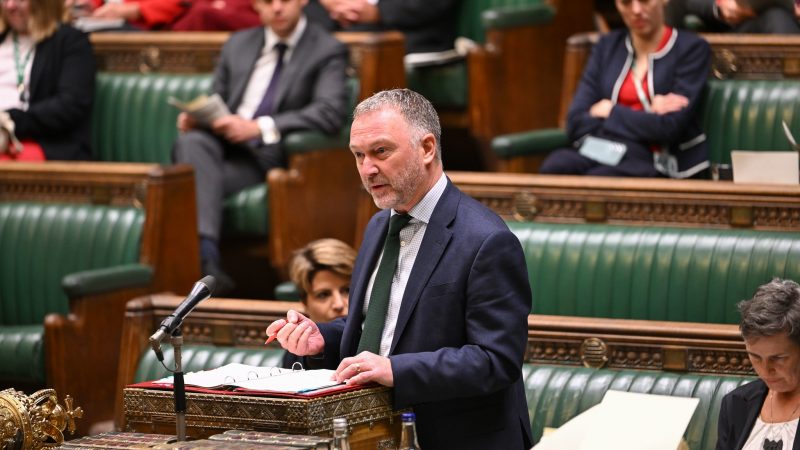
Campaigners have accused the government of ‘fiddling while Rome burns’ over its current policies on the water industry.
The comments come as bonuses for water bosses at six water firms were banned today (Friday 6 June) and while the ongoing crisis at Thames Water rumbles on.
On the day of the ban coming in, the Environment Secretary Steve Reed said: “Water company bosses, like anyone else, should only get bonuses if they’ve performed well, certainly not if they’ve failed to tackle water pollution. Undeserved bonuses will now be banned as part of the Government’s plan to clean up our rivers, lakes and seas for good.”
However, Cat Hobbs, director of anti-privatisation group We Own It branded the bonus ban a ‘token gesture’ and said it was ‘tinkering round the edges whilst still propping up Thatcher’s failed privatisation experiment’.
Hobbs said: “With this latest announcement the government is just fiddling while Rome burns, or more accurately fiddling while England drowns in raw sewage. This is a token gesture and water bosses have already indicated they’ll just increase salaries instead.
“The Water (Special Measures) Act along with the pointless Cunliffe review is an exercise in tinkering round the edges whilst still propping up Thatcher’s failed privatisation experiment.”
“If you’re banning bonuses for failing water bosses, you should be banning all shareholder payouts from failing water companies. If you follow this to its logical conclusion, you should be banning private companies from our water system entirely.”
She went onto highlight that the public support taking water into public ownership and to argue that this model has been proven successful.
Hobbs said: “The government is worryingly out of step with the country and the world on this issue. 82% of Brits want water in public ownership. 9 out of 10 countries run water in public ownership.
“Public ownership works. In Scotland publicly owned water delivers cheaper bills (£113 per year cheaper) and more investment (£72 extra per household).
“Public ownership saves us money and would quickly become a valuable revenue source for the public purse. Research by Greenwich University shows that public ownership could save us £3-5 billion a year – even if water shareholders are fully compensated.”
Chris Jarvis is head of strategy and development at Left Foot Forward
Image credit: House of Commons – Creative Commons
Left Foot Forward
“Can’t he be tough with it for once and say water is a human right? And it should be publicly owned and publicly run.”
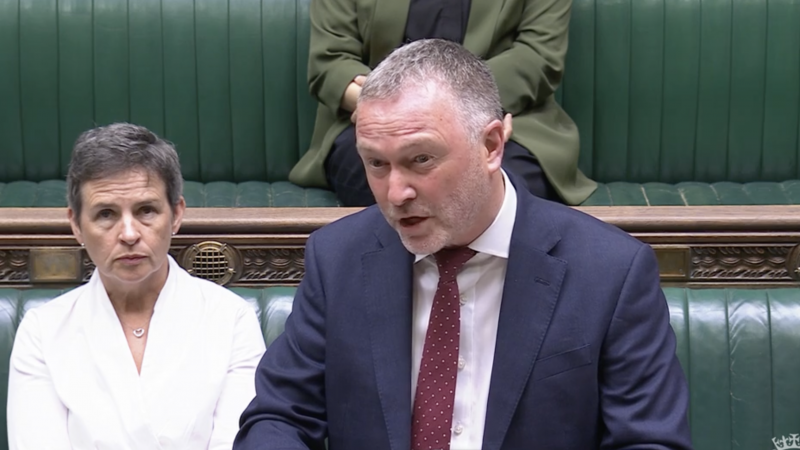
MPs have urged the government to bring water companies into public ownership following this morning’s announcement that Thames Water’s potential buyer had withdrawn from the deal.
During urgent questions this afternoon, Clive Lewis, who has introduced a private members’ bill to nationalise water companies, said that private equity giant KKR pulling out of the Thames Water takeover “exposes the complete bankruptcy of the privatised water model”.
Lewis pointed out that the government-commissioned review, the interim Cunliffe review, describes the water system “as too risky for investment”.
Yet, he pointed out that “it didn’t seem too risky when shareholders were siphoning off billions in dividends while letting the pipes rot, rivers choke and the debt pile up.”
Lewis added: “When will the government stop fiddling, put Thames Water into special administration, strip out the debt and begin the job of returning our water system, not just Thames back into public ownership.”
The government is currently not considering nationalisation
The Environment Secretary Steve Reed ruled out nationalisation, claiming that it would cost over £100 billion, which would have been taken away from other public services such as the NHS to be given to the owners of water companies.
In reality, there is no legal obligation for the government to pay market value to companies when nationalising industries. Both Labour and Conservative governments have nationalised without paying full compensation.
Labour MP Rebecca Long-Bailey cited University of Greenwich research showing public ownership pays for itself in about seven years and after that saves taxpayers £2.5 billion per year.
She said: “So is the Secretary aware that by immediately bringing Thames Water into special administration and permanent public ownership, it will cut the company’s massive debt mountain in half, stop the payment of huge dividends [..] and within just several years would actually start turning a profit for the people of this country.”
Jeremy Corbyn MP said that he found the response from the Environment Secretary “deeply depressing”, when he claimed there is a market solution there for Thames Water.
Corbyn said that under 35 years of water privatisation, the country has had to put up with excessive profits, pollution and rising bills.
‘If we took it into public ownership, Parliament would set the price’
He added: “He knows at some point he’s going to have to take Thames Water into public ownership and instead of quoting this strange figure of £100 billion in compensation, surely if we took it into public ownership, Parliament would set the price.”
Corbyn said the price should reflect “excessive profits, pollution and damage”. He then urged Reed: “Can’t he be tough with it for once and say water is a human right? And it should be publicly owned and publicly run.”
Green MP Ellie Chowns also questioned Reed on why public ownership is off the table.
She said the Greens have long campaigned for it “because we know that if you allow privatised monopolies to control our water, it’s left infrastructure crumbling, waterways running with sewage, sky-high bills and shareholders laughing all the way to the bank.”
Chowns added: “So can I ask the Secretary of State, given this obscene and fundamental failure, why is it that the government will not even consider bringing water back into public hands, where it belongs?”.
Reed responded that Thames Water’s issues are about governance, not ownership, and reiterated that nationalisation would cost over £100 billion and divert money from services like the NHS.
Olivia Barber is a reporter at Left Foot Forward
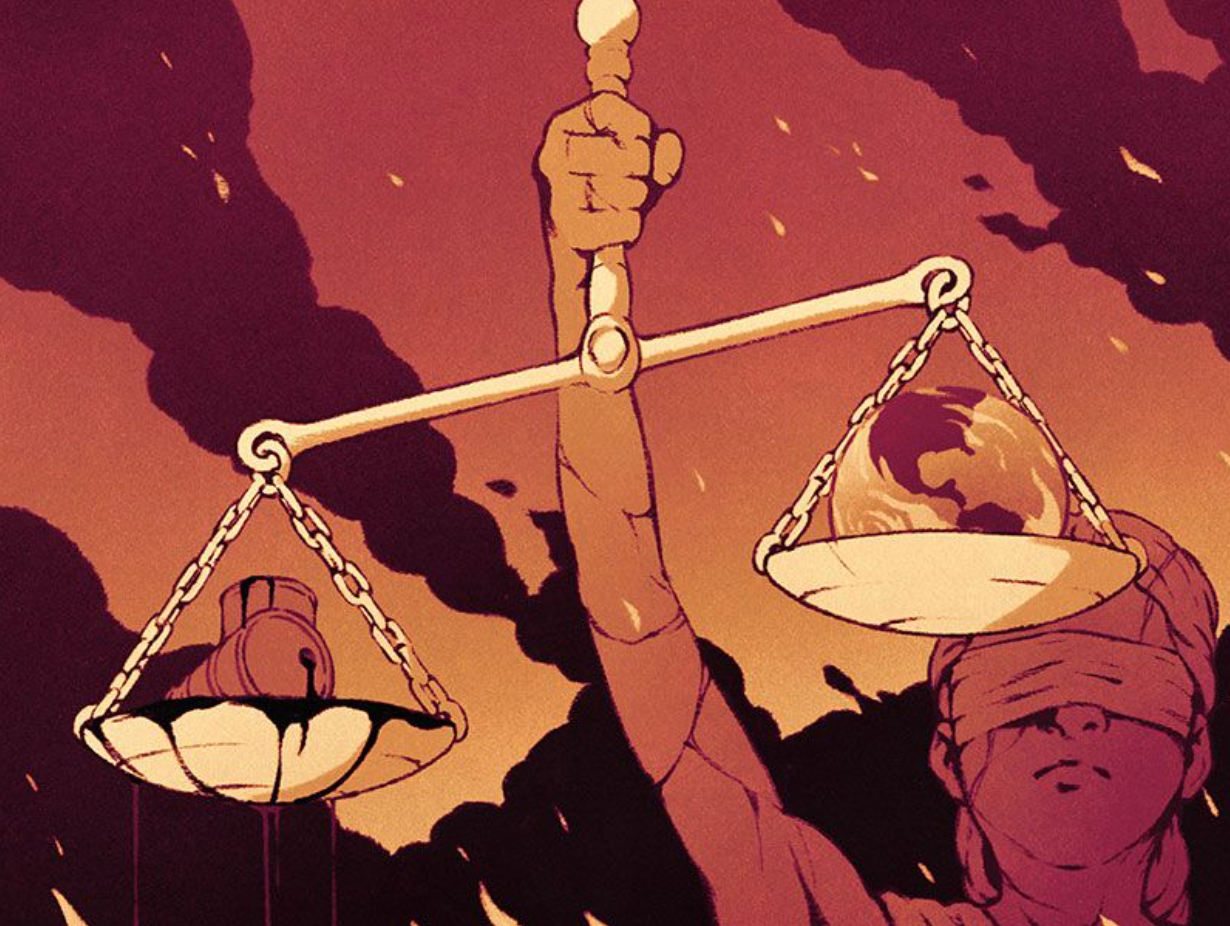
A trial is unfolding in UK courts, closely connected to millions of Brits — who remain blissfully unaware, despite desperate bids by the challengers for coverage.
Niger Delta civilians are accusing a UK corporation of devastating their habitat, livelihood, culture and bodies. It’s the corporation that supplies 10% of UK fossil fuels and delivers a fifth of its gas to our workplaces and homes.
And yet, if the story of Shell oil spills in the Niger Delta appears at all, it does so as a faraway feature under the ‘World News’ tab.
Oil spills in the Niger Delta have seen bursts of fantastic coverage, with the Guardian and BBC World Service leading the charge. But the victims are as frustrated by international media as they have been in their decades-long fight for justice.
The worst leak Lazarus Tamara remembers was in 1968, a decade after Shell first drilled for oil in the region. “There was oil everywhere,” he said on this week’s Media Storm podcast. “Our cultural heritage has been completely destroyed as a result.”
Tamara joined the fight in 1990, alongside Ken Saro-Wiwa, whose high-profile hanging as an activist in 1995 saw Nigeria expelled from the Commonwealth for over three years. Shell ultimately paid a $15.5 million settlement to families of victims of summary execution and alleged crimes against humanity in the Delta, though the company has always denied liability for Saro-Wiwa’s death.
Tamara took up his comrade’s mantle as one of the leaders of the Movement for the Survival of the Ogoni People (MOSOP). “It was out of that desperation that the movement was born,” he told us.
Dr Emem Okon fights her battle through academic research, laying down evidence of the poisonous impact of oil pollution on women’s health, fertility and rights.
“It is very important for the world to know the effects of hydrocarbons on women,” she said on Media Storm, citing her own early-onset menopause as well as the local blood samples she tested, which delivered hydrocarbon levels thousands of times above WHO’s permissible limit.
The resulting infertility, miscarriages, and stillbirths are more than just physical in impact, she said. “This causes confusion, misunderstanding, conflict within the family.”
“People were blaming the women for being promiscuous, of having their wombs removed, and all kinds of unfounded allegations,” she continued. “It’s traumatic. But before the research, people were not linking this to pollution, because we live with pollution — we drink polluted water, we inhale polluted air.”
Dr Okon appeared at Shell’s AGM this week, held at Heathrow (which feels random until you remember the airport has an injunction against climate activists, enabling the meeting to go ahead without disruption).
Tamara, meanwhile, has spent the week in court. While in the UK, they visited the Media Storm studio, to assess our national media’s coverage of climate and environmental news.
“People here in the UK — when we talk about the Niger Delta — they say, ‘oh it’s far away, 6,000 miles away’,” Tamara warned, “until it comes to them.”
While the media often fails to connect ‘UK stories’ of heatwave hosepipe bans and Net-Zero job losses with stories from the frontlines of climate destruction, Shell’s CEO does not. During the AGM, reported Dr Okon, Shell’s boss attributed continued exploration in Nigeria to shareholder demand at home. These stories are one.
The media is equally disconnected in the language it uses to report on climate issues, they went on. Six years ago, the Guardian updated its style guide to include the terms ‘climate crisis’ and ‘climate emergency’ rather than climate change. But aside from the Associated Press, who advise the terms only sparingly, no competitors have followed suit. Dr Okon argues this terminology should be the norm.
To us, what is happening is a crisis, it’s an emergency. So we feel that the media are not really giving the picture of what communities are experiencing, perhaps because they’re not directly impactedDr Emem Okon
“I think what the Guardian have done is something that others need to follow,” Tamara agreed. “But the others won’t do that — because they are pro-business.”
The Guardian (like Media Storm) has a funding model that is unusual for the sector, depending on reader donations and philanthropic foundations.
Most media rely on corporate advertising or content partnerships, such the Daily Mail, whose ‘news’ story this month about Amazon launching a rival service to Shein and Temu was peppered with advertisements allocated by Amazon Ads. In other words, the article — listed as ‘news’ by the Mail — directly earns revenue from the company it claims to journalistically report on.
Perhaps this is why the reporter abstains from asking how Amazon is able to compete with Chinese competitors, ignoring widespread claims of labour and environmental exploitation.
Another issue is our media’s attention span. Climate justice trials drag on for decades. “Is it that there is media fatigue?” Dr Okon asked. This year marked the start of the Ogale and Bille v. Shell case, ten years after the communities first filed a complaint. But snail-paced climate justice is incompatible with a fast-paced, short-term media cycle — for whom news must be new or be worthless.
“I was interviewed by the BBC Africa in December,” said Dr Okon. “So before we came on this trip [for the UK trial], I reached out. But somebody said they had interviewed me in December, so they have no intentions of covering this further. That is not encouraging.”
Tamara said he has to correct members of the British public passing by the courtroom that, no, the matter was not resolved years ago. “The press should assist us to constantly remind the population that these companies have not shifted an inch from their original position, which is driving the Ogoni people to extinction.”
“Let me use this forum to appeal to the international media, that they should not give up on the Niger Delta”, pleads Dr Okon. “We still need them to put pressure on the big corporations and the Federal Government of Nigeria to address all the challenges we have experienced as a result of the oil economy.”
“Indigenous people are crying all the time that their environment has been destroyed, they cannot live the way they used to live before, and it’s all caused by these fossil fuel companies and extractive companies that are on the land”, Tamara added. “Listen to them, or one day it will be you.”
Left Foot Forward.
Despite the damning evidence the government is clinging on to private ownership of water, which has fleeced customers for 36 years.
This week, US private equity conglomerate KKR withdrew its possible £4bn bid for Thames Water, a company that supplies water and wastewater services to 16m customers in London and the South East of England. Perhaps, it escaped a disastrous takeover. Since privatisation in 1989, Thames Water has secured at least 187 criminal convictions. KKR has been sanctioned over 217 times for predatory practices in the US since 2000 and paid financial penalties of $678m.
Thames Water’s woes were deepened by the 2006-2017 private equity ownership led by a consortium controlled by Macquarie. Financial engineering, low investment, profiteering, asset-stripping, tax dodges and borrowing money to pay dividends were the norm as Macquarie extracted average annual average returns of between 15.5% and 19% a year.
The government is obsessed with private ownership and is hoping that someone will rescue Thames Water. Meanwhile, Thames Water’s £19bn debt pile has increased by another £3bn, borrowed at interest rate of 9.75%. It is paying £200m a year to business advisers and nearly a one-third of its customer’s bills service company debt.
Other water companies operate with similar business models. The entire water sector in England is now controlled by companies with over 1,135 criminal convictions. Due to leaky pipes, more than 1 trillion litres of water a year is lost. In 2024, companies dumped raw sewage into rivers, seas and lakes for 3.62m hours. Asset-stripping is rife. In the 35 years before privatisation, almost 100 reservoirs were built. In the 35 years since privatisation, not one major English reservoir has been built. Thames Water has sold-off at least 25 reservoirs since the 1980s. Southern Water is due to decommission 43 of 93 reservoirs by 2030, and may possibly add two. Since privatisation companies have paid nearly £85bn in dividends and billions more in debt interest. They have accumulated debt of around £70bn and gearing/leverage ratio of 85%, sustained by high customer bills. In the last decade, directors collected £112m in bonuses and incentive payments
.Despite the failure of water privatisation the current Labour government, just like its Conservative predecessor, is opposed to public ownership. It counters public calls for nationalisation with a number of blunt tools. These include expressing faith in market solutions, promises of heavy fines for sewage dumping, ban on undeserved dividends and executive bonuses, and claims that public ownership is unaffordable. Such tools lack substance and cannot provide stability, and are a vote loser.
There can be no durable market-based solution to the crisis. Companies have a monopoly on the supply of clean water and disposal of wastewater. There is no competition. There are no substitute products and services. Customers are captive and cannot switch to any alternative product or supplier.
Water infrastructure needs an investment of at least £290bn over the next 25 years. Any corporation would want returns and that would mean even higher debt, interest payments and bills. In public ownership there would be no dividends. Instead money would be reinvested, just as £85bn already extracted would have been invested in the absence of privatisation. Borrowing by the government is always cheaper than borrowing by any company and that again would save billions for reinvestment. Any continuation of private ownership will inevitably repeat the follies of the last 36 years.
A game of obfuscation with fines is being played. On 28 May 2025, Ofwat announced a penalty on Thames Water of £104.5m for sewage dumping events going back a decade. The press release also referred to a £18.2m fine for breaching dividend rules. On 4th June 2025, a penalty of £15.7m was announced on Northumbrian Water for sewage dumping going back to 2013. Except, these fines were not new. The above fines for sewage dumping were first announced on 6 August 2024. The Thames Water fine for breaching dividend rules was first announced on 19 December 2024. As part of PR, the fines are being spun to create the impression that the government is being tough. Water companies are permitted to negotiate the amount and timing of penalties, a privilege not available to any citizen.
The fines are being used to correct the infrastructure neglect by water companies. The notice relating to Northumbrian Water stated that the money would be used to install smart sensors and monitors at sewage stations and improve the environment. This forced investment will obviate the need for companies to invest. It will improve their balance sheet and regulatory capital value (RCV), enabling them to extract higher returns from customers. This policy is akin to a motorist knowingly driving with faulty brakes and bald tyres and threating public safety. When caught s/he admits guilt and is fined £1,000, but the judge immediately hands the money back to the driver to enable him/her to buy new brakes and tyres. There is no penalty and no deterrent. Yet that is the government policy.
Customer anxieties are being soothed with claims that companies won’t be allowed to extract excessive dividends. The policy is unlikely to yield the claimed objectives. Water company accounts do not disclose distributable reserves, which govern the amount of dividends which can be paid. The focus on dividend payments in cash neglects the fact that shareholders can extract returns in other forms. These include share buybacks, bonus shares, excessive interest charges on intragroup and related party loans and spurious intragroup transactions; for example artificial management fees and other charges. There is no evidence that Ofwat can deal with financial engineering.
Following implementation of the Water (Special Measures) Act 2025 the government has promised to ban unfair bonuses to senior executives overseeing poor environmental and customer outcomes. Thames Water, Yorkshire Water, Anglian Water, Wessex Water, United Utilities, and Southern Water bosses are not permitted to receive bonuses with immediate effect. Thames Water has already indicated that it will circumvent the rules by rebranding bonuses as “retention payments”. More cat and mouse games are inevitable. Companies can reward executives with share options, generous perks and pension contributions. Within a group of companies, executives can be offered multiple directorships to ensure that they collect their loot. The most effective reform would have been to appoint employee and customer elected directors to the boards of companies and Ofwat, and empowering them to vote to executive pay. But democratising corporations and regulators is not on the government’s agenda.
Ministers oppose public ownership by claiming that it would have a high cost. They do so without ever explaining the cost of leaving the industry in private hands, which includes lack of investment, sewage dumping, debt pile, health hazards, profiteering, financial engineering, asset-stripping, water insecurity and high household and business costs. Ministers claim that water nationalisation would cost over £90bn. They amplify a 2018 report by Social Market Foundation, commissioned by water companies. This report is described by a former government adviser as having “virtually no intellectual substance “ and added that renationalisation itself would be “relatively easy, as with the revenues from the water bills, the government would have sufficient income to pay for the assets it acquired”.
Ministers now say that “if the whole industry was nationalised, shareholders and debt holders would need to be compensated, which could cost over an estimated £90 billion [this is based on Ofwat’s Regulatory Capital Value 2024 estimates]”. This does not stand up to scrutiny either. Regulatory capital value (RCV) is an accounting exercise and does not show market value of companies. In any case, it is grossly inflated as companies have capitalised parts on interest payments and repair and maintenance expenditure. To acquire control, no one has to buy debt and the £90bn tag has no relevance.
The Water (Special Measures) Act 2025 seeks to avoid the chaos from sudden collapse and ensure that the government puts water companies into temporary nationalisation. Companies would be restructured i.e. shareholders would be mostly wiped out and lenders will take a big hit. The government’s intention is to restructure any company brought into temporary nationalisation and then hand it back to the private sector. This can’t solve the problem as we would return to all the chaos of the last 36 years.
Under the Water Act 1991, the government can forcibly acquire control of companies, especially as they have routinely violated their terms of their licence to operate. Their shares are almost worthless. Amounts owed to creditors can be replaced by a government bond, repayable over x number of years. The cost of acquiring companies can be added to the government debt, if the government so wishes. It can instead be loaded to the entity itself, as private equity does for its acquisitions. The cost can be funded by public bonds issued to savers.
Despite the damning evidence the government is clinging on to private ownership of water, which has fleeced customers for 36 years. Profit motive is the key cause of the problems, but the government does not want to eliminate it. Instead, it is implementing policies to control executive bonuses and dividends, and levy heavy fines for sewage dumping. These are unlikely to deliver stability or public satisfaction.

Prem Sikka is an Emeritus Professor of Accounting at the University of Essex and the University of Sheffield, a Labour member of the House of Lords, and Contributing Editor at Left Foot Forward.
No comments:
Post a Comment