Strait Of Hormuz Under Siege: Unraveling The Global Consequences Of A Blockade – Analysis
File photo of oil tanker.
The Strait of Hormuz functions as the world’s vital oil chokepoint since it transports 17 to 20 million barrels per day (bpd) of crude oil and LNG, which represents nearly one-fifth of global petroleum liquids in 2025.
The closure of this narrow waterway by Iran would trigger an unmatched energy crisis while disrupting worldwide supply networks and triggering serious economic instability and immediate strategic changes throughout Gulf Arab nations and worldwide. A blockade of the Strait of Hormuz would initiate multiple crises that involve sharp price changes alongside extensive trade breakdowns and substantial adjustments in security arrangements across the region, which require immediate crisis handling and medium-term energy diversification strategies, and long-term supply-chain risk reduction.
Strategic Significance of the Strait of Hormuz
The Strait of Hormuz transports 18.5 million bpd of oil and 3 million bpd of LNG and refined products through this waterway in 2025.
– The Strait handles about 18 percent of global oil flows at 18.5 million bpd during Q1 2025.
– LNG and Refined Products: An additional 3 million bpd equivalent of LNG and refined fuels.
Geopolitical Context
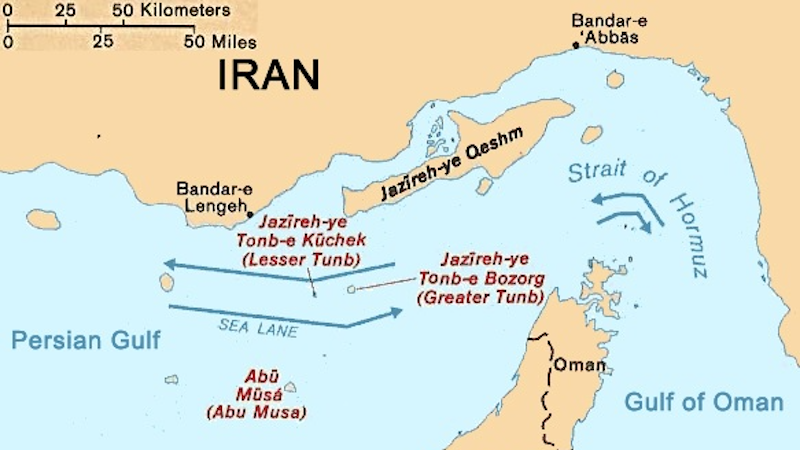
The narrow 21-mile-wide channel runs between Iran in the north and Oman in the south, while Iranian Revolutionary Guard forces patrol it, which demonstrates its exposed nature.
The closure would cut off all export pathways for Saudi Arabia and UAE, and Kuwait, as well as major LNG exporter Qatar.
Data Context: Global Energy Flows in 2025
Global crude consumption in 2025 reached 101 million bpd, while the Strait of Hormuz carried 18.5 million bpd of oil, which equated to 18.3 percent of the total world oil flow. The Hormuz waterway carried 77 billion cubic meters of LNG from Qatar, which represented 30 percent of worldwide exports. The IEA member nations hold approximately 1.5 billion barrels in their Strategic Petroleum Reserves, yet these reserves function solely as short-term supply protection. The existing East–West pipeline in Saudi Arabia and the Fujairah pipeline in the UAE provide a combined capacity of 6.8 million bpd, which remains well below the daily 20 million bpd that passes through the strait.
Problems and Challenges of a Blockade
1. Acute Energy Supply Shock
Benchmark Brent crude prices would exceed US$ $150–$200 per barrel within weeks to levels not observed since the 1970s embargo, which would push inflation above 8 percent in multiple import-dependent economies.
Sectoral Impact:
The immediate doubling of transportation fuel costs would decrease airline and shipping firm profits while forcing both industries to raise their prices.
The fuel-intensive manufacturing sector, together with the petrochemicals and fertilizers industries, would experience input cost increases that would decrease their output levels and workforce numbers.
2. Inflation and Economic Contraction
The global GDP would likely decrease by 4–6 percent in developed nations and more than 7 percent in emerging markets because of restricted financial markets and capital outflows.
Central banks must decide between two unappealing options when facing inflation: they can either increase interest rates to combat inflation but risk deeper economic decline, or keep interest rates low to maintain economic growth while allowing inflation to establish itself, which would reduce real income levels.
3. Supply Chain Disruption
The longer distance from tanker routes when using the Cape of Good Hope route results in a total 6,000 nautical miles journey that extends voyage duration to 10–14 days and causes freight rates to increase by 40–60 percent.
Just-in-Time Vulnerabilities
The discontinuation of automotive and electronics production would start when component shortages occur because assembly lines must shut down, and such a one-week shutdown would reduce output by 12 percent.
Middle Eastern countries that depend on European and Asian grain imports would experience two-week transit delays that would worsen their existing food shortages.
Arab States’ Reactions and Vulnerabilities
Saudi Arabia, together with Kuwait, faces the potential loss of US$ $100–130 billion in monthly oil exports, which would account for more than 80 percent of their total budget revenue.
The budgetary pressures would force Saudi Vision 2030 and UAE diversification plans to either suspend or terminate certain projects, which would threaten their social subsidy programs and investment commitments.
Diplomatic and Military Responses
The leaders of the GCC would issue public statements denouncing Tehran’s actions while they would pursue UNCLOS invocation and UN Security Council resolutions for strait reestablishment.
Security Posture:
– Joint naval patrols with the U.S. Fifth Fleet in Bahrain and European partners, alongside expedited deliveries of U.S. Aegis destroyers and submarines.
– Alternative export nodes (Fujairah, Yanbu) have their alert levels elevated to prevent Iranian retaliation.
Alternative Export Routes—Insufficient Band-Aid
– Pipeline Bypass: The Combined 6.8 million bpd capacity covers less than 40 percent of Hormuz flows.
– At the Fujairah storage complex, with a storage capacity of 20 million barrels, exports would only last three weeks, but the complex itself is vulnerable to aerial or missile strikes.
Alternative Export Routes—Insufficient Band-Aid
• Pipeline Bypass: Combined 6.8 million bpd capacity covers less than 40 percent of Hormuz flows.
• The storage complexes in Fujairah can store 20 million barrels but could only maintain exports for three weeks, and they are also vulnerable to aerial or missile attacks.
Recommendations for Mitigation and Resilience
Immediate Crisis Management
– The IEA members should release 200 million barrels of crude oil synchronously to temper the price increase while the U.S. SPR drawdowns are fast-tracked for approval.
– A United Nations Security Council emergency session should be convened to engage Oman and other neutral countries for shuttle diplomacy and to engage Iranian interlocutors through track two dialogues.
– A “Hormuz Maritime Security Initiative” under international law should be formalized to mandate freedom of navigation patrols with transparent rules of engagement.
Medium-Term Energy Diversification
– The acceleration of Renewables: The import-dependent Asia should increase its solar PV and wind capacity by 50 GW/year to reduce oil demand by 1.2 million bpd by 2030.
Alternative Pipelines and Shipping Hubs
– The proposed Qatar–Pakistan gas pipeline (2 billion cubic feet/day) should be fast-tracked for development, while the new oil lines through Oman’s Duqm port (up to 1 million bpd) should be accelerated.
– Floating LNG terminals should be invested in India and Southeast Asia to reduce dependence on choke points.
Long-Term Supply-Chain De-Risking
• The relocation of 25 percent of critical industries (semiconductors, pharmaceuticals) closer to end-markets should be supported by tax incentives and infrastructure grants.
• A minimum of six months’ inventory should be maintained for tier-one suppliers in the automotive and electronics sectors, while their procurement should be diversified across at least three geographic regions.
• Real-time tracking platforms using AI analytics should be deployed for disruption forecasting and automated alternative shipping instruction triggering.
Conclusion
A blockade of the Strait of Hormuz by Iran in 2025 would constitute an unprecedented attack on the global economic system, triggering an enormous energy crisis, destabilizing global financial markets, and exposing the vulnerabilities of both Gulf Arab countries and international supply chains. The Arab states, facing fiscal collapse, would gather international backing, strengthen their military positions, and use their limited alternative export routes.
The international community must take immediate action through the strategic release of petroleum reserves, powerful diplomatic efforts, and, if necessary, coordinated naval operations to restore shipping freedom. Beyond crisis management, policymakers and industry leaders must pursue medium-term energy diversification by accelerating renewables and alternative pipelines, and long-term supply-chain de-risking through reshoring, buffer stocks, and digital resilience. The security of the Strait of Hormuz goes beyond regional stability, requiring unconditional international commitment to protect the critical energy and trade routes of the world.
The opinions expressed in this article are the author’s own.
References
- Reuters. “Goldman Sachs warns of oil price surge on Strait of Hormuz risks.” Reuters, 23 June 2025.
- The Times. “Oil will surge above $100 a barrel if Iran blocks the Strait of Hormuz.” The Times, 23 June 2025.
- EnergyNOW.com. “Shell CEO Warns of ‘Huge Impact’ If Strait of Hormuz Blocked.” EnergyNOW.com, 19 June 202

Simon Hutagalung is a retired diplomat from the Indonesian Foreign Ministry and received his master's degree in political science and comparative politics from the City University of New York. The opinions expressed in his articles are his own.
No comments:
Post a Comment