It’s possible that I shall make an ass of myself. But in that case one can always get out of it with a little dialectic. I have, of course, so worded my proposition as to be right either way (K.Marx, Letter to F.Engels on the Indian Mutiny)
Monday, June 09, 2025
Protected Antarctic oceanic life threatened by ships anchoring, first underwater videos show
First video footage shows impacts of anchor and chain damage caused by cruise, research, fishing, and private vessels on Antarctic sea floor and animals, highlighting critically understudied conservation issue
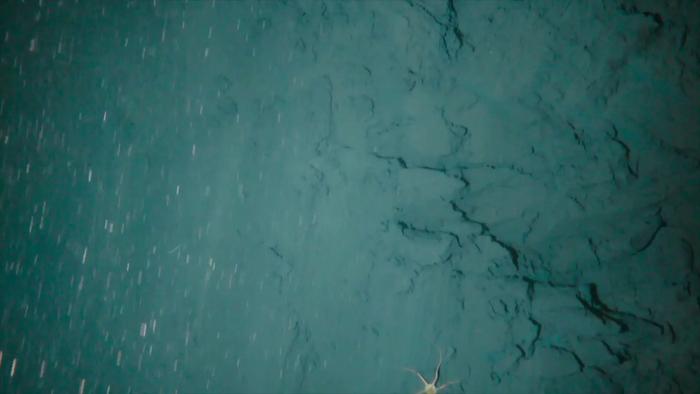
Striations, grooves, and mud deposits from anchor retrieval were visible in the substrate of the ocean floor. At the disturbed sites, little to no marine life was present. Credit: Matt Mulrennan / KOLOSSAL.
Ships operate in every ocean, and even the most remote waters aren’t off-limits. When they anchor, they leave behind a footprint. Anchoring cannot only disrupt marine life but also may damage undersea cables or pipelines, disrupt communication and cut off power supply.
Yet, global ship activity and therefore anchoring is becoming more widespread, even in the most remote regions of the planet. Now, an international team of scientists has gathered the first video evidence of anchoring and chain damage in Antarctic waters. The team’s results are now published in Frontiers in Conservation Science.
“This is the first time the impacts of ship anchoring and chain damage are documented in Antarctic waters. Activities in Antarctica have a lot of strict rules around conservation, yet ship anchoring is almost completely unregulated,” said first author Matthew Mulrennan, a marine scientist and founder of KOLOSSAL, an ocean exploration and conservation nonprofit in California.
“Documentation is way overdue, given the importance of these ecosystems and the protections we place on them. Anchoring impacts are understudied and underestimated globally. It’s so important to recognize and mitigate the impacts across all industries and limit planned anchoring,” added co-author Dr Sally Watson, a marine geophysicist at the National Institute of Water and Atmospheric Research in New Zealand.
Localized destruction
While there are no reliable numbers, at least 195 tourism, research, and fishing vessels, as well as private yachts were recorded in anchorable depths in Antarctica – usually confined to no more than 82.5 meters – during the 2022-23 season. Likely more ships operate there without licenses.
During the austral summer of that year, researchers used underwater cameras to observe the seafloor at 36 sites across the Antarctic Peninsula and South Georgia Island. Footage was captured close to the surface, midwater, and one meter above the sea floor. It showed disturbances to the seafloor and marine life where ships had anchored. Striations, grooves, and mud deposits from anchor retrieval were visible in the substrate of the ocean floor. At the disturbed sites, little to no marine life was present. Instead, the researchers observed crushed sponge colonies and a lack of benthic biomass. Directly adjacent to the anchoring sites, marine life flourished.
“The observed damage was a near miss to three giant volcano sponges, believed to be the oldest animals on the planet which may live up to 15,000 years,” Mulrennan said. Many other species, including Antarctic sun stars, giant Antarctic octopus, sea spiders, and a variety of fish were recorded at anchorable depths.
“The weird and wonderful animals that are impacted, like sponges, are important for filtering water, carbon sequestration, and providing shelter, food, and complex habitats which benefit the whole marine ecosystem, including penguins and seals – the animals tourists come to see,” Mulrennan pointed out.
Lasting impacts
Many of the species that live at anchorable depths in Antarctica are slow-growing, sessile, and can only be found in Antarctica. Those factors make them particularly vulnerable to disturbances. “We know that anchor impacts in tropical reefs can last a decade. In muddy sediment the scours can still be visible over a decade later,” Watson said. “Ecological recovery is really site specific. Things in cold waters are much slower growing than in warmer temperatures so I expect that recovery would take longer the higher the latitude.”
Future research, the team said, should examine short- and long-term impacts of anchoring on the seabed, recovery periods, and impacts on broader ecosystem function. Without databases recording anchoring frequency, however, telling how widespread the issue is and developing timescales of recovery hinders the development of mitigation measures.
“Anchoring is likely the most overlooked ocean conservation issue in terms of global seafloor disruption; it is on par with the damages from bottom trawling,” Mulrennan concluded. “It’s a pressing environmental issue, but it’s out of sight, out of mind.”
Striations, grooves, and mud deposits from anchor retrieval were visible in the substrate of the ocean floor. The researchers observed crushed sponge colonies. Credit: Matt Mulrennan / KOLOSSAL.
The researchers recorded giant volcano sponges, Antarctic sun stars, giant Antarctic octopus, sea spiders, and a variety of fish at anchorable depths. Credit: Matt Mulrennan / KOLOSSAL.
This year marks the opening of the United Nations Decade of Action for Cryospheric Sciences, an international initiative focused on the rapid changes occurring in glaciers, snow cover, ice sheets, sea ice, and permafrost and their impacts on the planet. MBARI’s cutting-edge research and technology will play a critical role in this effort, providing important data about the Arctic seafloor and the Southern Ocean.
“Ice-covered ocean and land are integral to the health of our planet and host unique communities of life. The Decade of Action for Cryospheric Sciences provides an opportunity to collaborate to better understand and protect these critically important polar environments. As a leader in ocean science and engineering, MBARI is well-positioned to play a major role in international efforts to take the pulse of polar regions and help discovery in uncharted waters,” said MBARI President and CEO Antje Boetius, a global leader in polar research.
Snapshots of MBARI’s work in the Arctic and Southern Ocean:
Investigating changes to the Arctic seafloor
Scientists have only recently been able to access the seafloor at the edge of the Canadian Arctic due to climate change impacts on sea ice.
Researchers have used MBARI’s autonomous underwater vehicles to conduct mapping surveys of the seafloor in this region, revealing remarkably complex underwater terrain. Data show dynamic and dramatic changes to the seafloor caused by the melting of ancient submerged permafrost as well as current cycles of melting and freezing seawater. MBARI’s research can help guide policymakers’ decisions about underwater infrastructure in the Arctic. This summer, MBARI researchers will return to the Canadian Beaufort Sea to continue this work.
MBARI’s collaborators on this body of work include researchers at the Geological Survey of Canada, Fisheries and Oceans Canada, the Korean Polar Research Institute, and the US Naval Research Laboratory.
Monitoring carbon and climate in the Southern Ocean
SOCCOM uses robotic BGC-Argo floats with advanced sensors developed by MBARI researchers to continuously log data about ocean conditions, including chemistry and productivity. There are currently more than 100 SOCCOM floats operating in the Southern Ocean. SOCCOM data are publicly available, allowing researchers around the world to access this remote part of the world. MBARI also leads SOCCOM’s outreach efforts, including a program to bring live data from SOCCOM’s robotic floats to the classroom.
Studying seafloor processes in Antarctica
The flow of water from the seafloor to the ocean at the land-sea interface—known as submarine groundwater discharge—plays an important role in ocean biogeochemistry, marine ecology, and seafloor geology. This process has been challenging to study in Antarctica, where climate change is likely causing fresh to brackish water to leak from the seafloor.
MBARI researchers are working to quantify submarine groundwater discharge along the Antarctic Peninsula and understand its environmental impacts. Preliminary findings suggest submarine groundwater discharge occurs at a higher rate in Antarctica than at similar depths in temperate environments, and this research will help refine future climate models at regional scales.
Assessing the biodiversity of the Southern Ocean
Environmental DNA (eDNA) allows scientists to detect the presence of organisms from the tiny bits of genetic material—cells, skin, waste, and mucus—they leave behind. eDNA provides a powerful tool for assessing the biodiversity of aquatic environments.
MBARI’s Environmental Sample Processor (ESP) and Filtering Instrument for DNA Observations (FIDO) allow researchers to collect and study eDNA in remote environments. Earlier this year, MBARI, in collaboration with the Australian Antarctic Program, sent ESP and FIDO instruments on the research icebreaker Nuyina on an expedition to the Denman Glacier region in East Antarctica to evaluate applications for this eDNA technology in the Southern Ocean.
About MBARI
MBARI (Monterey Bay Aquarium Research Institute) is a non-profit oceanographic research center founded in 1987 by the late Silicon Valley innovator and philanthropist David Packard. Our mission is to advance marine science and engineering to understand our changing ocean. Learn more at mbari.org.
The Time Has Come to Establish the International Arctic Ocean Sanctuary In addition to accelerating efforts to reduce global carbon emissions to reverse global warming, governments must urgently adopt strong, permanent protections for the entire Arctic Ocean. A polar bear walks on ice in the Beaufort Sea. (Photo: Pablo Clemente-Colon/ NOAA National Ice Center)
On World Ocean Day, and the eve of the United Nations Ocean Conference in Nice, France opening Monday, the Arctic Ocean ecological crisis needs to be top of the list for attention by governments.
Given the well-documented, catastrophic decline of the Arctic Ocean sea ice ecosystem in recent decades due to climate change, coupled with the increasing threats and impacts from industry and military activity in the region, it is imperative that governments establish an International Arctic Ocean Sanctuary to preserve this extraordinary ecoregion as a global commons for peaceful, non-commercial, scientific purposes.
Covering approximately 5.4 million square miles, the Arctic Ocean is one of the most extraordinary and vibrant regions of the global ocean, and plays an important role regulating Earth’s climate.
Combined with the effects of climate change, industrialization and militarization would further accelerate the ecological and social collapse of the struggling Arctic Ocean region.
The Arctic marine ecosystem is globally unique, productive, and remains relatively unexplored. The ocean biome supports more than 7,000 identified species, many of which are found nowhere else on Earth—polar bears, walrus, several kinds of ice seals, narwhals, beluga whales, bowhead whales, some of the largest populations of seabirds in the world, and many unique fish and invertebrate populations. It hosts cold seeps, hydrothermal vents, stunning benthic habitats, a rich pelagic ecosystem that remains surprisingly active during winter darkness, and supports the subsistence cultures of coastal Indigenous Peoples.
However, this unique polar marine ecosystem is now one of the most endangered regions of Earth’s biosphere, suffering effects of climate change more severely than anywhere else. Arctic sea ice has declined by more than half in the last 50 years, losing about 1 million square milesin both summer and winter, has thinned from an average of four meters to about one meter, and could disappear entirely in summer by 2035. Multiyear sea ice has all but vanished. This remarkable decline has been caused by global carbon emissions from human activity, mainly fossil fuel use.
The loss of Arctic sea ice over the last half-century constitutes one of the largest declines in ecological habitat on Earth, rivaling the loss of tropical rainforests. The resultant Arctic Ocean ecological crisis is now severe, and predicted to get much worse in coming decades.
In addition to devastating impacts of climate change in the Arctic Ocean, commercial interests are clamoring to exploit ice-free offshore areas for oil and gas, methane hydrates, minerals, commercial fishing, shipping, and tourism. And Arctic coastal nations have made Extended Continental Shelf (ECS) seabed claims (pursuant to U.N. Law of the Sea, Article 76) beyond their 200-mile Exclusive Economic Zones (EEZs), a dangerous territorial expansion into international waters with an eye toward resource extraction.
As Arctic nations and others (China, India, etc.) advance their own parochial interests across the region, there is a growing competitive race to exploit Arctic offshore resources and to project military power across the region to secure these competing national interests. As such, the risk of military confrontation across the Arctic Ocean is escalating. Combined with the effects of climate change, industrialization and militarization would further accelerate the ecological and social collapse of the struggling Arctic Ocean region, and would clearly compromise the ability of the bioregion and its people to survive the 21st-century climate crisis.
In fact, the resource and political tensions in the Arctic Ocean today are remarkably similar to the Antarctic after World War II, that were resolved then by the leadership of U.S. (Republican) President Dwight D. Eisenhower proposing and negotiating the historic 1959 Antarctic Treaty. The international Treaty, now with 58 nation-state members, permanently protects the extraordinary 5.5 million square-mile Antarctic continent as a global commons for peaceful, scientific purposes, free from nuclear testing, military operations, economic exploitation, and territorial claims. The Antarctic Treaty remains the single greatest conservation achievement in history.
The same opportunity now presents itself with the Arctic Ocean. In addition to accelerating efforts to reduce global carbon emissions to reverse global warming, governments must urgently adopt strong, permanent protections for the entire Arctic Ocean to give this region and its people the best chance possible to survive the 21st-century climate crisis. Given the pace of decline, this may be our last best chance to do so.
While Arctic nations have begun protecting some areas off their coasts, still less than 5% of Arctic Ocean waters are in permanently protected status. This is clearly insufficient.
The proposed circumpolar Arctic Ocean Sanctuary must fully protect not only international waters beyond coastal state 200-mile EEZs across the 1.1 million square mile Central Arctic Ocean (as is currently proposed), but also the highly productive waters within the EEZs of Arctic coastal nations—Canada, Norway, Denmark and Greenland, Russia, and the U.S., where most ecological activity, human impact, and threat occurs. The sanctuary should permanently prohibit oil and gas leasing, mineral leasing, commercial fishing, military activities, improve shipping safety, reduce pollutants, and enhance scientific research.
To be sure, it is a big ask of the five Arctic coastal nations to contribute some of their claimed territory into a globally protected area, but this was the right thing to do in 1959 in the Antarctic, and it is the right thing to do now for the Arctic.
While the current federal administrations in the Russia and U.S. habitually oppose any and all environmental conservation proposals, perhaps presidents Vladimir Putin and Donald Trump might see this as a historic legacy in the midst of the environmental havoc they have caused, a chance to be remembered as Eisenhower is today for his leadership in negotiating the Antarctic Treaty. And just to note, former President Joe Biden ignored this request entirely, enacted no comprehensive permanent protections in the U.S. Arctic Ocean off Alaska, and made no effort to begin discussions on the International Arctic Ocean Sanctuary.
Global society has a historic choice to make with the imperiled Arctic Ocean. Should we continue our competitive industrial and military expansion into one of the last wild areas of the world, further degrading a region already unraveling due to human-caused climate change? Or should we protect and sustain this magnificent place for all time, giving it and its inhabitants, human and non-human, the best chance possible to recover from climate change this century?
How we answer this question will tell us a lot about ourselves and our future.
Our work is licensed under Creative Commons (CC BY-NC-ND 3.0). Feel free to republish and share widely.
Rick Steiner is a conservation biologist in Anchorage, retired professor with the University of Alaska, and author of Oasis Earth: Planet in Peril (available as a free download here: https://www.oasis-earth.com/oasis-earth-planet-in-peril). Full Bio >

No comments:
Post a Comment