China says it may speed up rare earths application approvals from EU
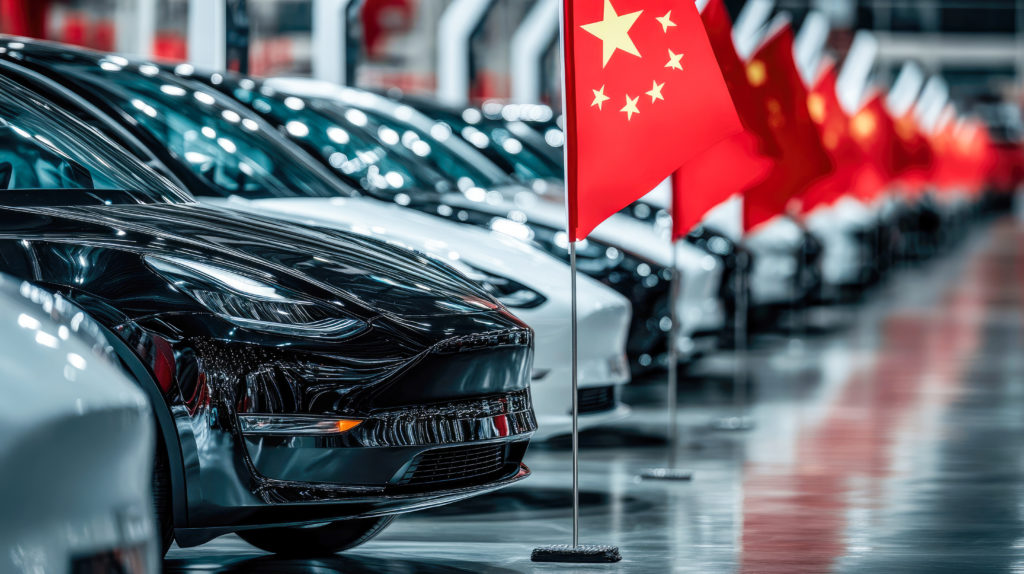
China is willing to accelerate the examination and approval of rare earth exports to European Union firms and will also deliver a verdict on its trade investigation of EU brandy imports by July 5, its commerce ministry said on Saturday.

Price commitment consultations between China and the EU on Chinese-made electric vehicles exported to the EU have also entered a final stage but efforts from both sides are still needed, according to a statement on the Chinese Commerce Ministry’s website.
The issues were discussed between Chinese Commerce Minister Wang Wentao and EU Trade Commissioner Maros Sefcovic in Paris on Tuesday, according to the statement.
The comments mark progress on matters that have vexed China’s relationship with the EU over the past year.
Most recently, China’s decision in April to suspend exports of a wide range of rare earths and related magnets has upended the supply chains central to automakers, aerospace manufacturers, semiconductor companies and military contractors around the world.
The ministry said China attached great importance to the EU’s concerns and “was willing to establish a green channel for qualified applications to speed up the aproval process.”
In a separate statement the commerce ministry issued later on Saturday, it said China was willing to further strengthen communication and dialogue with relevant countries on rare earth export controls as it recognized that demand from sectors such as robotics and electric vehicles had risen.
Brandy, EVs
The ministry earlier said that Commerce Minister Wang during the meeting “expressed the hope that the EU will meet us halfway and take effective measures to facilitate, safeguard and promote compliant trade in high-tech products to China.”
Chinese anti-dumping measures that applied duties of up to 39% on imports of European brandy – with French cognac bearing the brunt – have also strained relations between Paris and Beijing.
The brandy duties were enforced days after the EU took action against Chinese-made electric vehicle imports to shield its local industry, prompting France’s President Emmanuel Macron to accuse Beijing of “pure retaliation”.
The Chinese duties have dented sales of brands including LVMH’s Hennessy, Pernod Ricard’s Martell and Remy Cointreau.
Beijing was initially meant to make a final decision on the brandy duties by January, but extended the deadline to April and then again to July 5.
China’s Commerce Ministry said on Saturday that French companies and relevant associations had proactively submitted applications on price commitments for brandy to China and that Chinese investigators had reached an agreement with them on the core terms.
Chinese authorities were now reviewing the complete text on those commitments and would issue a final announcement before July 5, it said.
In April, the European Commission said the EU and China had also agreed to look into setting minimum prices of Chinese-made electric vehicles instead of tariffs imposed by the EU last year.
China’s commerce ministry said the EU had also proposed exploring “new technical paths” relating to EVs, which the Chinese side was now evaluating.
(By Brenda Goh and Zhang Jindong; Editing by William Mallard, Tom Hogue and Tomasz Janowski)
China’s rare earth weapon changes contours of trade war battlefield
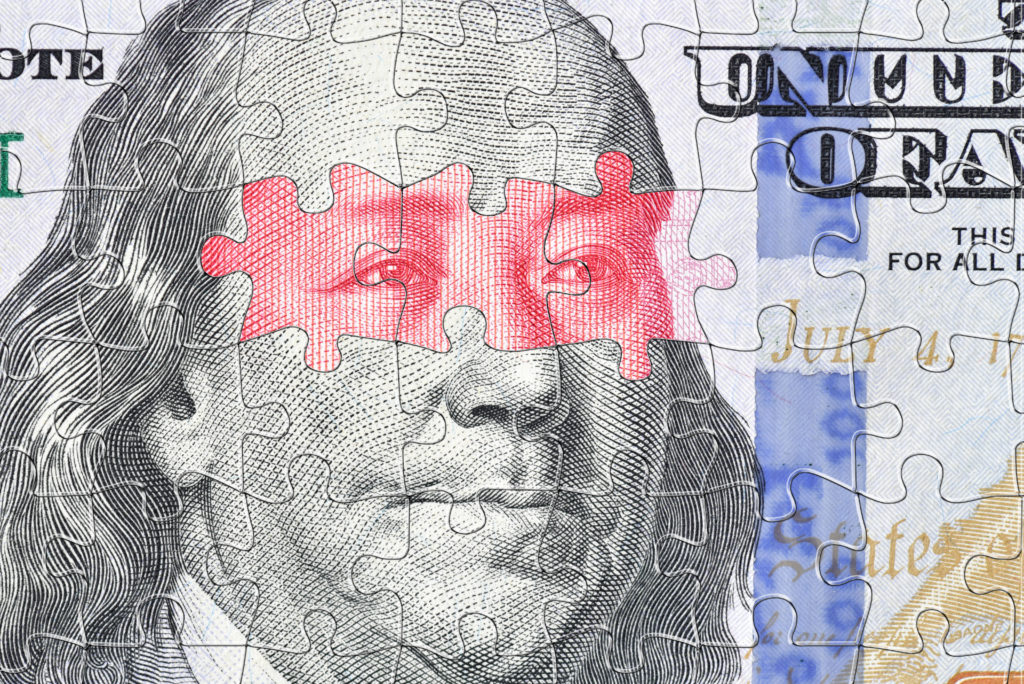
China has signalled for more than 15 years that it was looking to weaponise areas of the global supply chain, a strategy modelled on longstanding American export controls Beijing views as aimed at stalling its rise.
The scramble in recent weeks to secure export licences for rare earths, capped by Thursday’s telephone call between US and Chinese leaders Donald Trump and Xi Jinping, shows China has devised a better, more precisely targeted weapon for trade war.
Industry executives and analysts say while China is showing signs of approving more exports of the key elements, it will not dismantle its new system.
Modelled on the United States’ own, Beijing’s export licence system gives it unprecedented insight into supplier chokepoints in areas ranging from motors for electric vehicles to flight-control systems for guided missiles.
“China originally took inspiration for these export control methods from the comprehensive US sanctions regime,” said Zhu Junwei, a scholar at the Grandview Institution, a Beijing-based think tank focused on international relations.
“China has been trying to build its own export control systems since then, to be used as a last resort.”
After Thursday’s call, Trump said both leaders had been “straightening out some of the points, having to do mostly with rare earth magnets and some other things”.
He did not say whether China committed to speeding up licences for exports of rare earth magnets, after Washington curbed exports of chip design software and jet engines to Beijing in response to its perceived slow-rolling on licences.
China holds a near-monopoly on rare earth magnets, a crucial component in EV motors.
In April it added some of the most sophisticated types to an export control list in its trade war with the United States, forcing all exporters to apply to Beijing for licences.
That put a once-obscure department of China’s commerce ministry, with a staff of about 60, in charge of a chokepoint for global manufacturing.
The ministry did not immediately respond to Reuters‘ questions sent by fax.
Several European auto suppliers shut down production lines this week after running out of supplies. While China’s April curbs coincided with a broader package of retaliation against Washington’s tariffs, the measures apply globally.
“Beijing has a degree of plausible deniability – no one can prove China is doing this on purpose,” said Noah Barkin, senior adviser at Rhodium Group, a China-focused US thinktank.
“But the rate of approvals is a pretty clear signal that China is sending a message, exerting pressure to prevent trade negotiations with the US leading to additional technology control.”
China mines about 70% of the world’s rare earths but has a virtual monopoly on refining and processing.
Even if the pace of export approvals quickens as Trump suggested, the new system gives Beijing unprecedented glimpses of how companies in a supply chain deploy the rare earths it processes, European and US executives have warned.
Other governments are denied that insight because of the complexity of supply chain operations.
For example, hundreds of Japanese suppliers are believed to need China to approve export licences for rare earth magnets in coming weeks to avert production disruptions, said a person who has lobbied on their behalf with Beijing.
“It’s sharpening China’s scalpel,” said a US-based executive at a company seeking to piece together an alternative supply chain who sought anonymity.
“It’s not a way to oversee the export of magnets, but a way to gain influence and advantage over America.”
Decades in the making
Fears that China could weaponise its global supply chain strength first emerged after its temporary ban of rare earth exports to Japan in 2010, following a territorial dispute.
As early as 1992, former Chinese leader Deng Xiaoping was quoted as saying, “The Middle East has oil, China has rare earths.”
Beijing’s landmark 2020 Export Control Law broadened curbs to cover any items affecting national security, from critical goods and materials to technology and data.
China has since built its own sanctions power while pouring the equivalent of billions of dollars into developing workarounds in response to US policies.
In 2022, the United States put sweeping curbs on sales of advanced semiconductor chips and tools to China over concerns the technology could advance Beijing’s military power.
But the move failed to halt China’s development of advanced chips and artificial intelligence, analysts have said.
Beijing punched back a year later by introducing export licenses for gallium and germanium, and some graphite products. Exports to the United States of the two critical minerals, along with germanium, were banned last December.
In February China restricted exports of five more metals key to the defence and clean energy industries.
Analysts face a hard task in tracking the pace of China’s approvals following the Trump-Xi call.
“It’s virtually impossible to know what percentage of requests for non-military end users get approved because the data is not public and companies don’t want to publicly confirm either way,” said Cory Combs, a critical minerals analyst with Trivium, a policy consultancy focused on China.
(By Laurie Chen, Michael Martina and Victoria Waldersee; Editing by Kevin Krolicki and Clarence Fernandez)
Trump set to waive some legal requirements to boost critical minerals
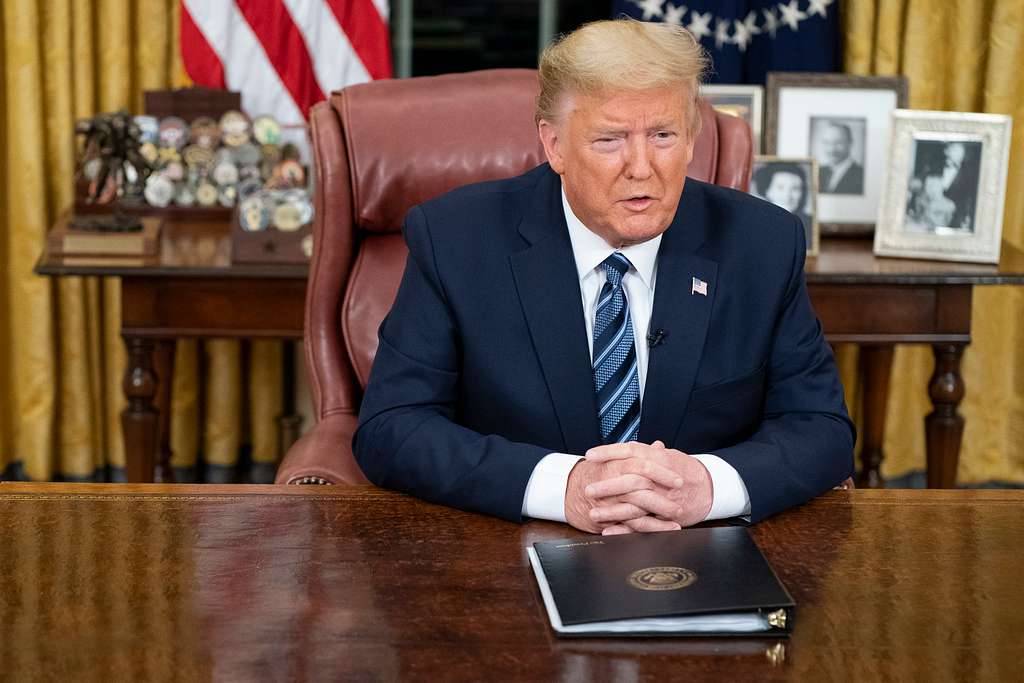
President Donald Trump is set to use emergency powers and slash legal requirements – including some congressional funding approvals – relating to a law aimed at lifting US production of critical minerals and weapons, according to a document seen by Reuters.
Trump’s action would apply to the Defense Production Act, a US law that grants the president broad emergency powers to control domestic industries and resources during national security emergencies.
The move would represent the latest attempt by the White House to reshape a critical mineral industry dominated by China, the top US economic rival. China is using its leverage in response to Trump’s trade war, recently halting critical mineral exports and rattling global supply chains.
The document is expected to be published on the Federal Register on Wednesday, the government web site shows.
Trump invoked the Korean War-era law in March to help boost domestic production of critical minerals used to make consumer goods, computer chips, robots and advanced weaponry.
The law places some restrictions on the president’s authority, such as requiring the White House to seek congressional approval for projects over $50 million and forcing project delivery dates within a one-year time frame.
The president can waive those requirements in the event of an emergency and Trump is expected to invoke those powers, according to the document seen by Reuters on Tuesday, ahead of its expected publication.
The White House did not immediately respond to a request for comment.
Former President Joe Biden signed similar waivers to speed up production of vaccines and medical equipment during the Covid-19 pandemic.
John Paul Helveston, a professor at George Washington University, said US investments in critical minerals represent a long-term solution to the problem, leaving the nation vulnerable to China’s trade policy in the short run.
“This all means that if the US wants to have access to these minerals over the next 5-10 years, the US will have to maintain a trade relationship with China,” Helveston said.
(By Ernest Scheyder and Jarrett Renshaw; Editing by Trevor Hunnicutt and Chizu Nomiyama)
No comments:
Post a Comment