One Big Beautiful Bill Hands U.S. Coast Guard Billions for Shipbuilding
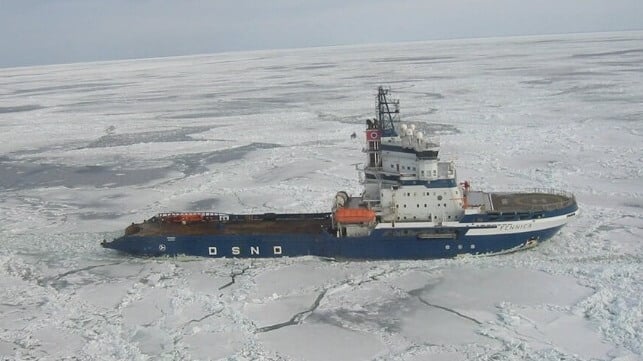
The One Big Beautiful Bill Act put down serious money towards fixing the U.S. Navy's long-term supply challenges, but it contains even more funding for another pressing maritime challenge: recapitalizing the aging assets of the U.S. Coast Guard, from cutters to aircraft to shore infrastructure. No longer in second place for resources, the agency is set to receive $24.5 billion to spend on things it badly needs - if it can use all the funding before it expires in late 2029.
First on the list, the bill authorizes billions of dollars for the Coast Guard's icebreaker programs. The Polar Security Cutter - a three-ship replacement program for the aging heavy icebreaker Polar Star - has been plagued by delays and cost overruns, but it will now have the financial resources to power through the challenges. The bill appropriates $4.3 billion to pay for the service's future heavy icebreakers, ensuring the service has the ability to reach Antarctica's McMurdo Station for annual resupply missions (and any other location with 20-foot-plus ice).
The service's proposed medium icebreaker acquisition also received a $3.5 billion injection of cash. Though barely in the planning phase, the service suddenly has enough financing to complete construction of multiple hulls. The cost of building each vessel is not yet known, but earlier this year, the Coast Guard began soliciting information from U.S. and foreign shipyards for an "Arctic Security Cutter" that could deliver within three years of an order signing, in time for the first vessel to enter service during President Donald Trump's current term.
As a practical matter, the three-year delivery timeline for the Arctic Security Cutter would restrict the potential bidders to a handful of foreign yards that build icebreakers at high speed: Irving Shipbuilding, which has an active production line for Canada's AOPS ice-class patrol vessel, a light icebreaker; Davie-owned Helsinki Shipyard; and Rauma Shipyard, which has been linked in the Finnish press to ongoing negotiations with the U.S. Coast Guard. Helsingen Sanomat reports that Rauma has proposed to build five medium icebreakers for the USCG for a price of about $2.7 billion - though the deal is not final, and the Coast Guard has been talking with other yards.
In addition to the Arctic Security Cutter program, the bill sets aside another $816 million for light and medium icebreakers "from shipyards that have demonstrated success in the cost-effective application of design standards and in delivering, on schedule and within budget." President Trump has negotiated with the president of Finland for the purchase of one or more commercial icebreakers, and has taken a personal interest in the terms of the sale.
Other Coast Guard shipbuilding programs also received ample support: $162 million for inland buoy tenders (Waterways Commerce Cutters); $1 billion to buy more of the service's small but successful Fast Response Cutters; and $4.3 billion to acquire more Offshore Patrol Cutters, the long-delayed replacements for the aging Medium Endurance Cutter (WMEC) fleet.
Beyond shipbuilding, the bill includes a much-needed $4.4 billion for reconstructing shoreside facilities. The Coast Guard has long had to choose between procurement, operations and maintenance, with the repair of its bases often ending up as a "pay-for." With the signing of the bill, USCG facilities across the country can share a combined $2.8 billion appropriation for construction; the Coast Guard Yard is getting a new floating drydock for $500 million; Alaska is getting a new icebreaker homeport for $300 million; and the service's enlisted bootcamp at Cape May is getting a $425 million revamp.
These extra line items dwarf the normal FY2026 budget request for everyday Coast Guard operations and procurement, which totals about $14.5 billion. In comparison with typical funding levels in previous years, the bill gives the Coast Guard a giant infusion of capital to replace aging assets and carry the service forward.
Top image: Fennica (file image courtesy Marcusroos / CC BY SA 3.0)

Turkey's Shipbuilders Face Economic Headwinds in Export Market
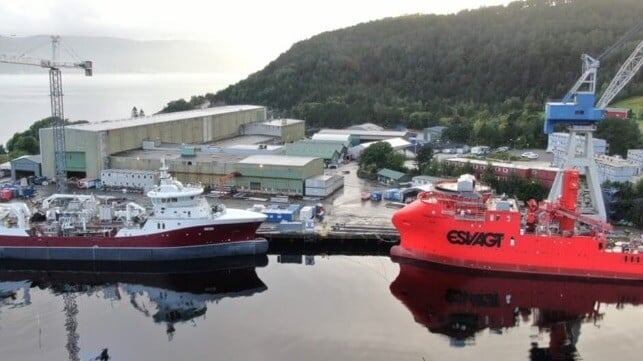
Turkey's shipbuilding sector has been a dominant force in the specialty-vessel market for years, but it appears to be losing ground, based on a string of disappointing sales numbers.
Last month, sales of Turkish ships and yachts fell by more than 60 percent year on year, the latest data from the Turkish Exporters' Assembly (TIM) shows. Just $84 million in orders came in for the month, making shipbuilding the sector that lost the most export business in the Turkish economy. Eexport numbers are expected to shrink by 15 percent for the full year, and payrolls are already on the decline.
The problem, according to Ship, Yacht and Services Exporters' Association (GYHIB) chairman Cem Seven, is the high inflation rate that has afflicted Turkey's economy for years, alongside a weak exchange rate, limited access to finance and high interest rates on loans. These factors make it hard to keep costs down, and Turkish builders now have a hard time competing on price with premium yards in Norway.
He told Turkish outlet Ekonomim that some big names in Turkey are now looking to invest in shipbuilding abroad, given the obstacles at home. Specialist shipbuilder Tersan has already done so with the acquisition of Havyard Leirvik Shipyard.
Turkey's central bank is taking strong action to rein in runaway inflation through tight monetary policy, pushing its benchmark rate to an astonishing 49 percent in recent months (making bank lending expensive in the process). Though Turkey's domestic economy is strengthening, exporters like shipyards face headwinds for the next few years, according to the World Bank.
"Export growth is likely to be limited by the real appreciation of the [Turkish] lira, subdued euro area demand, and uncertainty surrounding trade policies in major economies," the World Bank said in its 2025 forecast.
No comments:
Post a Comment