While the PKK has announced its dissolution and its desire to stop the fighting, clashes continue in Iraqi Kurdistan between the Kurdish guerrillas and the Turkish army. The latter is seeking to neutralise the PKK's extensive network of tunnels in the Gara Mountains. A war in an isolated region that takes place away from the cameras.
Published: 10/07/2025
FRANCE24
By: The Observers
LONG READ
On the evening of the announcement of the cease-fire by the PKK, pro-Kurdish sources had published videos of bombings carried out by the Turkish army in the vicinity of the village of Guharze.
 This image from a video released on March 2, 2025, shows shelling by the Turkish army in the mountains overlooking the village of Guharze. © Telegram / Senger / WarOfSoldier
"Turkey is trying to use the ceasefire to its advantage"
In the months following the ceasefire, Turkish strikes have increased, as Kamaran Osman, a member of the NGO Community Peacemaker Teams, explains:
On 27 February, PKK leader Abdullah Öcalan announced his desire to start a peace process. If we compare the week following this announcement to the previous weeks, we see an increase in Turkish bombing of 145%. While there was a slight decrease in March, there was a 332% increase in bombing in May compared to March. For example, Turkey carried out 510 strikes in May.
For its part, the PKK has carried out only about twenty attacks against Turkish forces. This shows a clear decline in the organisation's activity. In April, the attacks were concentrated on the governorate of Duhok because Turkey wants to clean these Gara Mountains of the tunnels they shelter.
For Turkey, this mountain range is strategic because it is the border from which the PKK can reach Turkish territory. Turkey is trying to use the ceasefire to its advantage. Its military is taking advantage of the drop in attacks carried out by the organisation to try to take control of mountains that they did not control before. The PKK is using this mountain range to reach Syria to the west [where the Kurdish region of Rojava, a territory controlled by the Kurdish YPG forces, is located] or the Erbil region to the east.
Bombed tunnels
Most of the Turkish army's activity is aimed at the tunnels of the Kurdish guerrillas. The Observers' editorial team was able to locate several images of strikes on the mountains where the tunnel entrances are said to be located.
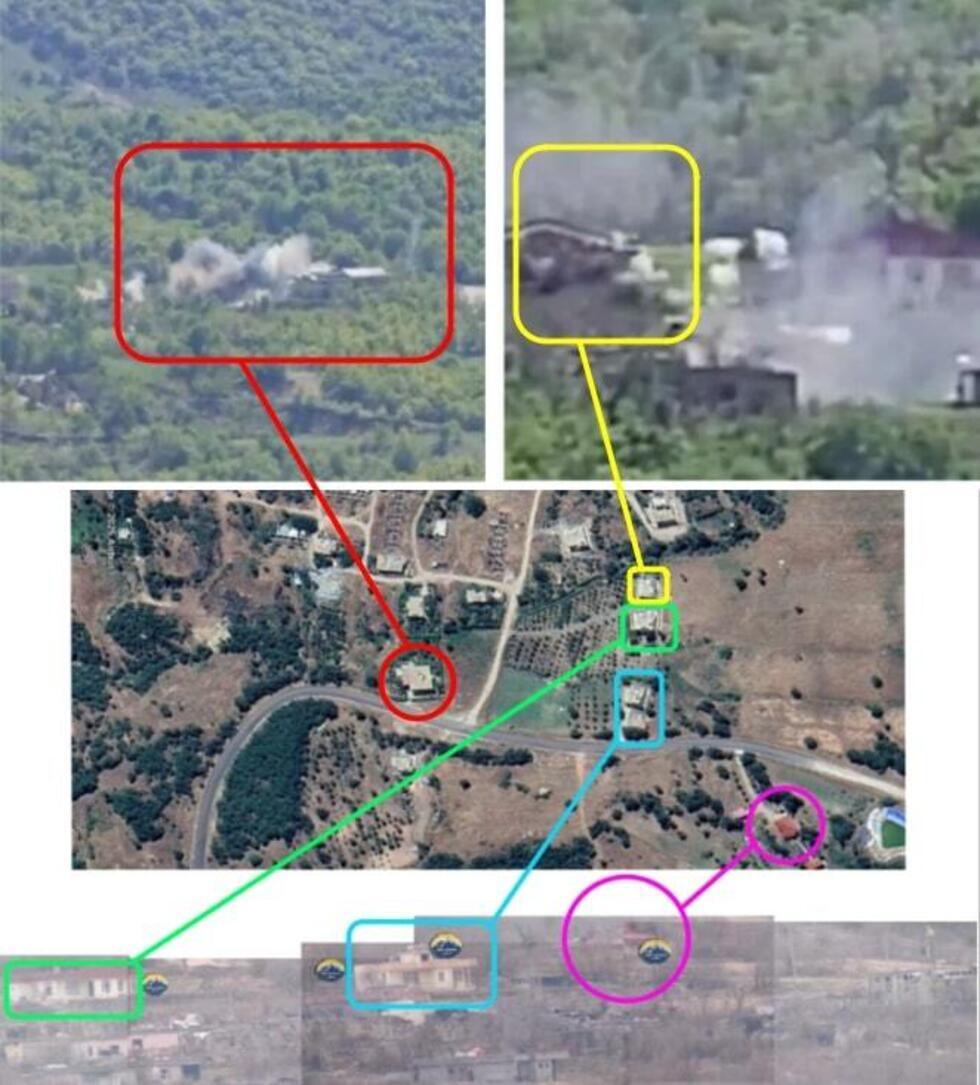
Among these shots, one targeted a tunnel located near the village of Belave. According to a pro-Turkish Telegram channel that follows the progress of operations in the region, the bombing was carried out by Turkish army planes.

"Turkey sees civilians as an obstacle to the full deployment of its troops in the region"
For Kamaran Osman, the fate of the village of Spindare is not an isolated case.
Farmers and their homes are often targeted by Turkish bombing because Turkey wants to create a buffer zone. Turkey therefore sees civilians as an obstacle to the full deployment of its troops in the region.
In total, 185 localities have been completely evacuated. Residents are sometimes unable to return to their villages of origin because of the destruction, as is the case in 405 localities. Sometimes, Turkish army soldiers burn down farmland or homes themselves in order to force people to leave. In total, 183 villages have been completely emptied of their population. By targeting civilians, Turkey wants to send a clear message to the locals: you must have no connection to the PKK.


"Reprisal" strikes announced by the PKK
In its communiqués published after the announcement of its dissolution, the PKK clearly states that it reserves the right to defend itself in the event of an attack by the Turkish army. In total, the Observers' editorial staff has been able to count five filmed attacks claimed by the Kurdish guerrillas since the announcement of the unilateral ceasefire. These attacks are carried out by means of FPV drones, small kamikaze drones that appeared in Ukraine and rush at full speed towards their target and explode.
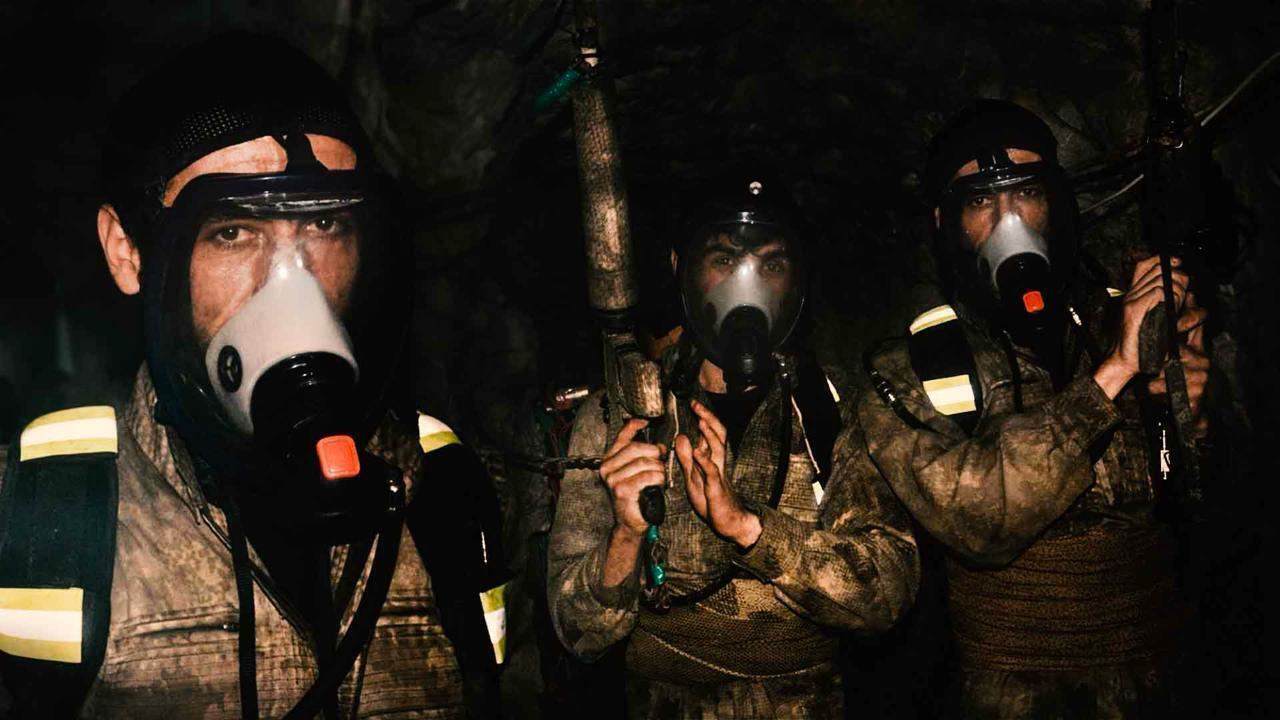
PKK militants in the tunnels from which they organise their actions against the Turkish army in Iraqi Kurdistan. © Telegram, gerilaname1
It had been more than 26 years since the general public had heard the sound of his voice. The leader of the Kurdistan Workers' Party (PKK) Abdullah Öcalan - detained by Turkey on the prison island of Imrali since 1999 - spoke at a press conference on Wednesday 9 July. He said he "did not believe in weapons, but in the power of politics and social peace."
Since February 2025, Abdullah Öcalan has been multiplying his outings in favour of a peaceful settlement of the conflict. These announcements surprised as much as they raised hope: since the 1980s, the PKK - officially created in 1978, and considered terrorist by the European Union and the United States - has been fighting by arms for the recognition of the Kurdish identity, a people scattered between Turkey, Iraq, Syria and Iran.
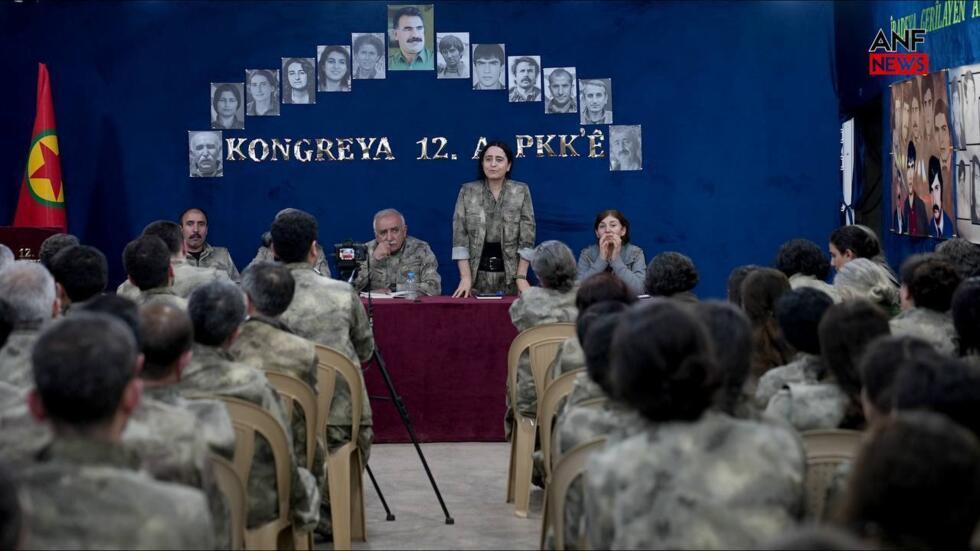
On March 1, the organization announced that it was moving towards the implementation of a ceasefire. Although Turkey has offered no guarantees on an end to the fighting, the party announced its dissolution on May 12, 2025 at its twelfth congress.
It had been more than 26 years since the general public had heard the sound of his voice. The leader of the Kurdistan Workers' Party (PKK) Abdullah Öcalan - detained by Turkey on the prison island of Imrali since 1999 - spoke at a press conference on Wednesday 9 July. He said he "did not believe in weapons, but in the power of politics and social peace."
Since February 2025, Abdullah Öcalan has been multiplying his outings in favour of a peaceful settlement of the conflict. These announcements surprised as much as they raised hope: since the 1980s, the PKK - officially created in 1978, and considered terrorist by the European Union and the United States - has been fighting by arms for the recognition of the Kurdish identity, a people scattered between Turkey, Iraq, Syria and Iran.
On March 1, the organization announced that it was moving towards the implementation of a ceasefire. Although Turkey has offered no guarantees on an end to the fighting, the party announced its dissolution on May 12, 2025 at its twelfth congress.
Several PKK cadres met at the twelfth congress of the organisation and pronounced its dissolution. © ANF News
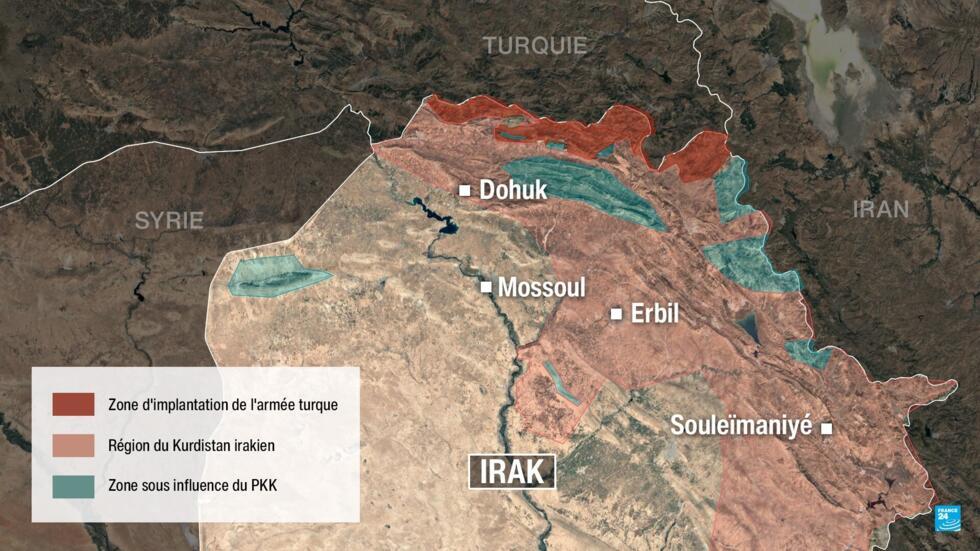
On 11 July, PKK fighters will symbolically lay down their weapons in the Suleimaniyah region. However, the fighting has not stopped between the Kurdish organisation and Turkey. Historical PKK leaders, such as Mustafa Karasu, denounce "a blockage [...] of which the attitude of the government is the cause". The clashes take place outside Turkish territory. Since the PKK's departure from the Turkish mountains in 2013, Turkey has continued guerrilla warfare in the Iraqi mountains. In June 2024, it announced that it wanted to create "a security corridor of 30 to 40 kilometres crossing the country's border with Iraq and Syria". The Turkish army's aim is to neutralise the PKK's network of tunnels located in the Gara Mountains.

On 11 July, PKK fighters will symbolically lay down their weapons in the Suleimaniyah region. However, the fighting has not stopped between the Kurdish organisation and Turkey. Historical PKK leaders, such as Mustafa Karasu, denounce "a blockage [...] of which the attitude of the government is the cause". The clashes take place outside Turkish territory. Since the PKK's departure from the Turkish mountains in 2013, Turkey has continued guerrilla warfare in the Iraqi mountains. In June 2024, it announced that it wanted to create "a security corridor of 30 to 40 kilometres crossing the country's border with Iraq and Syria". The Turkish army's aim is to neutralise the PKK's network of tunnels located in the Gara Mountains.
These images, published in July 2025 by a media outlet close to the PKK, show the lives of Kurdish fighters in the tunnels. © ANF, Telegram, rojev_mexmur
"Turkey is unable to seal off the areas it wants to control"
It is from these tunnels that the Kurdish guerrillas have been launching attacks on Turkish bases in Iraq for years. These underground passages have become vital for the PKK in order to escape the Turkish drones that fly over the area constantly. According to journalist and doctoral student at CERI (Sciences Po/CNRS) Iris Lambert, this is a conflict that has been stagnating for a long time:
"For the moment, the main area of confrontation is between the two mountain ranges of Matina and Gara, in the governorate of Duhok [in Iraqi Kurdistan]. But it is a very mountainous area that the PKK knows perfectly. In general, Kurdish fighters are divided into small units. They are entrenched in the tunnels to escape the constant surveillance carried out by Turkish military drones.
For its part, Turkey is increasing its artillery fire. These strikes are made possible because the Turks are building many military bases to ensure a network of the territory. Recently, it was estimated that 136 bases they have built. But Turkey is not able to seal off the areas it wants to control, and the PKK is not making much progress, but it is not retreating either. So it is a very fixed situation."
Despite the announcement of the ceasefire, the France 24 Observers team was able to identify several traces of confrontation.
"Turkey is unable to seal off the areas it wants to control"
It is from these tunnels that the Kurdish guerrillas have been launching attacks on Turkish bases in Iraq for years. These underground passages have become vital for the PKK in order to escape the Turkish drones that fly over the area constantly. According to journalist and doctoral student at CERI (Sciences Po/CNRS) Iris Lambert, this is a conflict that has been stagnating for a long time:
"For the moment, the main area of confrontation is between the two mountain ranges of Matina and Gara, in the governorate of Duhok [in Iraqi Kurdistan]. But it is a very mountainous area that the PKK knows perfectly. In general, Kurdish fighters are divided into small units. They are entrenched in the tunnels to escape the constant surveillance carried out by Turkish military drones.
For its part, Turkey is increasing its artillery fire. These strikes are made possible because the Turks are building many military bases to ensure a network of the territory. Recently, it was estimated that 136 bases they have built. But Turkey is not able to seal off the areas it wants to control, and the PKK is not making much progress, but it is not retreating either. So it is a very fixed situation."
Despite the announcement of the ceasefire, the France 24 Observers team was able to identify several traces of confrontation.
On the evening of the announcement of the cease-fire by the PKK, pro-Kurdish sources had published videos of bombings carried out by the Turkish army in the vicinity of the village of Guharze.
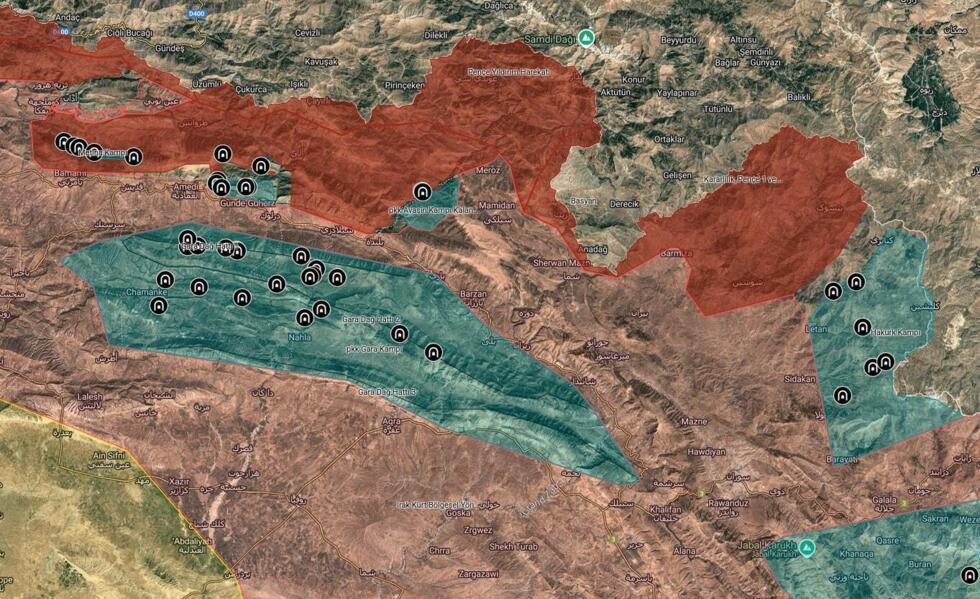
This map, drawn up by a pro-Turkish analyst, shows the deployment of Turkish troops (in red), the PKK (in green) and the troops of the autonomous government of Iraqi Kurdistan (in pink). The tunnels of the Kurdish guerrillas are marked with black symbols. © Shiya Ordu
On the pro-Turkish side, Telegram channels mentioned the intervention of T-129 Atak helicopters in the same locality.
On the pro-Turkish side, Telegram channels mentioned the intervention of T-129 Atak helicopters in the same locality.
This image from a video released on March 2, 2025, shows shelling by the Turkish army in the mountains overlooking the village of Guharze. © Telegram / Senger / WarOfSoldier"Turkey is trying to use the ceasefire to its advantage"
In the months following the ceasefire, Turkish strikes have increased, as Kamaran Osman, a member of the NGO Community Peacemaker Teams, explains:
On 27 February, PKK leader Abdullah Öcalan announced his desire to start a peace process. If we compare the week following this announcement to the previous weeks, we see an increase in Turkish bombing of 145%. While there was a slight decrease in March, there was a 332% increase in bombing in May compared to March. For example, Turkey carried out 510 strikes in May.
For its part, the PKK has carried out only about twenty attacks against Turkish forces. This shows a clear decline in the organisation's activity. In April, the attacks were concentrated on the governorate of Duhok because Turkey wants to clean these Gara Mountains of the tunnels they shelter.
For Turkey, this mountain range is strategic because it is the border from which the PKK can reach Turkish territory. Turkey is trying to use the ceasefire to its advantage. Its military is taking advantage of the drop in attacks carried out by the organisation to try to take control of mountains that they did not control before. The PKK is using this mountain range to reach Syria to the west [where the Kurdish region of Rojava, a territory controlled by the Kurdish YPG forces, is located] or the Erbil region to the east.
Bombed tunnels
Most of the Turkish army's activity is aimed at the tunnels of the Kurdish guerrillas. The Observers' editorial team was able to locate several images of strikes on the mountains where the tunnel entrances are said to be located.
Among these shots, one targeted a tunnel located near the village of Belave. According to a pro-Turkish Telegram channel that follows the progress of operations in the region, the bombing was carried out by Turkish army planes.
This video broadcast on June 27 by a pro-Turkish Telegram channel shows a bombing by the Turkish army. Location: 37° 4'46.97"N 43°35'49.90"E Telegram/akincitimi
Satellite images make it possible to geolocate the bombing which was filmed at the foot of the village of Belave.
Satellite images make it possible to geolocate the bombing which was filmed at the foot of the village of Belave.
On the left, an image of the PeakVisor mapping site. In the centre and right, images of a video of Turkish bombing of the mountains that are said to contain PKK tunnels. Location: 37°4'46.97"N - 43°35'49.90"E. © Telegram / Akincitimi
"Last week, there were more than 40 strikes a day"
Turkey has also targeted valleys where there are houses. The Observers team was able to geolocate images that show houses directly hit by strikes, such as in the village of Spindare on 17 April. According to the Turkish media close to the army, Siyah Ordu, the village of Spindare would serve as a place of "supplies" for PKK fighters and the Kurdish forces would have "many positions" located near this village and that of Mije.
"Last week, there were more than 40 strikes a day"
Turkey has also targeted valleys where there are houses. The Observers team was able to geolocate images that show houses directly hit by strikes, such as in the village of Spindare on 17 April. According to the Turkish media close to the army, Siyah Ordu, the village of Spindare would serve as a place of "supplies" for PKK fighters and the Kurdish forces would have "many positions" located near this village and that of Mije.
Geolocation of the images filmed and broadcast by the local media Spindar Xilfu Baregare. Location: 37°3'2.53"N - 43°34'1.41"E.
© Spindar Xilfu Baregare / Google Earth
Rizgar (not his real name) lived in Spindare:
In the last three days, the shelling has decreased. But last week, there were more than 40 strikes a day. Turkey usually targets the village with planes and artillery. All the houses were damaged and many of them were completely destroyed.
We were forced to evacuate the village in September 2024 because of the fighting. We are forbidden to enter the village. There are 15 other villages around which have all been evacuated. All the inhabitants of the village are farmers and our livelihood depends on our land.
Rizgar (not his real name) lived in Spindare:
In the last three days, the shelling has decreased. But last week, there were more than 40 strikes a day. Turkey usually targets the village with planes and artillery. All the houses were damaged and many of them were completely destroyed.
We were forced to evacuate the village in September 2024 because of the fighting. We are forbidden to enter the village. There are 15 other villages around which have all been evacuated. All the inhabitants of the village are farmers and our livelihood depends on our land.
"Turkey sees civilians as an obstacle to the full deployment of its troops in the region"
For Kamaran Osman, the fate of the village of Spindare is not an isolated case.
Farmers and their homes are often targeted by Turkish bombing because Turkey wants to create a buffer zone. Turkey therefore sees civilians as an obstacle to the full deployment of its troops in the region.
In total, 185 localities have been completely evacuated. Residents are sometimes unable to return to their villages of origin because of the destruction, as is the case in 405 localities. Sometimes, Turkish army soldiers burn down farmland or homes themselves in order to force people to leave. In total, 183 villages have been completely emptied of their population. By targeting civilians, Turkey wants to send a clear message to the locals: you must have no connection to the PKK.
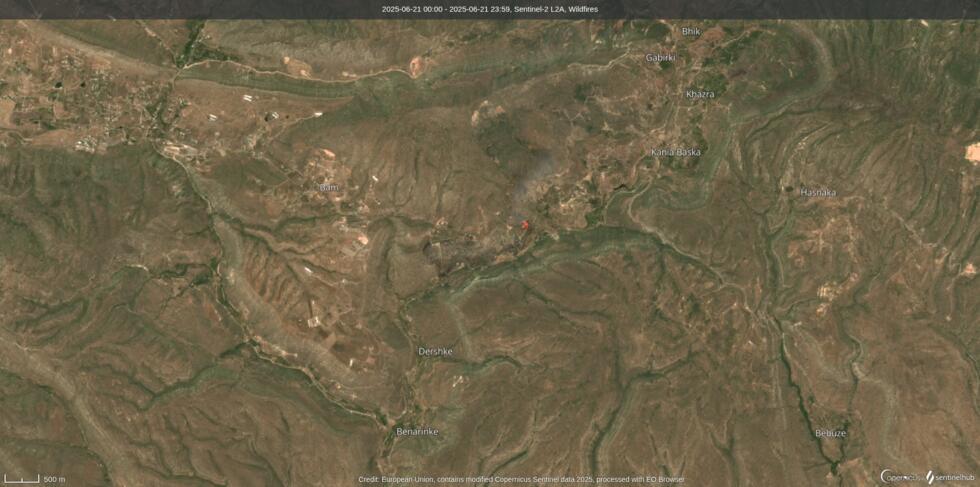
In this satellite image dated June 21, fires are visible in the Deraluk area. © Sentinel Hub
Twelve Turkish soldiers killed in cave
In addition to the bombings, Turkish ground operations are not stopping. On 6 July, the Turkish Ministry of Defence announced the death of 12 of its soldiers. The operation reportedly took place in the governorate of Duhok.
Twelve Turkish soldiers killed in cave
In addition to the bombings, Turkish ground operations are not stopping. On 6 July, the Turkish Ministry of Defence announced the death of 12 of its soldiers. The operation reportedly took place in the governorate of Duhok.
This communiqué from the Turkish Ministry of Defence published on 6 July shows the faces of four of the twelve soldiers who died in an operation against the PKK. © X / tcsavunma
According to the statement, the soldiers died during the inspection of a cave that was used as a hospital by PKK members. According to the Turkish authorities, the soldiers were poisoned by methane while trying to find the body of another Turkish soldier who disappeared in May 2022.
According to the statement, the soldiers died during the inspection of a cave that was used as a hospital by PKK members. According to the Turkish authorities, the soldiers were poisoned by methane while trying to find the body of another Turkish soldier who disappeared in May 2022.
On the left, the location of the tunnel where the bodies of the Turkish soldiers were found. On the right, images of the bodies exhumed from the tunnel by the Turkish army. Localisation: 7°5'34.16"N - 43°56'2.97"E. © Observers / akincitimi / Telegram
The pro-Kurdish media ANF published images of the corpse of one of the deceased Turkish soldiers. According to other sources favourable to the PKK, the Turkish soldiers were victims of their own chemical weapons and not of methane poisoning. However, it is not possible to independently confirm or deny this allegation.
The pro-Kurdish media ANF published images of the corpse of one of the deceased Turkish soldiers. According to other sources favourable to the PKK, the Turkish soldiers were victims of their own chemical weapons and not of methane poisoning. However, it is not possible to independently confirm or deny this allegation.
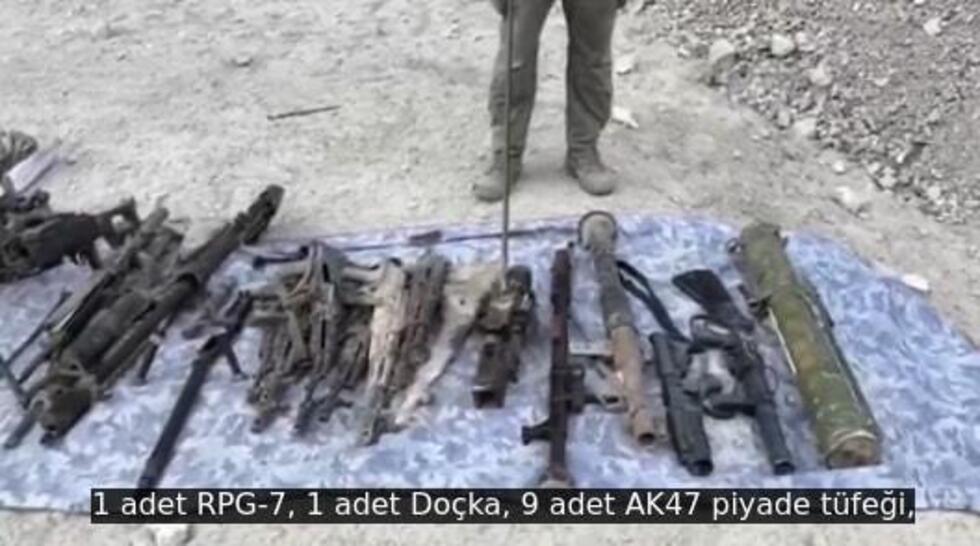
In this video released by the Turkish Ministry of Defence on 21 June, a Turkish soldier lists the weapons seized. © X / tcsavunma
On 21 June, the Turkish Ministry of Defence claimed to have neutralised a PKK arms cache. This arms cache was discovered in the area of the Turkish "Pençe-Kilit" operation.
On 21 June, the Turkish Ministry of Defence claimed to have neutralised a PKK arms cache. This arms cache was discovered in the area of the Turkish "Pençe-Kilit" operation.
"Reprisal" strikes announced by the PKK
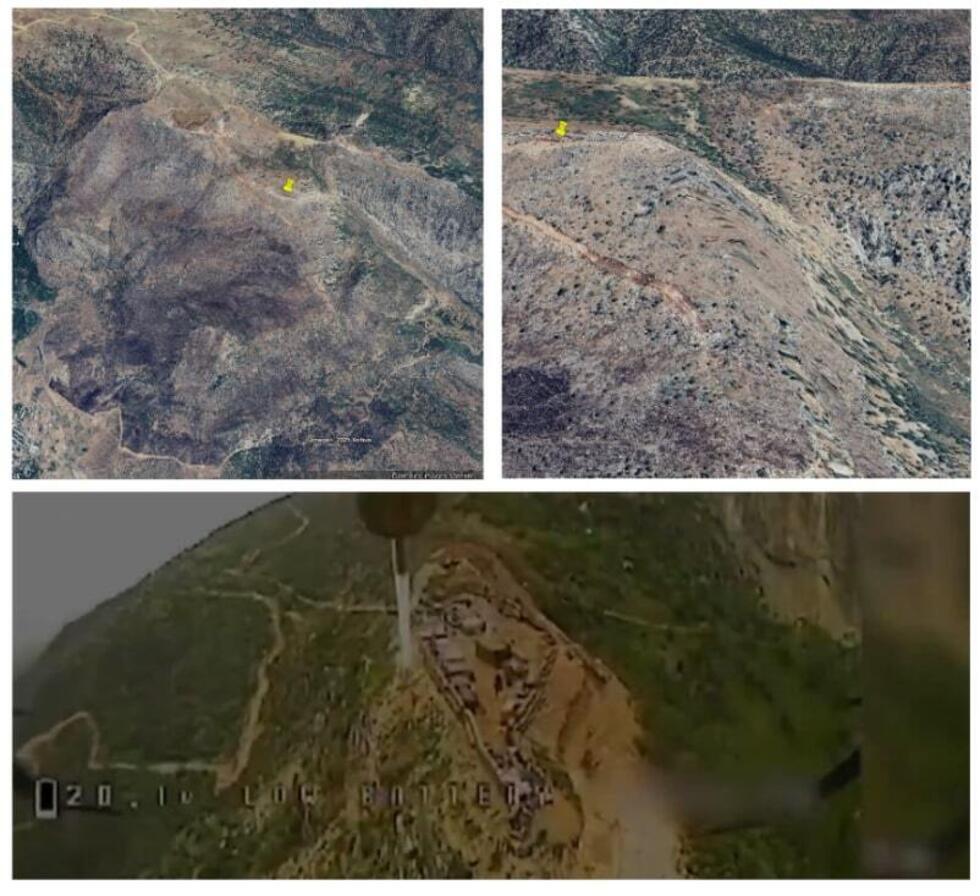
In its communiqués published after the announcement of its dissolution, the PKK clearly states that it reserves the right to defend itself in the event of an attack by the Turkish army. In total, the Observers' editorial staff has been able to count five filmed attacks claimed by the Kurdish guerrillas since the announcement of the unilateral ceasefire. These attacks are carried out by means of FPV drones, small kamikaze drones that appeared in Ukraine and rush at full speed towards their target and explode.
This video released in May 2025 shows a Kurdish FPV drone blowing itself up against a 23mm cannon. X/ScharoMaroof
The Observers team was able to geolocate the drone attack on a mountain near the town of Amadiye. Location: 37°06'23.5"N - 43°32'16.9"E. © Observers
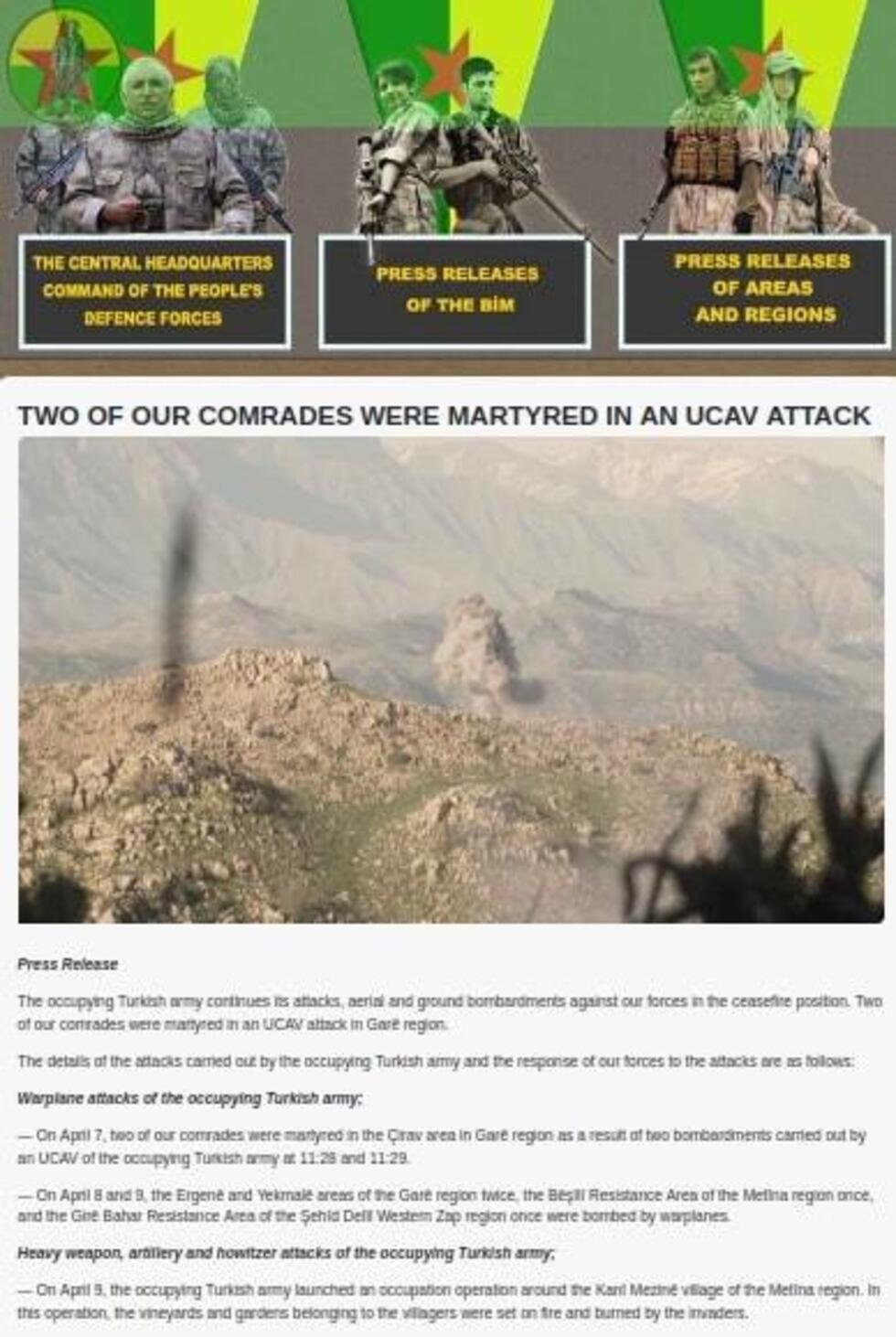
Since the cease-fire was announced, the PKK's armed wing in Iraq – the HPG – has claimed that two of its fighters have "fallen as martyrs".
Since the cease-fire was announced, the PKK's armed wing in Iraq – the HPG – has claimed that two of its fighters have "fallen as martyrs".
In this statement published on 12 April, the HPG acknowledged the death of two of its members after the Turkish bombings. © Hezaparastin.com
However, despite the drone strikes carried out by its guerrilla forces, the PKK seems determined to show international opinion that it wishes to carry out the cease-fire, as Abdullah Öcalan again indicated on 9 July.
However, despite the drone strikes carried out by its guerrilla forces, the PKK seems determined to show international opinion that it wishes to carry out the cease-fire, as Abdullah Öcalan again indicated on 9 July.
No comments:
Post a Comment