World countries gather at UN to revive two-state solution efforts

In a historic move to revive the long-stalled two-state solution, the international community has launched a high-level conference at the United Nations General Assembly in New York, aimed at turning the vision of a Palestinian state alongside Israel into reality after nearly eight decades of conflict, war, and unfulfilled promises.
The two-day conference, which began on July 28, is jointly sponsored by Saudi Arabia and France under the title "For the Peaceful Resolution of the Palestinian Issue and the Implementation of the Two-State Solution." While the US chose not to participate, it notably did not object to the initiative, signalling a subtle shift in its posture.
The event follows French President Emmanuel Macron’s announcement of plans to recognise the State of Palestine—a move likely to trigger wider recognition. Asked about this, US President Donald Trump said, “Let them do what they want,” which a senior European official called a sign that “the US is not making any special effort to stop the momentum.”
Dozens of foreign ministers convened at the UN to back the two-state solution, including France’s Jean-Noël Barrot, Saudi Arabia’s Prince Faisal bin Farhan, Egypt’s Foreign Minister, UK Foreign Secretary David Lammy, Germany’s State Minister for Foreign Affairs, Florian Hahn, and Palestinian Prime Minister Mohammad Mustafa.
Neither Israel nor the US attended. Asked if UK PM Keir Starmer might recognise Palestine like Macron, Trump replied, “I wouldn’t mind him taking that stance”—highlighting a lack of US pushback, unlike Netanyahu’s firm opposition.
In his opening remarks, UN Secretary-General António Guterres expressed gratitude to Saudi Arabia and France for sponsoring the event. “The Israeli–Palestinian conflict has persisted for generations, defying diplomacy and countless resolutions... defying international law,” he said, noting that the two-state solution now appears “more distant than ever.”
While he condemned “the horrific Hamas terrorist attacks of October 7, 2023 and the taking of hostages,” he also made clear, “Nothing justifies the destruction of Gaza or the starvation of its population.”
Guterres warned of the ongoing “expansion of settlements, rising settler violence against Palestinians, and the creeping annexation of the occupied West Bank,” describing it as part of a “systemic reality that is dismantling the foundations of peace in the Middle East.”
He called the conference “a rare opportunity—it can and must be a turning point, a moment that drives irreversible progress toward ending the occupation.” He reiterated the need for “two independent, democratic, and sovereign states, living side by side in peace and security, recognised by all, based on the pre-1967 lines, with Jerusalem as the capital of both.”
Saudi Foreign Minister Prince Faisal bin Farhan stressed that the two-state solution is key to regional stability. “This conference marks a pivotal moment on the path to implementing that solution,” he said. “Stability in the region begins with granting the Palestinian people their legitimate rights.”
He welcomed Macron’s announcement and called for an immediate end to the humanitarian catastrophe in Gaza, revealing that Saudi Arabia and France had facilitated the transfer of $300mn from the World Bank to support Palestine.
French Foreign Minister Barrot echoed these sentiments: “We cannot accept the targeting of civilians in Gaza,” he said. “The war has gone on too long and must stop.”
He continued: “We must work to make the two-state solution a tangible reality. It meets the legitimate aspirations of the Palestinian people, and this conference must be a turning point in making it happen. We have launched an irreversible momentum towards a political solution in the Middle East.”
Barrot added, “It was absolutely necessary to restart the political process—the two-state solution—which today faces greater threats than ever before.”
Palestinian Prime Minister Mohammad Mustafa said, “The Palestinian people must not be condemned to eternal displacement and occupation.”
He called for an immediate end to the violence in Gaza, describing the situation as “one of the most horrific massacres in history.”
Mustafa expressed gratitude to Saudi Arabia and France for co-hosting the conference, stating, We are grateful to Saudi Arabia and France for leading this historic conference, which sends a powerful message to the Palestinian people that the world stands with them.”
“This conference is a message to Israelis to move toward peace,” and praised France’s brave step in committing to recognise the State of Palestine, "he added.
Egyptian Foreign Minister Badr Abdelatty said, “Egypt has intensified its humanitarian assistance in recent weeks by delivering urgent aid to Gaza to ease the suffering of its people. It is essential to sustain and strengthen these efforts in cooperation with international partners.”
“We welcome the French president’s commitment to recognising the State of Palestine and aspire to build international consensus toward full recognition of Palestinian statehood.” Abdelatty said
“We are engaged in intensive consultations with Qatar and the US to coordinate a major international conference for Gaza’s reconstruction, to be held once a ceasefire is reached. This conference will serve as a vital platform to attract global support and boost development efforts in the Strip,” he added.
The two-state solution conference is expected to provide fresh momentum toward a summit anticipated in September, which may be held in either Paris or New York, alongside high-level meetings during the 80th session of the United Nations General Assembly.
France says 'no alternative' to two-state solution for Israel, Palestinians
France told a UN conference co-chaired with Saudi Arabia on Monday that there is "no alternative" to a two-state solution between Israel and the Palestinians.
Issued on: 28/07/2025

"Only a political, two-state solution will help respond to the legitimate aspirations of Israelis and Palestinians to live in peace and security. There is no alternative," French Foreign Minister Jean-Noël Barrot said at the start of the three-day meeting.
Days before the conference, French President Emmanuel Macron announced that he would formally recognise a State of Palestine in September.
In an interview with French weekly La Tribune Dimanche, Barrot said that other European countries will confirm "their intention to recognise the State of Palestine" during the conference, without confirming which.
"All states have a responsibility to act now," said Palestinian prime minister Mohammad Mustafa at the start of the meeting, calling for an international force to deploy to help underwrite Palestinian statehood. "Recognise the state of Palestine without delay."
France is hoping that Britain will take this step. More than 200 British members of parliament on Friday voiced support for the idea, but Prime Minister Keir Starmer reiterated that recognition of a Palestinian state "must be part of a wider plan."
According to a database created by French news agency AFP, at least 142 of the 193 UN member states – including France – now recognize the Palestinian state proclaimed by the Palestinian leadership in exile in 1988.
Thousands of lives lost
In 1947, a resolution of the UN General Assembly decided on the partition of Palestine, then under a British mandate, into two independent states – one Jewish and the other Arab. The following year, the state of Israel was proclaimed.
For several decades, the vast majority of UN member states have supported the idea of a two-state solution, Israelis and Palestinians living side-by-side.
But after more than 21 months of war in Gaza, the ongoing expansion of Israeli settlements in the West Bank, and Israeli officials declaring designs to annex occupied territory, it is feared a Palestinian state could be geographically impossible.
The current war in Gaza started following a deadly attack by Hamas on Israel, which responded with a large-scale military response that has claimed tens of thousands of Palestinian lives.
This week's conference comes at a moment when "the prospect of a Palestinian state has never been so threatened, or so necessary," Barrot said.
Beyond facilitating conditions for the recognition of a Palestinian state, the meeting will focus on three other issues – reform of the Palestinian Authority, disarmament of Hamas and its exclusion from Palestinian public life, and normalisation of relations with Israel by Arab states.
Growing international pressure
However, no new normalisation deals are expected to be announced at the meeting, according to a French diplomatic source.
On the other hand, "for the first time, Arab countries will condemn Hamas and call for its disarmament," Barrot said.
The conference "offers a unique opportunity to transform international law and the international consensus into an achievable plan and to demonstrate resolve to end the occupation and conflict once and for all, for the benefit of all peoples," said Palestinian ambassador to the UN Riyad Mansour, calling for "courage" from participants.
Israel and the United States were not taking part in the meeting, amid growing international pressure to mount on Israel to end nearly two years of war in Gaza.
Despite "tactical pauses" in some military operations announced by Israel, the humanitarian catastrophe in the ravaged coastal territory is expected to dominate speeches by representatives of more than 100 countries as they take the podium.
Bruno Stagno, chief advocacy officer at Human Rights Watch, said "more platitudes about a two-state solution and peace process will do nothing to advance the conference's goals, nor to halt the extermination of Palestinians in Gaza."
(with AFP)
Vatican Communication Office Urges Two-State Solution As France Backs Palestinian Statehood
By CNA
By Kate Quiñones
The Vatican’s Dicastery for Communication reiterated its long-standing call for recognition of Palestine statehood amid the ongoing Israel-Hamas conflict after France announced last week it would recognize the region’s statehood.
The editorial manager for the Vatican’s Dicastery for Communication, Andrea Tornielli, called for a “two-state solution” and recognition of Palestine as a state in a July 27 editorial.
In the editorial, Tornielli cited France’s recent movement toward recognition. Last week, French President Emmanuel Macron announced in a post on X that France would recognize Palestine as a state — a plan that was quickly rejected by various Western countries including the United States, the United Kingdom, Germany, Italy, and Australia.
In addition to affirming Palestine as a state, Macron called for the demilitarization of the terrorist group Hamas that runs the government of Gaza. He demanded the release of the hostages, called for humanitarian aid for Gaza, and said that Palestine must accept demilitarization and fully recognize Israel.
In 2015, the Vatican signed its first treaty with the “State of Palestine.” Tornielli recalled the “comprehensive agreement” between the two parties, noting that the treaty affirmed the right of the Palestinian people to an “independent, sovereign, democratic, and viable” state.
While Pope Francis was the first of the popes to use the term “State of Palestine” upon his 2014 visit to the Holy land, Tornielli pointed out that Pope Benedict XVI affirmed both that “the State of Israel has the right to exist and enjoy peace and security” and that “the Palestinian people have the right to an independent and sovereign homeland.”
Before Benedict, in the early 1990s, Pope John Paul II established relationships with both the State of Israel and the Palestine Liberation Organization, according to Tornielli.
“It is to be hoped that the High-Level International Conference for the Peaceful Resolution of the Palestinian Question and the implementation of the two-state solution, grasping the urgency of a common response to the Palestinian drama, will decisively pursue a solution to finally guarantee this people a state with secure, respected, and recognized borders,” Tornielli wrote in the editorial.
Notably, the Vatican’s support of the “two-state solution” runs counter to the stances of many Western countries. The United States, the United Kingdom, Germany, Italy, and Australia rejected Macron’s Palestine statehood plan outright, while President Donald Trump dismissed Macron, telling reporters at the White House: “What he says doesn’t matter. It’s not going to change anything.”
Macron said in his post that he plans to announce the recognition at the United Nations General Assembly in September.
While U.K. Prime Minister Keir Starmer rejected the plan, he explained in a statement he supported the “two-state solution” but said it must ensure “lasting security for Palestinians and Israelis.”
On a local level, the Representative Council of Jewish Institutions of France called the decision a moral failure and said it risks security for Jews worldwide, while top American Jewish groups declined to attend a meeting with the French government after his statement.
Israeli Prime Minister Benjamin Netanyahu “strongly” condemned Macron’s decision, saying the move “rewards terror and risks creating another Iranian proxy, just as Gaza became.”
“A Palestinian state in these conditions would be a launch pad to annihilate Israel — not to live in peace beside it,” Netanyahu said. “Let’s be clear: The Palestinians do not seek a state alongside Israel. They seek a state instead of Israel.”
CNA
The Catholic News Agency (CNA) has been, since 2004, one of the fastest growing Catholic news providers to the English speaking world. The Catholic News Agency takes much of its mission from its sister agency, ACI Prensa, which was founded in Lima, Peru, in 1980 by Fr. Adalbert Marie Mohm (†1986).
EU proposes to suspend Israeli access to European research fund over Gaza war
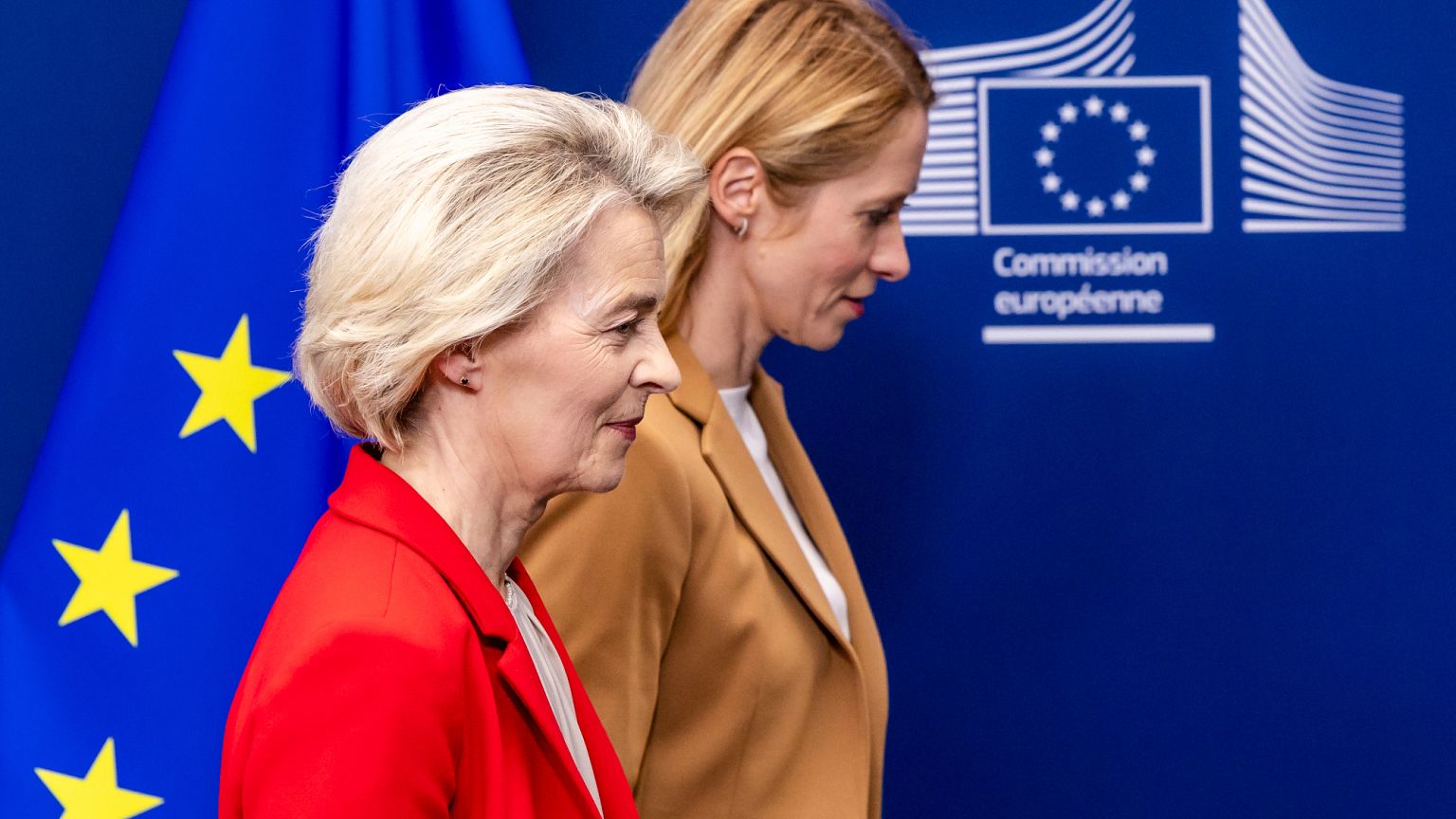
The European Commission is tabling the suspension of Israel's access to the EU's Horizon Research fund as a consequence of the worsening humanitarian crisis in Gaza. It comes after an accord between the two sides for Israel to substantially increase aid to Gaza has not materialised, say EU sources.
The European Commission has issued proposals to EU member states to partially suspend Israel's access to the EU's Horizon Europe research and innovation programme in response to Israel's ongoing actions in Gaza.
EU Commissioners met on Monday today to discuss the move in response to the failure of Israel to implement a negotiated agreement to "substantially" improve access to food and medical supplies to Palestinians in Gaza.
The move would affect the participation of Israeli start-up businesses with "disruptive innovations and emerging technologies that have potential dual-use applications, such as cyber-security, drones and artificial intelligence", a statement from the European Commission said.
Until this decision, EU Commissioners including President of the European Commission, Ursula von der Leyen have collectively refused to support any action against Israel.
The proposal will be discussed and potentially voted on by member states as early as Tuesday when EU ambassadors from all 27 member states will convene.
Suspending Israel from the Horizon programme was one of ten options the European Commission and member states were presented with on foot of a report confirming Israel was in breach of international law due to the dire situation for civilians across the Palestinian Territories.
Partially suspending Horizon would not require unanimous support across all 27 countries, and member states such as Austria, Germany, Hungary and the Czech Republic are still unlikely to agree to taking action against Israel.
However, the motion could pass with the qualified majority voting, which means larger state such as Italy would have to support it in order to meet the requirements.
Dutch Prime Minister Dick Schoof said the humanitarian situation in Gaza is "catastrophic" and demanded "the people of Gaza be given immediate, unfettered, safe access to humanitarian aid."
In a post on social media, Schoof also said his government could take even stronger action against Israel.
The Hague supports the plan to suspend Israeli participation in Horizon, adding the Netherlands will "also press for further European measures, for example in the realm of trade", he said.
On 10 July the EU negotiated a "significant" improvement of humanitarian aid access into Gaza, including an increase of food trucks, and an agreement to "protect the lives of aid workers", after the EU High Representative for Foreign Affairs Kaja Kallas dispatched a delegation to Tel Aviv, including Christophe Bigot, the EU's Special Envoy to the Middle East.
But strong consensus within the EU is that Israel has not enacted its part of the deal.
"Clearly the situation in the last few days in Gaza is still awful, and although some more aid is getting in, distribution has been deadly," a highly placed source told Euronews.
The UN estimates over 1000 people have been killed at food distribution sites alone, and dozens have died of starvation in recent days.
"I hope they're discussing actual measures and not just the situation in Gaza, we need action, not more declarations of how terrible it is," said another EU diplomat close to the matter.
"Focusing on one option forces member states to make a decision, I'm not sure how economically this will impact Israel, but it shows political pressure is really mounting" on Israel, said this diplomat, adding that they considered the Commission "has washed its hands of the matter" up to this point.
No comments:
Post a Comment