Robert Davis
August 10, 2025
RAW STORY
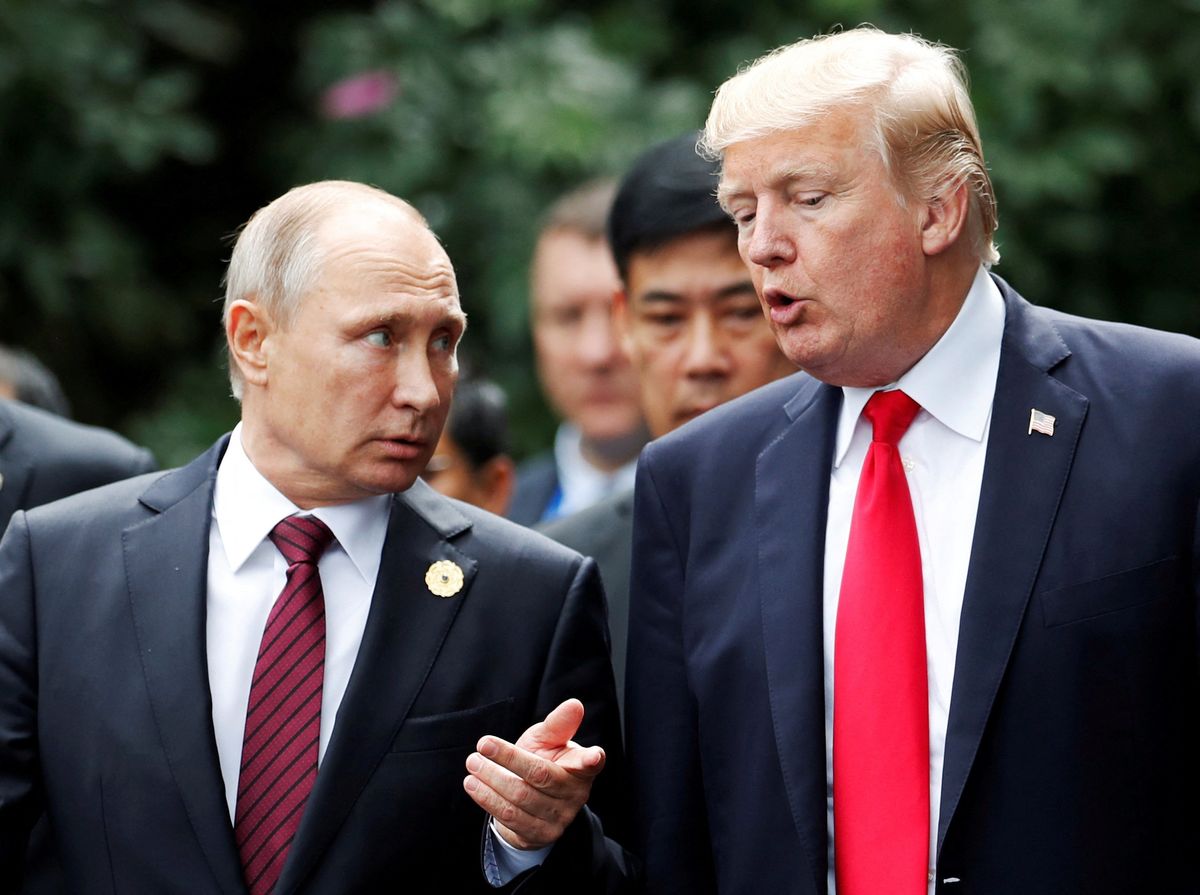
FILE PHOTO: U.S. President Donald Trump and Russia's President Vladimir Putin talk during the family photo session at the APEC Summit in Danang, Vietnam November 11, 2017. REUTERS/Jorge Silva/File Photo
President Donald Trump's meeting with Russian President Vladimir Putin this week could have major geopolitical implications, according to one analyst.
Trump and Putin plan to meet in Alaska to negotiate an end to the war in Ukraine. Ahead of the meeting, Putin announced he wanted control over a wide swath of eastern Ukraine, including land his forces do not control, according to the Institute for the Study of War. Ukrainian President Volodymyr Zelenskyy has rejected this offer, even though Trump has said Zelenskyy will need to give up some land to end the war.
This situation reminded one analyst of how former Soviet strongman Joseph Stalin viewed the world.

“Putin would like to divide the world into spheres of influence with Trump and Xi," Andrey Kolesnikov, a Russia-based political analyst, told the Financial Times. "A new Yalta and a cold war — that’s just what he wants. He is eager to claim [Joseph] Stalin’s laurels."
Ahead of the meeting with Trump, Putin invited to the Kremlin the heads of state from nine countries that Russia considers friendly. Those include China's Xi Jinping and India's national security advisor Ajit Doval.
Putin's actions ahead of the meeting also show that he is not interested in ending the conflict, according to the report.
“There is no real alternative but to freeze the conflict along the current frontline. The post-Korean war stand-off is way more likely than a lasting peace,” Kolesnikov said.
Read the entire piece by clicking here.
Ukraine Must Be Included in Trump-Putin Peace Talks, Says Sanders
The senator said the negotiations could be "a positive step forward" after three and a half years of war.

At the Alley of Heroes military cemetery,a woman waters the flowers on the grave of a Ukrainian police officer who died during artillery shelling on August 10, 2025 in Kramatorsk, Ukraine.
(Photo: Pierre Crom/Getty Images)
The senator said the negotiations could be "a positive step forward" after three and a half years of war.
At the Alley of Heroes military cemetery,a woman waters the flowers on the grave of a Ukrainian police officer who died during artillery shelling on August 10, 2025 in Kramatorsk, Ukraine.
(Photo: Pierre Crom/Getty Images)
Julia Conley
Aug 10, 2025
CO MMON DREAMS
Echoing the concerns of Ukrainian President Volodymyr Zelenskyy and European leaders about an upcoming summit between U.S. President Donald Trump and Russian President Vladimir Putin, Sen. Bernie Sanders on Sunday said the interests of Ukrainians must be represented in any talks regarding an end to the fighting between the two countries—but expressed hope that the negotiations planned for August 15 will be "a positive step forward."
On CNN's "State of the Union," Sanders (I-Vt.) told anchor Dana Bash that Ukraine "has got to be part of the discussion" regarding a potential cease-fire between Russia and Ukraine, which Putin said last week he would agree to in exchange for major land concessions in Eastern Ukraine.
Putin reportedly proposed a deal in which Ukraine would withdraw its armed forces from the Donetsk and Luhansk regions, giving Russia full control of the two areas along with Crimea, which it annexed in 2014.
On Friday, Trump said a peace deal could include "some swapping of territories"—but did not mention potential security guarantees for Ukraine, or what territories the country might gain control of—and announced that talks had been scheduled between the White House and Putin in Alaska this coming Friday.
As Trump announced the meeting, a deadline he had set earlier for Putin to agree to a cease-fire or face "secondary sanctions" targeting countries that buy oil from Russia passed.
Zelenskyy on Saturday rejected the suggestion that Ukraine would accept any deal brokered by the U.S. and Russia without the input of his government—especially one that includes land concessions. In a video statement on the social media platform X, Zelenskyy said that "Ukraine is ready for real decisions that can bring peace."
"Any decisions that are against us, any decisions that are without Ukraine, are at the same time decisions against peace," he said. "Ukrainians will not give their land to the occupier."
Sanders on Sunday agreed that "it can't be Vladimir Putin and Donald Trump" deciding the terms of a peace deal to end the war that the United Nations says has killed more than 13,000 Ukrainian civilians since Russia began its invasion in February 2022.
"If in fact an agreement can be negotiated which does not compromise what the Ukrainians feel they need, I think that's a positive step forward. We all want to see an end to the bloodshed," said Sanders. "The people of Ukraine obviously have got to have a significant say. It is their country, so if the people of Ukraine feel it is a positive agreement, that's good. If not, that's another story."
A senior White House official told NewsNation that the president is "open to a trilateral summit with both leaders."
"Right now, the White House is planning the bilateral meeting requested by President Putin," they said.
On Saturday, Vice President JD Vance took part in talks with European Union and Ukrainian officials in the United Kingdom, where Andriy Yermak, head of the Office of the President in Ukraine, said the country's positions were made "clear: a reliable, lasting peace is only possible with Ukraine at the negotiating table, with full respect for our sovereignty and without recognizing the occupation."
European leaders pushed for the inclusion of Zelenskyy in talks in a statement Saturday, saying Ukraine's vital interests "include the need for robust and credible security guarantees that enable Ukraine to effectively defend its sovereignty and territorial integrity."
"Meaningful negotiations can only take place in the context of a cease-fire or reduction of hostilities," said the leaders, including French President Emmanuel Macron, German Cancellor Friedrich Merz, and U.K. Prime Minister Keir Starmer. "The path to peace in Ukraine cannot be decided without Ukraine. We remain committed to the principle that international borders must not be changed by force."
At the Quincy Institute for Responsible Statecraft, British journalist and analyst Anatol Lieven wrote Saturday that the talks scheduled for next week are "an essential first step" toward ending the bloodshed in Ukraine, even though they include proposed land concessions that would be "painful" for Kyiv.
If Ukraine were to ultimately agree to ceding land to Russia, said Lieven, "Russia will need drastically to scale back its demands for Ukrainian 'denazification' and 'demilitarization,' which in their extreme form would mean Ukrainian regime change and disarmament—which no government in Kyiv could or should accept."
A recent Gallup poll showed 69% of Ukrainians now favor a negotiated end to the war as soon as possible. In 2022, more than 70% believed the country should continue fighting until it achieved victory.
Aug 10, 2025
CO MMON DREAMS
Echoing the concerns of Ukrainian President Volodymyr Zelenskyy and European leaders about an upcoming summit between U.S. President Donald Trump and Russian President Vladimir Putin, Sen. Bernie Sanders on Sunday said the interests of Ukrainians must be represented in any talks regarding an end to the fighting between the two countries—but expressed hope that the negotiations planned for August 15 will be "a positive step forward."
On CNN's "State of the Union," Sanders (I-Vt.) told anchor Dana Bash that Ukraine "has got to be part of the discussion" regarding a potential cease-fire between Russia and Ukraine, which Putin said last week he would agree to in exchange for major land concessions in Eastern Ukraine.
Putin reportedly proposed a deal in which Ukraine would withdraw its armed forces from the Donetsk and Luhansk regions, giving Russia full control of the two areas along with Crimea, which it annexed in 2014.
On Friday, Trump said a peace deal could include "some swapping of territories"—but did not mention potential security guarantees for Ukraine, or what territories the country might gain control of—and announced that talks had been scheduled between the White House and Putin in Alaska this coming Friday.
As Trump announced the meeting, a deadline he had set earlier for Putin to agree to a cease-fire or face "secondary sanctions" targeting countries that buy oil from Russia passed.
Zelenskyy on Saturday rejected the suggestion that Ukraine would accept any deal brokered by the U.S. and Russia without the input of his government—especially one that includes land concessions. In a video statement on the social media platform X, Zelenskyy said that "Ukraine is ready for real decisions that can bring peace."
"Any decisions that are against us, any decisions that are without Ukraine, are at the same time decisions against peace," he said. "Ukrainians will not give their land to the occupier."
Sanders on Sunday agreed that "it can't be Vladimir Putin and Donald Trump" deciding the terms of a peace deal to end the war that the United Nations says has killed more than 13,000 Ukrainian civilians since Russia began its invasion in February 2022.
"If in fact an agreement can be negotiated which does not compromise what the Ukrainians feel they need, I think that's a positive step forward. We all want to see an end to the bloodshed," said Sanders. "The people of Ukraine obviously have got to have a significant say. It is their country, so if the people of Ukraine feel it is a positive agreement, that's good. If not, that's another story."
A senior White House official told NewsNation that the president is "open to a trilateral summit with both leaders."
"Right now, the White House is planning the bilateral meeting requested by President Putin," they said.
On Saturday, Vice President JD Vance took part in talks with European Union and Ukrainian officials in the United Kingdom, where Andriy Yermak, head of the Office of the President in Ukraine, said the country's positions were made "clear: a reliable, lasting peace is only possible with Ukraine at the negotiating table, with full respect for our sovereignty and without recognizing the occupation."
European leaders pushed for the inclusion of Zelenskyy in talks in a statement Saturday, saying Ukraine's vital interests "include the need for robust and credible security guarantees that enable Ukraine to effectively defend its sovereignty and territorial integrity."
"Meaningful negotiations can only take place in the context of a cease-fire or reduction of hostilities," said the leaders, including French President Emmanuel Macron, German Cancellor Friedrich Merz, and U.K. Prime Minister Keir Starmer. "The path to peace in Ukraine cannot be decided without Ukraine. We remain committed to the principle that international borders must not be changed by force."
At the Quincy Institute for Responsible Statecraft, British journalist and analyst Anatol Lieven wrote Saturday that the talks scheduled for next week are "an essential first step" toward ending the bloodshed in Ukraine, even though they include proposed land concessions that would be "painful" for Kyiv.
If Ukraine were to ultimately agree to ceding land to Russia, said Lieven, "Russia will need drastically to scale back its demands for Ukrainian 'denazification' and 'demilitarization,' which in their extreme form would mean Ukrainian regime change and disarmament—which no government in Kyiv could or should accept."
A recent Gallup poll showed 69% of Ukrainians now favor a negotiated end to the war as soon as possible. In 2022, more than 70% believed the country should continue fighting until it achieved victory.
Democrats: Say No to Endless Killing in Ukraine and Give Peace a Chance
While some hawks still pretend that Ukraine could "win" the war with enough missiles, bombs, ammunition, and other supplies from the U.S., realists scoff at such claims.

People mourn during a funeral ceremony for Ukrainian journalist Viktoriia Roshchyna, who died in Russian captivity, at St. Michael’s Golden-Domed Cathedral on August 8, 2025 in Kyiv, Ukraine.
(Photo: Yan Dobronosov/Global Images Ukraine via Getty Images)
Norman Solomon
Aug 10, 2025
While some hawks still pretend that Ukraine could "win" the war with enough missiles, bombs, ammunition, and other supplies from the U.S., realists scoff at such claims.
People mourn during a funeral ceremony for Ukrainian journalist Viktoriia Roshchyna, who died in Russian captivity, at St. Michael’s Golden-Domed Cathedral on August 8, 2025 in Kyiv, Ukraine.
(Photo: Yan Dobronosov/Global Images Ukraine via Getty Images)
Norman Solomon
Aug 10, 2025
The Hill
After three and a half years of carnage in Ukraine, the meeting expected soon between President Trump and Russian President Vladimir Putin is an opportunity to finally find a peaceful solution to a terrible war. Genuine diplomacy to end the bloodshed is long overdue.
Up to 100,000 Ukrainians are estimated to have been killed, many of them civilians, along with more than twice that number of deaths among Russian troops. Hundreds of thousands more have been wounded on each side, and Russian bombardment has devastated many of Ukraine’s cities and towns.
Condemnations of the Trump-Putin summit are predictable from congressional Democrats more interested in scoring political points than opening a diplomatic door for peace. While most Republican leaders will praise Trump no matter what he does, pressure from the so-called national security establishment could damage prospects for a peaceful outcome in Ukraine.
Since early 2022, the U.S. government, on a largely bipartisan basis, has provided upwards of $67 billion in military aid to Ukraine. Supporters of continuing the massive arming of Ukraine claim the highest moral ground, while others do the killing and dying. Even after it became clear that the war could go on indefinitely without any winner, the message from Washington’s elite politicians and pundits to the Ukrainian people has amounted to “let’s you and them fight.”
Last week, Sen. Lisa Murkowski (R-Alaska) and Sen. Jeanne Shaheen (D-N.H.) introduced a bill to give Ukraine $54.6 billion in aid over the next two years, with many billions going directly to arm the Ukrainian military. If the Trump-Putin summit is unsuccessful, the currently dim prospects for such legislation could brighten. This dynamic gives war enthusiasts and advocates for the military-industrial complex a motive to throw cold water on the summit.
While Murkowski now represents a minority view on Ukraine among fellow Republicans, Shaheen is decidedly in the mainstream of her Senate Democratic colleagues. Even after all the suffering and destruction in Ukraine, few seem really interested in giving peace a chance.
As for Trump, he has sometimes talked about seeking peace in Ukraine, even while greenlighting large quantities of weapons to the Kiev government. Given his mercurial approach, there is no telling what his mindset will be after meeting with Putin.
Most Democrats in Congress seem content with continuation of a war that has no end in sight. Little is being accomplished in military terms other than more killing, maiming and destruction.
During recent months, Ukrainian forces have lost ground to Russian troops. While some hawks still pretend that Ukraine could “win” the war with enough missiles, bombs, ammunition and other supplies from the U.S., realists scoff at such claims.
Unfortunately, while the war drags on, Democrats in Congress are prone to treat diplomacy as a third rail. To a large extent, their partisan template was reinforced nearly three years ago, making “diplomacy” a dirty word for the Ukraine war.
The fiasco began in late October 2022 with the release of a letter to President Biden signed by 30 House Democrats, led by Rep. Pramila Jayapal (D-Wash.), the chair of the Congressional Progressive Caucus. The letter was judicious in its tone and content, affirming support for Ukraine and appropriately condemning “Russia’s war of aggression.” But the signatories got in instant hot water because the letter balanced its support for arming Ukraine with sensibly urging steps that could stop a war without a foreseeable end.
“Given the destruction created by this war for Ukraine and the world, as well as the risk of catastrophic escalation, we also believe it is in the interests of Ukraine, the United States, and the world to avoid a prolonged conflict,” the letter stated. “For this reason, we urge you to pair the military and economic support the United States has provided to Ukraine with a proactive diplomatic push, redoubling efforts to seek a realistic framework for a ceasefire.”
Just one day later, Jayapal issued a statement declaring that “the Congressional Progressive Caucus hereby withdraws its recent letter to the White House regarding Ukraine.” For some members of the caucus, the sudden withdrawal was a jarring and embarrassing retreat from a stance for diplomacy.
Ever since then, the war train has continued to roll, unimpeded by cooler heads. And, like elected officials in Washington, voters are looking at the war through partisan lenses.
A March Gallup poll found that 79 percent of Democrats said that the U.S. was not doing enough to help Ukraine — a steep jump from 48 percent since the end of last year. During the same period, the number of surveyed Republicans with that view remained under 15 percent.
It is time for Americans and their elected representatives to set aside partisan lenses and see what’s really at stake with the Ukraine war. Endless killing is no solution at all.
Rebuilding détente between Washington and Moscow is essential — not only for the sake of Ukrainians and Russians who keep dying, but also for the entire world. The two nuclear superpowers must engage in dialogue and real diplomacy if the next generations all over the globe are to survive.
© 2023 The Hill
Norman Solomon is the national director of RootsAction.org and executive director of the Institute for Public Accuracy. The paperback edition of his latest book, War Made Invisible: How America Hides the Human Toll of Its Military Machine, includes an afterword about the Gaza war.
Full Bio >
After three and a half years of carnage in Ukraine, the meeting expected soon between President Trump and Russian President Vladimir Putin is an opportunity to finally find a peaceful solution to a terrible war. Genuine diplomacy to end the bloodshed is long overdue.
Up to 100,000 Ukrainians are estimated to have been killed, many of them civilians, along with more than twice that number of deaths among Russian troops. Hundreds of thousands more have been wounded on each side, and Russian bombardment has devastated many of Ukraine’s cities and towns.
Condemnations of the Trump-Putin summit are predictable from congressional Democrats more interested in scoring political points than opening a diplomatic door for peace. While most Republican leaders will praise Trump no matter what he does, pressure from the so-called national security establishment could damage prospects for a peaceful outcome in Ukraine.
Since early 2022, the U.S. government, on a largely bipartisan basis, has provided upwards of $67 billion in military aid to Ukraine. Supporters of continuing the massive arming of Ukraine claim the highest moral ground, while others do the killing and dying. Even after it became clear that the war could go on indefinitely without any winner, the message from Washington’s elite politicians and pundits to the Ukrainian people has amounted to “let’s you and them fight.”
Last week, Sen. Lisa Murkowski (R-Alaska) and Sen. Jeanne Shaheen (D-N.H.) introduced a bill to give Ukraine $54.6 billion in aid over the next two years, with many billions going directly to arm the Ukrainian military. If the Trump-Putin summit is unsuccessful, the currently dim prospects for such legislation could brighten. This dynamic gives war enthusiasts and advocates for the military-industrial complex a motive to throw cold water on the summit.
While Murkowski now represents a minority view on Ukraine among fellow Republicans, Shaheen is decidedly in the mainstream of her Senate Democratic colleagues. Even after all the suffering and destruction in Ukraine, few seem really interested in giving peace a chance.
As for Trump, he has sometimes talked about seeking peace in Ukraine, even while greenlighting large quantities of weapons to the Kiev government. Given his mercurial approach, there is no telling what his mindset will be after meeting with Putin.
Most Democrats in Congress seem content with continuation of a war that has no end in sight. Little is being accomplished in military terms other than more killing, maiming and destruction.
During recent months, Ukrainian forces have lost ground to Russian troops. While some hawks still pretend that Ukraine could “win” the war with enough missiles, bombs, ammunition and other supplies from the U.S., realists scoff at such claims.
Unfortunately, while the war drags on, Democrats in Congress are prone to treat diplomacy as a third rail. To a large extent, their partisan template was reinforced nearly three years ago, making “diplomacy” a dirty word for the Ukraine war.
The fiasco began in late October 2022 with the release of a letter to President Biden signed by 30 House Democrats, led by Rep. Pramila Jayapal (D-Wash.), the chair of the Congressional Progressive Caucus. The letter was judicious in its tone and content, affirming support for Ukraine and appropriately condemning “Russia’s war of aggression.” But the signatories got in instant hot water because the letter balanced its support for arming Ukraine with sensibly urging steps that could stop a war without a foreseeable end.
“Given the destruction created by this war for Ukraine and the world, as well as the risk of catastrophic escalation, we also believe it is in the interests of Ukraine, the United States, and the world to avoid a prolonged conflict,” the letter stated. “For this reason, we urge you to pair the military and economic support the United States has provided to Ukraine with a proactive diplomatic push, redoubling efforts to seek a realistic framework for a ceasefire.”
Just one day later, Jayapal issued a statement declaring that “the Congressional Progressive Caucus hereby withdraws its recent letter to the White House regarding Ukraine.” For some members of the caucus, the sudden withdrawal was a jarring and embarrassing retreat from a stance for diplomacy.
Ever since then, the war train has continued to roll, unimpeded by cooler heads. And, like elected officials in Washington, voters are looking at the war through partisan lenses.
A March Gallup poll found that 79 percent of Democrats said that the U.S. was not doing enough to help Ukraine — a steep jump from 48 percent since the end of last year. During the same period, the number of surveyed Republicans with that view remained under 15 percent.
It is time for Americans and their elected representatives to set aside partisan lenses and see what’s really at stake with the Ukraine war. Endless killing is no solution at all.
Rebuilding détente between Washington and Moscow is essential — not only for the sake of Ukrainians and Russians who keep dying, but also for the entire world. The two nuclear superpowers must engage in dialogue and real diplomacy if the next generations all over the globe are to survive.
© 2023 The Hill
Norman Solomon is the national director of RootsAction.org and executive director of the Institute for Public Accuracy. The paperback edition of his latest book, War Made Invisible: How America Hides the Human Toll of Its Military Machine, includes an afterword about the Gaza war.
Full Bio >

No comments:
Post a Comment