Century Aluminum to invest $50M in Mt. Holly smelter restart in South Carolina
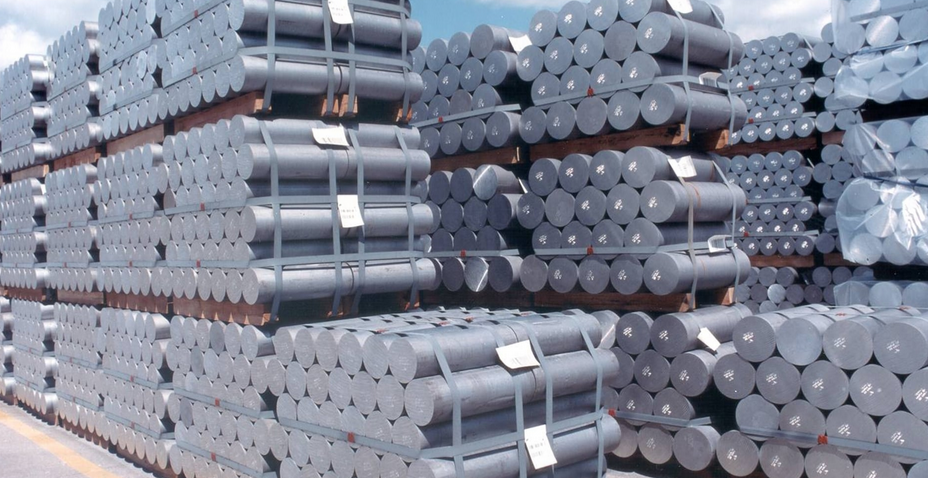
Century Aluminum (NASDAQ: CENX) announced Thursday it plans to restart over 50,000 metric tons of idled production at its Mt. Holly smelter in South Carolina.

The company said it will invest approximately $50 million in the effort, creating over 100 new jobs and boosting US domestic aluminum production by almost 10%.
The restart will enable the plant, currently operating at 75% capacity, to achieve full production by June 30, 2026, a level not seen since 2015.
The restart, it said, comes as a direct result of US President Trump’s application of Section 232 tariffs for primary aluminum, most recently increasing the tariffs to 50% without exceptions or exemptions.
At full capacity, Mt. Holly smelter has an economic impact of over $890 million annually in the state of South Carolina, driven in part by the average wage of $100,000 for jobs directly supported by the company, according to a University of South Carolina study released in 2024.
“Today’s announcement was made possible by President Trump’s commitment to onshoring manufacturing of critical metals … and to protecting American workers in our industry whose expertise is needed to ensure future generations do not have to rely on foreign supplies to build our communities and grow our economy,” CEO Jesse Gary said in a news release.
“Our team stands ready to continue leading the resurgence of domestic primary aluminum.”
General Matter to Build $1.5 Billion Uranium Plant in Kentucky
- General Matter will build a $1.5 billion uranium enrichment facility in Kentucky, producing both LEU and HALEU for advanced nuclear reactors.
- The project, backed by Founders Fund and Peter Thiel, is the largest economic development initiative in Western Kentucky and will create over 140 permanent jobs.
- The initiative aligns with Trump administration efforts to reduce U.S. dependence on China for critical minerals and enhance national security.

Critical minerals startup General Matter announced ambitious plans this week to construct a $1.5 billion uranium enrichment facility at the Paducah Gaseous Diffusion Plant in McCracken County, Kentucky, as the Trump administration seeks to reduce reliance on rare earths from China.
The groundbreaking project would be the first U.S.-owned, privately developed uranium enrichment facility and marks the largest economic development initiative in Western Kentucky's history. General Matter will develop the 100-acre uranium enrichment facility on the same site originally selected 75 years ago by the U.S. Atomic Energy Commission for uranium enrichment activities. The facility will produce both low enriched uranium (LEU) and high-assay low enriched uranium (HALEU), materials essential for powering advanced nuclear reactors, while the company has already secured DOE contracts for both LEU and HALEU production.
The project is expected to create substantial economic opportunities, generating 140 high-paying permanent jobs along with various construction positions during the development phase. Local officials, including Gov. Andy Beshar (D) and Rep. James Comer (R), praised the initiative for its potential to position Kentucky as a leader in the nuclear energy sector and attended the plant’s ceremony to break ground.
The company plans to begin uranium enrichment operations by 2030.
General Matter is headed up by Scott Nolan, a partner at venture capital firm Founders Fund, which led the startup’s $50 million Series A round. In a rare move, Founders Fund CEO Peter Thiel has joined the company’s board.
President Donald Trump has taken steps to bolster domestic critical mineral development, primarily through executive actions aimed at reducing U.S. reliance on foreign imports and enhancing national security. In March, the president signed an executive order — the "Immediate Measures to Increase American Mineral Production” — which invokes the Defense Production Act to provide financing, loans, and investment support for domestic mining and processing projects, including a dedicated critical minerals fund managed by the U.S. International Development Finance Corporation in collaboration with the Department of Defense.
In April, Trump signed an additional executive order focused on offshore critical minerals, aiming to develop domestic capabilities for seabed mineral exploration and processing to counter China’s influence.
China's grip on the global rare earth supply chain spans from mine to magnet, positioning Beijing as the dominant force in materials critical to everything from wind turbines to military hardware.
The world's second-largest economy produces 58% of light rare earths and commands 90% of heavy rare earth output, according to the Hudson Institute. Myanmar, an ally of Beijing, supplies the remaining 10% of heavy rare earths.
China's stranglehold extends well beyond raw materials. The country processes 90% of rare earth ores worldwide and controls more than 80% of the market for rare earth magnets — the refined products that power electric vehicles, defense systems and renewable energy infrastructure.
No comments:
Post a Comment