From brown to green: Historical German lignite site converted to solar park
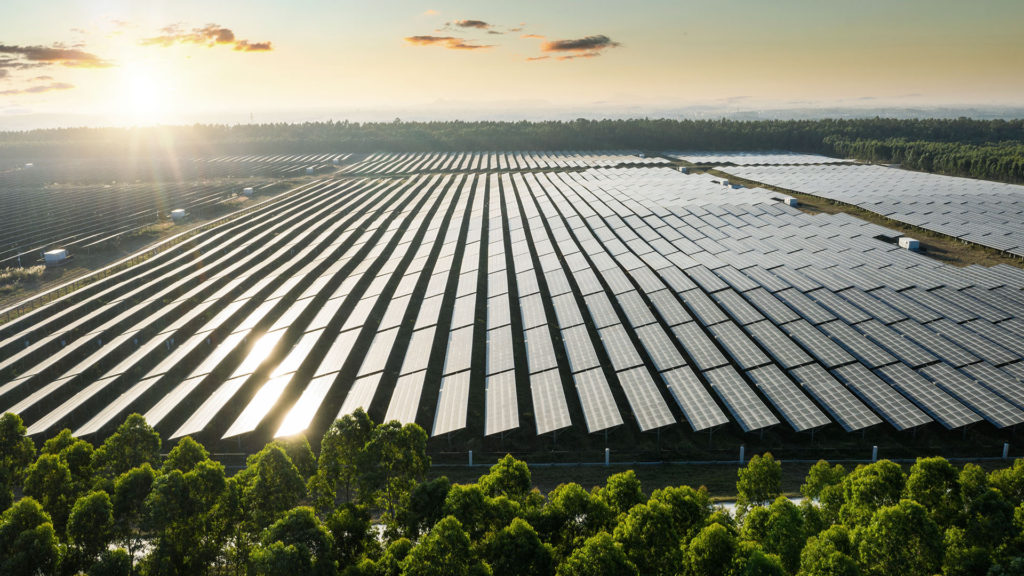
The construction of RP Global’s first German solar PV park has begun on one of Germany’s oldest lignite mining areas. The 50MWp solar project is located in Harbke, an historic location on the former East-West border.

In its first phase, the PV plant Harbke, located on the border between Saxony-Anhalt and Lower Saxony, will reach a capacity of 50 MWp. This is the first German project by RP Global, developed in collaboration with EPC MaxSolar.
Following completion of an extensive approval process, construction work has now begun on the former Wulfersdorf spoil tip in the district of Börde.
The Harbke PV plant is one of the most significant energy projects in the area. The district of Börde actively promotes the expansion of solar power and has been included in the ‘Global Sustainable Municipality nationwide’ initiative as one of five model municipalities.
The aim is to systematically integrate Agenda 2030 and its 17 global sustainability goals (SDGs) into administrative structures.
The solar park Harbke is being built on an area that has been shaped by humans for a long time and is already crisscrossed by two existing power lines. Thanks to this infrastructure, the electricity generated in future can be fed into the grid efficiently and without the need for additional power lines.
Harbke is of historical significance when it comes to energy production – lignite has been mined there for decades. After the Second World War, the open-cast mine was divided and used as an important source of energy on both sides of the border. Following a decision by the municipality of Harbke to repurpose the area, green electricity will now be generated there.
A special circumstance is being considered in the construction: access to the project site runs along the former border, the so-called “death strip”. The border strip, left behind by the GDR border guards in 1989 and better known as the “Kolonnenweg”, is a listed historical monument.
Rigorous precautions are therefore taken to preserve the historical elements when delivering the park components to the construction site, the company said, adding that an expansion of the project is in the works.
Rock Tech inks German renewable energy deal for lithium plant
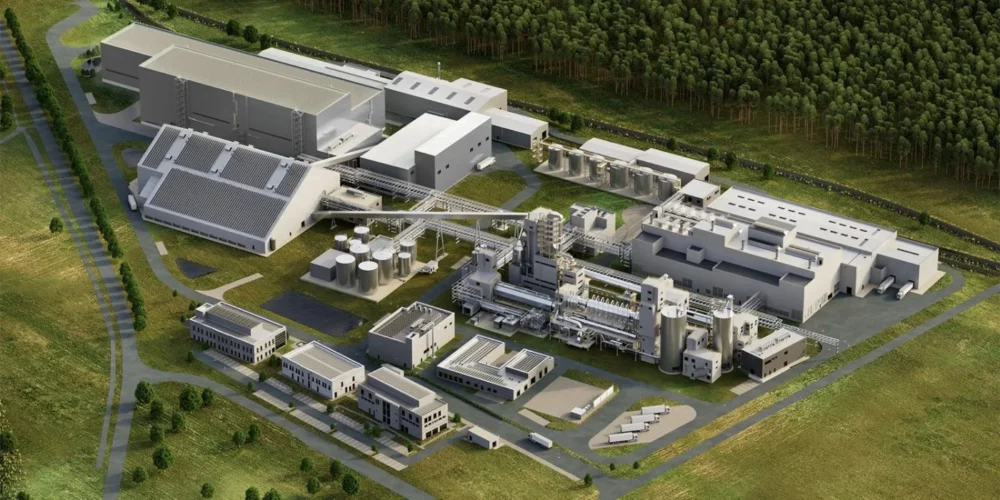
Rock Tech Lithium (TSXV: RCK) has secured a long-term supply of renewable energy from Germany’s ENERTRAG to power the company’s planned lithium hydroxide converter in Guben.
The companies inked the power supply agreement on Tuesday, in the presence of key government figures including Canadian Prime Minister Mark Carney and Katharina Reiche, Germany’s Federal Minister for Economic Affairs and Energy.
The agreement was signed during the German-Canadian critical minerals roundtable, where the countries formally announced a partnership focusing on the development of lithium and other critical minerals to break China’s monopolistic control in the supply chain.
Rock Tech’s proposed plant is designed to produce battery-grade lithium hydroxide, with an annual production capacity of 24,000 tonnes. The facility, situated on the German-Polish border, about 60 km away from Tesla’s plant in Grünheide, is slated for commissioning this year. First output is expected in 2026.
The converter project, the company notes, is recognized as a strategic initiative under the European Commission’s Critical Raw Materials Act and serves as a model for the decarbonization of European industry through cross-border cooperation. The concept also serves as a template for building a resilient supply chain for critical minerals in Canada.
Rock Tech Lithium traded 7.4% higher at $1.02 apiece by 1:50 p.m. ET, giving the company a market capitalization of $109.4 million.
Decarbonized supply chain
Regarding the ENERTRAG partnership, the Toronto-based lithium developer said it would provide “a sustainable and competitive electricity supply” with planning security for the converter’s operating costs.
A core element of the renewable energy initiative, it says, is the direct supply of electricity from new wind and photovoltaic plants in the neighboring Polish municipality of Gubin.
From the start of commissioning, a significant share of the converter’s electricity demand is to be covered by renewable sources. From 2030 onwards, at least 50% of the total electricity demand will be met by renewables, which the company says could lead to a 25% reduction in indirect CO2 emissions.
“With the planned direct supply of our converter with renewable energy, we are setting an important milestone for the sustainable and competitive production of lithium hydroxide in Europe,” Rock Tech Lithium CEO Mirco Wojnarowicz said in a news release.
“The partnership with ENERTRAG is an important example of how industry and energy producers can work together in a practical way to decarbonize the value chain. This not only creates planning security for our project but also contributes to achieving European climate targets,” he added.
In addition to the Guben converter, Rock Tech is also looking to build a similar facility in Red Rock, Ontario, which is expected to produce 32,000 tonnes of lithium carbonate equivalent using company and third-party feedstock.
No comments:
Post a Comment