From Words to Action: Making the ISM Code Fit for Today's Seafarers
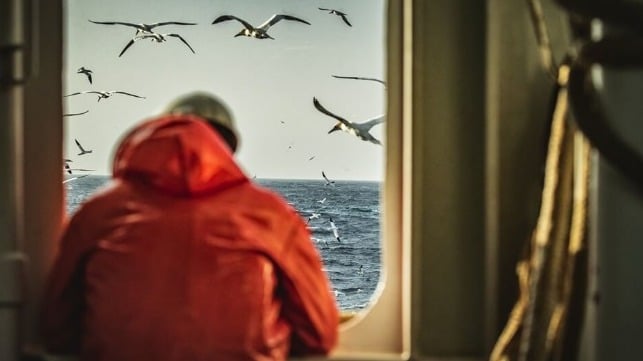
The International Maritime Organization’s Maritime Safety Committee (MSC) has sent a clear message: the ISM Code is overdue for serious reform. Meeting in London for its 110th session, the Committee called for a comprehensive overhaul of the guidelines governing safe ship management—guidelines that, despite their critical importance, no longer reflect the realities of life at sea.
This follows an independent IMO study that revealed just how inconsistently the ISM Code is enforced. The findings pointed to weak oversight, poor accountability, and a glaring disconnect between documented procedures and what crews actually experience, particularly in relation to fatigue, harassment, and excessive workloads.
It’s a story the industry knows all too well. Shipping is saturated with regulations, yet the most basic rights and protections for seafarers are still routinely undermined. The problem isn’t a lack of policy, it’s a lack of commitment.
Capt. Saurabh Mahesh, Group Director Crewing (Operations) at Columbia Group, believes this revision is long overdue. “There’s no question the Code needs to evolve. But it must go beyond simply redrafting language, it has to confront the reality that compliance is often little more than a box-ticking exercise,” he said. “We need to rebuild trust by ensuring real follow-up when breaches occur, and by guaranteeing that crews are genuinely protected, not just theoretically covered.”
The MSC’s recommendations are pragmatic and necessary. They include integrating anti-harassment measures into safety management systems, providing proper support for victims, protecting whistleblowers, and strengthening rest hour rules with enforcement that is consistent and credible. But none of this will matter unless administrations and operators implement these reforms meaningfully—and are held accountable when they don’t.
One of the most pressing issues is the falsification of rest hour records. Capt. Mahesh is among those calling for biometric solutions, fingerprint or retina scans, to replace outdated paper logs that are too easily manipulated. There are also calls for more rigorous external audits, realistic safe manning assessments that reflect vessel age and trading patterns, and decisive enforcement when non-conformities are uncovered. Without these changes, little will improve.
Yet enforcement alone isn’t enough. Working conditions themselves must be adapted to the complexity and pressure of modern shipping. One-size-fits-all shift patterns are no longer acceptable. Crews need flexible rest options, especially during extreme weather or congested port calls. Vessels operating on high-intensity routes should have access to shore-based officers who can provide relief. Greater use of digital tools, consistent crew feedback, and better engagement with shore services can all help ease the strain. These are practical solutions, they just require the will to put them in place.
There is also growing concern that even well-intentioned reforms could backfire if applied without care. Capt. Mahesh warns that piling new compliance costs onto operators without adequate support or strategic planning could have unintended consequences, especially if it leads to reduced earnings for seafarers or undermines progress on diversity.
That caution is shared by Claudia Paschkewitz, Director of Sustainability, Inclusion, and Diversity at Columbia Group. “We fully support the intent behind these recommendations,” she said. “But we must ensure that, in trying to fix deep-rooted operational issues, we don’t sacrifice the equally urgent work on inclusion. If reforms are rushed or poorly designed, there’s a risk that cost-cutting measures could push diversity efforts backwards. We need standards that are enforceable, inclusive, and fair—not trade-offs between safety and equality.”
The IMO has now tasked its Sub-Committee on the Implementation of IMO Instruments (III) and the Sub-Committee on Human Element, Training and Watchkeeping (HTW) with redrafting the guidelines over the next three years. But there is a real risk that momentum will fade. The challenge is to keep up the pressure and prevent this from becoming yet another consultation exercise that produces paperwork instead of progress.
What the industry needs now is honesty: an acknowledgment that parts of the system have failed, and a commitment, not just from regulators, but from owners and operators, to do better. Not because they are compelled to, but because safety, welfare, and dignity are non-negotiable.
If the ISM Code is to regain credibility, it needs more than a refresh. It requires enforcement, investment, and cultural change.
The opinions expressed herein are the author's and not necessarily those of The Maritime Executive.
Op-Ed: Yacht Industry Needs Serious Reform to Ensure Crew Safety
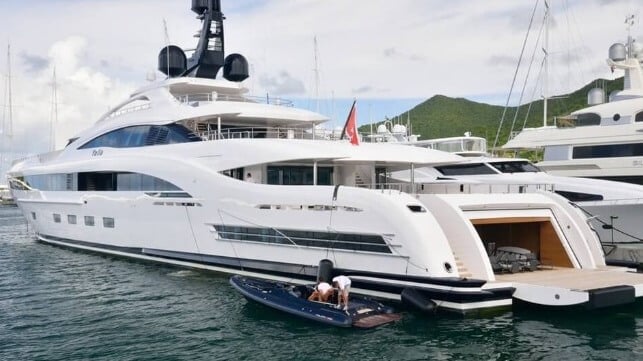
 The recent tragedy in the Bahamas involving stewardess Paige Bell has sharply illuminated an ongoing crisis within the yachting industry that I’ve seen for a long time, a crisis that goes beyond isolated incidents and exposes deep-rooted issues of safety, accountability, and cultural indifference toward abuse.
Behind the glossy façade of exotic ports and luxury yachts lies a disturbing reality. Nearly 40% of crew members report having experienced unwanted sexual contact aboard yachts, but only around 22% ever file a complaint. Why? Because systems for reporting are inadequate, fear of retaliation is high, and a culture of silence still dominates the industry. Crew are often not even given access to complaint procedures, and when they are, they’re often too scared to use them.
The industry's reaction—calls for background checks and tighter protocols—misses the point. We don’t have a vetting problem; we have a sexual harassment and power dynamic problem. Background checks won't catch someone who’s assaulted three stewardesses but never got reported because of NDAs or fear. It’s a superficial fix to a systemic failure.
One of the most troubling aspects I’ve witnessed is how most abuse begins at the top. Long-tenured senior officers like captains and engineers become untouchable. In a closed hierarchy where nobody challenges them, toxic behavior becomes normalized. Junior crew, especially women, feel unsafe speaking up because they fear being dismissed or even blacklisted.
To create change we must begin by creating accountability and that must start with leadership. Captains and management must genuinely enact zero-tolerance policies, not just verbally but visibly. In addition, training in trauma awareness, conflict resolution, and mental health should all be mandatory. Junior crew need to feel safe voicing concerns without fear.
The current legal protections are also showing up inadequately. The Maritime Labour Convention (MLC), intended to safeguard seafarers, doesn’t apply to many private yachts under certain size thresholds. This makes enforcement weak, especially when yachts are flagged in offshore jurisdictions. Even in cases that are reported, victims often find themselves silenced with hush money and removed quietly from the vessel.
We need a different approach involving a secure, anonymous, third-party reporting system with real weight and able to track repeat offenders and create further accountability. NDAs must not be used to cloak criminal behavior. The industry needs a shared red-flag database so perpetrators can't simply move onto the next boat.
Women entering the industry are particularly vulnerable. They often lack relationships or backup systems at the start and can be preyed upon. I always tell young crew to not assume safety comes with a uniform and that they must trust slowly, learn fast and look out for each other.
I’m relieved to say that some change is happening, crew members are beginning to speak up more often, share warnings, and challenge the status quo. That momentum must translate into policy, not just talk.
I firmly believe that change must start and continue from the top. Yacht owners and management have to prioritize crew welfare over reputation or profit. It’s time for the industry to evolve in ways like arming crew with safeguards, empowering leadership to act, and dismantling cultures of silence. Only then can we move from tragedy to transformation, and ensure that the next generation of crew can navigate their careers with dignity, safety, and respect.
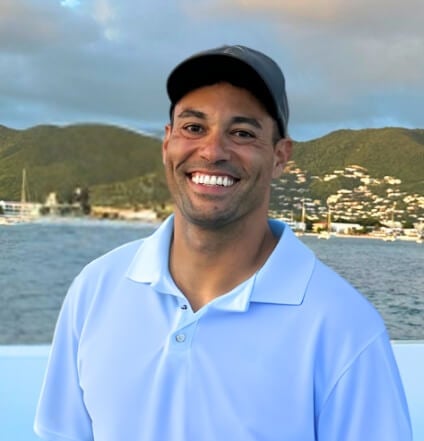
Hugo Ortega is a Superyacht Captain 500T, educator, and founder of Superyacht Sunday School, a global platform helping aspiring crew enter the luxury yachting industry.
The opinions expressed herein are the author's and not necessarily those of The Maritime Executive.
Facing Manning Crisis, RFA Highlights Willingness to Train Older Cadets
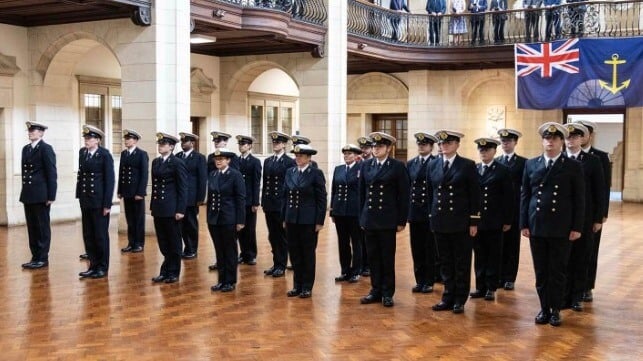
Facing an existential crisis in manning, the Royal Fleet Auxiliary is highlighting its successes in recruiting and training the next generation of seafarers. The door for new entrants is open, and RFA accepts promising cadets of working age; no "only-under-40" rules apply, and indeed two of its latest recruits are in their mid-40s and 50s - and just now starting out in maritime.
New RFA recruits begin their service with a brief course at Dartmouth, the Royal Navy's officer training base, in order to learn some of the basics of seafaring. After a completion ceremony, they progress onward to learn more about their chosen specialty.
"I was looking for a career which is exciting and challenging," said 45-year-old Ben Pitts, a Liverpool resident and a graduate of the most recent RFA training class. "My time at Dartmouth has been a real eye-opener, challenging, rewarding, and a great experience to learn and grow."
Pitts is pursuing certification as a deck officer, but there are other choices too. Classmate Toni Cupit, 53, joined up to become a logistics officer.
During their time as cadets, they will serve sea tours aboard vessels in the RFA's fleet. The opportunities may be somewhat more limited than in years past: only three of the RFA's ships are operational (surveillance ship RFA Proteus, plus oilers RFA Tidespring and RFA Tidesurge), and they are reportedly crewed below strength. Based on UK defense media reporting, RFA Tiderace has been inactive since 2023 due to manning shortages, RFA Cardigan Bay and Fort Victoria are in long-term layup for similar reasons, RFA Stirling Castle has been transferred to the Royal Navy because of insufficient RFA manpower, and RFA Lyme Bay and Mounts Bay are in drydock for maintenance. The aging RFA Argus has reportedly had class withdrawn because of its poor material condition, and is said to be prohibited from shifting docks because of concerns about the state of her hull.
The root cause of the crisis is a crew shortage, driven in part by low pay (relative to civilian seagoing employment). The RFA's headcount has fallen by a third in the last 15 years, though a newly-negotiated pay deal with the branch's officers' union may go some distance to stemming the decline.
After the discovery of RFA Argus' serious corrosion issues, former officer Cmdre. Tom Sharpe (RN) issued a public call for a top-to-bottom review of the RFA. In an opinion piece, he warned that Argus could have sunk with potentially fatal consequences, and warned that the auxiliary fleet could be "getting close" to a serious accident.
"It's going to be very uncomfortable; there will be senior officers and civil servants probably still serving - although I think some of these things have such a long lead time it goes back decades - who need to be held to account," he wrote. "And they need to be held to account because lack of accountability is one of the real problems defense has across the board."
In this landscape, new officer recruits will be most welcome in the unique career offered by the RFA.
"The work that we do is like nothing else out there. We are amongst the very select group that go out and do this kind of work for any navy," said Commodore Sam Shattock, Commodore RFA, in a statement Sunday.
AI-Powered Detection Improves Safety for Offshore Operators
[By Zelim]
The offshore energy industry has started adopting AI-based advanced detection technology to improve safety and operational oversight, with operators now trialling and installing intelligent detection systems to reduce the risk of man overboard (MOB) incidents.
Among the systems gaining attention is ZOE, developed by Edinburgh-based technology firm Zelim. The company’s intelligent detection and tracking system has now been installed on a second jack-up rig, following over a year of successful operation on a North Sea rig operated by a leading offshore drilling contractor.
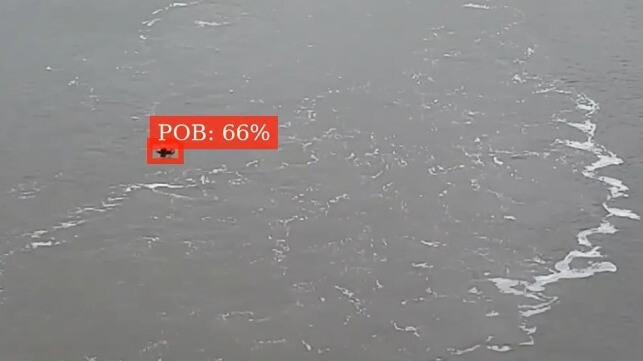
ZOE combines camera hardware with proprietary AI software that automatically detects when a person falls overboard and tracks their position in real time, enabling faster, more accurate response. Its deployment on another rig signals a broader interest across the offshore energy sector in using machine learning to support both personnel safety and asset security monitoring.
Zelim’s CEO and founder, Sam Mayall, explains that the system was developed specifically to operate in the maritime environment, which presents different technical constraints from traditional object detection systems used on land. “The first challenge in a man overboard incident is knowing when and where it happened. The second challenge is keeping track of the person in the water, particularly in variable sea states. ZOE provides real-time visual tracking and geo-location data to coordinate an effective response.”
The first installation provided a relatively fixed operating environment for ZOE to prove its capabilities. The more recent deployment is on a rig that frequently relocates to new locations, requiring the system to adapt to different weather conditions, sea states, and lighting environments.
ZOE uses machine learning models trained on a bespoke maritime dataset. Zelim began building its own visual library in 2020 during development of its Guardian unmanned rescue vessel. As part of that process, the company used drone-mounted cameras to capture footage of people in the water from different angles and under various conditions. These images were manually annotated and used to train the algorithms behind the intelligent detection system. The resulting dataset now includes more than 7 million labelled images, which is claimed to be the most extensive of its kind in maritime search and rescue.
According to Mayall, the quality and specificity of the dataset is critical. “A person in the water may be wearing dark clothing, face down, partially submerged, or obscured by foam or spray. These aren’t fixed profiles. We had to ensure the system could recognise a human target from a range of angles and distances, under real-world conditions. That meant building a dataset that reflected how people actually appear in the water, not how they’re modelled in ideal circumstances.”
ZOE integrates with a rig or vessel’s existing infrastructure, including surveillance, navigation and emergency response systems. The package includes processing hardware to enable detection and alerting to occur locally, without dependence on remote or cloud connectivity.
The software architecture behind ZOE has also been adapted into other modules. Watchkeeper is an option that supports bridge teams by acting as a visual lookout, identifying navigational hazards or approaching vessels. Another module, Shield, extends the same detection capability to support rig security, alerting crews to suspicious activity or unauthorised vessels within restricted zones around offshore sites. Both modules are built on the same core AI engine, but are designed for different operational roles.
Mayall says that the ability to detect and classify objects consistently and in real time opens up wider use cases. “If you can reliably detect a person in the water, you can also detect other objects or risks. The same system can support navigation, perimeter monitoring, or safety watchkeeping. That’s where we see this technology heading - not just detection, but situational understanding.”
Zelim has collaborated with the US Coast Guard on testing and validation. One of the drivers for this collaboration was the Coast Guard’s own research, which found that visual spotting by trained search crews remains inconsistent, with detection probabilities sometimes below 20 percent depending on conditions. Mayall notes that AI systems bring consistency. “AI doesn’t fatigue, doesn’t blink, and doesn’t overlook what’s in plain sight. That consistency makes it a reliable component in a broader safety system.”
The use of AI for detection and alerting is increasingly viewed not as a replacement for human judgment, but as an augmentation of it. In a setting where rapid recognition and response are critical, the ability to reduce the detection window from minutes to seconds can have a direct impact on outcomes. Operators are beginning to see these systems not only as tools for emergency response, but also as part of their broader approach to safety and operational assurance.
Zelim’s work over the past five years reflects a shift towards intelligent, consistent monitoring that supports human decision-making and improves reaction time. For offshore operators, that capability is now becoming part of the standard toolkit. As deployments continue and new modules are brought online, systems like ZOE may come to define the next generation of offshore safety technology – not as standalone interventions, but as integrated components of modern marine operations.
The products and services herein described in this press release are not endorsed by The Maritime Executive.
No comments:
Post a Comment