Issued on: 03/08/2025 -
New outbreaks of violence overnight into Sunday
August 3, 2025

A view of damaged Syrian army tanks and other heavy weapons is seen in the Yarmouk area, after Israeli artillery fire hit the area in response to rockets allegedly launched into Daraa, Syria, on June 04, 2025. [Muhammed Malik Hattab – Anadolu Agency]
The Israeli army on Sunday claimed carrying out a coordinated raid on four locations in southern Syria overnight, seizing weapons allegedly to be used in cross-border arms trafficking, Anadolu reports.
According to army spokesperson Avichay Adraee, Israeli forces interrogated several individuals suspected of arms trafficking in the village of Hader, near the occupied Golan Heights.
The military said its forces remain deployed across the area as part of efforts to prevent what it called “terrorist entrenchment” near the Syrian border and to “protect the citizens of the State of Israel.”
Since the fall of the Assad regime in December 2024, Israel has targeted military installations, vehicles and ammunition sites in Syria multiple times. Recently it intervened in Suwayda on the pretext of protecting the minority Druze, which had clashes with Bedouin tribes, and also struck Damascus.
A security source said the armed groups had violated the ceasefire agreed in the predominantly Druze region
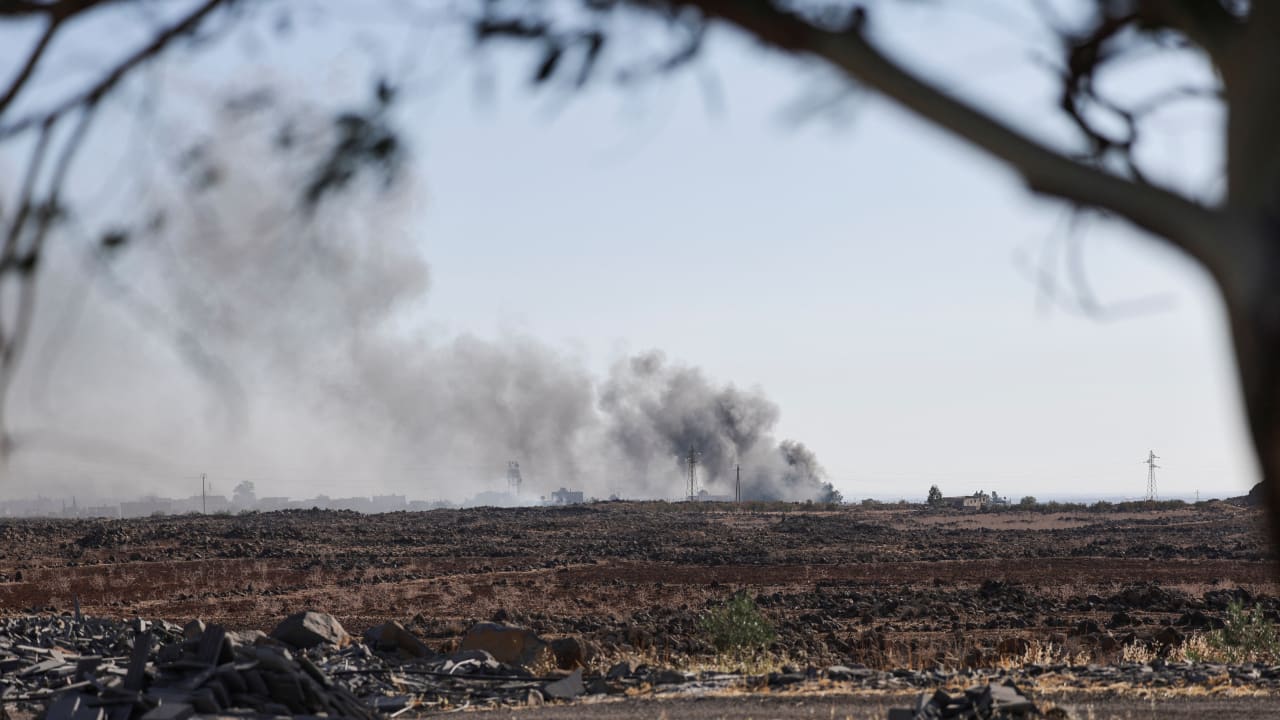
Armed groups attacked personnel from Syria's internal security forces in Sweida, killing one member and wounding others, and fired shells at several villages in the violence-hit southern province, state-run Ekhbariya TV reported on Sunday.
The report cited a security source as saying the armed groups had violated the ceasefire agreed in the predominantly Druze region, where factional bloodshed killed hundreds of people last month.
Syria's Interior Ministry issued a statement claiming it was rebel gangs that violated the ceasefire, despite the government's attempts to maintain calm.
“As these gangs failed to thwart the Syrian State’s efforts and its responsibilities towards our people in Sweida, they resorted to violating the ceasefire agreement by launching treacherous attacks against Internal Security Forces on several fronts and shelling some villages with rockets and mortar shells, resulting in the martyrdom and injury of a number of security personnel” the ministry said.

Violence in SweidaViolence in Sweida erupted on July 13 between Bedouin tribal fighters and Druze factions. Government forces were sent to quell the fighting, but the bloodshed worsened, and Israel carried out strikes on Syrian troops in the name of the Druze.
The Druze are a minority offshoot of Islam with followers in Syria, Lebanon and Israel. Sweida province is predominantly Druze but is also home to Sunni tribes, and the communities have had long-standing tensions over land and other resources.
A US-brokered truce ended the fighting, which had raged in Sweida city and surrounding towns for nearly a week. Syria said it would investigate the clashes, setting up a committee to investigate the attacks.
The Sweida bloodshed last month was a major test for interim President Ahmed al-Sharaa, after a wave of sectarian violence in March that killed hundreds of Alawite citizens in the coastal region.
At least two killed as armed groups attack Syria's security troops in Sweida
Violence erupted in early July between tribal fighters and Druze factions
The National
August 03, 2025
Armed groups attacked Syria's internal security troops in the southern city of Sweida on Sunday, killing at least two people and injuring others, local media and war monitor reported.
Syrian Observatory for Human Rights said that “A member of the General Security forces was killed and seven others were injured … as clashes erupted with local factions around Tal Hadid in the western Sweida countryside”. It also reported the death of a “local fighter”.
A source told Syria's state-run Al Ekhbariya TV that the armed groups breached the ceasefire deal made in the predominantly Druze region last month after sectarian clashes killed hundreds of people, many of them civilians.
Tal Hadid is a “key control point” at a relatively high altitude, according to the monitor, allowing whoever controls it to overlook neighbouring areas.
Fighting also erupted around the city of Thaala, the monitor said, “following bombardment of the area with shells and heavy weapons launched from areas under the control of government forces, while the sound of explosions and gunfire was heard in various parts of Sweida city”.
According to the monitor and Sweida locals, Damascus has been imposing a siege on the province, with the Observatory saying the government wants to “force inhabitants to comply”.
Clashes erupted in early July between Bedouin and Druze factions, after the kidnapping of a Druze trader on a government-controlled road to the north of the city, and escalated into widespread violence in which more than 1,000 people were killed.
Syrian government troops were sent to contain the unrest but Druze militias, who deeply distrust the newly established authorities in Damascus and accuse of siding with the Bedouin, mobilised to push them back.
The Druze are a minority offshoot of Islam, with followers in Syria, Lebanon and Israel. Sweida province is predominantly Druze but is also home to Sunni tribes, and the communities have been scarred by long-standing tension over land and other resources.
A US-brokered truce ended the fighting, which had raged in Sweida city and surrounding towns for nearly a week. The government in Damascus said it would investigate the clashes, setting up a committee for that purpose.
The Sweida bloodshed last month was a major test for interim President Ahmed Al Shara, after a wave of sectarian violence in March that killed hundreds of Alawite citizens in the coastal region.
Israel in July attacked the main Syrian military compounds in the heart of Damascus, in a widening aerial campaign in response to the offensive on Sweida. Israel said it was acting to defend the Druze minority.
Also on Sunday, the Israeli army announced it conducted a raid on targets in southern Syria the previous day, in which it seized weapons and questioned several suspects it said were involved in trafficking weapons in the area.
Updated: August 03, 2025, 8:48 AM`
Kurdish-led SDF Say Five Members Killed During Attack by ISIS in Syria

A member of the SDF in Deir Ezzor, Syria. (AFP file)
The Kurdish-led Syrian Democratic Forces said on Sunday that five of its members had been killed during an attack b ISIS militants on a checkpoint in eastern Syria's Deir Ezzor on July 31.
The SDF was the main fighting force allied to the United States in Syria during fighting that defeated ISIS in 2019 after the group captured large swathes of Syria and Iraq.
ISIS has been trying to stage a comeback in the Middle East, the West and Asia. Deir Ezzor city was captured by the group in 2014, but the Syrian army retook it in 2017.
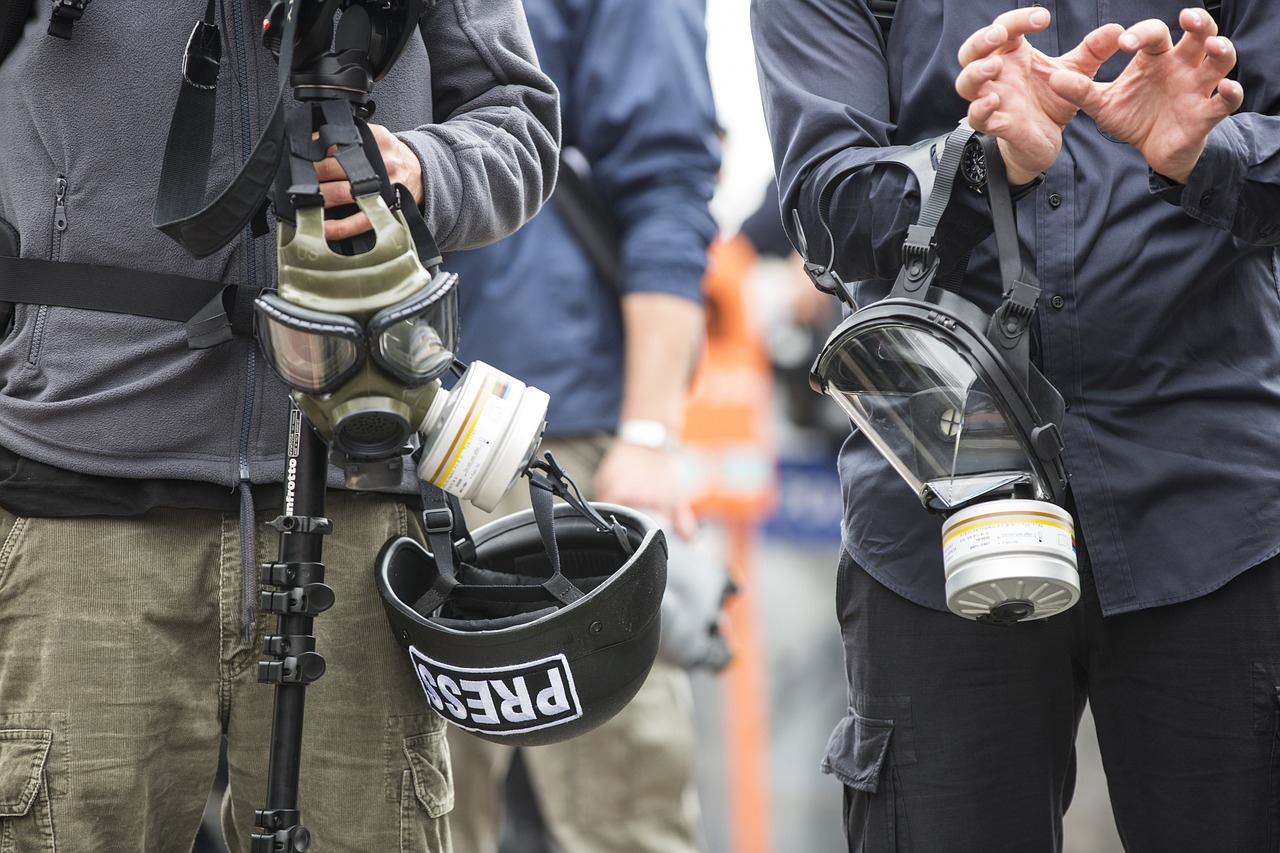
The Committee to Protect Journalists (CPJ) on Wednesday urged accountability for the death of Syrian photojournalist Sari Majid Al-Shoufi while reporting on armed combat near the Syrian city of Sweida.
Al-Shoufi was a photojournalist for Suwayda 24, a Druze-focused website. Rayan Marouf, the editor-in-chief of the website, said Al-Shoufi was reporting from a site in Taara, close to Sweida. Marouf told CPJ that, at around 6 AM on July 14, Al-Shoufi sent messages that “the site was under heavy attack by drones and armored vehicles, and that everyone around him had been killed.” Al-Shoufi’s death was confirmed 10 days later.
Armed hostilities between the Druze and Bedouin groups in Sweida was spurred by an attack on a Druze merchant by Bedouin tribespeople on July 13. Various other journalists have been wounded, threatened or harassed since the armed clashes began. The UN Syria Commission of Inquiry expressed “deep concern” over the violence in Sweida and stressed that the Syrian authorities have the responsibility to “ensure the respect, protection and fulfilment of human rights of all its people, free from any form of discrimination, and calls on all parties to cease violence immediately and de-escalate the situation through dialogue.”
According to Reporters Without Borders (RSF), Syrian authorities previously assured that press freedom would be improved. Yet, there have been growing concerns regarding the safety of journalists during Syria’s political transition. For example, in May 2025, RSF criticized the attacks on seven journalists in Sweida.
CPJ’s Levant program coordinator, Doja Daoud, stated that the killing of Al-Shoufi “is a stark reminder of the grave dangers journalists face in conflict zones. Syrian journalists deserve safety and accountability from Syrian authorities
Moscow, Damascus oppose Israel’s aggressive actions against Syria
July 31, 2025
MEMO

Russian Foreign Minister Sergey Lavrov (R) and Syrian Foreign Minister Asaad al-Shaibani (L) hold a press conference after their meeting in Moscow, Russia on July 31, 2025. [Russian Foreign Ministry – Anadolu Agency
“Russia has consistently opposed the exploitation of Syrian territory for geopolitical rivalries or as a battleground for other states’ disputes,” Russian Foreign Minister Sergey Lavrov said at a news conference in Moscow following talks with his Syrian counterpart Asaad al-Shaibani,
Lavrov voiced hope that Syria would successfully navigate its current challenges.
“The recent sharp escalation in (southern Syria’s) Suwayda province, as well as earlier events on the Syrian coast, underscore the persistent challenges facing Syria’s leadership and society at this stage,” Lavrov noted, warning: “All members of the international community must avoid actions that risk further escalation.”
He also endorsed the initiative of the International Committee of the Red Cross to establish a presence in Suwayda, stating it would “help stabilize the situation and prevent recurrences.”
“We are convinced that lasting normalization in Syria requires inclusive dialogue. We hope the measures announced by the transitional government of President (Ahmad) al-Sharaa will directly advance these goals,” Lavrov added.
The minister also backed Syria’s upcoming September parliamentary elections, emphasizing their role in fostering national reconciliation.
“We reaffirm our commitment to Syria’s unity, independence, and territorial integrity, and we are prepared to support post-conflict reconstruction,” he noted.
Lavrov also thanked the Syrian leadership for the steps they are taking to ensure the safety of Russian citizens and Russian facilities within the country’s borders
The minister reported that during the meeting, he had agreed with his Syrian counterpart to conduct an inventory of all existing agreements.
“There were some contacts, but today we decided that this process should become regular. Issues concerning cooperation in the field of security and training personnel (both civilian and military)—all this is of interest to our Syrian colleagues,” he said.
Regarding trade and economic agreements and contracts, Lavrov said he had agreed with Shaibani that Damascus would expedite the appointment of its co-chairman in the bilateral intergovernmental trade and economic commission.
“On our part, there is already a chairman. As soon as the Syrian component of this mechanism is formed, we will ask this intergovernmental body to review all existing agreements and contracts to find mutually beneficial, mutually acceptable ways for Russia’s participation in assisting the recovery of the Syrian economy,” he noted.
Lavrov emphasized that internationally, lifting all sanctions against the Syrian people would have special significance.
He noted that Russia has never supported such Western decisions, nor allowed any sanctions to be advanced in the UN Security Council.
READ: Putin to Netanyahu: Syria’s sovereignty and territorial integrity must be respected
“Now our American and European counterparts are gradually beginning to lift certain sanctions step by step. This movement is in the right direction. But we believe it is necessary to completely abolish these sanctions once and for all. They harmed only the Syrian people, not those politicians who claimed to be targeted by them,” Lavrov concluded.
– Syrian foreign minister says Israel exploiting ‘minorities card’
Syria’s foreign minister, for his part, said Israel is exploiting the “minorities card” to justify interference in the country’s internal affairs.
Shaibani asserted that the country’s Druze community is being manipulated to fracture Syrian society, reinforcing the claim that Damascus cannot protect all of its citizens.
“Israel systematically targets populated areas in the Suwayda province to incite civil unrest, potentially even reigniting civil war. It is critical that no party—especially Israel—exploits the ‘minorities card’ to justify interference in Syria’s internal affairs,” he stressed.
He also underscored Syria’s lack of aggressive intent toward Israel, noting the government’s focus on postwar reconstruction and public exhaustion after over a decade of civil war.
“The Syrian government is responsible for all its people, not select minorities. We will not allow this narrative to be weaponized again,” he declared.
On bilateral ties, Shaibani described the meeting as opening “a new chapter in Russian-Syrian relations,” adding: “Our nation seeks deepened cooperation with Russia.”
He emphasized that Moscow had “unequivocally confirmed the absolute sovereignty of the Syrian Arab Republic” during transparent discussions with Lavrov.
“Syria’s path to stability and recovery is impossible without halting Israel’s attacks, witnessed globally. These strikes violate international law and humanitarian norms while sabotaging our nation’s reconstruction and stabilization,” he said.
Shaibani also welcomed Russia’s firm rejection of Israeli military actions, noting their talks had addressed Moscow’s role in Syria’s economic revival.
“Our discussions included Russia’s role in Syria’s economic recovery, grounded in international law and our people’s interests. Our partnership will not dwell on the past but advance through shared responsibility and mutual respect,” he said.
Damascus aims to regain its traditional position on the international stage and intends to establish partnership relations with other countries, primarily in the interests of the Syrian people, he concluded.
No comments:
Post a Comment