EU leaders push for Kyiv to be part of Trump-Putin talks to end Ukraine war
Top EU diplomat Kaja Kallas said any deal between the United States and Russia to end the war in Ukraine had to include Kyiv and the bloc, adding that she was convening a meeting of EU foreign ministers on Monday “to discuss our next steps". A statement from EU leaders on Sunday urged US President Donald Trump to put more pressure on Russia to end the war.
Issued on: 11/08/2025 -
By: FRANCE 24
Asked on CNN on Sunday if Zelensky could be present, US Ambassador to NATO Matthew Whitaker responded: “Yes, I certainly think it’s possible.”
“Certainly, there can’t be a deal that everybody that’s involved in it doesn’t agree to. And, I mean, obviously, it’s a high priority to get this war to end.”
Whitaker said the decision would ultimately be Trump’s to make, and there was no word Sunday from the White House.
‘Testing Putin’
Top EU diplomat Kaja Kallas said any deal between the United States and Russia to end the war in Ukraine had to include Kyiv and the bloc.
“President Trump is right that Russia has to end its war against Ukraine,” Kallas said in a statement Sunday.
“The US has the power to force Russia to negotiate seriously. Any deal between the US and Russia must have Ukraine and the EU included, for it is a matter of Ukraine’s and the whole of Europe’s security,” she added.
“I will convene an extraordinary meeting of the EU foreign ministers on Monday to discuss our next steps.”
Ukraine’s Foreign Minister Andriy Sybiga will also take part in the Monday afternoon meeting, the ministry said.
NATO chief Mark Rutte told ABC’s “This Week” broadcast on Sunday that Trump was “putting pressure on Putin”.

Top EU diplomat Kaja Kallas said any deal between the United States and Russia to end the war in Ukraine had to include Kyiv and the bloc, adding that she was convening a meeting of EU foreign ministers on Monday “to discuss our next steps". A statement from EU leaders on Sunday urged US President Donald Trump to put more pressure on Russia to end the war.
Issued on: 11/08/2025 -
By: FRANCE 24
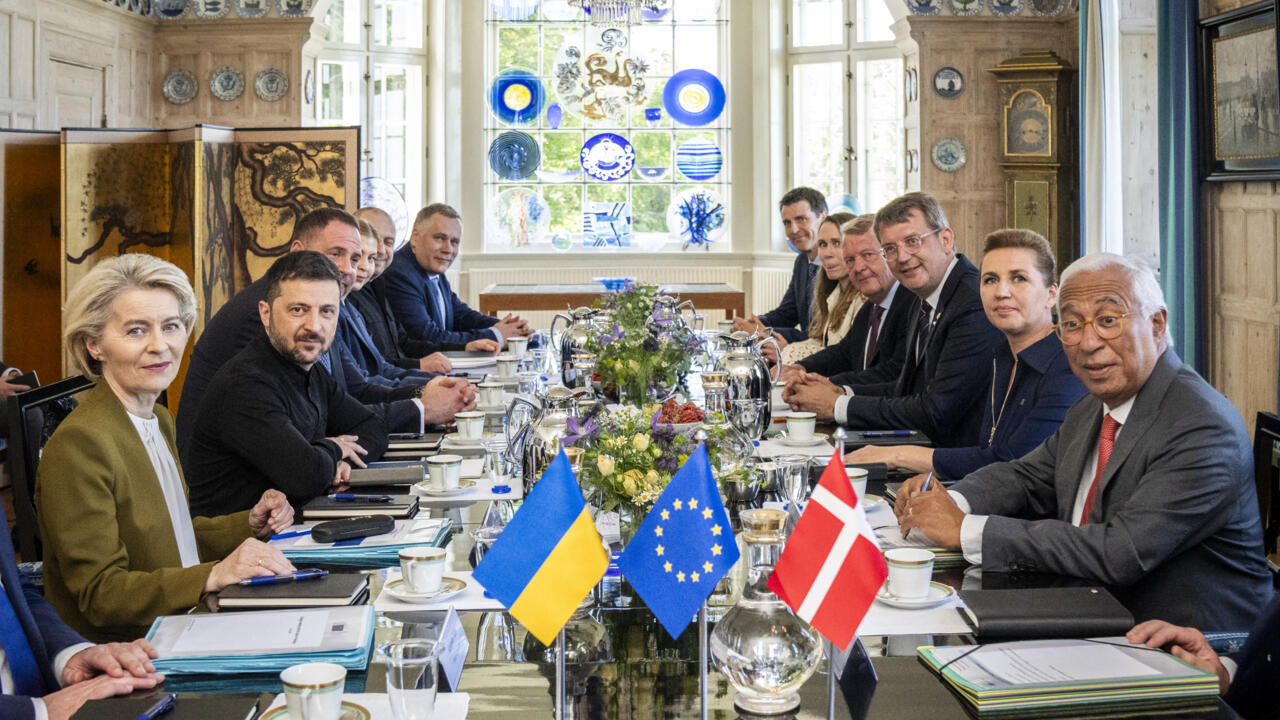
European Commission President Ursula von der Leyen (L), Ukraine's President Volodymyr Zelensk, Danish Prime Minister Mette Frederiksen (2R) and President of the European Council António Costa, meet at Marselisborg Castle in Aarhus, Denmark, on July 3, 2025. © Ida Marie Odgaard, AFP
European leaders on Sunday pushed for Ukraine to be a part of negotiations between the United States and Russia, ahead of talks between presidents Vladimir Putin and Donald Trump.
The two leaders will meet in the US state of Alaska Friday to try to resolve the three-year war, but the European Union has insisted that Kyiv and European powers should be part of any deal to end the conflict.
The idea of a US-Russia meeting without Ukrainian President Volodymyr Zelensky has raised concerns that a deal would require Kyiv to cede swaths of territory, which the EU has rejected.
EU foreign ministers will discuss the talks in a meeting by video link on Monday, joined by their Ukrainian counterpart.
“The path to peace in Ukraine cannot be decided without Ukraine,” leaders from France, Germany, Italy, Poland, Britain and Finland and EU Commission chief Ursula von der Leyen said in a joint statement, urging Trump to put more pressure on Russia.
Read moreTrump to meet Putin in Alaska on August 15 to discuss war in Ukraine
In a flurry of diplomacy, Zelensky held calls with 13 counterparts over three days including Kyiv’s main backers Germany, Britain and France.
German Chancellor Friedrich Merz said Sunday he hoped and assumed that Zelensky would attend the leaders’ summit.
Leaders of the Nordic and Baltic countries – Denmark, Estonia, Finland, Iceland, Latvia, Lithuania, Norway and Sweden – also said no decisions should be taken without Kyiv’s involvement.
Talks on ending the war could only take place during a ceasefire, they added in a joint statement.
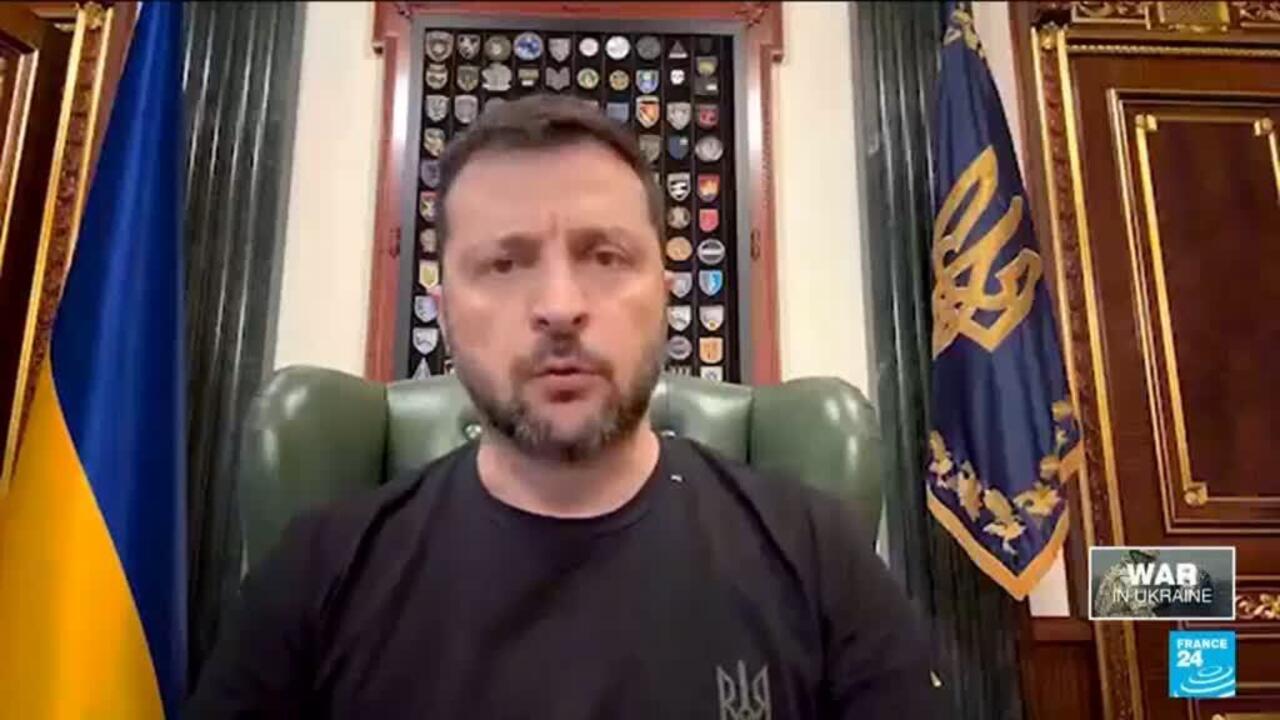
Zelensky says Ukraine must be included in Trump-Putin talks
European leaders on Sunday pushed for Ukraine to be a part of negotiations between the United States and Russia, ahead of talks between presidents Vladimir Putin and Donald Trump.
The two leaders will meet in the US state of Alaska Friday to try to resolve the three-year war, but the European Union has insisted that Kyiv and European powers should be part of any deal to end the conflict.
The idea of a US-Russia meeting without Ukrainian President Volodymyr Zelensky has raised concerns that a deal would require Kyiv to cede swaths of territory, which the EU has rejected.
EU foreign ministers will discuss the talks in a meeting by video link on Monday, joined by their Ukrainian counterpart.
“The path to peace in Ukraine cannot be decided without Ukraine,” leaders from France, Germany, Italy, Poland, Britain and Finland and EU Commission chief Ursula von der Leyen said in a joint statement, urging Trump to put more pressure on Russia.
Read moreTrump to meet Putin in Alaska on August 15 to discuss war in Ukraine
In a flurry of diplomacy, Zelensky held calls with 13 counterparts over three days including Kyiv’s main backers Germany, Britain and France.
German Chancellor Friedrich Merz said Sunday he hoped and assumed that Zelensky would attend the leaders’ summit.
Leaders of the Nordic and Baltic countries – Denmark, Estonia, Finland, Iceland, Latvia, Lithuania, Norway and Sweden – also said no decisions should be taken without Kyiv’s involvement.
Talks on ending the war could only take place during a ceasefire, they added in a joint statement.
Zelensky says Ukraine must be included in Trump-Putin talks
© France 24 01:32
Asked on CNN on Sunday if Zelensky could be present, US Ambassador to NATO Matthew Whitaker responded: “Yes, I certainly think it’s possible.”
“Certainly, there can’t be a deal that everybody that’s involved in it doesn’t agree to. And, I mean, obviously, it’s a high priority to get this war to end.”
Whitaker said the decision would ultimately be Trump’s to make, and there was no word Sunday from the White House.
‘Testing Putin’
Top EU diplomat Kaja Kallas said any deal between the United States and Russia to end the war in Ukraine had to include Kyiv and the bloc.
“President Trump is right that Russia has to end its war against Ukraine,” Kallas said in a statement Sunday.
“The US has the power to force Russia to negotiate seriously. Any deal between the US and Russia must have Ukraine and the EU included, for it is a matter of Ukraine’s and the whole of Europe’s security,” she added.
“I will convene an extraordinary meeting of the EU foreign ministers on Monday to discuss our next steps.”
Ukraine’s Foreign Minister Andriy Sybiga will also take part in the Monday afternoon meeting, the ministry said.
NATO chief Mark Rutte told ABC’s “This Week” broadcast on Sunday that Trump was “putting pressure on Putin”.
© France 24 09:10
“Next Friday will be important because it will be about testing Putin, how serious he is on bringing this terrible war to an end,” he added.
Ukraine’s military said on Sunday it had taken back a village in the Sumy region from the Russian army, which has made significant recent gains.
The village is on the frontline in the north of the country and about 20 kilometres (13 miles) west of the main fighting between the two armies in the northern region.
A ‘just peace’
As a prerequisite to any peace settlement, Moscow has demanded Kyiv pull its forces out of the regions and commit to being a neutral state, shun US and EU military support and be excluded from joining NATO.
Kyiv said it would never recognise Russian control over its sovereign territory, though it acknowledged that getting land captured by Russia back would have to come through diplomacy, not on the battlefield.
The EU’s Kallas backed Kyiv’s position on Sunday.
“As we work towards a sustainable and just peace, international law is clear: All temporarily occupied territories belong to Ukraine,” the EU foreign policy chief said.
NATO’s Rutte said it was a reality that “Russia is controlling some of Ukrainian territory” and suggested a future deal could acknowledge this.
“When it comes to acknowledging, for example, maybe in a future deal, that Russia is controlling, de facto, factually, some of the territory of Ukraine. It has to be effectual recognition and not a political de jure recognition,” Rutte told ABC.
Zelensky thanked those countries backing Ukraine’s position in his Sunday evening address.
“The war must be ended as soon as possible with a fair peace,” he said. “A fair peace is needed.
“Clear support for the fact that everything concerning Ukraine must be decided with Ukraine’s participation. Just as it should be with every other independent state.”
(FRANCE 24 with AFP)
“Next Friday will be important because it will be about testing Putin, how serious he is on bringing this terrible war to an end,” he added.
Ukraine’s military said on Sunday it had taken back a village in the Sumy region from the Russian army, which has made significant recent gains.
The village is on the frontline in the north of the country and about 20 kilometres (13 miles) west of the main fighting between the two armies in the northern region.
A ‘just peace’
As a prerequisite to any peace settlement, Moscow has demanded Kyiv pull its forces out of the regions and commit to being a neutral state, shun US and EU military support and be excluded from joining NATO.
Kyiv said it would never recognise Russian control over its sovereign territory, though it acknowledged that getting land captured by Russia back would have to come through diplomacy, not on the battlefield.
The EU’s Kallas backed Kyiv’s position on Sunday.
“As we work towards a sustainable and just peace, international law is clear: All temporarily occupied territories belong to Ukraine,” the EU foreign policy chief said.
NATO’s Rutte said it was a reality that “Russia is controlling some of Ukrainian territory” and suggested a future deal could acknowledge this.
“When it comes to acknowledging, for example, maybe in a future deal, that Russia is controlling, de facto, factually, some of the territory of Ukraine. It has to be effectual recognition and not a political de jure recognition,” Rutte told ABC.
Zelensky thanked those countries backing Ukraine’s position in his Sunday evening address.
“The war must be ended as soon as possible with a fair peace,” he said. “A fair peace is needed.
“Clear support for the fact that everything concerning Ukraine must be decided with Ukraine’s participation. Just as it should be with every other independent state.”
(FRANCE 24 with AFP)
Zelenskyy accuses Putin of trying to legalize occupation of Ukrainian territories
TRUMP TOO
‘His only card is the ability to kill, and he is trying to sell the cessation of killings at the highest possible price,’ says Ukrainian president
Efe Ozkan |10.08.2025 - TRT/AA
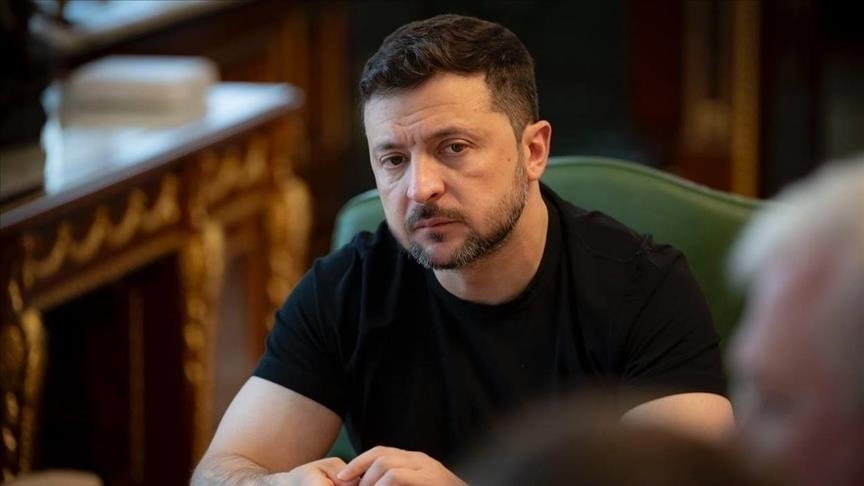
Ukrainian President Volodymyr Zelenskyy accused Russian President Vladimir Putin on Saturday of wanting “territorial spoils” and legalizing the occupation of Ukrainian territories.
Zelenskyy reiterated the need for an end to his country’s war with Russia and not just “a pause in the killings.”
“There must be a just end to the war, and it is Russia that must end the war it started. There is only one actor opposing this -- Putin. His only card is the ability to kill, and he is trying to sell the cessation of killings at the highest possible price,” he said in a video message on X.
Zelenskyy emphasized US President Donald Trump’s ability to achieve a more permanent solution.
“The President of the United States has the levers and the determination. Ukraine has supported all of President Trump’s proposals, starting back in February. Ceasefire, all formats have been supported,” he said.
Zelenskyy noted that Putin’s desire for a pause in the fighting was due to his fear of sanctions and “for the legalization of the occupation of our land -- he wants to get territorial spoils for the second time.”
He noted that “Putin was allowed to take Crimea,” which he argued led to the occupation in Donetsk and Luhansk.
“We will not allow this second attempt to partition Ukraine. Knowing Russia, where there is a second, there will be a third. That is why we stand firm, on clear Ukrainian positions. We must end the war with a dignified peace, based on a clear and reliable security architecture,” said Zelenskyy.
His message comes as Trump is expected to meet Putin on Aug. 15 in the US state of Alaska to discuss a peace deal.
India backs Trump-Putin Alaska summit, eyes early end to Ukraine war
SUCKING UP TO TRUMP
New Delhi hails planned US-Russia meet on Aug 15, hopes for peace and relief from tariffs tied to its Russian oil imports
Anita Joshua Published 10.08.25, TELEGRAM CALCUTTA
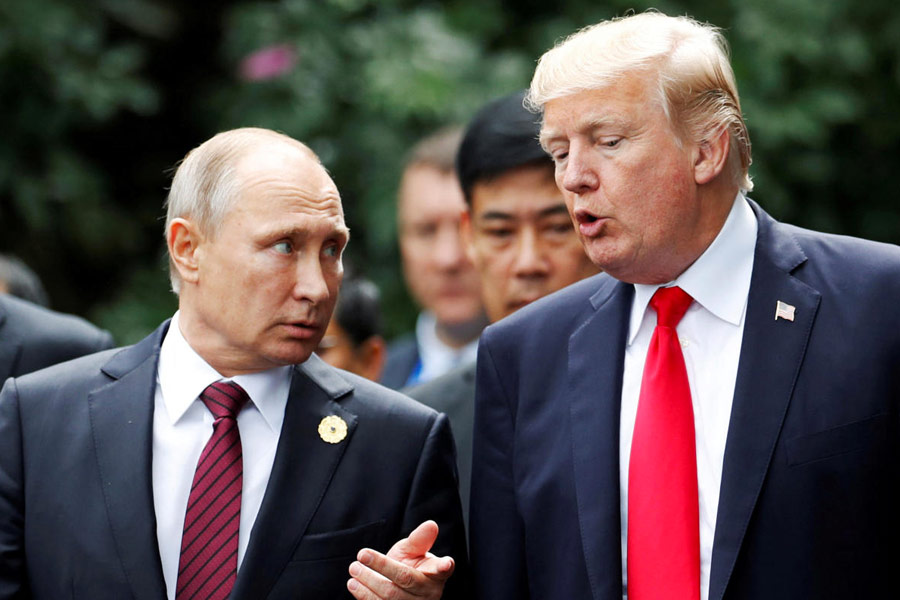
Donald Trump and Vladimir PutinFile
India on Saturday welcomed the agreement between US and Russia for a presidential meeting in Alaska in a bid to end the war in Ukraine. New Delhi’s stakes for an early resolution of the conflict are higher than ever before since the war began in February 2022 after Washington slapped India with an additional 25 per cent tariff on imports as a penalty for buying Russian oil.
Welcoming the “understanding reached between the United States and the Russian Federation for a meeting in Alaska on 15th August 2025”, external affairs ministry spokesperson Randhir Jaiswal in a suo motu statement said: “This meeting holds the promise of bringing to an end the ongoing conflict in Ukraine and opening up the prospects for peace.”
Quoting Prime Minister Narendra Modi’s statement that “this is not an era of war”, the spokesperson said India not only endorses the summit meeting between US President Donald Trump and his Russian counterpart Vladimir Putin, but also “stands ready to support these efforts”.
Vance says Ukraine peace deal unlikely to satisfy either side

US Vice President JD Vance speaks during a meeting with British Foreign Secretary David Lammy at Chevening House in Sevenoaks, Kent, Britain Aug 8, 2025.
PHOTO: Kin Cheung via Reuters file
US Vice President JD Vance speaks during a meeting with British Foreign Secretary David Lammy at Chevening House in Sevenoaks, Kent, Britain Aug 8, 2025.
PHOTO: Kin Cheung via Reuters file
PUBLISHED ON August 10, 2025
WASHINGTON — US Vice President JD Vance said a negotiated settlement between Russia and Ukraine was unlikely to satisfy either side, and that any peace deal will likely leave both Moscow and Kyiv "unhappy."
He said the US is aiming for a settlement both countries can accept.
"It's not going to make anybody super happy. Both the Russians and the Ukrainians, probably, at the end of the day, are going to be unhappy with it," he said on Fox News' Sunday Morning Futures with Maria Bartiromo.
US President Donald Trump said on Friday he will meet with Russian President Vladimir Putin on Aug 15 in Alaska to negotiate an end to the war in Ukraine.
Trump said Russia and Ukraine were close to a ceasefire deal that could end the three-and-a-half-year-old conflict, possibly requiring Ukraine to surrender significant territory.
Ukrainian President Volodymyr Zelenskiy, however, said on Saturday that Ukraine cannot violate its constitution on territorial issues, adding, "Ukrainians will not gift their land to the occupiers."
In the Fox News interview recorded on Friday, Vance said the United States was working to schedule talks between Putin, Zelenskiy and Trump, but he did not think it would be productive for Putin to meet with Zelenskiy before speaking with Trump.
"We're at a point now where we're trying to figure out, frankly, scheduling and things like that, around when these three leaders could sit down and discuss an end to this conflict," he said.
A White House official said late on Saturday that Trump was open to a summit with both leaders, but that right now the White House was planning for the bilateral meeting requested by Putin.
WASHINGTON — US Vice President JD Vance said a negotiated settlement between Russia and Ukraine was unlikely to satisfy either side, and that any peace deal will likely leave both Moscow and Kyiv "unhappy."
He said the US is aiming for a settlement both countries can accept.
"It's not going to make anybody super happy. Both the Russians and the Ukrainians, probably, at the end of the day, are going to be unhappy with it," he said on Fox News' Sunday Morning Futures with Maria Bartiromo.
US President Donald Trump said on Friday he will meet with Russian President Vladimir Putin on Aug 15 in Alaska to negotiate an end to the war in Ukraine.
Trump said Russia and Ukraine were close to a ceasefire deal that could end the three-and-a-half-year-old conflict, possibly requiring Ukraine to surrender significant territory.
Ukrainian President Volodymyr Zelenskiy, however, said on Saturday that Ukraine cannot violate its constitution on territorial issues, adding, "Ukrainians will not gift their land to the occupiers."
In the Fox News interview recorded on Friday, Vance said the United States was working to schedule talks between Putin, Zelenskiy and Trump, but he did not think it would be productive for Putin to meet with Zelenskiy before speaking with Trump.
"We're at a point now where we're trying to figure out, frankly, scheduling and things like that, around when these three leaders could sit down and discuss an end to this conflict," he said.
A White House official said late on Saturday that Trump was open to a summit with both leaders, but that right now the White House was planning for the bilateral meeting requested by Putin.
 |
| NestorMakhno Anarchys Cossack.pdf THE CONSERVATIVE PRAMATIST The Economics Behind a Ceasefire in Ukraine By Matt Gertken REALCLEARWORLDPOLITICS The odds of a ceasefire in Ukraine are higher than most people think – but nobody said the path would be smooth. This past week, U.S. President Donald Trump began slapping “secondary tariffs” on countries like India that import oil from Russia. The goal is to force Putin to commit to a credible ceasefire negotiation – and thus create a global “peace dividend” that would boost Trump’s presidency and economic sentiment. The problem is that Trump has limited willingness to incur pain on Ukraine’s behalf – while other countries have a high willingness to incur pain for their sovereignty and energy security. India stays neutral, at least toward Russia India, for instance, now faces a 25% tariff for supporting Russia’s economy, in addition to the 25% “reciprocal” tariff arising from Trump’s broader tariff onslaught. India imports about 39% of its oil from Russia, 9% of its coal, and 9% of its overall goods. Oil consumption makes up 4.7% of its GDP. India’s exports to the U.S. make up about 20% of total, or 2.2% of GDP. That is comparable to Russian oil imports, but the tradeoff looks tougher on paper than it really is. India would rather suffer a blow to manufacturers than see its entire social stability upended by rising domestic fuel prices. While there are ample substitutes for the 1.7 million barrels per day that Russia ships to India, India is not inclined to accept U.S. dictation over its resource supply security. India is also negotiating with Russia over whether to buy fifth-generation Russian fighters. The U.S. can afford to maintain punitive measures on India, but it is questionable policy. India accounts for 2.9% of American imports, which is small but not negligible. It exports pharmaceuticals, which are important for voters. The U.S. faces a strategic setback if it alienates a rising global power that it needs to counter China over the long run. For that reason, the Trump administration will quickly seek a solution with India. But only after it makes progress on Russia and Ukraine. India’s historically neutral and non-aligned status has received a boost, though it will still work with the U.S. to counter China in future. U.S. and China stumble toward a shallow deal China is next in line for secondary tariffs, with the so-called “tariff truce” set to expire on August 12. Talks with China did not go well in Stockholm last month. Neither Trump nor Xi confirmed that the truce negotiated in Geneva in May would be extended by three months. If Putin rejects Trump’s offers, then Trump may be forced to raise tariffs and increase leverage in the near term. But it would be temporary and part of the negotiating process. The Trump administration still wants a “Phase Two” trade deal with China. It is already loosening high-tech export controls. Trump may also be sidelining Taiwan’s president. The latter’s humiliating defeat in a recall election last month removes an obstacle to a U.S.-China trade deal. The top issues for American voters right now are inflation and prices (21%) and the economy and jobs (14%). Foreign policy is low on the list at 1%, according to a July poll by The Economist/YouGov. Trump’s general approval rating stands at 47%, but his net approval rating is negative and his approval on handling the economy has fallen to 41%. That comes after half a year of trade war. Indeed, while 77% of Republicans support the trade war, only 31% of independent voters do, according to the same pollster. Independents and establishment Republicans will be critical to fending off the midterm curse in 2026. Moreover, the odds of China cutting off Russian oil, beyond superficial gestures, are low. China’s strategic interest lies in a de facto alliance with Russia, so that it can improve its supply security over time. An increasingly coherent Eurasian strategic partnership would help to shield the Chinese population from any shocks imposed by the U.S. and its fellow maritime powers. Especially in the event of a conflict over Taiwan or China’s desired sphere of influence. Hence Trump’s goal with China is merely to get more concessions. He wants to expand U.S. access to foreign markets, increase net exports, and keep the economy booming. Trump cannot afford to jeopardize the China deal, the bull market, the economy, and the midterm elections all for the sake of Ukraine. He needs to get all the hard work done and the negative economic surprises over with by Christmas, or at least well before summer 2026, when midterm voters start to make up their minds. After the midterm, the U.S.-China trade war is likely to return with a vengeance. Russia accepts a ceasefire… only to rebuild Russia ultimately has an interest in a ceasefire, especially one that does not require it to return the conquered territory. Russia has spent nearly 20% of GDP on this war – compared to the U.S.’s 1% of GDP on the Vietnam war – and it has lost over 200,000 soldiers with a population of 144 million, whereas the U.S. lost 58,000 with a population of 216 million in 1975. About 60% of Russians believe peace talks should begin, according to the Levada Center. Russia is not driven by popular opinion in the same way as the democracies are, but the widening gap between means and ends still points to a change in state policy. Oil and gas revenues, at $131 billion, are now falling beneath estimated defense spending, at around $195 billion. Yet crude oil prices remain weak in the context of U.S. coordination with its Gulf Arab allies, who are increasing oil supply. It makes little sense for Russia to spurn Trump, who is eager for a deal, and reunite the U.S. with Europe… and NATO with Ukraine. Russia will always say it is willing to fight a forever war in its propaganda, but the material interest in a ceasefire is strong. The takeaway is that, while President Trump may crank up the pressure on Russia and its oil customers in the near term, he will need to de-escalate shortly. Everybody knows it – and nobody is willing to sacrifice their long-term energy security to avoid temporary tariffs. At the same time, Russia will eventually accept a ceasefire. The problem is that it will only bring a ceasefire dividend, not a durable peace dividend. By its nature, the Russo-Chinese bloc will continue to clash with the U.S. and its allies over the long run. As for India, its balancing act will continue. Matt Gertken is Chief Geopolitical Strategist at BCA Research |
No comments:
Post a Comment