India Protests Trump's Pressure Campaign on Russian Oil Imports
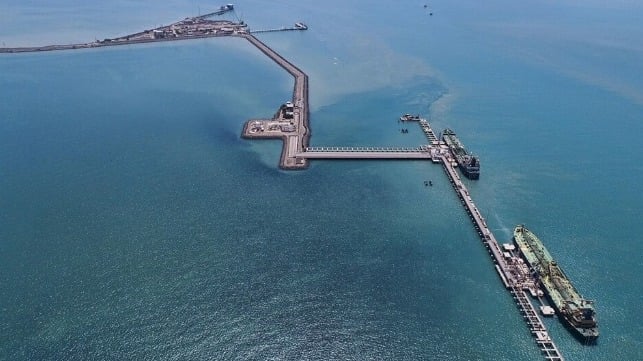
The government of India confirmed Monday that it plans to resist pressure from the Trump administration to stop buying Russian oil.
India ramped up purchasing of Russian oil after the full-scale invasion of Ukraine began in 2022. As Europe shut down its own imports, large volumes of sanctioned Russian crude became available at a discount on the global market. Under the G7 "price cap" measure, Russia has been allowed to keep selling that oil to non-Western buyers. At the time of implementation in 2022-23, G7 economic planners - notably then-U.S. Treasury Secretary Janet Yellen - wanted to keep Russian oil exports flowing, keeping net global supplies stable while reducing Russian energy revenue at the margins with the price cap. "The United States at that time actively encouraged [Russian oil] imports by India for strengthening global energy markets stability," the Indian foreign ministry noted in a statement Monday.
India was a willing participant and stepped up its buying of Russian crude, allowing the Middle Eastern crude oil that it used to buy to go to Europe instead. Indian refiners stopped buying American oil in quantity, and using their newfound and heavily-discounted Russian barrels - which now account for up to 30 percent of Indian crude imports - Indian refiners provided the European market with low-cost gasoline and diesel, made partly from EU-sanctioned Russian oil.
The Trump administration entered negotiations over the future of Ukraine with a pro-Russian outlook, and initially blamed Kyiv for the war. But as rounds of peace talks have come and gone without results, President Donald Trump's opinion of Russian negotiating strategy has soured. Trump has threatened to impose "secondary tariffs" on India if Moscow does not make moves toward ending the war. As U.S. importers pay the cash amount of each tariff to U.S. Customs and Border Protection for each shipment, the policy would raise transaction costs for Indian products like textiles and pharmaceuticals, making those products less competitive.
Trump doubled down on his threats in a social media post Monday, warning that he would raise tariffs "substantially" on Indian goods if India did not relent. India has so far signaled that it will continue buying, and tanker deliveries of Russian crude continued over the weekend.
"The targeting of India is unjustified and unreasonable. Like any major economy, India will take all necessary measures to safeguard its national interests and economic security," asserted the Indian foreign ministry, noting that the EU and U.S. both still trade with Russia for other commodities.
China is the leading buyer of Russian oil, thanks to steady demand from its independent "teapot" refiners for discounted barrels. It also faces U.S. pressure to stop importing from Russia, and Beijing's leaders have made clear that China will not be swayed from its support for Moscow.
"China will always ensure its energy supply in ways that serve our national interests," China’s Foreign Ministry stated in a social media post last week. "Coercion and pressuring will not achieve anything."
Top Image: Nayara / CC BY SA 4.0

Trump Again Threatens Major Tariff Hike On India Over Russian Crude
By Charles Kennedy - Aug 04, 2025
U.S. President Donald Trump on Monday said he would “substantially raise tariffs” on Indian exports in response to the country’s continued import and resale of Russian crude oil. The remarks, posted on Truth Social, marked the first time Trump directly tied trade penalties to India’s energy sourcing decisions, according to a report by Reuters.
Trump accused India of purchasing “massive amounts” of Russian oil and reselling it for profit, saying the country was indifferent to Ukrainian casualties. While no specific tariff categories were mentioned, aides cited by Fortune said the measures would be “very large, very soon.”
Despite sustained U.S. pressure, India has kept Russian crude volumes above 1.5 million barrels per day throughout the summer. Refiners have relied on rupee payments, direct Russian tankers, and third-party traders to maintain flows even under the threat of secondary sanctions. According to trade data cited by TRT World, India’s imports from Russia surged from under $9 billion in 2021 to over $64 billion last year, driven overwhelmingly by discounted oil purchases.
At least four sanctioned Russian-flagged vessels are currently anchored off India’s western coast, unable to unload amid legal and logistical uncertainty. These tankers, stationary for over a week, illustrate the growing complexity of India’s crude trade with Russia.
India’s foreign ministry has not commented on Trump’s remarks. However, prior statements have emphasized energy security and “strategic autonomy,” particularly as Russian barrels remain the cheapest large-scale option for Indian refiners. No implementation date for the new tariffs has been announced.
The tariff threat adds to growing uncertainty for Indian refiners, several of which have already begun reassessing payment structures, flag registries, and ship-to-ship transfer protocols. While some barrels are now being routed through intermediaries in Fujairah and Singapore, Indian shipping agents say due diligence checks have tightened following new U.S. Treasury advisories. Analysts note that even a symbolic tariff hike could chill third-party financing and insurance, complicating access to discounted cargoes already slowed by transshipment bottlenecks.
By Charles Kennedy for Oilprice.com
India’s Top Refiner Hastens to Replace Russian Crude
By Tsvetana Paraskova - Aug 04, 2025Indian Oil Corporation, the biggest refiner in the country, has purchased about 7 million barrels of crude from the U.S., the Middle East, and Canada in a spot tender last week, partly to replace Russian crude, which is now on hold at India’s state refiners.
IndianOil has bought 4.5 million barrels of U.S. West Texas Intermediate Midland, 2 million barrels of Abu Dhabi’s Das crude, and 500,000 barrels of
Western Canadian Select (WCS) crude, anonymous trade sources told Reuters on Monday.
IndianOil and the other state-owned Indian refiners have not attempted to buy crude from Russia in the past week, although they have regularly imported Russian oil on a delivered basis.
Last week, U.S. President Donald Trump threatened secondary tariffs on the buyers of Russian oil, while discounts of Moscow’s crudes narrowed to alternatives.
IndianOil, Bharat Petroleum Corporation Ltd (BPCL), Hindustan Petroleum Corporation Limited (HPCL), and Mangalore Refinery and Petrochemicals Limited (MRPL) have paused purchases of Russian crude, awaiting government guidance and clarity over the threatened “penalties” on India for buying Russian crude oil.
Instead, the four state-controlled oil refiners, which account for over 60% of India’s refining capacity, have sought additional barrels from the Middle East and West Africa on the spot market.
Crude from the U.S. has also become attractive in recent weeks, as rising prices of Middle Eastern crudes have opened the arbitrage window for WTI crude to flow to Asia.
The prices for Middle Eastern crudes going to Asia have jumped amid concerns that the cheap Russian supply, favored by China and India, could see disruptions if President Trump makes good on his threat to impose “penalties” or secondary tariffs on the buyers of Russian oil.
While Indian refiners are scrambling to understand the implications of President Trump’s threatened “penalties” on India for buying Russian oil, at least four tankers carrying crude cargoes from Russia were staying idle off India’s west coast on Friday, ship-tracking data compiled by Bloomberg showed last week.
By Tsvetana Paraskova for Oilprice.com
India Continues Russian Oil Imports Despite U.S. Sanctions
By Tsvetana Paraskova - Aug 04, 202
Tankers loaded with Russian crude that had stayed idle off India’s coast for days discharged their cargo at Indian oil import terminals over the weekend, in defiance of the U.S. threats of additional “penalties” on the world’s third-largest crude importer for buying Russian oil.
While Indian refiners last week were scrambling to understand the implications of President Trump’s threatened “penalties” on India for buying Russian oil, at least four tankers carrying crude cargoes from Russia were staying idle off India’s west coast on Friday, ship-tracking data compiled by Bloomberg showed.
India’s top state refiners did not purchase any crude from Russia last week after U.S. President Donald Trump threatened secondary tariffs on the buyers of Russian oil and as discounts of Moscow’s crudes narrowed to alternatives, industry sources with knowledge of the procurement plans told Reuters on Thursday.
However, the tankers carrying Russian crude that have arrived near India’s coasts have now discharged more than 3 million barrels of Russia’s flagship Urals grade, according to vessel-tracking data compiled by Bloomberg. Private Indian refiners Nayara Energy and Reliance Industries imported most of these barrels. Nayara, in which Russia’s oil giant Rosneft holds 49%, and Reliance have long-term supply deals to buy Russian crude.
Despite the U.S. threats of penalties, the EU sanctions against Nayara Energy, and an EU ban on imports of fuels processed from Russian crude, India hasn’t instructed its refiners to halt purchases of Moscow’s oil, sources with knowledge of the matter told Bloomberg this weekend.
India’s state-controlled and private refiners are allowed to buy crude from whichever source they prefer and the buying remains a commercial decision, according to Bloomberg’s sources.
The world’s third-largest crude oil importer, India, has significantly boosted Russian oil imports since 2022, when Russia’s oil was banned in the West. Russia currently accounts for about a third of India’s oil purchases, becoming the single largest crude supplier to India.
By Tsvetana Paraskova for Oilprice.com
No comments:
Post a Comment