Gaza and the CBC: The Public Broadcaster Betrays Its Mandate
August 28, 2025

CBC News, YouTube screenshot.
Anyone who has doubted the Chomsky-Herman propaganda model of mass media has surely had their skepticism tested over the past twenty-two months. The axiom that media “serve to mobilize support for the special interests that dominate the state” by distorting or suppressing facts is nowhere more evident than in Western reporting on Gaza. Likewise, the model’s depiction of “worthy” versus “unworthy” victims – portraying “murderous aggression as a defense of freedom” – perfectly encapsulates mainstream coverage of Israel’s indiscriminate killing of Palestinian civilians. Consent for this barbarity could not have been manufactured without the uniform complicity of a pliant press. Public media should provide a corrective to corporate distortions; yet Canada’s public broadcaster, the CBC, has repeatedly failed in this duty. By refusing to deliver accurate, comprehensive, and contextually rich reporting on Israel’s assault, it has denied Canadians the information they need to act on conscience and to pressure their government to help end the savagery. In effect, the CBC has made Canadians complicit in genocide.[1]
Like other Western media, Canadian coverage of Gaza suffers from a structural bias rooted in concentrated ownership. Postmedia Network, controlled by a U.S.-based hedge fund, controls roughly 112 Canadian newspapers, all pushing a uniform pro-Israel editorial line. Its flagship, the National Post, churns out content that reads as though it were ghostwritten by Likud — if not for the simplistic formulations more fitting for a middle-school newsletter. Faced with this bleak media landscape, many Canadians turned to the CBC, expecting a more impartial perspective. What they found was a public broadcaster that mirrored the same misleading narratives and manipulative reporting, offering coverage no more reliable than its corporate counterparts. And as Canadians voiced frustration, the CBC responded not with reform, but with craven, self-justifying apologetics.
As with its Western peers, the CBC has systematically stripped essential context from its reporting. The Hamas attack on October 7, 2023, was rarely framed against the backdrop of Israel’s 75-year occupation, repeated international-law violations, or dozens of UN Security Council resolutions condemning its conduct. As Israel’s brutal assault unfolded, the CBC downplayed or omitted critical information. Landmark legal rulings were barely acknowledged: in January 2024, the International Court of Justice (ICJ) found Israel’s actions amounted to a “plausible” genocide; in July, the ICJ declared Israel’s 57-year occupation illegal; in September, the UN General Assembly voted in favor of sanctions, and arrest warrants were issued for Israeli leaders. These decisions, briefly mentioned at the time, vanished from coverage, directly contradicting the CBC’s mission “to learn, understand, and clearly explain the facts to our audience.” During her November 2024 visit to Canada, UN Special Rapporteur Francesca Albanese presented an opportunity to probe the nation’s legal obligations and Israel’s atrocities. CBC ignored Albanese’s calls for a Canadian audit of collaborations with Israel, failed to cover her report documenting Gaza’s “scorched-earth catastrophe,” and did not report that her meetings with Canadian officials were abruptly cancelled, which she attributed to “very vocal, very virulent, very aggressive” pressure from pro-Israel lobby groups. These omissions deprived Canadians of essential knowledge that might have compelled political action.
The CBC also suppressed coverage of the deliberate attack on Gaza’s healthcare system. Letters from U.S. and Canadian healthcare workers warned of the methodical destruction of medical infrastructure, yet the network ignored them. The UN Independent International Commission of Inquiry classified these acts as war crimes and crimes against humanity, and the Lancet estimated Gaza’s death toll at 186,000, yet the CBC suppressed this incriminating evidence, depriving audiences of any grasp of the true magnitude of the crisis and concealing Israel’s premeditated assault on civilian life. Israel’s media blackout in Gaza, and the murder of nearly 200 journalists, likewise received minimal coverage. Even during an aid-drop flight over Gaza, the CBC acceded to Israeli restrictions against filming aerial footage, while ITV News broadcast stark images of the devastation.
CBC’s Office of the Ombudsman, under Jack Nagler, received a flood of complaints. Although the network tried to suggest that complaints were evenly split between pro- and anti-Israel voices, the reality is quite different: most of the pro-Israel complaints came not from individuals but from well-funded organizations – chief among them Honest Reporting Canada (HRC), a billionaire-backed lobby closely aligned with the Israeli government. Nagler euphemistically described HRC as merely “an organization which monitors media coverage of Israel and the Middle East” — analogous to calling the Third Reich an institution dedicated to social reform: technically accurate, but grotesquely evasive of its true purpose. HRC attacks and suppresses any critique of Israel, frequently using antisemitism smears, and nearly 40% of its alerts targeted the CBC. Nagler’s failure to disclose these dynamics is inexcusable. His reviews focus narrowly on content, ignoring the most serious flaw: the CBC’s persistent contextual omissions. In his assessments, Nagler routinely defaults to a “both sides” fallacy, the deliberate pretension that there is equivalence in the asymmetrical power relationship between Israel and Gaza. And, predictably, the reviews almost always find that the CBC upheld its Journalistic Standards and Practices (JSP), with only token criticisms on minor points, and he too often concedes points to HRC, lending legitimacy to its campaign to distort reality.
Numerous examples illustrate the absurdity. To highlight a few illustrative cases: a complainant argued that a host’s “mhm” response to a guest mentioning Gaza’s siege signaled assent and was therefore biased against Israel. Nagler accepted that it could have “affected the way listeners would interpret the segment” – a conclusion that is not only implausible but that also blatantly ignores the undeniable factual reality of Gaza’s siege. A review of the October 17, 2023 strike on al-Ahli Baptist Hospital found Israel’s denial dubious given its damage-control efforts, including promoting a fabricated video and fake audio recordings. Ombudsman Nagler defended the CBC for emphasizing Israeli denials, praising the network for treating the IDF as a “more reliable source” than Hamas. HRC challenged a story about a Palestinian girl who lost both legs in an Israeli strike, claiming Israel’s responsibility was unproven. Nagler admitted Israel was the “obvious” culprit but conceded the complaint, ignoring abundant evidence such as UNICEF’s report documenting “the largest cohort of pediatric amputees in history.” That several of the reviews garnered praise from Honest Reporting Canada is, to say the least, troubling – and deeply revealing. Receiving accolades from such a deceptive and compromised organization raises serious questions about the impartiality and credibility of the CBC’s oversight process.
Independent media critics, most notably the Canadian news website, The Breach, have repeatedly exposed CBC’s biased and substandard reporting. One former CBC producer documented a “chilling effect” in which Palestinian guests were cancelled and staff faced pressure to self-censor. The producer ultimately resigned after being smeared as antisemitic. Editor-in-Chief Brodie Fenlon responded defensively, dismissing her criticisms as “broad conclusions” and framing the controversy as an insoluble “personal and divisive” matter. His maudlin, self-pitying apology, lamenting “friends or families pulled apart by this story” and moments when CBC “stumbled,” amounts to a hollow façade of remorse. It sidesteps systemic issues of framing, sourcing, and omissions. It also ignores a fundamental truth: for one side of the so-called ‘divide’, the emotional toll is unimaginable suffering, while for the other, it is mostly the discomfort of confronting its own complicity in that suffering. And if there is any ignorance about “the story’s history and complexities,” culpability for that lies squarely with the CBC and other Western media due to their near-total omission of the historical context leading up to October 7.
CBC’s coverage exemplifies the mechanics of manufactured consent: selective language, historical erasure, and dehumanization. Gaza has endured the heaviest aerial bombardment in history — 100,000 tons of explosives, equivalent to six Hiroshimas, dropped on a densely populated enclave. Official counts of 62,000 deaths are almost certainly underestimates; some experts suggest the toll approaches half a million. Children account for a devastating proportion, with estimates of 18,000 killed and more than 50,000 killed or injured. If Canadians were consistently confronted with this reality, public outrage would almost certainly compel government action. Instead, the CBC shields its audience from these facts, ensuring moral indifference and passive complicity.
Throughout the crisis, the CBC has consistently capitulated to pro-Israel lobby pressure. CBC’s choices have not merely misinformed; they have implicated Canadians in the ongoing genocide. One CBC staff member described the network’s reporting as “the type of coverage that will one day be taught in schools and museums as a factor that contributed to genocide.” This grim judgment reflects a painful truth: the broadcaster has distorted reality, misrepresented victims, and shielded audiences from the ethical urgency of Gaza’s destruction.
While these journalists and their managers must eventually confront their own conscience, the painful reality is that the rest of us have been implicated in their failure. As Chomsky declares, “What the media are doing is ensuring that we do not act on our responsibilities, and that the interests of power are served, not the needs of the suffering people, nor even the needs of [domestic citizens], who would be horrified if they realized the blood dripping from their hands.” The CBC not only has distorted the reality of Israel’s enormous crimes, but it also has made Canadians complicit in them, their hands stained with the blood of innocent Palestinians.
Notes
1. Edward S. Herman and Noam Chomsky, Manufacturing Consent: The Political Economy of the Mass Media (New York: Pantheon Books, 1988), pp. xi, 37. ↑
Israel’s Killing of Journalists Follows a Pattern of Silencing Palestinian Media That Stretches Back to 1967
Photograph Source: Tasnim News Agency – CC BY 4.0
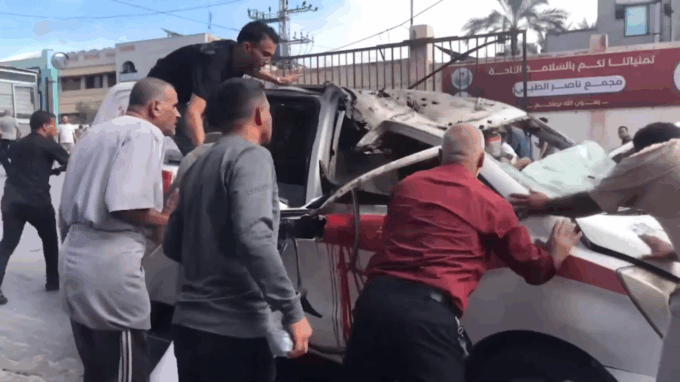
Five journalists were among the 22 people killed on Aug. 25, 2025, in Israeli strikes on the Nasser Hospital in the Gaza Strip. Following global condemnation, the office of Israeli Prime Minister Benjamin Netanyahu issued a statement saying Israel “values the work of journalists.” But the numbers tell a different story.
Those deaths bring the total number of journalists killed in Gaza in almost two years of war to 192. The Committee to Protect Journalists, which collates that data, accuses Israel of “engaging in the deadliest and most deliberate effort to kill and silence journalists” that the U.S.-based nonprofit has ever seen. “Palestinian journalists are being threatened, directly targeted and murdered by Israeli forces, and are arbitrarily detained and tortured in retaliation for their work,” the committee added.
As a scholar of modern Palestinian history, I see the current killing of reporters, photographers and other media professionals in Gaza as part of a longer history of Israeli attempts to silence Palestinian journalists. This history stretches back to at least 1967, when Israel militarily occupied the Palestinian territories of the West Bank, East Jerusalem and the Gaza Strip following the Six-Day War.
Beyond the humanitarian toll, what makes matters even more drastic now is that, with Israeli restrictions on foreign media entering Gaza, local Palestinian journalists are the only people who can bear witness to the death and destruction taking place – and report it to a wider world. Indeed, nearly all of the nearly 200 journalists killed since Oct. 7, 2023, have been Palestinian.
A decades-long process in the making
From the first days of the occupation in 1967, Israel has tried to keep a tight grip on media reporting, building a legal and military architecture that aimed to control and censor Palestinian journalism.
In August 1967, the army issued Military Order 101, effectively criminalizing “political” assembly and “propagandistic” publications in the occupied territories.
Yet despite such restrictions, local journalism persisted and grew. By the early 1980s, Palestinians in the occupied territories were publishing three dailies, five weeklies and four magazines. The most popular publications circulated up to 15,000 copies.
But all Palestinian publications were subject to Israeli military censorship. Every night, editors were forced to submit two copies of everything they planned to print to Israeli censors. That included articles, photos, ads, weather reports and even crossword puzzles.
Anything the Israeli censor deemed to be “of political significance” had to be removed prior to publication. Editors who violated these terms, or who were accused of belonging to Palestinian political groups, could be detained or deported. These practices have echoes today with Israel often accusing the journalists it kills of being Hamas operatives.
Censorship regimes
Objecting to these and many other restrictions, Palestinians launched the first intifada, or uprising, against the Israeli occupation in December 1987. During the uprising’s first year, Israeli forces reportedly jailed 47 Palestinian reporters, temporarily banned eight local and regional newspapers, permanently revoked the licenses of two magazines and closed four press service offices.
While intended to be a show of force, most Palestinians saw the restrictions as evidence that Israel was afraid of Palestinians reporting on their own conditions.
Many people hoped that the Oslo Accords – a series of negotiations between Israel and the Palestinian Liberation Organization that formally launched in 1993 – would lead to greater press freedoms. But it was not to be the case.
Israeli authorities continued to enforce military censorship on what they deemed to be “security topics.” They also revoked the press cards of reporters who did not stay in line and assaulted and harassed journalists reporting from the ground.
Meanwhile, the newly established Palestinian Authority, set up as part of the Oslo process to partially govern Palestinian territories on what was meant to be a temporary basis, built a censorship regime of its own. It, too, arrested, suspended and closed news outlets it deemed too critical of its actions.
Shootings and impunity
By the 2000s, Israel’s attacks on journalists in the West Bank and Gaza Strip grew deadlier. Israeli forces fatally shot Palestinian photographer Imad Abu Zahra in Jenin in the West Bank in 2002, British filmmaker James Miller in Rafah in 2003 and Reuters cameraman Fadel Shana in Gaza in 2008.
Since 2008, as battles between Israeli forces and Palestinian militant groups have grown fiercer, journalists have worked under even deadlier conditions. Yet even during unarmed demonstrations, journalists have faced deadly Israeli force. In 2018, during the mass unarmed protests in Gaza known as the Great March of Return, Israeli forces shot and killed Palestinian journalists Yaser Murtaja and Ahmed Abu Hussein. Both were wearing “PRESS” vests when they were shot. In addition, at least 115 journalists were wounded while covering the protests, which lasted six months.
The deadly force has not been limited to Palestinians in Gaza. In May 2022, Palestinian American journalist Shireen Abu Akleh was killed in the Jenin refugee camp. One of the most famous Palestinian reporters at the time, Abu Akleh’s death drew hundreds of thousands of mourners, while Israeli police beat pallbearers at her funeral service.
Legitimate military targets?
International humanitarian law makes clear that journalists are civilians and therefore cannot be targeted during combat. That includes war correspondents who are covering war while under the protection of an armed group.
For their part, Israeli officials argue that they do not target journalists. They say that their strikes are aimed at legitimate military objectives, often asserting that Hamas embeds itself in civilian buildings or that some of the journalists killed were militants.
But such allegations are often made without independently verifiable evidence. Israel alleged that Murtaja, the journalist killed in Gaza in 2018, was a militant, but provided no proof.
In the case of Abu Akleh, Israeli officials initially claimed that she may have been killed by Palestinian militants. They eventually admitted there was a “high possibility” that Israeli forces killed Abu Akleh, but claimed that the killing was accidental and therefore the government would not press charges. A recent documentary refutes that claim and identifies the Israeli soldier alleged to have killed Abu Akleh intentionally.
Culture of impunity
Even prior to the deadly Hamas-led attacks on Israel on Oct. 7, 2023, the picture emerging was that of impunity for Israeli forces who killed journalists – by accident or by design. A May 2023 report from the Committee to Protect Journalists concluded that Israel engaged in a “deadly pattern” of lethal force against journalists and failed to hold perpetrators accountable.
Since October 2023, journalists in Gaza have faced even deadlier conditions. Israel continues to ban international news agencies from reporting inside the Gaza Strip. As a result, local Palestinian journalists are often the only ones on the ground.
Aside from the deadly conditions, they contend with Israeli smears against their work and threats against their families.
Palestinian journalists there often run toward bombardments when others run away. As a result, they are sometimes killed in “double-tap” strikes, where Israeli air and drone strikes return to an area that has just been struck, killing rescue workers and the journalists covering them.
All this has led to an unbearable personal toll for those continuing to report from within Gaza. On Oct. 25, 2023, Al Jazeera’s Gaza bureau chief, Wael al-Dahdouh, was reporting live on air when he learned that an Israeli airstrike had killed his wife, two children and grandson. He returned on air the next day.
And the killing has not eased up. On Aug. 10, 2025, Israeli forces killed Anas al-Sharif in Gaza City, another prominent Al Jazeera correspondent who had stayed on the streets through months of bombardment. Five of his fellow journalists were also killed in the same airstrike.
The Aug. 25 strike on Nasser Hospital is just the latest in this deadly pattern.
Among the five journalists killed in that attack were freelancers working for Reuters and The Associated Press – two international media outlets frustrated by Israel’s refusal to allow its journalists into Gaza to document the war.
Despite the danger, global newsrooms have repeatedly urged Israel to open Gaza to independent media, and a coalition of 27 countries recently pressed for access in Gaza.
Israel continues to refuse these requests. As such, Palestinian journalists remain the primary witnesses of Israel’s relentless assault on Gaza. And they are increasingly killed as they do so. The question remains whether the international community will hold Israel to account.
This article is republished from The Conversation under a Creative Commons license. Read the original article.
No comments:
Post a Comment