By Alexander Kolyandr
July 31, 2025
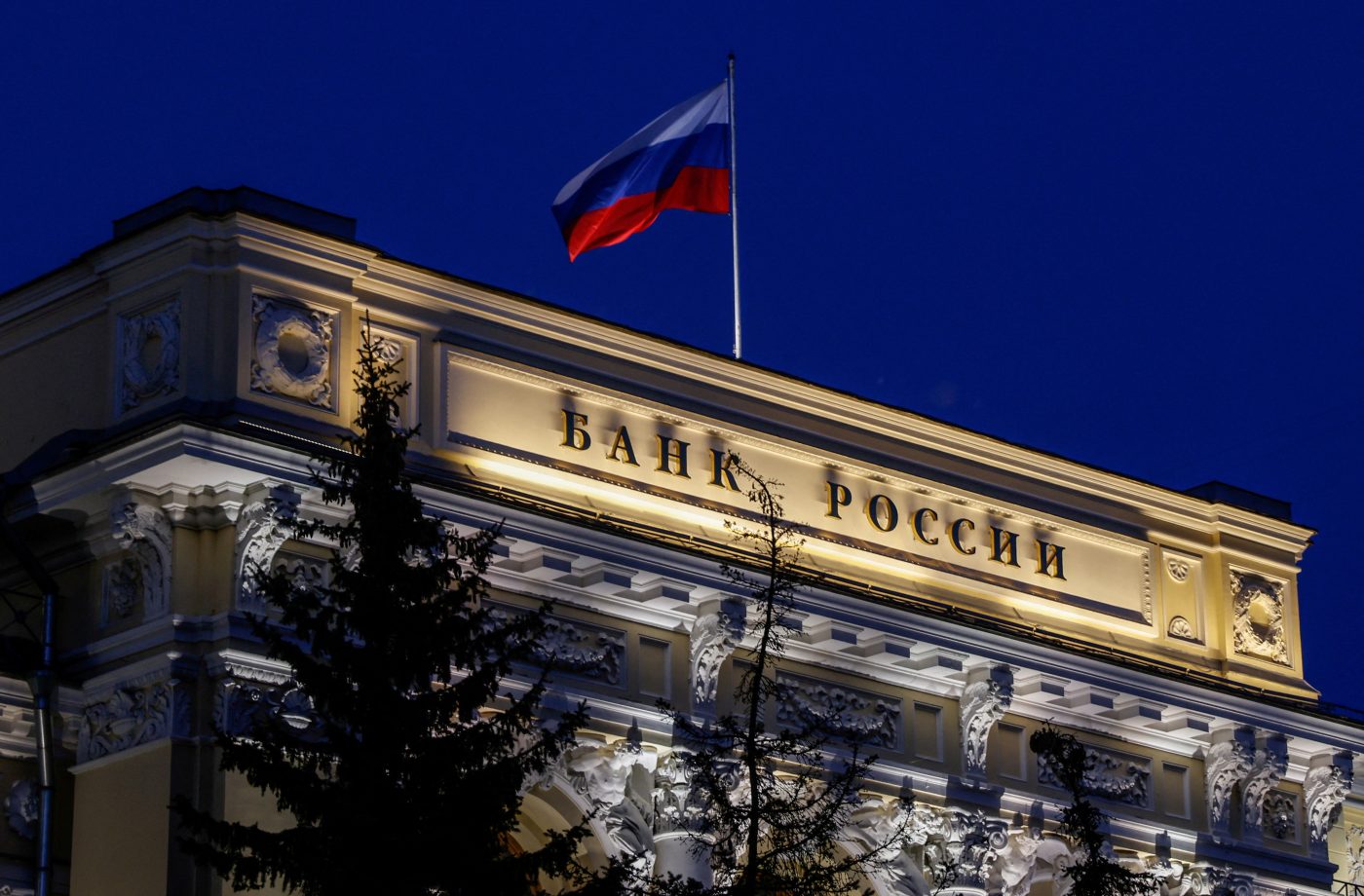
The Bank of Russia cut its base rate by a substantial 200 basis points to 18% on July 25, following a 100-point reduction the previous month. It also lowered its inflation outlook for 2025 and signaled a possible further cut to bring rates to 15% by the end of the year.
Inflation has been the primary challenge for Elvira Nabiullina, the outspoken and conservative Bank of Russia governor. Despite months of pressure from politicians and industrialists, she maintained interest rates at a prohibitive 21% after the Russian government responded to Western sanctions, war needs, and labor shortages with unprecedented fiscal spending — a striking departure from its traditionally conservative budgetary policy.
This state spending, supported in part by oil revenues and higher taxes, kept the economy afloat and delivered 4.3% GDP growth in both 2023 and 2024. The downside was double-digit inflation driven by labor shortages, rising salaries, and the domestic industry’s inability to expand production.
After a protracted uphill battle, the central bank now appears to be winning its struggle against rising prices and an overheated economy. Earlier in July, it recorded inflation close to its 4% target — the first time in months the figure had been so low.
In the week leading up to the rate cut, inflation even turned negative. Average annual inflation in the second quarter fell to 4.8%, compared with 8.2% in the first quarter. This represented a significant improvement on the bank’s April prediction of 7% to 8% inflation for this year, and it updated its forecast to between 6% and 7%.
The decline was attributed to a strong ruble, which makes imports cheaper, though the labor market remains overheated. Unemployment is at a historic low of 2.2%, with demand for workers unchanged since late last year.
This labor shortage has driven rising salaries — a key factor behind high inflation. However, real wages rose just 0.1% in May, a stark contrast to 3.2% in February and 6.5% in January, and the lower growth — alongside stricter borrowing conditions — is cooling demand and dampening inflation.
“Current inflationary pressures, including underlying ones, are declining faster than previously forecast,” the Bank said after its July 25 meeting. “Domestic demand growth is slowing. The economy continues to return to a balanced growth path.”
Get the Latest
This “balanced growth path” is a euphemism for anemic growth. The regulator expects Russia’s economy to grow between 1% and 2% in 2025, while the IMF forecasts even lower levels of 0.9% to 1.5%.
For the Kremlin, a brief period of low growth is tolerable, though combined with lower oil prices, it would reduce fiscal revenues. The main gamble is that the cooling of the economy won’t trigger a prolonged recession.
So far, the government can maintain defense and social spending, but may need to cut elsewhere, which would put it on a dangerous path.
Reduced spending or austerity measures would further slow economic growth and wage increases at a time when sanctions, low oil prices, and challenges to property rights discourage private capital investment. Growth might not recover, even with low inflation, and military production would claim a growing share of the Russian economy.
On the other hand, if the government doesn’t reduce fiscal support, there’s a risk high inflation will return.
The Bank has made clear it still sees risks to pursuing a softer monetary policy. These include falling oil prices, geopolitical factors (specifically additional Western sanctions), and political decisions to increase spending. It said that if next year’s budget parameters differ from current agreements, it might have to reconsider its easing approach.
The Bank of Russia’s policy of high interest rates and stringent regulations, combined with external factors and economic exhaustion, has accelerated inflation’s decline, but Russia is not out of the woods.
And the Kremlin’s preference for continued spending to finance the war and support growth continues to create tension between Russia’s monetary and fiscal policy goals.
Alexander Kolyandr is a Non-Resident Senior Fellow at the Center for European Policy Analysis (CEPA) specializing in the Russian economy and politics. Previously, he was a journalist for the Wall Street Journal and a banker for Credit Suisse. He was born in Kharkiv, Ukraine, and lives in London.
More on this and other aspects of the Russian economy in a weekly summary produced by the independent publication, The Bell.
Europe’s Edge is CEPA’s online journal covering critical topics on the foreign policy docket across Europe and North America. All opinions expressed on Europe’s Edge are those of the author alone and may not represent those of the institutions they represent or the Center for European Policy Analysis. CEPA maintains a strict intellectual independence policy across all its projects and publications.
A Putin Ally, Russia’s War Machine, And Luxury Villas In Dubai – Analysis
By RFE RL
By Sergei Titov and Systema
(RFE/RL) — Private beachfronts, million-dollar bathtubs, evenings of wine, whiskey, cigars, and karaoke – or performances by Russian pop stars whose fame stretches back to the 1990s.
Those are some of the trappings of an “ultraluxe” villa complex in Dubai where Sergei Chemezov – the Western-sanctioned head of the massive Russian state defense conglomerate Rostec and a close ally of President Vladimir Putin since they were KGB officers in communist East Germany – spends time with family, friends, and associates.
While they are not the formal owners of the mansions, Chemezov and at least two heads of Rostec subsidiaries are neighbors at XXII Carat, a gated complex of elaborate, multimillion-dollar villas on the Palm Jumeirah, an artificial island on the Persian Gulf coast, Systema, RFE/RL’s Russian investigative unit, has found.
Chemezov, 72, became friends with Putin when they lived in the same apartment building in Dresden in the 1980s, when Chemezov was a KGB general and Putin a lieutenant colonel in the Soviet spy agency. In 1996, when Putin became President Boris Yeltsin’s deputy chief of staff, he made Chemezov head of the Kremlin’s foreign economic relations department.
Rostec and its sprawling web of units and subsidiaries manufacture many of the weapons and components Russia uses in its war against Ukraine, now in its fourth year since Putin launched the full-scale invasion in February 2022.
Chemezov has supported the invasion and echoed Putin’s narratives in public comments, accusing the United States and its Western allies of provoking the war and saying they risked triggering a global war. The Rostec CEO since 2007, Chemezov was hit with US, UK, and EU sanctions following the Russian seizure of Ukraine’s Crimean Peninsula in 2014.
Sapphire, Emerald, Ruby
Since 2015, he has been visiting the United Arab Emirates at least once a year, according to leaked border crossing data. A source who is familiar with Chemezov’s inner circle said that the villa Chemezov uses was purchased a few years before the complex was finished late in 2018, and that Chemezov and his wife “put a lot into it, like a second home,” personally choosing the interior and closely monitoring the construction.
The villa they built is the costliest of the three styles at the complex, Sapphire, each of which has beach access and some of which are fitted with a $1 million bathtub made crystal or quartz – rose or green. In 2020, Sapphire villas cost $25.8 million, and the current asking price is about $31 million.
The other styles are Emerald and Ruby; all of them have at least seven bedrooms, a hammam bath, a climate-controlled wine cellar, a landscaped garden, and a swimming pool.
Hidden Ownership?
Formally, the two-story, 2,170 square meter home Chemezov uses is owned by a firm called Neve Limited, according to data published by C4ADS, a US-based nonprofit data-analysis and global-research organization. Systema was unable to track down information about Neve Limited, but the C4ADS data shows an e-mail address and phone number that leaked documents suggest are those of Natalya Agapova, a lawyer who has longstanding financial ties to Chemezov and his family.
Agapova declined to comment on property at XXII Carat, and Rostec did not respond to a request for comment.
One and two doors down from the Chemezov villa are slightly smaller homes used by the heads of two Rostec subsidiaries: Nikolai Kolesov, the director of Russian Helicopters; and Aleksandr Mikheyev, the director of Rosoboronexport, the main Russian arms sales company.
The villa Mikheyev uses is registered to his son, Aleksei, according to C4ADS data and Dubai land records. The formal owner of the one Kolesov uses is a local UAE company, Veles Electronics, which the late Putin foe and anti-corruption crusader Aleksei Navalny’s associates linked to the Russian Helicopters chief in a recent report.
Aleksei Mikheyev declined to comment. Rosoboronexport and Russian Helicopters did not respond to requests for comment.
Chemezov often spends time with Mikheyev and Kolesov when he stays in Dubai, sources with knowledge of the Rostec leadership told Systema, speaking on condition of anonymity because they were not authorized to discuss the matter publicly.
Their gatherings typically involve drinking alcohol, smoking cigars, and singing karaoke, sources said – though sometimes it was patriotic Russian pop stars such as Oleg Gazmanov and Grigory Leps, both under EU sanctions since 2022 over their support for the war, doing the crooning.
Russian Roots
The sources of wealth that enable state-owned company chiefs like Chemezov, Mikheyev, and Kolesov to afford such property are murky, though the latter also controls a lucrative network of private military industry companies.
A haven for rich Russians, particularly for those hit by sanctions over the war in Ukraine, Dubai is on the Persian Gulf — but the roots of XXII Carat are deep in Russia. The developer was a company called Forum Group, based in Yekaterinburg and founded by Oleg Cherepanov, a prominent businessman who was known in the Ural Mountains city as Cherep – “the Skull.”
Cherepanov has lived in Dubai since 2014 and heads Forum Group Dubai. He has distanced himself from the Russian-based Forum Group, which is now 80 percent owned Tamara Cherepanova, 77.
In Yekaterinburg, Forum Group built an ice arena for UGMK,a metals giant whose co-owner, US and UK-sanctioned billionaire Andrei Bokarev, is reportedly a friend of Chemezov’s and purportedly owns real estate at XXII Carat.
The C4ADS database indicates that two Ruby-class villas belonged to Diana Madzhitova, 29, who has flown to the U.A.E. with Bokarev more than 20 times in the last five years, according to leaked border crossing data. One of them was apparently later acquired by another buyer.
Bokarev and Madzhitova did not respond to attempts to contact them.
(Written by Steve Gutterman based on reporting by Sergei Titov of Systema)
- Sergei Titov is an investigative journalist with RFE/RL’s Russian Investigative Unit, also known as Systema. He focuses on such topics as Russian oligarchs and their dark money, offshore networks and corruption. Previously, he worked as an observer at Forbes Russia and as a special correspondent at the Russian media holding RBC.
- Systema is RFE/RL’s Russian-language investigative unit, launched in 2023. The team conducts in-depth investigative journalism, producing high-profile reports and videos in Russian.
RFE/RL journalists report the news in 21 countries where a free press is banned by the government or not fully established.
No comments:
Post a Comment