SYRIA
Suweida under fire: Sectarianism and the consolidation of power in Damascus
First published at International Viewpoint.
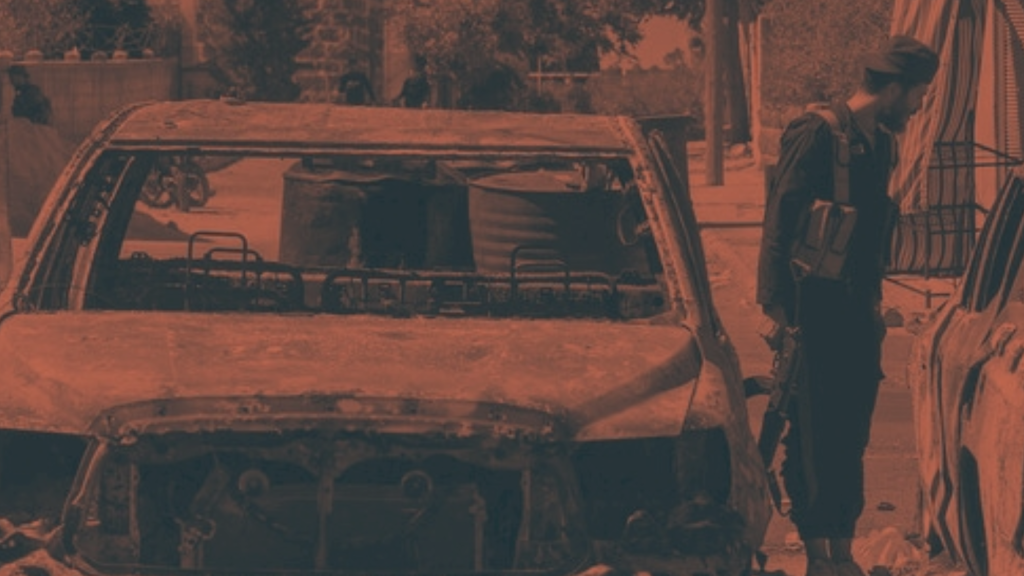
The situation in the province of Suweida, southern Syria, was still not stable at the time of writing (July 24), despite an official ceasefire and the arrival of a first humanitarian aid convoy on July 20 in the provincial capital, the city of Suweida, which has a population of approximately 150,000. The devastated city continues to suffer from a siege by the central government in Damascus and pro-government armed groups, depriving its population of water and electricity and lacking essential food supplies. Attacks were ongoing in some villages in the province by armed groups supportive of the central authorities.
Following the conclusion of a ceasefire, Bedouin fighters and pro-government tribes withdrew from part of the city of Suweida. Local armed Druze factions have regained control. At the same time, US officials claimed to have brokered a truce between Damascus and Tel Aviv. This agreement allowed the deployment of Syrian government forces in Suweida province, with the exception of the city of Suweida, which Israel initially rejected.
After more than a week of fighting, several thousand deaths have been recorded, both civilians and combatants, and more than 140,000 people have been displaced, according to the UN. The Suwayda 24 news website recorded 36 destroyed and damaged villages, most of which are currently emptied of their inhabitants, while looting continues.
These latest events follow previous attacks by armed groups linked to or supporting the Damascus government in Suweida province and near Damascus in April and May, which left more than 100 dead. Damascus is seeking to achieve political objectives through these actions: consolidating its power over a fragmented Syria, undermining Suweida’s autonomy, and disrupting democratic dynamics from below.
Suweida, attacks from all Sides and suffering under deadly siege
Suweida province, with a majority Druze population, gained a degree of political autonomy during the Syrian popular uprising. After the fall of the Assad regime, many local armed forces and leading Druze religious leaders maintained contact with the new authorities in Damascus but refused to lay down their arms, lacking a democratic and inclusive political transition and guarantees for Suweida province. However, the region has become a war zone since 13 July, following the arrest and torture of a Druze merchant at a checkpoint manned by Bedouin armed groups, which was established following the April and May violence against the Druze population in Damascus and Suweida. This checkpoint on the Damascus-Suweida road is under the responsibility of Bedouin tribes from Al-Mutallah in the Al-Kiswah region of rural Damascus, affiliated with the General Security of the Ministry of Interior. In addition to committing repeated violations against Druze individuals between Suweida and the capital, Damascus, the central authorities used it as a tool of political pressure against Suweida.
The Bedouin population represents approximately 5% of the population in the Suweida region and is primarily based in rural areas. Their military organization is limited and less centralized than that of the local Druze factions. Several Bedouin tribes exist in the south. The armed Druze factions, for their part, are divided into three major military entities (the Suweida Military Council, the Men of Dignity, and the Forces of Dignity), and they did not necessarily adopt the same attitude towards the new government in Damascus following the fall of the Assad regime in December 2024. The Suweida Military Council, for example, has a more hostile stance towards the central authorities, while the Forces of Dignity have collaborated more closely with the presidency of Ahmed al-Shareh.
Following initial clashes between Bedouin and Druze armed factions, the Syrian interim government then sent columns of armored vehicles from Damascus to Suweida in an attempt to assert control over the province, claiming to want to end the violence while fighting alongside Bedouin armed forces affiliated with the central government.
During the first days of military operations in Suweida province, the actions of armed forces affiliated to or supportive of the Damascus government in Suweida alongside it recalled images of the March massacre against Alawite populations in coastal areas, resulting in the deaths of more than 1,000 civilians. Murdered civilians, sectarian and hateful speeches and behaviors, such as scenes of humiliation of local residents, mustaches cut or shaved by fighters, circulate on social media, scenes of destruction and looting of infrastructure and civilian homes… As of July 18, the Syrian Network for Human Rights (SNHR) recorded more than 200 deaths, and several hundred wounded. At the same time, many civilians in Suweida have left their homes close to the military clashes and fear the actions of pro-government fighters to seek refuge in safer areas of the province.
Despite their military superiority, government armed forces and pro-government militias were forced to withdraw from the captured areas due to resistance from local armed factions in Suwayda, and especially to Israeli airstrikes against military headquarters in Damascus and convoys of the forces affiliated with or supportive of the government (see below).
Following this, self-proclaimed Syrian President Ahmad al-Shareh announced on July 17 the transfer of responsibility for maintaining security in Suwayda to local armed factions and Druze religious dignitaries. Attacks by Druze fighters against Bedouin civilians in Suwayda province occurred.
Following these actions, a number of Sunni Arab tribes, often with ties to central government figures, from different regions of the country published appeals and statements on social media to help their Bedouin “brothers” in Suweida. This mobilization was further reinforced by media propaganda encouraged by the government and its allies, amplifying the violence against Bedouin civilians. A new offensive by tribal armed groups then took place Thursday evening, 18 July, in Suweida province, while hateful and sectarian calls against the Druze population multiplied through social media in different regions of the country.
Images then began to appear on social media of vehicles and armed men from different tribes mobilizing and heading towards Suweida province. Some of the tribal armed groups entered the western part of the city of Suweida, unopposed by government forces, and looted and burned dozens of houses, shops and cars. Following their passage, the walls of these neighborhoods were covered with graffiti such as “ Druze pigs” or “We are coming to slit your throats”...
Ahmed al-Shareh condemned the perpetrators of abuses against the Druze population in Suweida and affirmed that they “will be held accountable”. However, he made the same promise after the massacre on the Syrian coast against Alawite civilians, with no consequences for these perpetrators to date. The commission of inquiry established for these massacres was initially supposed to submit its report within 30 days of its creation; its mandate was then extended for three months on 10 April. The report was finally submitted to President al-Shareh only after more than 90 days, on 20 July. Moreover, the commission of inquiry stated during its press conference on 22 July that no evidence existed to demonstrate the responsibility of senior state and military officials in the March massacres, contrary to a Reuters investigation conducted a few weeks earlier. Similarly, the committee announced that it had no information on the numerous cases of targeted kidnappings, disappearances, and gender-based violence against women and girls that occurred during the massacres, which have been ongoing since February 2025, particularly against Alawite women.
Furthermore, Al-Shareh primarily accused “outlaw groups” — the term used by the ruling authorities to refer to the local Druze armed factions in Suweida — of being primarily responsible for the violence in the province and of violating the ceasefire agreement by engaging in “horrific violence” against civilians, threatening civil peace by pushing the country towards chaos and a collapse of security. At the same time, it praised the mobilizations of the Arab tribes and celebrated their “heroism”, while calling on them to respect the ceasefire... A contradictory message, to say the least.
In fact, in the political strategy of the HTS central authorities, the mobilization of Sunni Arab tribes appeared to be a useful tool to compensate for the military weakness of the government armed forces in their offensives against Suweida and to obtain political concessions.
At the same time, the dominant media coverage in the country, particularly on the Syrian national television station “al-Ikhbariya”, echoed official state propaganda by encouraging a reading of the events in which Sheikh al-Hijri, a senior Druze religious dignitary, and armed Druze factions were primarily responsible for the violence, accusing them of being simultaneously “separatists”, “armed gangs”, “allies of the Zionists”, and so on.
These general attacks, both military and media-driven, against the province of Suweida have considerably reduced the differences that existed between the various armed Druze groups, but also within the local Druze population. Faced with these threats, perceived as an offensive against the Druze population as a whole, the need for unity is felt on all sides.
Reflecting this dynamic, several trade unions and professional associations in Suweida have notably severed all contact with the trade union centers in Damascus in protest against the massacres perpetrated and hold the central government fully responsible for these human rights violations. The Council of the Bar of Suweida, for example, announced its resignation in its entirety, condemning “the terrorist acts, war crimes, sectarian cleansing, genocide, and crimes against humanity committed in the governorate of Suweida by the government through its military and auxiliary forces.” The Suweida Engineers Association issued a statement mourning its murdered members and calling for the creation of a genuine national authority representing the people, and announced the cessation of coordination with the trade union centre in Damascus. The Agricultural Engineers Union expressed its mourning for three of its members, “who died following the barbaric attack supported by the terrorist regime.” It stated that it would “suspend its contacts with the trade union centre in Damascus until the situation changes and an authority representing the Syrian people is established, protecting their dignity and preserving their rights.” The Veterinarians Union called these events a “crime against humanity” targeting civilians on sectarian grounds and denounced the role of the central authorities in inciting and directly supporting the violations. The union announced the suspension of its relations with the trade union centre until “the de facto authority is removed and an authority representing the Syrian people is established,” in its words. The teachers’ union in Suweida, for its part, accused the authorities of being directly responsible for the massacres. The union reiterated its commitment to the message of education and democracy, affirming its rejection of the mobilization and calls for takfirism. It announced the cessation of its cooperation with the Damascus trade union centre “until the elimination of the extremist ideology that monopolizes it.”
On 28 July, massive demonstrations occurred throughout Suweida Governorate demanding the lifting of the siege the province, condemning the massacres committed by the armed forces affiliated and supportive of the Syrian Interim government, requesting an international intervention to open humanitarian corridors, and called for an independent international investigation into the recent events. In addition to this, they also denounced the security forces’ prevention of foreign media from entering the province and documenting the atrocities that occurred.
In many ways, the actions of the armed forces belonging to or supporting the Damascus government and their behavior towards the local population in Suweida recalled the dark memories of the entry of the former Assad regime into eastern Aleppo in late 2016 and into Ghouta, in the Damascus countryside, in the spring of 2018, or of the Turkish army and its Syrian proxies into Afrin, in the northwest of the country, the same year. In other words, a form of armed occupation rejected by the local population.
Sectarianism: A political tool of domination and control
These armed operations against Suweida province are part of a broader strategy by the Syrian government, led by HTS, to consolidate its power over a fragmented country.
To achieve this, it has primarily implemented a strategy based on external recognition and legitimization to consolidate its dominance within the country. Syrian President al-Shareh and his affiliates demonstrate a clear desire to anchor their country within a regional axis led by the United States and its regional allies such as Turkey, Qatar, and Saudi Arabia, in order to consolidate their hold over Syria. In this context, the new government is also seeking a form of normalization with the Israeli state (see below).
Building on this initial momentum, the new HTS-led government consolidated its dominance over state institutions, the army, security services, and social actors in the country. In the case of Suwayda, after the fall of the Assad regime, it was local networks and groups that elected longtime activist Muhsina al-Mahithawi to be governor of Suweida province, but this was rejected by Damascus, which appointed its own governor. More generally, Al-Shareh has, for example, appointed ministers, security officials, and regional governors affiliated with HTS or armed groups within the Syrian National Army (SNA), an alliance of Syrian armed opposition groups that has acted for years as a proxy for the Turkish government. For example, the new authorities have appointed some of the highest-ranking HTS commanders to the new Syrian army, including the new defense minister and longtime HTS commander, Mourhaf Abu Qasra, who was promoted to general. The reorganization of the Syrian army has been carried out by integrating only armed groups loyal to the new authorities in Damascus (HTS and the SNA) and by recruiting new soldiers with similar loyalty-based dynamics.
At the same time, the new authorities in Damascus accuse armed groups opposed to the central government of being “outlaw groups”, such as the local Druze armed factions, while other armed groups more favorable to the government are not worried by these accusations, such as the Sunni Arab tribes fighting in Suweida. While the unification of all armed groups into a new Syrian army does not raise opposition in itself, large sectors of the Druze population in Suweida and the Kurds in the northeast still oppose it, in the absence of certain guarantees, such as decentralization and a genuine democratic transition process. The actions and violence of pro-government armed groups have not calmed these fears, quite the contrary.
Similarly, key positions in the new transitional government are held by figures close to al-Shareh. In addition, parallel institutions composed of the Syrian presidency and figures affiliated with HTS have been established, such as the Syrian National Security Council, headed by al-Shareh and composed of his close associates (the Minister of Foreign Affairs, the Minister of Defense, the Minister of Interior, and the Director of General Intelligence), which was created at the same time as the interim government to manage security and politics. The new Syrian authorities have also taken steps to consolidate their power over economic and social actors. For example, they have restructured the country’s chambers of commerce and industry by replacing the majority of their members with individuals appointed by Damascus. Several new board members are known for their close ties to HTS, such as the new president of the Federation of Syrian Chambers of Commerce, Alaa Al-Ali, formerly president of the Idlib Chamber of Commerce and Industry, affiliated with HTS. Other members are prominent figures in the pre-2011 business world, such as Issam Ghreiwati, who now chairs the board. Issam Ghreiwati is the son of Zuhair Ghreiwati, founder of the Ghreiwati Group, one of Syria’s largest business conglomerates.
Furthermore, in mid-April, Ahmad Al-Sharaa’s brother, Maher Al-Sharaa, was appointed Secretary-General of the Presidency, responsible for managing the presidential administration and liaising between the presidency and state bodies. A recent Reuters investigation also revealed that Hazem al-Sharaa, along with others, is responsible for reshaping the Syrian economy through secret acquisitions of Assad-era companies.
At the same time, the authorities also appointed new leaders to unions and professional associations. In particular, they selected a union council for the Syrian Bar Association, composed of members of the Idlib Council of Free Bars. Syrian lawyers responded by launching a petition calling for democratic elections within the Bar Association.
Finally, the new ruling authorities led by HTS have been using sectarianism as a tool of domination and control over the population. Clearly, sectarian tensions and hatred are not due to ancient religious divisions, nor are they “rooted” in the region’s populations, nor are they supposedly dynamics rooted in the “revenge” of minorities against the Sunni Arab majority. Sectarianism and sectarian tensions are a product of modernity and have political roots and dynamics.
More generally, the rise in sectarian rhetoric, tensions, and attacks by the ruling authorities, led by HTS and the armed forces supportive of the government, first against the Alawite populations, as demonstrated by the coastal massacres in March, and then against the Druze communities, aims to achieve three main objectives.
First, the exploitation of sectarian tensions and the discourse of “Mazlumiya Sunniya” (“Sunni injustice”), seeking to build a sense of popular belonging and unite large sections of the Sunni Arab population, despite the many political, social, regional, and other differences within this community.
Second, these sectarian attacks and tensions aim to disrupt democratic space or dynamics from below. In this perspective, Suweida has been a symbol of popular resistance since the beginning of the popular uprising in 2011, including against the former Assad regime, with ongoing democratic actions, a vibrant local civil society, and attempts to create alternative unions and professional associations. For example, popular demonstrations and continuous strikes took place in the Suweida governorate, particularly after the outbreak of a relatively large protest movement since mid-August 2023, which highlighted the importance of Syrian unity, the release of political prisoners and social justice. Some local armed Druze factions also participated in the military offensive with other military groups in southern Syria against the Syrian Assad regime in its final days before its fall. This is without forgetting the support of local armed Druze factions for tens of thousands of young men from Suweida who refused to join the Syrian army loyal to the Assad regime and fight in its ranks since 2014.
In March, sectarian massacres in coastal areas had virtually put an end to the protests organized in January and February 2025 in various provinces by civil servants dismissed by the new government. Since December 2024, the Syrian authorities have laid off tens of thousands, if not more, of public sector employees. Following this decision, demonstrations by dismissed or suspended civil servants erupted across the country, including in Suweida. These protests were promising, as were attempts to create alternative unions or, at the very least, coordination structures. These new entities, in addition to opposing the mass layoffs, also demanded wage increases and rejected the government’s plans to privatize public assets. However, the consolidation of the protest movement was considerably weakened due to fears that armed groups close to the regime would respond with violence.
Finally, sectarian rhetoric and attacks have allowed the new authorities in Damascus to attempt to impose their total control over regions outside their control, such as in Suweida, or to consolidate their power, as in the coastal areas in March, by mobilizing segments of the population along sectarian lines.
Sectarianism acts as a powerful mechanism of social control, shaping the course of class struggle by fostering dependency between the popular classes and their ruling elites. As a result, the popular classes are deprived of any political independence and define themselves — and engage politically — through their sectarian identity. In this respect, the new government follows in the footsteps of the former Assad regime, continuing to use sectarian policies and practices as a means of governance, control, and social division.
In this context, the armed abuses committed by affiliated and pro-government armed forces are not “simply” the result of “individual actions” or a “lack of professionalism” on the part of the army, whether during the March massacres against the Alawite population or today in Suweida. Indeed, the Reuters investigation has demonstrated that pro-government armed groups were directly involved in the violence perpetrated against Alawite civilians in March, with the knowledge and consent of the highest levels of the state. Moreover, the new authorities created the political conditions that made this violence possible. Indeed, human rights violations against individual Alawites, including kidnappings and assassinations, have increased in recent months, some of which — such as the Fahil massacre in late December 2024 and the Arzah massacre in early February 2025 — resembled dress rehearsals for the coastal massacres in March. Moreover, Syrian officials have repeatedly portrayed the Alawite community as an instrument of the old regime against the Syrian people. For example, during his speech at the 9th Syria Donors’ Conference in Brussels, Belgium, Syrian Foreign Minister Asaad al-Shibani stated, “ 54 years of minority rule have led to the displacement of 15 million Syrians…” — implicitly suggesting that the Alawite community as a whole had ruled the country for decades, rather than a dictatorship controlled by the Assad family. While it is undeniable that Alawite figures held key positions within the former regime, particularly within its military and security apparatus, reducing the nature of the state and its dominant institutions to an “Alawite identity” or portraying the regime as favoring religious minorities while systematically discriminating against the Sunni Arab majority is both misleading and far removed from reality.
The authorities have also failed to establish a mechanism to promote a comprehensive transitional justice process aimed at punishing all individuals and groups involved in war crimes during the Syrian conflict. This could have played a crucial role in preventing acts of revenge and easing growing sectarian tensions. However, Ahmad al-Shareh and his allies have no interest in transitional justice, most likely fearing being tried for their own crimes and abuses committed against civilians. Moreover, on 17 May, the Syrian transitional authorities announced presidential decrees establishing two new government bodies: the Transitional Justice Commission and the National Commission for the Missing. However, the mandate of the Transitional Justice Commission, as defined in the decree, is narrow and excludes many victims, including those of HTS and its allied armed groups such as the SNA. This selective justice is therefore highly problematic and risks provoking new political and sectarian tensions in the country. This is without forgetting that certain figures affiliated with the Assad regime and guilty of committing crimes, or contributing to them, have been granted de facto immunity by the new authorities, such as Fadi Saqr, former commander of the National Defense Forces (NDF) affiliated with the previous Assad regime, or Muhammad Hamsho, a well-known businessman affiliated with Maher al-Assad.
Therefore, returning to Suweida province and recent events, the strategy and actions of the Syrian government forces in Suweida province are part of these attempts to centralize power in the hands of the new ruling authority and consolidate their domination over society.
The risk of exclusive power with a central authority with limited capabilities can only lead to further political tensions in the country. This situation also further weakens the country’s sovereignty.
Israel’s exploitation of sectarian tensions
At the same time, the Israeli government has sought to exploit recent human rights violations committed by pro-Damascus armed forces against the Druze population to fuel sectarian tensions in the country, presenting itself as the defender of the Druze population of southern Syria and threatening military intervention for their “protection”. Despite appeals to the Israeli government by Druze religious dignitary Sheikh Hikmat al-Hijri and greater openness among some segments of the Druze population towards Israel, particularly after the recent violence against them, there is a widespread rejection of any Israeli intervention by large segments of the Druze population in Suweida and other regions. They have also repeatedly reaffirmed their belonging to Syria and their support for the country’s unity.
But the defense of the Druze population is not, and never has been, the State of Israel’s priority. On the contrary, Tel Aviv is sending a clear message to Damascus: it will not tolerate any military presence in southern Syria, including in the provinces of Qunaytra, Deraa and Suweida, and aims for the demilitarization of these areas.
In this context, the Israeli occupation army launched new strikes in Damascus, near the Syrian army headquarters and the Ministry of Defense, as well as in other areas of the country on 16 and 17 July, following previous attacks.
In doing so, the colonial and racist Israeli state seeks to further weaken the Syrian state and obtain more political concessions from Damascus, which has demonstrated its willingness to normalize, directly or indirectly, its relations with Tel Aviv. The Syrian government, led by HTS, has confirmed the existence of negotiations and discussions with Israeli officials aimed at easing tensions between the two countries and finding forms of understanding. This is despite the Israeli occupation army’s incessant attacks on Syrian territories, particularly those occupied following the fall of the Assad regime in December, and the destruction of agricultural land and civilian infrastructure. Al-Shareh has repeatedly reiterated that his regime does not pose a threat to Israel and has also apparently told President Trump that it is willing to rejoin the Abraham Accords if the “appropriate conditions” are met.
This is also why Damascus has not condemned the massive Israeli strikes against the Islamic Republic of Iran. Rather, it views Iran’s weakening positively, just as it does with Hezbollah in Lebanon. This position is not only linked to Iran’s role during the Syrian popular uprising and the hostility towards it among large sectors of the population, but also reflects, as explained above, the political orientation of the new ruling elite in Syria, which seeks to root the country within a US-led axis in order to consolidate its power internally.
This orientation has not changed despite recent events, and the United States is well aware of this. Washington does not want to see this new power in Damascus, which seeks to satisfy these regional political interests and ensure a degree of authoritarian stability there, further weakened. It was in this context that US leaders called on Tel Aviv to cease its bombing of Syrian government targets and to conclude a truce with Damascus. This truce agreement also allowed the deployment of Syrian government forces in the province of Suweida, with the exception of the city of Suweida, which Israel initially rejected.
Moreover, the military escalation in Suweida followed discussions in Baku, Azerbaijan, between Syrian and Israeli officials, according to the Syria in Transition website. During these discussions, Syrian authorities, led by HTS, reportedly sought Tel Aviv’s approval for the reintegration of Suweida. While Israeli officials expressed openness to limited reintegration — that is, the restoration of public services and the deployment of a limited local security force — Damascus misinterpreted this decision as authorization for a large-scale military operation. Despite this misunderstanding, this decision by the Syrian authorities reveals a persistent tendency to rely on external validation and support to justify certain policies, including coercive measures against local populations, as in the case of Sweida, rather than encouraging political dialogue.
According to various sources, senior officials from the United States, Israel, and Syria met on Thursday, 24 July, to reach a security agreement in southern Syria and prevent further crises.
In other words, international recognition, the pursuit of good relations with the United States and its regional allies, and the promotion of a possible normalization process with Israel are all aimed at consolidating HTS’s power over the country. The interests of the Syrian working class and their democratic aspirations are being ignored in this process.
In this context, the recent events in Suweida demonstrate, once again, that Syria is not experiencing a democratic and inclusive political transition. Rather, it is a process of establishing a new authoritarian regime, structured and led by HTS, under the guise of institutional and international legitimacy.
However, this process remains incomplete due to the weak political, economic, and military capabilities of the new authorities in power led by HTS, as demonstrated by the failure of its total control over Suweida. Despite this failure, the ruling authorities are unlikely to change their policies or make real concessions in favor of the political and socio-economic interests of the Syrian working classes in all their diversity without a shift in the balance of power and, above all, without the (re)construction and development of a counter power within society, bringing together democratic and progressive political and social networks and actors.
New political, social, and community groups and organizations have nevertheless emerged and are organizing, but have yet to develop into social forces rooted in the population capable of broader mobilizations in society. At the same time, collaboration between the different regions of Syria, including with Kurdish organizations present in northeast Syria, must be intensified.
However, 14 years of war and destruction, and more than 50 years of dictatorship, weigh heavily on this reconstruction…
Joseph Daher is a Swiss-Syrian academic and activist. He is the author of Syria After the Uprising: The Political Economy of State Resilience (Pluto, 2019) and Hezbollah: The Political Economy of Lebanon’s Party of God (Pluto, 2016), and founder of the blog Syria Freedom Forever. He is also co-founder of the Alliance of Middle Eastern and North African Socialists.
HTS’ strategy to consolidate its power in Syria
First published at Syria Untold.
[Author's note: This text was written and published in Arabic before the recent dramatic events of Sweida, which in many ways confirmed the argument of this article. The military escalation in Sweida followed discussions in Baku, Azerbaijan, between Syrian and Israeli representatives, according to the website Syria in Transition. During the talks, the Syrian ruling authorities led by Hay’at Tahrir Sham (HTS) allegedly requested Tel Aviv’s approval for the reintegration of Sweida. While Israeli officials expressed openness to limited reintegration — that is, the restoration of state services and the deployment of a limited local security force — Damascus misinterpreted this as authorization for a full-scale military operation. Regardless of the misunderstanding, the Syrian authorities' decision, if confirmed, reveals a persistent tendency to rely on external validation and support to justify certain policies, including coercive measures against local populations like in the case of Sweida, rather than politically engaging with them. Moreover, it has used the tool of sectarianismas a way to mobilise sectors of the population and divide Syrian popular classes. This has resulted in heightened sectarian tensions in the country, and many violations of human rights against civilians. Finally, the dramatic events in Sweida confirms the need to (re)build a strong civil society from below to impose a counterweight to the centralization and monopolization of power in the hands of HTS and its affiliates. Otherwise, Sweida’s events might repeat themselves.]
More than six months after the fall of the Assad regime, HTS has continued its strategy to consolidate its power over a fragmented Syria, which relied first of all on gaining external recognition and legitimation to foster its domination within the country.
Indeed, this has helped the new ruling authorities to reinforce their domination over the country’s state institutions and social actors.
Moreover, HTS is using the tool of sectarianism as a tool to construct a so-called homogeneous popular basis in the Arab Sunni community, mobilising sectors of the population around sectarian dynamics. These policies seek to discipline and divide the Syrian popular classes and divert them from socio-economic and political challenges and difficulties.
International legitimacy, sanctions and economy
On 14 May 2025, US President Donald Trump announced the full removal of the sanctions on Syria during a high-profile visit to Saudi Arabia. In the following weeks, the European Union and Japan lifted economic sanctions on Syria in a bid to help the war-torn country’s recovery. At the end of June, Trump once again dismantled a web of sanctions against Syria.
US, European and Japanese decisions to deliver sanctions relief represent a significant diplomatic victory for Syria’s new authorities, signaling their ability — despite HTS’s jihadist origins — to address international concerns and establish formal relations with key regional and global powers.
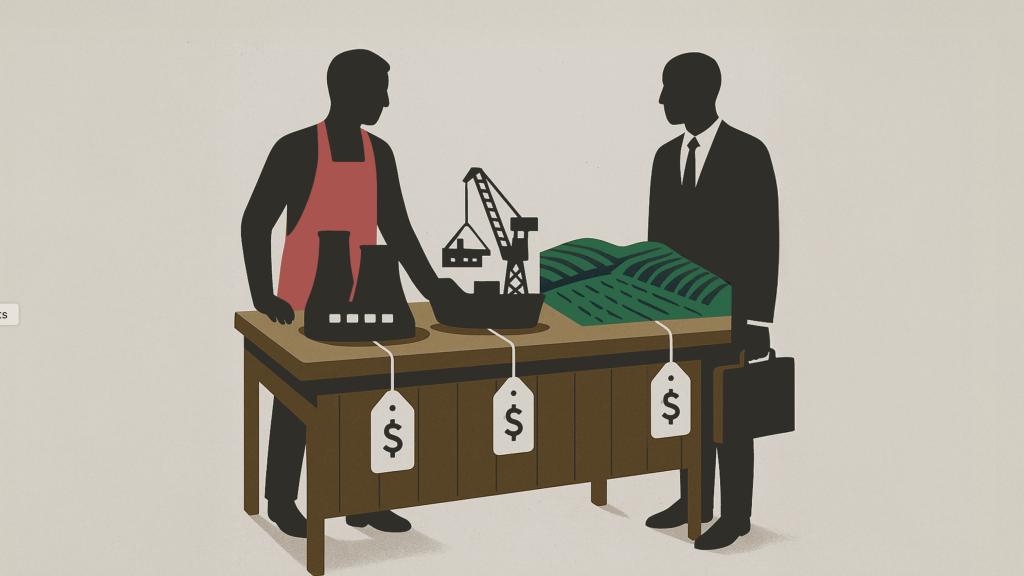
Beyond its symbolic importance, the decision to lift the sanctions is already generating tangible policy outcomes. Not only it has paved the way for renewed regional engagement with the Syrian state and its institutions but it also paves the way for the reintegration of Syria’s economy into regional and global markets. It will facilitate financial transactions, revitalize trade flows, and open the door for Foreign Direct Investment (FDI), as well as engagement from the Syrian business diaspora — key priorities for the new ruling authority. In this context, Damascus has intensified efforts to attract regional and international firms to invest in infrastructure modernization and revenue-generating sectors.
Immediately following the removal of the US sanctions announcement, the Syrian government signed several Memorandum of Understanding (MoU) with regional and international companies, such as with Dubai Port World, a subsidiary of the UAE’s Dubai World, valued at $800 million, to develop the Tartous port.
This agreement followed a 30-year deal signed on May 1 between the French shipping and logistics giant CMA CGM and Damascus to develop the port of Latakia.1 Several contracts were concluded throughout the month of May, including the memorandum of understanding between the General Authority for Land and Maritime Ports and Chinese company, Fidi, to invest in free zones for 20 years.
Moreover, Syria signed a memorandum of understanding with a consortium of companies (including American, Qatari, and Turkish companies) led by the Qatari based company UCC Concession Investments, whose chairman is Syrian-Qatari entrepreneur Moutaz Al-Khayyat and whose president and CEO is his brother, Ramez Al-Khayyat, to enhance investment in the energy sector, with a value of up to seven billion US dollars.
According to the Minister of Energy, the agreement includes the development of four gas turbine power generation stations operating on a combined cycle (CCGT) in the areas of Deir Ezzor, Mhardeh, Zeyzoun in Hama countryside, and Trifawi in Homs countryside, with a total estimated generation capacity of about 4000 megawatts, in addition to a solar power station with a capacity of 1000 megawatts in Wadi al-Rabi in southern Syria. Construction is expected to begin after final agreements and is targeted to finish within three years for the gas plants and less than two years for the solar plant.
On the financial front, the lifting of a broad array of U.S. sanctions — originally imposed through executive orders between 2004 and 2019 — represents a major breakthrough for Syria’s economic reintegration. This move could lead to the unfreezing of Syrian state assets abroad, the restoration of access to US dollar transactions, and the reconnection of Syrian banks to the international SWIFT payment system. These steps are critical to re-establishing normal banking operations, restoring investor confidence, and enabling the flow of capital into and out of the country. The decision also opens the door for renewed access to funding from international financial institutions and development banks such as the Islamic Development Bank (IDB), the International Monetary Fund (IMF) and the World Bank.
In the beginning of June, an IMF delegation visited Syria for the first time since 2009 and met with officials from the public and private sectors, notably the finance minister and central bank governor.
The lifting of US sanctions represents a major source of hope for the Syrian population, as it removes one of the most significant barriers to economic recovery. However, substantial legal and procedural uncertainties remain that could delay or complicate full economic normalization. First, the lifting of sanctions must be institutionalized through a clear and formal process. Secondly, and more critically, even in the absence of sanctions, Syria faces deep structural economic obstacles regarding the instability of the Syrian Pound (SYP) and competition of Turkish Pound and USD; damaged and destroyed infrastructures; high cost of production; continued shortages of key inputs; transport networks in disrepair; shortage of qualified labor; the private sector, dominated by micro, small, and medium-sized enterprises (MSMEs), still requires significant modernization and capital; state resources remain limited, curbing public investment capacity; energy access constitutes a critical bottleneck.
Moreover, HTS political and economic orientation, rooted in neoliberal dynamics and accompanied by harsh austerity measures, makes it harder to establish the foundations for a viable and inclusive reconstruction process. For instance, the government recent contracts regarding electricity sector privileges forms of full privatization through the Build-Own-Operate (BOO) model. In this model, a private company undertakes the construction and operation of a project, maintaining ownership of the asset indefinitely. This signifies that the control over a public service or infrastructure asset transitions permanently from state to private hands. They could therefore decide on their own of the price of electricity and its distribution.
In addition, the current economic trajectory is exacerbating poverty and deepening structural underdevelopment in key productive sectors.
In the private sector, the Ministry of Economy and Industry published a decision at the end of May removing the obligation for businessmen and company directors to register their employees with social security, under the pretext of facilitating the process and encouraging investment. Following criticism of this decision, which was deemed contrary to workers' rights, the ministry issued a clarification the following day, specifying that this measure does not exempt entrepreneurs from the obligation to register their employees with social security, but simply temporarily suspends this obligation until the end of the year to encourage membership in chambers of commerce. However, this explanation has not alleviated fears of renewed worker exploitation.
After months of waiting, the government finally raised the salaries of public employees and retirees by 200 percent, making the minimum wage SYP 750,000 per month, or around $68 (according to the official exchange rate of SYP 11,000 for $1), effective as of July. While a step in the good direction, most of the population, whether employed by the state or the private sector, cannot cover their monthly needs with their salaries. According to estimates made by the newspaper Kassioun at the end of June 2025, the minimum cost of living for a five-member Syrian family living in Damascus reached approximately SYP 9 million (around $818).
The Syrian population not only needs jobs, but jobs that pay enough to allow individuals to live in dignity and cover their daily needs. In addition, the cuts in subsidies and rise in the prices of essential products will only worsen the situation and cancel out the effects of a salary increase.
Syria is also facing one of the most severe food crises in the recent decades, as an acute drought in 2025 threatens to decimate the domestic wheat harvest, traditionally a cornerstone of the country’s agricultural output. More generally, this crisis is connected to a systemic agricultural decline, and unstable trade relations. Rumors are circulating about the abandonment of support for wheat cultivation, traditionally a pillar of the country's agricultural production, according to a source at the Ministry of Agriculture, as reported by The Syria Report website. Even before the fall of the Assad regime, input costs were consistently high, with fertilizer prices tripling since 2023 — increasing production costs, limiting farmers' access to inputs and negatively affecting agricultural production.
In this context, the economic decisions of the new authorities are further impoverishing large swathes of the population and deepening underdevelopment in Syria’s productive economic sectors.
Rooting Syria in a US led regional axis and normalisation with Israel
But more generally, in this strategy to gain international recognition and acknowledgment, there is a clear willingness of the Syrian president al-Sharaa and its HTS affiliates to root its country in a US led axis allied with regional countries such as Turkey, Qatar and Saudi Arabia as a way to consolidate their power over Syria. In this framework, the new ruling authority also seeks a form of normalization with the Israeli state. Al-Sharaa has reiterated on numerous occasions that his rule is not a threat to Israel and apparently also declared to President Trump his readiness to join the Abraham Accords under the “right conditions”.
Officially, there are no conditions for lifting US sanctions, but it is clear that it was achieved in exchange for negotiations and concessions on various issues, including control of Palestinian actors in Syria, and normalization with Israel. Several Palestinian officials in Syria have been arrested, including members of the Palestinian Islamic Jihad movement and the leader of the Popular Front for the Liberation of Palestine — General Command, who was an ally of the former Assad regime.
The Syrian government, led by HTS, is prepared to make numerous concessions to Israel and provide security guarantees, with the aim of rapprochement with the United States and strengthening its power. Al-Sharaa confirmed the existence of indirect negotiations with Israel aimed at easing tensions. According to various sources, direct talks were also recently held between Israeli, Syrian, and Turkish officials in Azerbaijan. This is despite the continuous attacks by the Israeli occupation army of Syrian territories, particularly in the occupied Syrian lands.
This is also why Damascus has not condemned the massive Israeli strikes against the Islamic Republic of Iran. They perceive quite positively a weakening of Iran, just as they did with Hezbollah in Lebanon. This position is not only connected to Iran’s role during the Syrian uprising and hostility towards it of large sectors of the population, but it reflects, as explained above, the political orientation of the new ruling elite in Syria, as they seek to root the country in a US-led axis to consolidate their power. For the same reasons, they increased control of the border between Lebanon and Syria, where weapons destined for Hezbollah are regularly seized.
At the same time, the rapprochement between Damascus and Washington will probably put more political pressure on the Autonomous Administration of the North East of Syria (AANES), as the ongoing drawdown reduction of US military presence continues. This could increase the refusal of Syrian ruling authority, supported by Turkey, of any decentralized or federal framework in Syria. Ankara has recently reiterated its total rejection of any plans that undermine the central government in Syria or threaten its sovereignty and territorial integrity, in response to demands from large sectors of the Kurdish population and political parties for Damascus to adopt a decentralized system of government. Damascus has adopted a similar position and described these demands as a threat to national unity.
In this framework, international recognition, promoting a potential normalization process with Israel, and seeking good relations with the US and its regional allies are all made in the perspective to consolidate HTS power and strengthen its rule over the country.
Dominating state’s institution and society
Building on the continuous legitimation of its rule by regional and international powers, HTS new ruling authorities have pursued measures to consolidate their power over political, economic and social actors. As explained in a previous article, HTS dominates the key positions in the state institutions, in the army and security services. Similarly, key positions in the new transitional government are held by figures close to al-Sharaa. For example, Asaad al-Shibani and Abu Qasra retained their positions as foreign minister and defense minister, respectively, while Khattab was appointed interior minister. Moreover, the new ruling authorities established parallel institutions to further consolidate their power, such as the National Security Council in Syria, headed by al-Sharaa and made up of his close associates (the foreign minister, defense minister, interior minister, and director of general intelligence). In a similar vein, the Foreign Ministry established the General Secretariat for Political Affairs at the end of March to supervise domestic political activities, formulate general policies related to political matters, and manage assets of the dissolved Baath Party.
The absence of an inclusive democratic process within the new ruling authority was also reflected in various initiatives, conferences, and committees that were supposed to be participatory and chart the next steps for the country's future. Such initiatives included the Syrian National Dialogue Conference, on February 25, which was widely criticized for its lack of preparation, representation, and seriousness due to the limited time allocated to the sessions. The interim constitution, signed by the interim Syrian president, was also widely criticized by various political and social actors, both for the lack of transparency in the criteria for selecting the drafting committee and its content. Furthermore, while the interim constitution formally declares the separation of powers, this is hampered by the broad scope of powers vested in the presidency.
At the same time, the new ruling authority has failed until now to establish a framework for comprehensive, long-term transitional justice aimed at holding all individuals and groups accountable for war crimes. On May 17, Syria’s transitional authorities announced presidential decrees establishing two new government bodies: the Transitional Justice Commission and the National Commission for the Missing. However, the Transitional Justice Commission’s mandate, as laid out in the decree, is troublingly narrow and excludes many victims, including from HTS and its allied armed groups.
This is selective justice and therefore very problematic, which can provoke new political and sectarian tensions in the country. In addition, no process of transitional justice regarding efforts to recover state assets and hold accountable businessmen linked to the former regime and responsible for serious financial and economic crimes have been implemented.
At the same time, the establishment of the Higher Committee for the Election of the People’s Assembly in the beginning of June has resulted in many criticisms. The methodology and process adopted for selecting members of the future parliament lacks transparency and inclusivity and could act as a tool to favor actors close to the new ruling actors. Ahmad Al-Sharaa will appoint a third of the members of Parliament, while the remaining two-thirds are to be selected by “regional subcommittees” that are themselves appointed by the Higher Committee for the Election of the People’s Assembly.
Outside state institutions, they try to expand their domination over other social actors. For instance, they restructured the country’s chambers of commerce by replacing the majority of members with appointees and reduced the number of board members in the main chambers, including Damascus, Damascus Countryside, Aleppo and Homs. Several new board members are known for their close relations to HTS such as the new president of Federation of Syrian Chambers of Commerce Alaa Al-Ali, former head of the HTS affiliated Idlib Chamber of Commerce and Industry. Other members are well known business personalities from pre-2011 such as Issam Ghreiwati, who now serves as chairman of the board. Issam Ghreiwati is the son of Zuhair Ghreiwati, who established the Ghreiwati Group, one of Syria’s most prominent commercial conglomerates.
The ruling authorities have also brought in new, affiliated figures to head trade unions and professional associations. These practices of appointing members, rather than promoting internal elections, is in direct continuity with the former Assad’s regime.
The risk of an exclusive control power by HTS and its allies of state’s institutions and expanding power over society could create further cycles of violence and sectarian tensions, while resulting in an elite-led transition process and reconstruction process, which will only reproduce social inequalities, impoverishment, a concentration of wealth in the hands of a minority, and the absence of productive development.
Sectarianism, a tool of domination
Finally, to consolidate its power over society, HTS is using sectarianism as a tool of domination and control over the population.
While the sectarian violence unleashed in March against Alawite civilians was initially provoked by remnants of the Assad regime who organized coordinated attacks against members of the security services and civilians, the counterreaction encompassed all Alawites, according to a logic of sectarian hatred and revenge. In April and May, armed groups connected to or supportive of the authorities mounted attacks against the Druze population.
Responsibility for the massacres in March and the continuous killings of Alawite civilians, and then attacks on the Druze population, lies principally with the new Syrian authorities. They failed to prevent them, and indeed some of the militia groups were directly implicated in the attacks, and higher echelons of the state were aware of the massacres and gave their approval, as reported by the Reuters report. Moreover, HTS ruling authorities produced the political conditions making them possible.
Indeed, human rights violations against Alawite individuals and communities, including kidnappings and assassinations, have been on the rise in the past few months, some of which — like the Fahil massacre at the end of December 2024 and the Arzah massacre at the beginning of February 2025 — felt like dress rehearsals before the coastal massacres. Then sectarian attacks against Druze populations in Damascus and in the South in Sweida occured. Once again, no measures were taken against militia groups involved in the attacks, or against individuals in sectarian calls and actions.
The ruling authorities continuously described these acts as isolated, while taking no serious actions against their perpetrators. To date, despite government overtures to investigate, there has been no accountability.
Moreover, HTS and Syrian officials have repeatedly misrepresented the Alawite community as a tool of the former regime against the Syrian people. For instance, during his speech at the 9th edition of the donors' conference on Syria in Brussels, Belgium, Syrian Foreign Minister Asaad al-Shibani stated, “54 years of minority rule led to the displacement of 15 million Syrians...” — implicitly suggesting that the Alawite community as a whole had ruled the country for decades, rather than a dictatorship controlled by the Assad family.
While it is undisputed that Alawi figures held key positions in the former regime, particularly within its military and security apparatus, reducing the nature of the state and its dominant institutions to an “Alawite identity” or portraying the regime as favouring religious minorities while systematically discriminating against the Sunni Arab majority is both misleading and far from reality.
The authorities also failed to establish a mechanism promoting a comprehensive transitional justice process aimed at punishing all individuals and groups implicated in war crimes during the Syrian conflict. This could have played a crucial role in preventing acts of revenge and putting a lid on rising sectarian tensions.
Indeed, Ahmad al-Sharaa and his allies have a common interest for a selective transitional justice, fearing that they may be judged for their own crimes and abuses committed against civilians.
More generally, there are three main objectives in these sectarian tensions and attacks.
Firstly, instrumentalizing sectarian tensions, and the narrative of “Mazlumiya Sunniya” (Sunni victimhood or injustice) to try to build a popular consentment and unite large segments of the Arab sunni community around them, despite many political and social differences within this community.
Sectarianism is fundamentally a tool for consolidating power and dividing society. It serves to distract the popular classes from socio-economic and political issues by scapegoating a particular group — defined by sect or ethnicity — as the root of the country’s problems and a security threat, thereby justifying repressive and discriminatory policies against it.
Moreover, sectarianism acts as a powerful mechanism of social control, shaping the course of class struggle by fostering dependence between the popular classes and their elite leadership. As a result, the popular classes are stripped of independent political agency and instead come to be defined — and engage politically — through their sectarian identity.
Also in this regard, the new ruling authority is following in the footsteps of the former Assad regime, continuing to use sectarian policies and practices as a means of governance, control and social division.
Secondly, these sectarian attacks and tensions seek to break democratic space or dynamics from below. Following the march massacres, people are scarier to organize. For instance, protests in different governorates in January and February 2025 by laid-off public employees have been organised, as were attempts to organize alternative trade unions, or at least coordination structures. However, the sectarian massacres in the coastal areas significantly reduced the potency of the protest movement, because of fears that armed groups close or from the new ruling authorities might react with violence.
Thirdly, these sectarian attacks allowed the new ruling authorities in Damascus to reassess their domination in some territories (coastal areas) and try to do so in the areas with significant Druze populations, although unachieved particularly in the province of Sweida, frustrating the central authorities. The objectives of the ruling authorities in these events were therefore part of a broader strategy to centralise power and consolidate their domination in areas outside of their total control.
Conclusion
While any post-Assad government would have inherited a daunting set of political and economic problems, the current ruling authorities led by HTS bring their own set of challenges. Their political and economic orientation makes it even harder to establish the foundations for a viable and inclusive democratic and reconstruction process. Moreover, its policies are resulting in increasing loss of the country’s sovereignty to foreign actors. Quite the opposite: HTS has sought to consolidate its own power in the state's institutions, army and society.
This is why HTS policies should not be viewed as separate files: they are connected. Indeed, rooting the new Syria in a total alliance with western led axis, with its regional allies, and seeking forms of normalization with Israel, help consolidate the external legitimacy of the new ruling elite and attract foreign investments, including through privatisation of state assets and liberalization of the economy. The implementation of such policies, normalization with Israel and neoliberal dynamics impoverishing further society and deepening socio-economic inequalities, could create instability in the country, including through protests movements and rising criticisms.
Here, sectarianism is a useful tool to try to build a so-called homogeneous Sunni bloc, in trying to ignore and hide socio-economic and regional differences, in order to neutralise dissent in the country or mobilise sections of the populations against particular groups to divert them from class dynamics and divide the population.
Moreover, despite the rhetoric of the new ruling authority and supporters of its orientation, there are no guarantees that alliance with Western powers and normalization with Israel will improve the economic and political situations. We can look at Egypt’s evolution following the peace agreement with Israel in 1981. Despite an average of around $1 billion in US financial assistance since 1981, the socio-economic situation in Egypt worsened in the past decades, while wealth gaps increased considerably. In addition, the Egyptian economy is in crisis. At the same time, Egypt increasingly lost its sovereignty to USA and Israeli interests, as its role in the blockade of the Gaza Strip or attacks on demonstrators in the Gaza march recently demonstrated it.
In this framework, many questions arise regarding what strategy to adopt to improve the country’s situation. How to help Syria? Some actors, whether individuals and groups, think they can help Syria by working and engaging with the new ruling authorities to improve their practices and competencies. While engaging with specific state’s institutions is a necessity, simply because it is to them that demands and requests are made, to expect state’s authorities to change their policies and political behavior because of comments and councils on good governance is to create false hopes.
We must be clear: the ruling authorities will not change its policies and behavior, or even make real concessions in favor of the political and socio-economic interests of the Syrian popular classes, without a change in the balance of forces and moreover the construction and development of a counter power within the society, which gathers democratic and progressive networks and actors. Democracy is a daily struggle: it has to be won and is not given.
- 1
Under this agreement — worth $260 million — CMA CGM will construct a new berth and invest in port infrastructure, with the revenue-sharing arrangement granting 60 per cent to the Syrian state and 40 per cent to the company. CMA CGM has operated at Latakia since 2009, marking a continuity of its presence under new political circumstances. In parallel, high-level discussions have begun on energy development.
No comments:
Post a Comment