'Kick in the teeth': Key indicator comes in ‘scorching hot’ just as Trump tariffs hit

A leading inflation indicator surged much more than expected last month, just as the impact of U.S. President Donald Trump's tariffs started to weigh on American businesses and consumers.
New Producer Price Index (PPI) numbers released on Thursday showed that wholesale prices rose by 0.9% over the last month and by 3.3% over the last year. These numbers were significantly higher than economists' consensus estimates of a 0.2% monthly rise and a 2.5% yearly rise in producer prices.
PPI is a leading indicator of future readings of the Consumer Price Index, the most widely cited gauge of inflation, as increases in wholesalers' prices almost inevitably get passed on to consumers. Economists have been predicting for months that Trump's tariffs on imported goods, which at the moment are higher than at any point in nearly 100 years, would lead to a spike in inflation.
Reacting to the higher-than-expected PPI number, some economic experts pinned the blame directly on the president.
"So much for foreigners paying tariffs," commented Joseph Brusuelas, chief economist at tax consulting firm RSM US, on X. "If they did, PPI would be falling. Wholesale prices up 3.3% from a year ago and 3.7% in the core. The temperature is definitely rising in the core. This implies a hot PCE reading lies ahead."
Liz Pancotti, the managing director of policy and advocacy at the Groundwork Collaborative, took a deep dive into the numbers and found that Trump's tariffs were having an impact on a wide range of products.
"There is no mistaking it: President Trump's tariffs are hitting American farmers and driving up grocery prices for American families," she said. "Wholesale prices for grocery staples, like fresh vegetables (up 39% over the past month) and coffee (up 29% over the past year) are rising, squeezing American families even further in the checkout line."
Pancotti singled out the rise in milk prices as particularly worrisome for American families.
"Milk drove more than 30% of the increase in prices for unprocessed goods, rising by 9.1% in just the past month," she explained. "Tuesday's CPI print showed that milk prices rose by 1.9% in July, and this PPI data suggests further price hikes are on the way."
Betsey Stevenson, who served on former President Barack Obama's Council of Economic Advisers, also pointed the finger at Trump's policies.
"Tariffs will cause higher prices," she said. "Volatility and uncertainty will cause higher prices. The PPI jump is not a surprise, it was inevitable."
On his Bluesky account, CNBC's Carl Quintanilla flagged analysis from economic research firm High Frequency Economics stating that the new PPI numbers were "a kick in the teeth for anyone who thought that tariffs would not impact domestic prices in the United States economy."
The firm added that it "will not be a long journey for producers' prices to translate into consumer prices" in the coming months.
Liz Thomas, the head of investment strategy at finance company SoFi, argued that the hot PPI numbers could further frustrate Trump's goal of getting the Federal Reserve to lower interest rates given that doing so would almost certainly boost inflation further.
"The increase in PPI was driven by services, and there were increases in general services costs and in the Trade component (i.e., wholesale/retail margins)," she commented. "The Fed won't like this report."
Ross Hendricks, an analyst at economic research firm Porter & Co., described the new report as "scorching hot" and similarly speculated that it would stop the Federal Reserve from cutting rates.
"Good luck with them rate cuts!" he wrote. "Can't recall the last time we've seen a miss that big on a single monthly inflation number."
Hedge fund manager and author Jeff Macke jokingly speculated that the bad PPI print would cause Trump to fire yet another government statistician just as he fired Erika McEntarfer, the former commissioner of the Bureau of Labor Statistics.
"Whoever compiles the PPI needs to update their CV," he wrote.
Just as with the monthly jobs report, the Bureau of Labor Statistics collects and publishes PPI data.
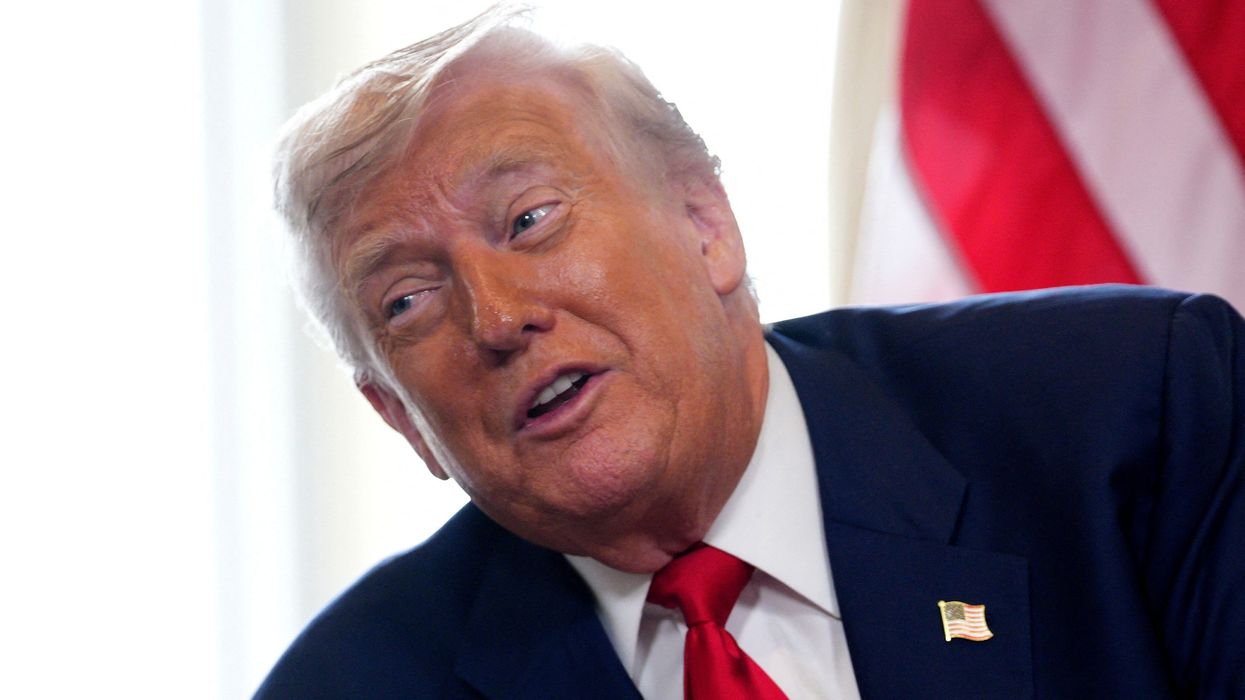
U.S. President Donald Trump reacts as he meets with British Prime Minister Keir Starmer (not pictured) at Trump Turnberry golf club on July 28, 2025 in Turnberry, Scotland, Britain. Christopher Furlong/Pool via REUTERS
Natasha Sarin, president and co-founder of The Budget Lab at Yale, says she bristles at the thought of President Donald Trump touting his recent E.U. trade deal as a win.
“The idea that taking a tariff rate of 1.5 percent and turning it into a tariff rate of 15 percent plus is somehow a win for Americans — I’m just baffled by the concept,” said the economist to New York Times reporter Ezra Klein. “Because no one would say that if you took the sales tax on certain goods and you increased it 15-fold that was a win for Americans. But effectively, that’s what we’ve done.”
Sarin said the U.S. economy before President Trump took office was doing “quite well” relative to the rest of the world recovering from pandemic, despite many polls. Inflation had been very high, but it was coming back down toward the Fed’s 2 percent target, with just the last mile to go. The labor market, she said, was strong.
And then President Trump took office.
“At the time, many commentators, including myself, said the best-case scenario for the economy is literally if [Trump] did nothing,” Sarin said. “… Instead, beginning on Liberation Day and continuing since, the president and his administration initiated a trade war aimed at remaking the global order. The consequences of the trade war have been some of the most inflationary policies we’ve seen in our lifetimes.”
Now Trump’s trade war is beginning to reverberate.
“The Budget Lab at Yale, which I run, estimates that we’re going to see household prices increase by around $2,000 a year. We’re going to see an inflation uptick, and we’re going to see a weaker labor market as a result of all that has already been done.
Sarin told Klein the only reason most other nations haven’t responded to Trump’s tariffs with retaliatory tariffs of their own is because tariffs “are a bad tax” on their own people by forcing folks at the middle or bottom of the tax code to pay proportionately more for goods and necessities.
Most countries, she said “don’t want to hit low- and middle-income people who consume most of what they earn.”
Plus, if you make it more expensive to buy goods, Sarin said people are going to buy fewer goods, and demand drops. People buy fewer TVs and couches because they’re more expensive — then production and investment in those types of capacities decrease, and the economy goes into a drag.
“Over the last six months our growth rate has been around 1.2 percent,” said Sarin, who is also a law professor. “It was supposed to be — as of last November, when we made projections — basically twice that. So, this is having a real effect on the economy. It’s slowing and shrinking it. That’s exactly what our models predict, and that’s exactly what economists … would expect to happen from these types of policies.”
Read the full New York Times report at this link.
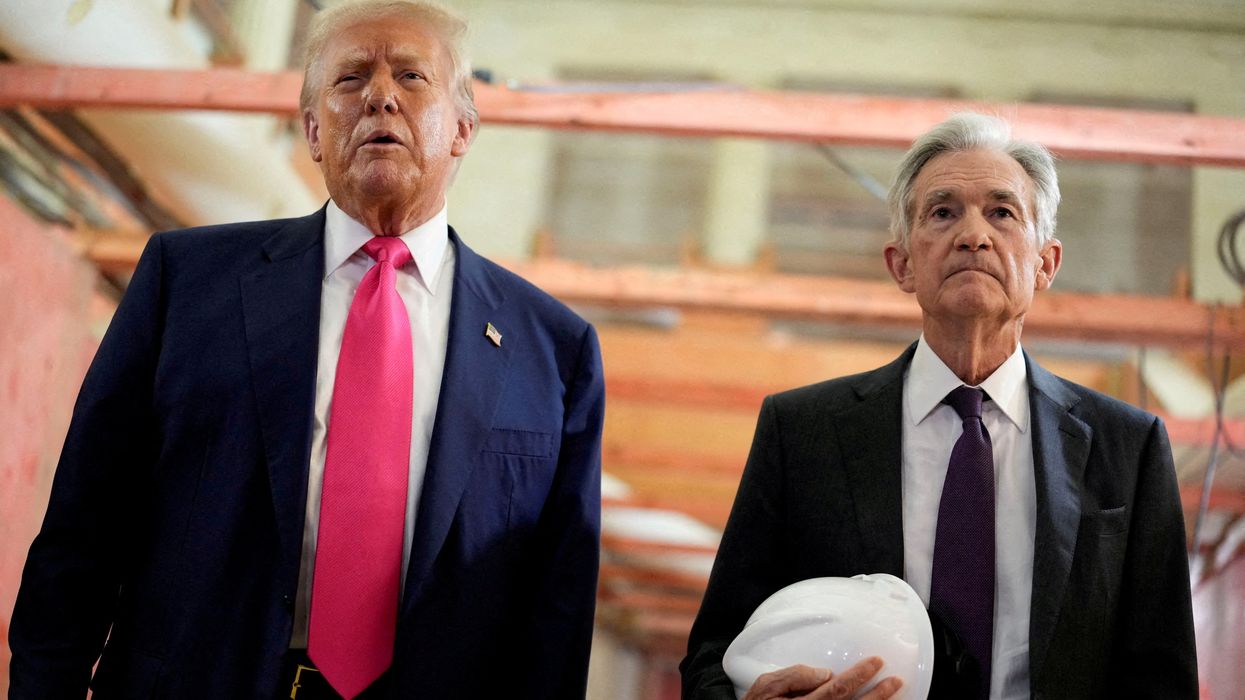
FILE PHOTO: U.S. President Donald Trump and Federal Reserve Chair Jerome Powell speak during a tour of the Federal Reserve Board building, which is currently undergoing renovations, in Washington, D.C., U.S., July 24, 2025. REUTERS/Kent Nishimura/File Photo
According to the U.S. Bureau of Labor Statistics (BLS), unemployment in the United States was at 4.2 percent in July — which is far from a recession. But the BLS also found that the U.S. is hurting in terms of job creation; the 4.2 percent figure largely reflects Americans who are holding on to jobs they already have rather than starting new jobs. And President Donald Trump was so angry over the BLS' job creation data that he fired ex-BLS Commissioner Erika McEntarfer and nominated a MAGA loyalist for the position: E.J. Antoni, known for his work with the Heritage Foundation.
In an article published on August 16, Axios' Courtenay Brown lays out some reasons why so many Americans are feeling "gloomy" about the economy.
"Americans haven't been this gloomy about the job market since the Great Recession," Brown reports. "Why it matters: Fears about joblessness have surged since President Trump unveiled plans to impose steep tariffs on foreign goods. The economy might have hit a soft patch, but it has so far dodged the bleak predictions from a few months ago."
Nonetheless, Brown notes that "consumers are still bracing for the worst to come."
"As of early August," Brown explains, "that pessimism was in step with that of the 2008 financial crisis. About 62 percent of consumers believe unemployment will worsen in the year ahead, according to the University of Michigan's latest monthly survey. That's bounced around a little in the last few months, but consistently hung around levels not seen since the Great Recession…. The concerns about higher unemployment are paired with worries about an inflation resurgence."
The University of Michigan's consumer report was released on August 15.
Joanne Hsu, the report's director, is quoted as saying, "Although CPI inflation has not surged, our data show that consumers are still bracing for an increase in inflation to come. Moreover, consumers are also concerned that labor markets will weaken."
Brown notes that The Great Recession was the United States' "worst economic downturn since the Great Depression."
When the stock market crashed in 1929, U.S. unemployment was only 3.2 percent, according to Investopedia. By 1932, it was up to 23 percent. Americans were so angry about the economy that year that Democratic presidential nominee Franklin Delano Roosevelt defeated incumbent GOP President Herbert Hoover by a landslide and picked up a whopping 472 electoral votes.
The Great Recession wasn't as severe as The Great Depression, but Brown recalls that in late 2008 and 2009, "The stock market was falling off a cliff, unemployment filings soared and the jobless rate would ultimately peak at 10 percent."
Brown continues, "Now: The economy is slowing, though fears are worse than the official data suggests so far. The unemployment rate is holding at a historically low 4.2 percent, as of July. Hiring has stalled, but so have layoffs. There are fewer unemployment filings now than in July 2021, when a record-low share of Americans (14 percent) said they anticipated higher unemployment in the year ahead."
Read Courtenay Brown's full report for Axios at this link.
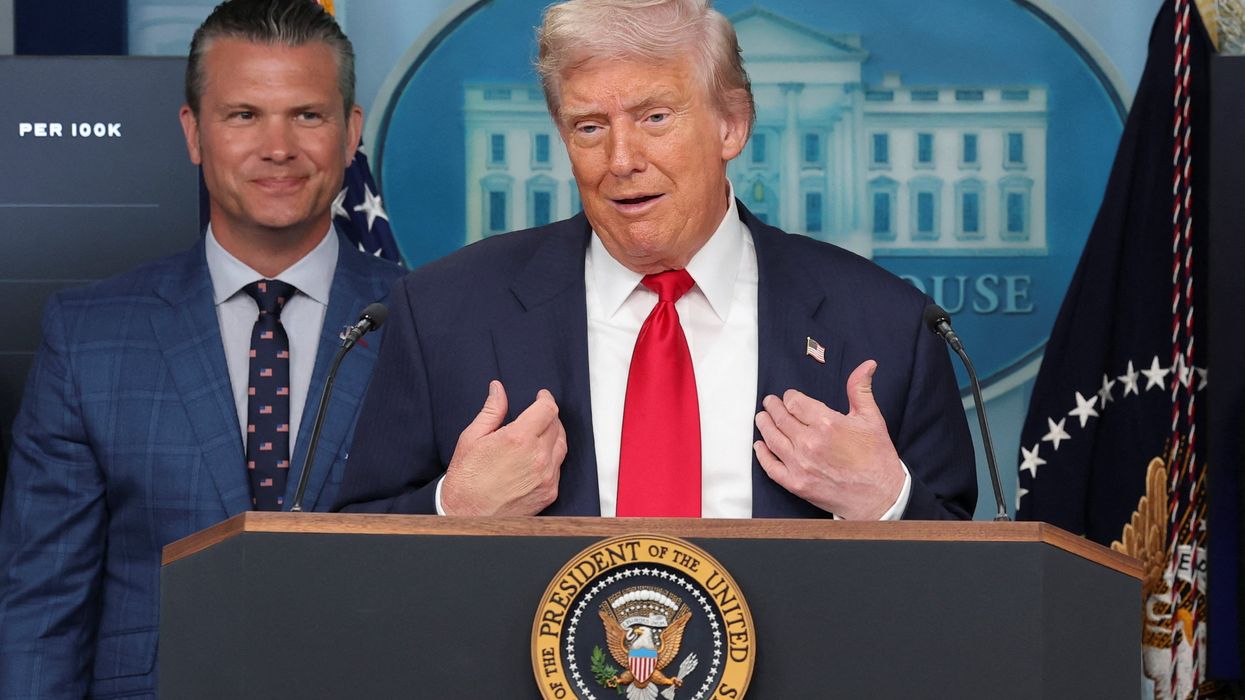
U.S. President Donald Trump speaks during a press conference about deploying federal law enforcement agents in Washington to bolster the local police presence, in the Press Briefing Room at the White House
U.S. Consumers appear to be dreading their Trumpian future, according to the University of Michigan’s most recent Consumer Sentiment Index.
“Consumer sentiment fell back about 5 percent in August, declining for the first time in four months,” according to the report. “This deterioration largely stems from rising worries about inflation.”
Preliminary results for the month showed consumer confidence down 13.7 percent from a year ago, during former President Joe Biden's term. Despite confidence being higher under the last administration, voters still rolled Biden out of office, largely based on economic dissatisfaction at high prices.
The report also revealed that consumers continue to expect both inflation and unemployment to deteriorate in the future, with “year-ahead inflation expectations” rising from 4.5 percent last month to 4.9 percent this month.
“This increase was seen across multiple demographic groups and all three political affiliations,” the report adds.
The numbers put an end to two consecutive months of receding inflation for short-run expectations and three straight months for long-run expectations.
Social media reacted badly to Bloomberg Reporter Joe Weisenthal posting the “ugly consumer sentiment numbers,” and blamed President Donald Trump for much of the anxiety.
“It’s incredible how back we are,” one commenter snidely posted on X, while another pointed out how thoroughly “the media buried Biden's presidency using data points like this but seem oddly disinterested now that Trump is back in charge.”
Another online commenter posted: “Buyer's remorse is hitting folks earlier than expected,” and blamed the courts, the media, corporate America, the Congressional GOP, and the GOP base for failing to provide “any check on Trump.”
Still another X user warned that “we are just now seeing increasing wholesale inflation as businesses have eaten through their pre-tariff glut. That means we are almost certainly going to see higher prices hitting the shelves very soon."
See the preliminary numbers at this link.
Tariff revenue fails to curb US deficit as July spending hits record highs
Even with customs revenue quadrupling under new tariffs, record-high spending on benefits, healthcare and debt interest drove the largest monthly deficit in US history.
The US federal deficit surged to $291 billion (€248bn) in July, marking a 19% increase from the same month last year and one of the biggest jumps in recent years, according to Treasury Department data.
It’s the largest spending total ever recorded for the month of July, though some other months—particularly during the peak of COVID-19 stimulus—saw even higher outlays overall.
Even though the country is now earning more from tariffs—customs receipts were multiplied by four, going from about $7.1 billion (€6.06bn) in July 2024 to roughly $27.7 billion (€23.7bn) this year—this was not enough to offset a sharp rise in spending.
Why is the US federal deficit increasing?
Spending rose as bigger Social Security checks, increased Medicare and Medicaid costs, and higher interest payments on the national debt combined with pricier defence, education and healthcare programs, pushing the July deficit to a record high
The July figure follows a volatile stretch in the federal government’s monthly balances, driven in part by new import duties and the quirks of the fiscal calendar.
In May, the deficit narrowed to $316 billion (€269.8bn), or $219 billion (€187bn) when adjusted for timing differences, as tariff revenue from newly imposed import taxes provided an early windfall. June appeared at first to show a rare surplus, but this was largely an illusion—when adjusted for payment shifts, the month actually posted a $71 billion (€60.6bn) defici
July’s return to a deep shortfall underscores a broader fiscal reality. Namely, while tariffs have injected tens of billions into the Treasury in recent months, they have not changed the structural imbalance between revenue and expenditure. Spending has continued to outpace receipts, even amid healthy customs income.
June’s brief surplus aside, the government’s shortfall remains substantial, with one-off revenue boosts from tariffs unable to contain the impact of persistent, broad-based spending growth. As the Treasury’s figures show, even months of record customs collections have done little to slow the pace of red ink.
No comments:
Post a Comment