Trump and Putin to meet for Ukraine war talks where 'Ice Curtain' once fell
Donald Trump and Vladimir Putin will meet in Alaska on Friday for talks on ending the war in Ukraine, and to revive their diplomatic and economic ties. It's a first-of-a-kind summit in a location loaded with history, symbolism and strategic importance.
Issued on:

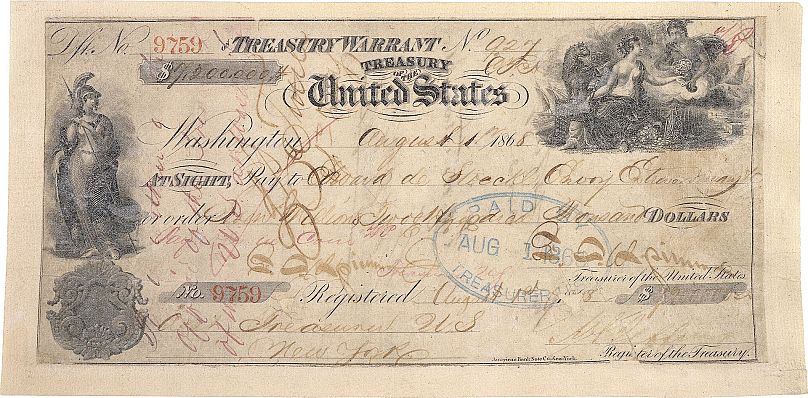
While Trump told reporters on Monday that he was “going to Russia on Friday" to meet with Putin, Alaska has been part of the United States since 1867 – when Russia sold it for $7.2 million.
The US state lies just 53 miles from Russia across the Bering Strait at its narrowest point, between Russia's Chukchi Peninsula and Alaska's Seward Peninsula. There is a 21-hour time difference because the International Date Line runs through the strait.
The talks will mark the first visit by a Russian leader to Alaska and Putin’s first trip to the US since 2015. The location avoids legal and logistical obstacles.
The US is not a member of the International Criminal Court, which in 2023 issued a warrant for Putin on accusations of war crimes. This means Washington has no legal obligation to arrest him. Putin can also travel to Alaska without crossing other nations’ airspace.
EU says Ukraine must 'decide its own future' ahead of Trump-Putin summit
From colony to cooperation
The choice of Alaska also recalls the long history between the two countries.
Working for Russia, 18th century Danish explorer Vitus Bering discovered the strait separating Asia from the Americas that now bears his name.
Russian merchants capitalised on Alaska's fur trade, reselling furs bought from indigenous hunters at vast profit through the Russian-American Company, which ran a trading colony on the territory.
However, in 1867, Tsar Alexander II sold the territory to Washington for $7.2 million, following Russia's defeat in the Crimean War, which had left it with enormous debts.
The deal was criticised in both countries: Americans saw it as a useless frozen wasteland, while some Russians said the price was too low – especially when Alaska was subsequently found to contain vast deposits of gold, copper and other valuable minerals.
Alaska became important in military cooperation after both the US and the Soviet Union entered the Second World War in 1941, serving as a route for US-built aircraft and supplies to Russia.
The territory played a vital role in military cooperation after both the US and the Soviet Union entered World War II in 1941, serving as a route for the transfer of US-built aircraft and other supplies to Russian territory.
During the Cold War its proximity to Russia made it a strategic frontline. Locals nicknamed the closed border the "Ice Curtain".
US summit in Alaska a 'personal victory' for Putin, Zelensky says
Traces of Russian culture
Alaska officially became the 49th US state in January 1959, but traces of its Russian history remain – most visibly in the Russian Orthodox churches that dot the territory.
While, according to the US census, only 1.4 percent of Alaska's population of just over 740,000 – amounting to around 10,360 people – have Russian heritage, the state's Russian Orthodox diocese had around 30,000 members as of 2006, according to the Los Angeles Times.
The community is served by 35 churches, with their distinctive domes, established during the Russian-American Company era, as well as a seminary on Kodiak Island. The religion remains the main legacy of the Russian colonial period.
Although most Russians returned to Russia after Alaska was sold, the church had by then become a way of life in the region, integrated into local traditions.
As Richard Dauenhauer, a professor of native languages and culture at the University of Alaska Southeast told the Los Angeles Times: "It’s very easy to stereotype missionaries as having imposed a completely foreign religion on natives here. But there was actually a lot of synthesis of orthodoxy with the Aleutian [indigenous] culture. A lot of what happened in the native tradition was baptised into the church."
One congregant, Eleanor Tomaganuk, told the American daily: "We were brought up this way. There’s very much a feeling that this is our church."
Russian surnames too are common, even among those with no Russian ancestry – another legacy of the period of colonialism, during which names were assigned to Alaskan natives – and a Russian dialect is still spoken in some communities.
Alaskan Russian has two distinct varieties, both influenced by local Alaskan languages – Kodiak Russian and Ninilchik Russian – although today it is on the verge of extinction, with most speakers over the age of 75.
'Alaska is ours!'
After the collapse of the USSR, Alaska was the subject of nostalgia for Russians. A 1992 song by the band Lyube included the line: “Don’t play the fool, America... give back our dear little Alaska.”
The band has reportedly begun performing the song again recently, as some pro-Putin nationalists call for Alaska’s return.
United 24, the Ukrainian government's media and fundraising platform, highlighted recent Russian propaganda around ownership of the territory in a social media post.
Examples include a billboard proclaiming "Alaska is ours!", a military patch that shows Alaska as part of Russian territory, the music video for Lyube's song (which features images of Alaska being detached from the American continent by cannon fire), and a children's choir performing a song saying "we'll return Alaska to the motherland's harbour".
In December 2024, Newsweek reported that Russian TV presenter Vladimir Solovyov, a close ally of Putin, had said on a Russian state media programme that Finland, Warsaw, the Baltics, Moldova and Alaska should be "returned to the Russian empire".
Commenting on the setting for Friday's talks, former US ambassador to Russia and professor of political science at Stanford University, Michael McFaul, posted on X: "Trump has chosen to host Putin in a part of the former Russian empire. Wonder if he knows that Russian nationalists claim that losing Alaska, like Ukraine, was a raw deal for Moscow that needs to be corrected."
Macron says he is in Greenland to express 'France and EU's solidarity'
Sam Greene, a professor of Russian politics at King’s College London, posted on the same platform: "The symbolism of holding the Trump-Putin summit in Alaska is horrendous – as though designed to demonstrate that borders can change, land can be bought and sold.
Two days later, Trump said at Monday's press conference: “There’ll be some land swapping going on. I know that through Russia and through conversations with everybody. To the good, for the good of Ukraine. Good stuff, not bad stuff. Also, some bad stuff for both.”
He went on to describe the summit as a "feel-out meeting" to hear what Putin "has in mind" about ending the war in Ukraine, adding: "I may say – lots of luck, keep fighting. Or I may say, we can make a deal."
This article was partially adapted from this article by RFI's French service.
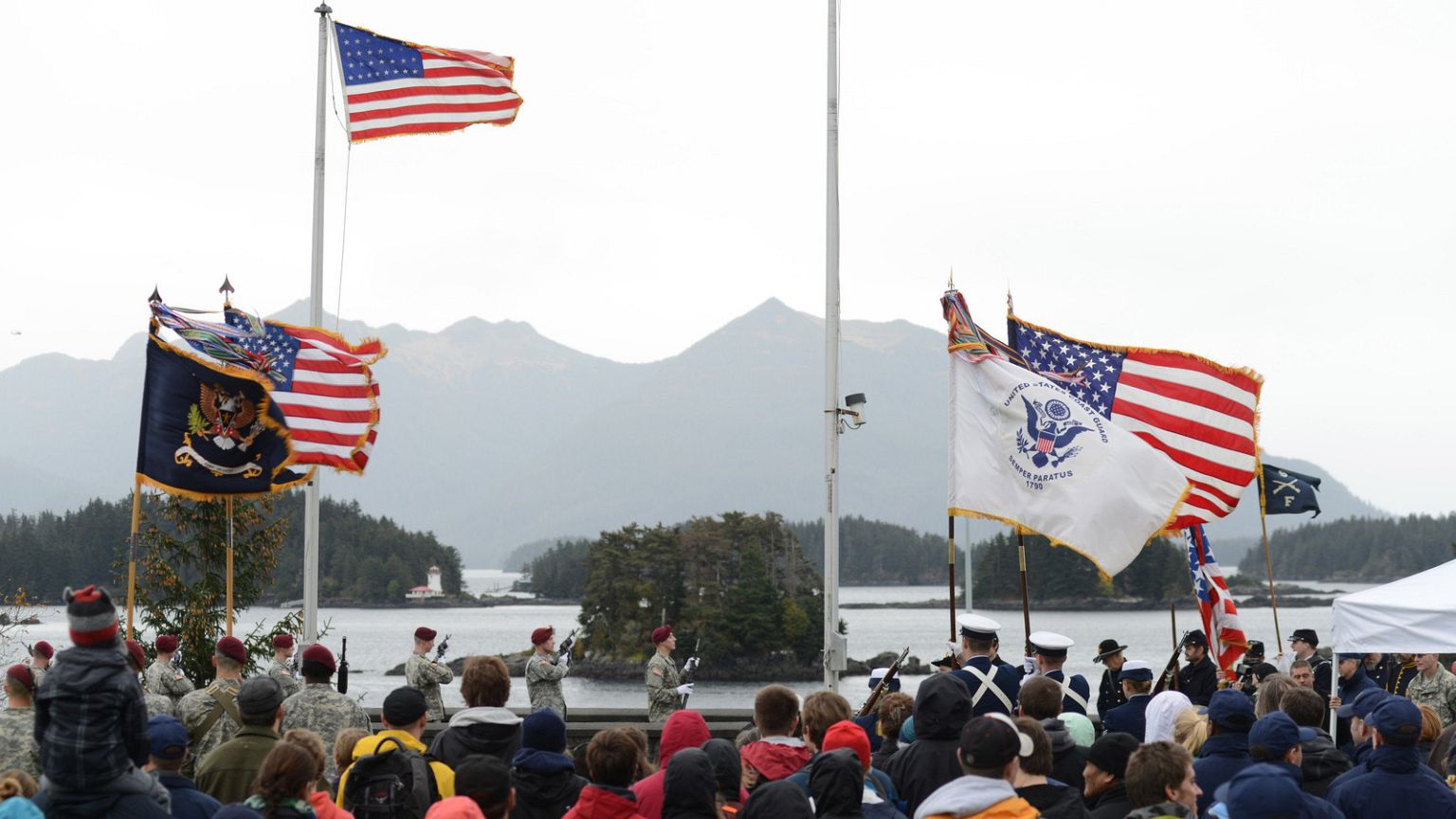
Copyright James POULSON /AP
By Mared Gwyn Jones
Published on 14/08/2025 -
As the Russian and US presidents prepare to meet in the Alaskan capital, speculation that Vladimir Putin rejects the legitimacy of Russia’s 1867 sale of Alaska to the US has resurfaced online.
United States President Donald Trump and Russian President Vladimir Putin will meet face-to-face in a remote army base in the Alaskan capital of Anchorage on Friday for much-anticipated talks on Russia’s war in Ukraine.
The choice of venue is practical. Mainland Alaska and Russia are just 90 kilometres apart, while Alaska's Little Diomede Island lies fewer than 4 kilometres from Russia's Big Diomede Island in the Bering Strait.
It means Putin will be able to travel for talks while avoiding the airspace of Western countries that could attempt to intercept his flight to enforce the arrest warrant of the International Criminal Court (ICC).
But the venue is not only practical, it’s also symbolic. Alaska was once a fully-fledged Russian colony.
In 1867, Russia’s Tsar Alexander II sold Alaska to the US for $7.2 million, to help pay back high debts accrued during the Crimean war of 1853-185
For the Kremlin, Alaska was not considered an economically significant part of its territory.
Alaska was officially proclaimed the 49th US state in 1949, and is now the largest of the US’ current 50 states.
Putin will be the first Russian president to visit Anchorage.
Choice of venue re-ignites imperialist narratives
The Anchorage summit has reignited narratives that hail Alaska a “historical” Russian land, with prominent Kremlin officials and allies quick to highlight the territory’s Russian heritage and history.
The theory that Russia will one day re-claim the US state as its own is not new, and has been peddled by several prominent Kremlin officials and allies in the past.
Last year, Russian state TV propagandist Olga Skabeyeva referred to the US territory as “our Alaska”
Dmitry Medvedev, deputy chair of the Russian Security Council, has joked on social media about going to war with the US over the territory.
Kirill Dmitriev, a top Kremlin negotiator who also heads the Russian Direct Investment Fund, said last week that Alaska was a “Russian American” and suggested the summit could trigger closer cooperation between Moscow and Washington in the Arctic.
A 2022 billboard carrying the message “Alaska is ours”, which at that time sparked outrage among some US senators, has also resurfaced.
No publicly available evidence Moscow has nullified 1867 sale of Alaska
Speculation that Moscow is taking steps to regain the territory is also circulating widely.
That speculation has been fuelled by Trump appearing to confuse Alaska for Russia in a press conference on Monday, when he said he would travel to “Russia” to meet Putin despite having already confirmed Alaska as the venue.
Some social media users have suggested that a 2022 Russian Supreme Court ruling nullified the 1867 sale of Alaska to the US.
But Euroverify couldn’t find any official court document to corroborate that claim.
Other users have referenced a 2024 decree that purportedly declared the 1867 sale of Alaska illegal.
That decree does exist. It’s dated 18 January 2024 and allocates funds for the search, registration, and legal protection of Russia’s historic overseas assets.
We verified its contents and found it makes no reference to Alaska or any of Russia’s historical claims to the territory. Analysts however do believe that the Kremlin could use the decree to re-open historical disputes, not only in Alaska but also in former Russian territories.
Russia makes biggest 24-hour advance in
Eastern Ukraine ahead of Alaska summit
The Russian offensive in eastern Ukraine made major advances Wednesday as European leaders held online talks with US President Donald Trump ahead of his meeting with Russian President Vladimir Putin. Just days ahead of the Alaska summit, Russia made its biggest 24-hour advance into Ukraine in over a year, according to data from a US research group.
Issued on: 13/08/2025 -
By: FRANCE 24
Video by:Philip TURLE

02:40
The Russian army this week made its biggest 24-hour advance into Ukraine in over a year just days ahead of a meeting between US President Donald Trump and Russian President Vladimir Putin in Alaska, according to data from the US-based Institute for the Study of War.
The Russian army took or claimed 110 square kilometres (42.5 square miles) on August 12 compared to the previous day, according to AFP analysis of battlefield data from the Institute for the Study of War.
It was the biggest advance since late May 2024.
In recent months, Moscow has typically taken five or six days to progress at such a pace, although Russian advances have accelerated in recent weeks.
Russia – which currently has full or partial control over 19 percent of Ukrainian territory – said Wednesday that it had taken two villages close to Dobropillia.
Donetsk governor Vadym Filashkin said the region was beginning the mandatory evacuation of families with children from the town of Bilozerske and a dozen other settlements.
"We are beginning the mandatory evacuation of families with children from the town of Bilozerske," Filashkin said, adding that around 1,150 children remained in the area impacted by the order.
Russia's offensive in eastern Ukraine was gaining speed and seizing ground Wednesday as European leaders held online talks with Trump ahead of his Alaska summit.
Russian military push comes ahead of Trump-Putin summit

01:25
'New offensive operations'
Ukrainian President Volodymyr Zelensky acknowledged Tuesday that Russian troops had advanced by up to 10 kilometres (six miles) near the eastern coal mining town of Dobropillia, but said that Kyiv would soon "destroy them".
"We see that the Russian army is not preparing to end the war. On the contrary, they are making movements that indicate preparations for new offensive operations," he said.
Read more Ukraine acknowledges new and speedy Russian gains
The Russian military also fired at least 49 drones and two ballistic missiles at Ukraine during the night, the Ukrainian air force said.
At least three people were killed in Russian artillery and drone attacks on the southern Kherson region, according to regional officials.
Artem, a 30-year-old serviceman in Kramatorsk, said the war would likely continue for "a long time".
"Putin is massing an army, his army is growing, he is stockpiling weapons, he is pulling the wool over our eyes," he said.
Pokrovsk in Russian sights ahead of Alaska summit
Russian forces on the ground in Ukraine have been closing in on a key territorial grab around the city of Pokrovsk, in the eastern Donbas region, which is part of Ukraine’s industrial heartland that Putin has long coveted.
Military analysts using open-source information to monitor the battles have said Ukraine's ability to fend off those advances could be critical: Losing Pokrovsk would hand Russia an important victory ahead of the summit and could complicate Ukrainian supply lines to the Donetsk region, where the Kremlin has focused the bulk of military efforts.
Meanwhile, Ukrainian forces struck an oil pumping station in Russia’s Bryansk region overnight on Wednesday, according to a statement from Ukraine’s General Staff.
Ukrainian drones struck the Unecha station which supplies the Russian army, the statement said, adding that damage and a large fire was reported in the area around the pumping station.
Unecha transports oil to two pipelines with an annual capacity to pump 60 million tons. The operation was carried out by units of the Unmanned Systems Forces of Ukraine’s army and the Main Intelligence Directorate of the Defense Ministry, the statement said.
(FRANCE 24 with AFP and AP)
No comments:
Post a Comment