Armenia, Azerbaijan sign US-brokered peace deal, agree to open ‘Trump Route’ transit corridor

The leaders of Armenia and Azerbaijan signed a landmark peace agreement at the White House on August 8. Officials said the US-brokered deal will end decades of conflict and open a strategic transit corridor that is set to reshape trade flows in the South Caucasus.
The agreement, reached after months of US-led talks, commits the two countries to formally end hostilities and reopen transport links severed during decades of conflict over the disputed Nagorno-Karabakh region. It includes the creation of a major transit route through southern Armenia linking Azerbaijan to its Nakhchivan exclave bordering Turkey, a project named the “Trump Route for International Peace and Prosperity” (TRIPP).
“This is a great honour for me,” US President Donald Trump said at the signing ceremony, flanked by Azerbaijani President Ilham Aliyev and Armenian Prime Minister Nikol Pashinyan. “I didn’t ask for this,” he added, according to a White House statement, saying that the name of the route was proposed by the Armenian side.
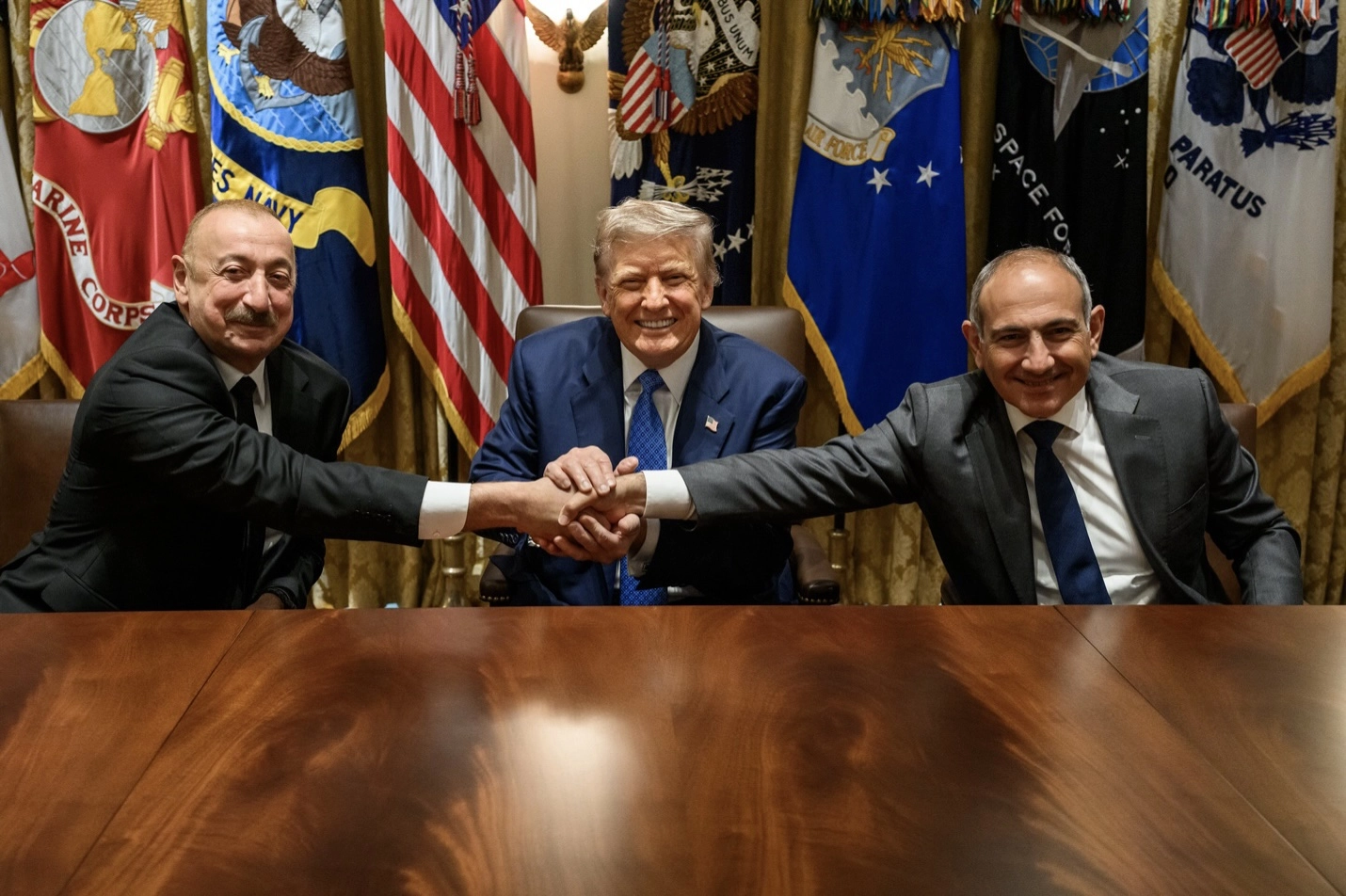
Aliyev and Pashinyan shook hands in the White House’s East Room as Trump reached over to clasp both their hands, in a symbolic gesture intended to draw a line under the lengthy conflict that has claimed tens of thousands of lives since the early 1990s.
“For more than 35 years, Armenia and Azerbaijan have fought a bitter conflict that resulted in tremendous suffering for both nations… With this accord, we’ve finally succeeded in making peace,” Trump said.
The leaders of both Azerbaijan and Armenia were effusive in their thanks to the US president.
“It’s a day which will be remembered by the people of Azerbaijan with a feeling of pride and gratitude to President Trump… Within several months, he managed to put an end to conflicts in Asia, in Africa, and now in South Caucasus — what we could not achieve for more than 30 years,” said Aliyev, as quoted in a White House statement.
“We will turn the page of standoff, confrontation, and bloodshed, and provide a bright and safe future for our children.”
“Today, we have reached a significant milestone in Armenia-Azerbaijan relations,” said Pashinyan, according to the Armenian Prime Minister’s Office. “We are laying the groundwork for a better history than the one we have had in the past. This groundbreaking progress simply would not have been possible without President Trump's personal involvement and his unwavering commitment to peace in our region.”
Alongside the peace declaration, both Yerevan and Baku signed separate agreements with Washington to deepen cooperation in energy, technology, and trade, though the White House did not immediately disclose details.
According to the joint declaration, the TRIPP project will guarantee “unhindered connectivity” between Azerbaijan and Nakhchivan, while providing “mutual benefits for the Republic of Armenia in terms of international and domestic connectivity”. There must now be an excellent prospect of Azerbaijan's close ally Turkey fully reopening its border to Armenia.
The agreement comes almost two years after Azerbaijan retook full control of Nagorno-Karabakh in a 2023 offensive that prompted the exodus of more than 100,000 ethnic Armenians from the enclave.
Azerbaijan's long-standing demand for a land corridor to Nakhchivan – known in Baku as the Zangezur corridor – had been a key sticking point in talks. Armenia had resisted the proposal, citing sovereignty concerns.
The TRIPP is essentially the same route, but US officials said the initiative would be implemented in coordination with Armenia and “mutually agreed third parties”.
The TRIPP corridor is expected to boost trade along the “Middle Corridor” route linking China and Europe via Central Asia, the Caspian Sea, and Turkey, offering an alternative to Russian and Iranian transit networks.
Both Azerbaijan and Turkey are expected to benefit from faster cargo routes, while Armenia could gain new economic opportunities from participation in a major international transit system.
However, it is expected to erode Iran and Russia’s influence in the region. The new route and increased US engagement in the region face strong opposition from Iran. Tehran has repeatedly warned against any new transit arrangements that could marginalise it from regional trade flows.
Russia, historically a security guarantor in the South Caucasus, has seen its role diminish amid strained relations with both Yerevan and Baku. Armenia has moved closer to the European Union after the Russia-led CSTO security alliance failed to intervene during Azerbaijani incursions, while Azerbaijan’s ties with Moscow have been tested by recent diplomatic incidents.
Russia Cautious on Armenia-Azerbaijan Deal, Iran Rejects Border Corridor
Moscow, once the main power broker in the Caucasus, is now bogged down in its offensive in Ukraine, diverting political and military resources into the grinding conflict of attrition.
by AFP | Aug. 10, 2025
Content
Waning influence
Repackaging for Trump?
Share
Flip
Russia cautiously welcomed a US-brokered draft deal between Armenia and Azerbaijan on Saturday, but Moscow’s regional ally Iran rejected the idea of a new border corridor backed by President Donald Trump.
The two former Soviet republics signed a peace deal in Washington on Friday to end a decades-long conflict, though the fine print and binding nature of the deal remained unclear.
The US-brokered agreement includes establishing a transit corridor through Armenia to connect Azerbaijan to its exclave of Nakhchivan, a longstanding demand of Baku.
The United States would have development rights for the corridor – dubbed the “Trump Route for International Peace and Prosperity” – in the strategic and resource-rich region
But Russia’s ally and the warring parties’ southern neighbour Tehran said it would not allow the creation of such a corridor running along the Iranian border.
“With the implementation of this plot, the security of the South Caucasus will be endangered,” Akbar Velayati, an advisor to supreme leader Ayatollah Ali Khamenei told the Tasnim news agency.
The planned corridor was “an impossible notion and will not happen,” while the area would become “a graveyard for Trump’s mercenaries,” he added.
In a similar tone, Moscow said it would “further analyze” the corridor clause, noting there were trilateral agreements in place between Russia, Armenia and Azerbaijan, from which no one had yet withdrawn.
Russian Strike Sets Central Ukraine Train Station Ablaze
A video shared by the chairman of Ukraine’s state-owned rail operator showed a train station engulfed in flames overnight after a Russian strike, sending sparks into the night sky.
“It should not be ignored that Armenia’s border with Iran is guarded by Russian border guards,” said Russian foreign ministry spokeswoman Maria Zakharova.
Moscow, previously a key backer of Armenia, still has a military base there. Embroiled in its Ukraine operation, launched in 2022, it did not intervene in the latest conflict.
This has strained the historically warm ties between Yerevan and Moscow, home to a large and influential Armenian diaspora, triggering Armenia’s drift towards the West.
Advertisement
Waning influence
Christian-majority Armenia and Muslim-majority Azerbaijan went to war twice over their border and the status of ethnic enclaves within each other’s territories.
Moscow, once the main power broker in the Caucasus, is now bogged down in its more than three-year offensive in Ukraine, diverting political and military resources into the grinding conflict of attrition.
Both Armenia and Azerbaijan praised the US efforts in settling the conflict. Azerbaijani President Ilham Aliyev even said he would back President Donald Trump’s nomination for the Nobel Peace Prize.
The US-led NATO alliance welcomed the deal as a “significant step forward.”
But in Moscow, Zakharova refrained from even calling it a deal, referring to it merely as “the meeting of the leaders of the South Caucasus republics in Washington” – adding, however, that it still deserved “a positive assessment.”
Repackaging for Trump?
Analysts also sounded a note of caution, with the International Crisis Group pointing out that the deal left “a lot of questions unanswered.”
Advertisement
7 Miraculous Military Repairs Under Fire
The 'Impossible' Repair Mission
When experts said 'can't be fixed'
German technicians achieved what Raytheon deemed impossible - repairing a critically damaged Patriot radar system essential for Ukraine's defense.
The two countries went to war twice over the disputed Karabakh region, which Azerbaijan recaptured from Armenian forces in a lightning 2023 offensive, sparking the exodus of more than 100,000 ethnic Armenians.
Azerbaijan and Armenia agreed on the text of a comprehensive peace deal in March.
Much of the White House agreement was a “repackaging” of that, which helped both countries get on Trump’s good side “by giving him a role,” the Crisis Group’s senior South Caucasus analyst Joshua Kucera said.
Azerbaijan later added a host of demands to that March deal, including amendments to Armenia’s constitution to drop territorial claims for Karabakh, before signing the document.
Pashinyan has announced plans for a constitutional referendum in 2027, but the issue remains deeply divisive among Armenians, with Kucera warning that this could yet derail the process.
Kucera called the corridor “one potentially significant development” from the White House meeting, but added that missing key details could prove “serious stumbling blocks.”
The US-brokered deal was “definitely a testament to the fact that Russia has been losing its influence” as its Ukraine operation had “diverted its attention and resources from some other areas of its traditional interest,” Olesya Vardanyan, an independent analyst on the South Caucasus, told AFP.
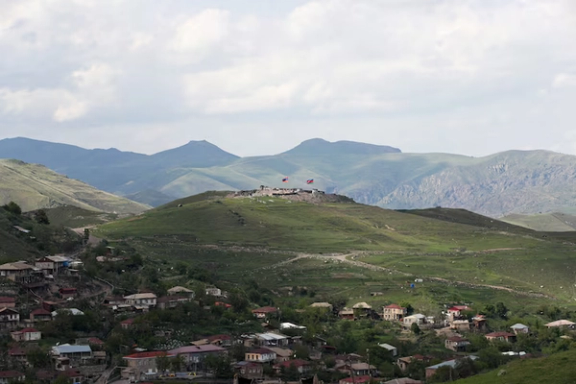
A view shows the positions of the Armenian and Azerbaijani armies on the heights above the village of Khnatsakh in Syunik Province, Armenia May 13, 2025.
Tehran has condemned US plans to develop Armenia’s Zangezur corridor as part of a peace deal with Azerbaijan, branding it a challenge to regional security, a senior Iranian diplomat said.
On Friday, Armenia and Azerbaijan signed a deal at the White House to settle a longtime dispute over the corridor, a strip of land which became a flash point in the two rivals’ decades-long conflict.
The deal gives Washington leasing rights to develop the transit corridor, which would connect Azerbaijan with its exclave, Nakhchivan. It will be renamed the Trump Route for International Peace and Prosperity (TRIPP). Though it will operate under Armenian legal jurisdiction, the US will lease the land to a private American company to manage construction and logistics.
“The Islamic Republic will not easily overlook the issue of Zangezur,” Ali Bagheri Kani, the secretary of Iran's Strategic Council on Foreign Relations, told state broadcaster IRIB on Saturday evening in reaction to the US-brokered peace deal.
The Strategic Council on Foreign Relations is responsible for formulating strategies and policies and coordinating all foreign affairs activities. Its members and chair are appointed by the Supreme Leader.
Russia’s foreign ministry had also taken a position and said other countries would not remain silent, Bagheri Kani added.
Russia, a traditional ally and broker in the strategically vital South Caucasus, was excluded from the deal, despite its border guards stationed on the Armenia-Iran border.
While supporting the summit, Moscow urged that solutions be developed by regional countries themselves with support from their immediate neighbors—Russia, Iran, and Turkey—warning against the “sad experience” of Western mediation in the Middle East.
Kayhan calls plan a 'betrayal'
Bagheri Kani's remarks followed a sharply worded piece in Kayhan, a daily under the supervision of Supreme Leader Ali Khamenei, which described the agreement to build the Zangezur corridor as “a great betrayal” and warned that it “must not go unanswered” by the Islamic Republic.
“Iran should use the levers at its disposal to confront them and, as a first step, can invoke the Geneva and Jamaica conventions to ban the passage of US- and Israeli-affiliated vessels through the Strait of Hormuz,” wrote the daily on Sunday.
'Corridor will fail,' Khamenei advisor says
Ali Akbar Velayati, senior adviser to Khamenei, also rejected the project, warning Iran would stop its establishment “even without Moscow’s help” and accusing Washington of trying to reshape the South Caucasus.
“Mr Trump thinks the Caucasus is a piece of real estate he can lease for 99 years,” Velayati told the IRGC-affiliated Tasnim News Agency on Saturday.
“This passage will not become a gateway for Trump’s mercenaries," he said, referring to Azerbaijan and Armenia. "It will become their graveyard."
Armenian Prime Minister Nikol Pashinyan and Azerbaijani President Ilham Aliyev signed the US-brokered peace accord at the White House with US President Donald Trump.
The deal grants Washington exclusive development rights to a strategic route across Armenia linking mainland Azerbaijan to its Nakhchivan exclave, bypassing both Iran and Russia
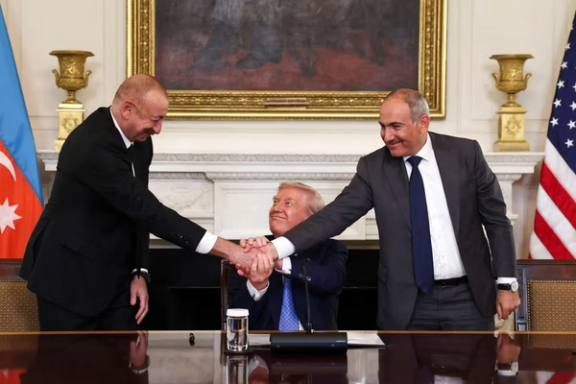
The White House has promoted the “Trump Route for International Peace and Prosperity” as a boost to energy exports and trade in the South Caucasus.
Armenia and Azerbaijan have fought repeated wars over Nagorno-Karabakh since the late 1980s, most recently in 2023 when Baku regained full control of the enclave. While Russia mediated previous agreements, its sway has diminished since the 2022 invasion of Ukraine.
In spite of the hardliners' reactions, Iran’s foreign ministry on Saturday welcomed the peace text as an important step toward stability. However, it cautioned that projects near its borders must proceed “within the framework of mutual interests, with respect for national sovereignty and territorial integrity, and without foreign interference.”
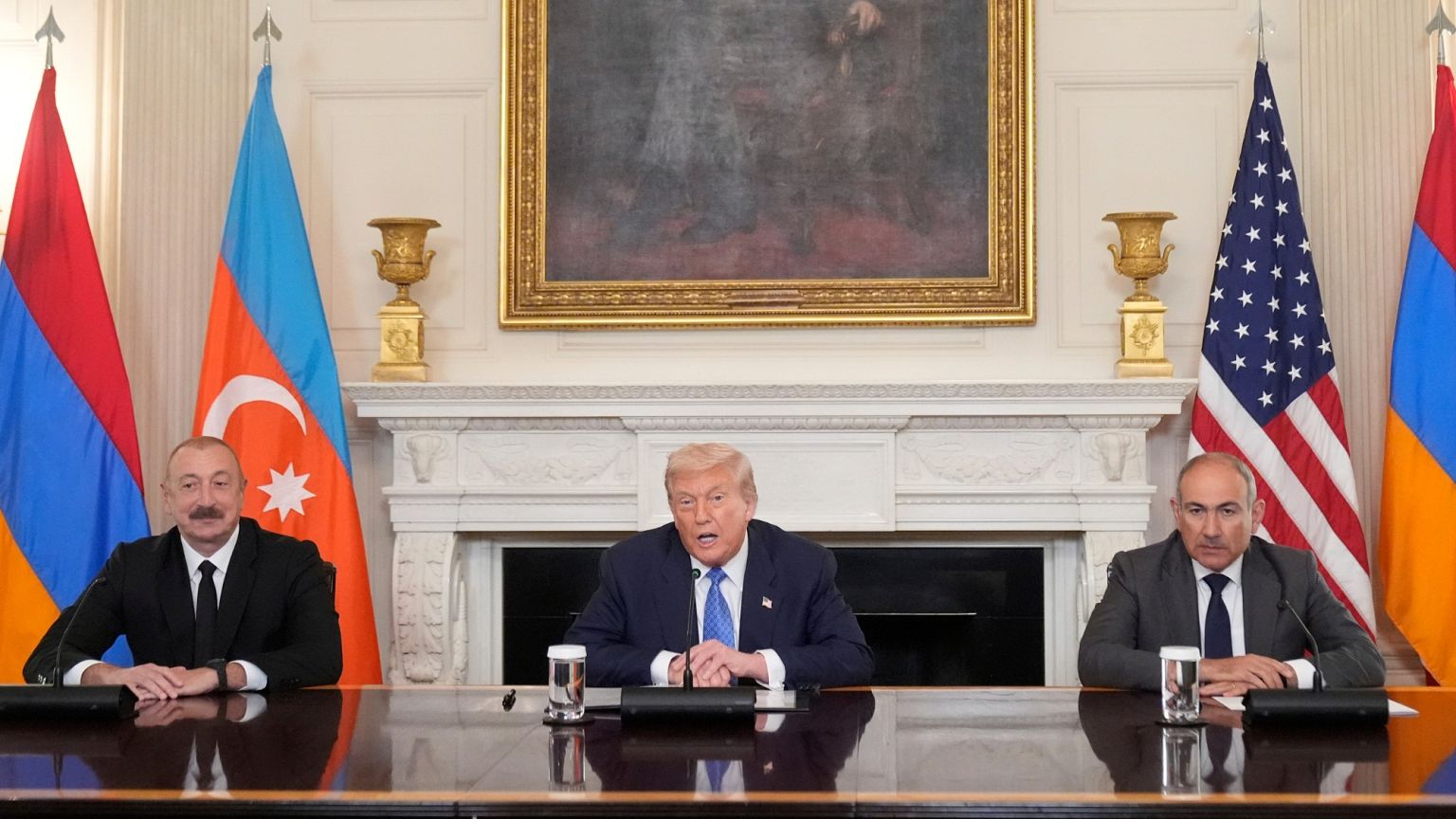
Copyright AP Photo
By Sasha Vakulina
09/08/2025 -
After almost four decades of a bloody conflict that until recently had no end in sight, Azerbaijan and Armenia signed a peace agreement in the presence of the US President Donald Trump. Notably absent in this historic moment is Russia, which no longer plays a central role in the South Caucasus.
Leaders of Armenia and Azerbaijan Nikol Pashinyan and Ilham Aliyev signed a peace agreement on Friday in the presence of US President Donald Trump in Washington, after almost four decades of a bloody Karabakh conflict.
“We are today establishing peace in the South Caucasus,” Azerbaijan's President Aliyev said. "Today we writing a great new history."
Armenian Premier Pashinyan added that this agreement represented "opening a chapter of peace". "(We are) laying foundations to a better story that the one we had in the past," he added.
"The countries of Armenia and Azerbaijan are committing to ending all fighting forever," Trump said at a joint press conference with the two leaders.
"They suffered greatly for so many years, many tried to find resolution, the European Union, the Russians, never happened," he added. "But with this accord we finally succeeded making peace."
In September 2023, Azerbaijan reclaimed full control of the Karabakh region after a lightning military campaign, and over the past year, Baku and Yerevan have been making progress in normalising their relations.
Although the Friday’s signing ceremony included not only Pashinyan and Aliyev, but also Trump, the former adversaries managed to mend fences only when there was no third party involved any more, including Washington and Moscow. But unlike Russia, the US will benefit from the peace agreement.
Meanwhile, the EU said it welcomed the deal and called the signing a "way to lasting, sustainable peace for both countries and across the entire region, also culminating years of EU efforts."
The EU also called for the" implementation of the agreed steps" to ensure steady and smooth progress towards full normalisation of relations between Azerbaijan and Armenia.
'Trump route' in South Caucasus
Armenia and Azerbaijan agreed to create a major transit corridor that will be named the Trump Route for International Peace and Prosperity.
It will connect mainland Azerbaijan and its Nakhchivan region, which borders Baku's ally Turkey via Armenian territory.
White House spokeswoman Anna Kelly said the new transit corridor will “allow unimpeded connectivity between the two countries while respecting Armenia's sovereignty and territorial integrity and its people.”
Azerbaijan and Nakhchivan are separated by a 32-kilometre patch of Armenia’s territory.
For Baku, the corridor offers a direct land connection to Nakhchivan, strengthens ties with Turkey and consolidates post-war gains through infrastructure diplomacy.
It also strengthens Azerbaijan’s position as a crucial transport and logistics hub on a global scale. Initially, Azerbaijan did not want to have any third party involved and preferred to have it under Baku’s control, without the US, Europe or Russia's involvement.
Yerevan was concerned it could threaten Armenian sovereignty and wanted it to remain under Armenian control.
The new Trump route will be operated according to Armenian law, and the US will sublease the land to a consortium for infrastructure and management, the officials said.
Trump previewed much of Friday’s plan in a social media post Thursday evening, saying the two leaders would sign economic agreements with the US that would “fully unlock the potential of the South Caucasus region.”
“Many leaders have tried to end the war, with no success, until now, thanks to Trump,” the US president said on his Truth Social site.
Former allies
Armenia and Azerbaijan have also signed a document on dissolving the OSCE's Minsk Group.
“If we are closing the page on the conflict, then why do we need a format that deals with its settlement," Pashinyan said earlier this week.
Established in 1992, the OSCE Minsk Group was meant to facilitate the resolution of the Karabakh conflict, and it has been chaired by France, the US and Russia.
Its dissolution not only marks the end of the Karabakh conflict, but also formalises Baku and Yerevan distancing themselves from Moscow, especially given the fact that the two leaders have jointly made the formal request in Washington.
Signing the peace agreement in Washington alongside the US president sends a strong signal to Moscow regarding the two countries' commitment to finding a solution among themselves, but also redirects their foreign policy focus to the West.
Moscow has been trying to repair the cooperation with both Baku and Yerevan, offering "mediation" and launching disinformation campaigns against Yerevan.
In recent days, Russia-state-controlled media have issued massive criticism and numerous attacks on Pashinyan, accusing him of “trading” Armenian sovereignty for personal financial gains and even calling him a “puppet”.
Earlier Moscow had also launched disinformation campaigns against Yerevan with false allegations of “a bio weapons facility in Armenia orchestrated by the Americans”.
Moscow had repeatedly made similar claims about US bio-weapons facilities in Ukraine before the full-scale invasion. Russia has also made similar false claims about Georgia in the past.
Russia’s attempts to repair its ties with Baku were entirely destroyed when an Azerbaijani airliner crashed in Kazakhstan in December, killing 38 of 67 people aboard.
As exclusively reported by Euronews, investigations into the incident revealed that the Azerbaijan Airlines Flight 8243 was shot at by Russian air defence over Russia's Grozny and rendered uncontrollable by electronic warfare.
Azerbaijan's Aliyev recently announced that his country is preparing to file lawsuits in international courts against Russia regarding the Azerbaijan Airlines plane crash.
Referring to the investigation into the Malaysian airline Boeing case, shot down by Russian militants over the Russia-occupied Donetsk region of Ukraine, Aliyev said Baku is ready to wait as long as it takes.
“We are ready to wait 10 years, but justice must win. And unfortunately, the situation, which is currently in limbo, does not contribute to the development of bilateral relations between Russia and Azerbaijan," he explained.
Last month, Azerbaijan and Russia engaged in another rare escalation. Baku detained the executive director and editor-in-chief of Russia's state-run news agency Sputnik following Moscow’s raids of the Azeri community in Yekaterinburg.
Two people died during the raid by the Russian Federal Security Service (FSB), and 50 more were detained.
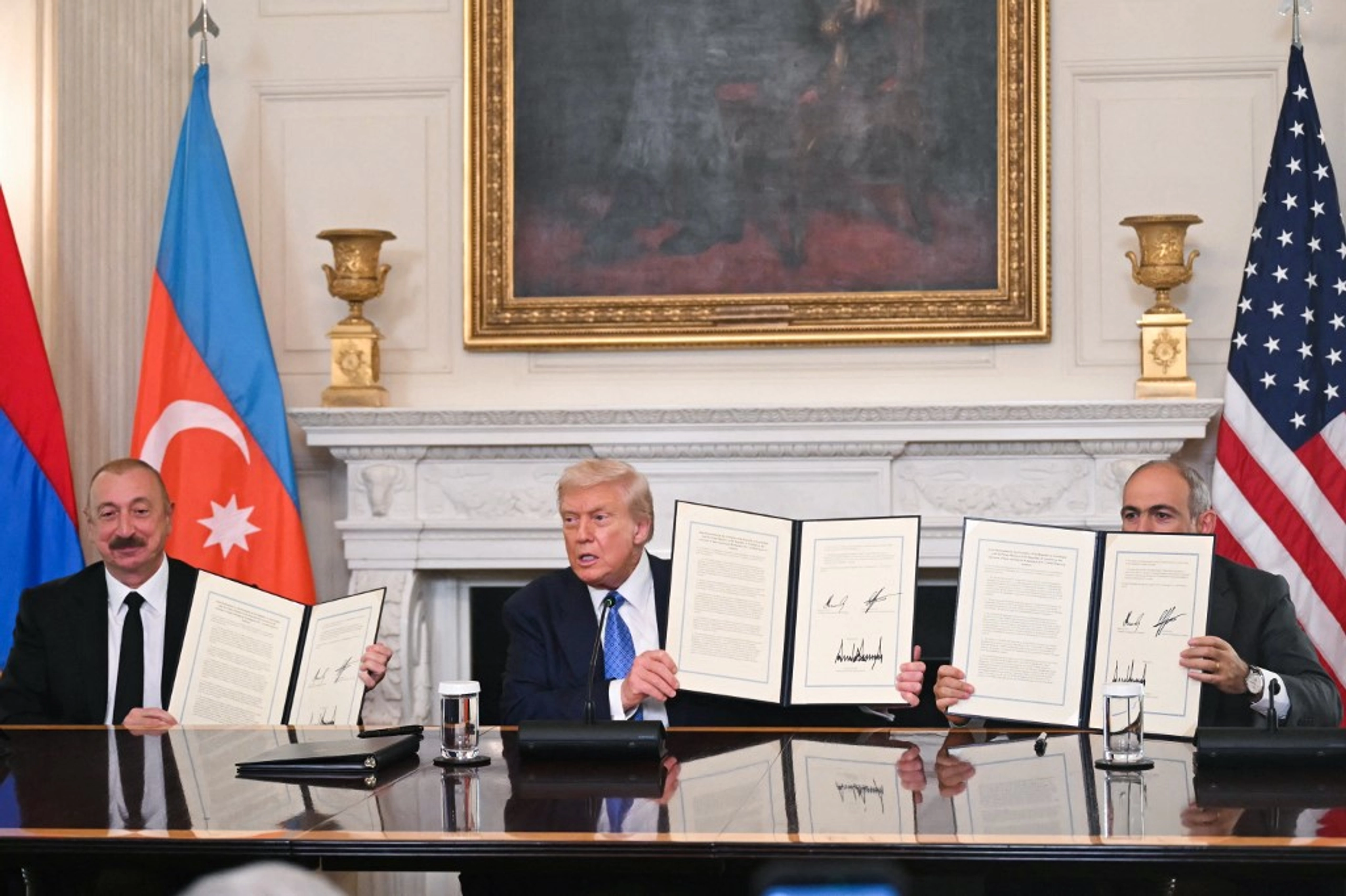
The leaders of Armenia and Azerbaijan met Friday and signed a peace treaty under the watch of US President Donald Trump.
by AFP | Aug. 10, 2025
Content
‘Acceptable’
‘Endless concessions’
‘More stability... in the short term’
The streets were almost deserted in Yerevan Saturday because of the summer heat, but at shaded parks and fountains, Armenians struggled to make sense of what the accord signed a day earlier in Washington means for them.
The leaders of Armenia and Azerbaijan, two Caucasian countries embroiled in a territorial conflict since the fall of the USSR, met Friday and signed a peace treaty under the watch of US President Donald Trump.
In Yerevan, however, few of the people asked by AFP were enthusiastic.
‘Acceptable’
“It’s a good thing that this document was signed because Armenia has no other choice,” said Asatur Srapyan, an 81-year-old retiree.
He believes Armenia hasn’t achieved much with this draft agreement, but it’s a step in the right direction.
“We are very few in number, we don’t have a powerful army, we don’t have a powerful ally behind us, unlike Azerbaijan,” he said. “This accord is a good opportunity for peace.”
Maro Huneyan, a 31-year-old aspiring diplomat, also considers the pact “acceptable,” provided it does not contradict her country’s constitution.
“If Azerbaijan respects all the agreements, it’s very important for us. But I’m not sure it will keep its promises and respect the points of the agreement,” she added.
‘Endless concessions’
But Anahit Eylasyan, 69, opposes the agreement and, more specifically, the plan to create a transit zone crossing Armenia to connect the Nakhchivan region to the rest of Azerbaijan.
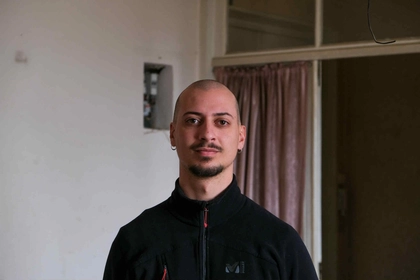
“We are effectively losing control of our territory. It’s as if, in my own apartment, I had to ask a stranger if I could go from one room to another,” she explains.
She also hopes not to see Russia, an ally of Armenia despite recent tensions, expelled from the region.”
Anahit also criticizes Prime Minister Nikol Pashinyan for “making decisions for everyone” and for his “endless concessions to Azerbaijan.”
“We got nothing in exchange, not our prisoners, nor our occupied lands, nothing. It’s just a piece of paper to us,” she fumes.
Shavarsh Hovhannisyan, a 68-year-old construction engineer, agrees, saying the agreement “is just an administrative formality that brings nothing to Armenia.”
“We can’t trust Azerbaijan,” Hovhannisyan asserted, while accusing Pashinyan of having “turned his back” on Russia and Iran.
“It’s more of a surrender document than a peace treaty, while Trump only thinks about his image, the Nobel Prize.”
‘More stability... in the short term’
According to President Trump, Armenia and Azerbaijan have committed “to stop all fighting forever; open up commerce, travel and diplomatic relations; and respect each other’s sovereignty and territorial integrity.”
For Olesya Vartanyan, an independent researcher specializing in the Caucasus, the Washington agreement “certainly brings greater stability and more guarantees for the months, if not years, to come.”
But given the long-lasting tensions between Armenia and Azerbaijan, “I fear that we will have to plan only for the very short term,” she said.
10 August 2025
commonspace.eu editorial team
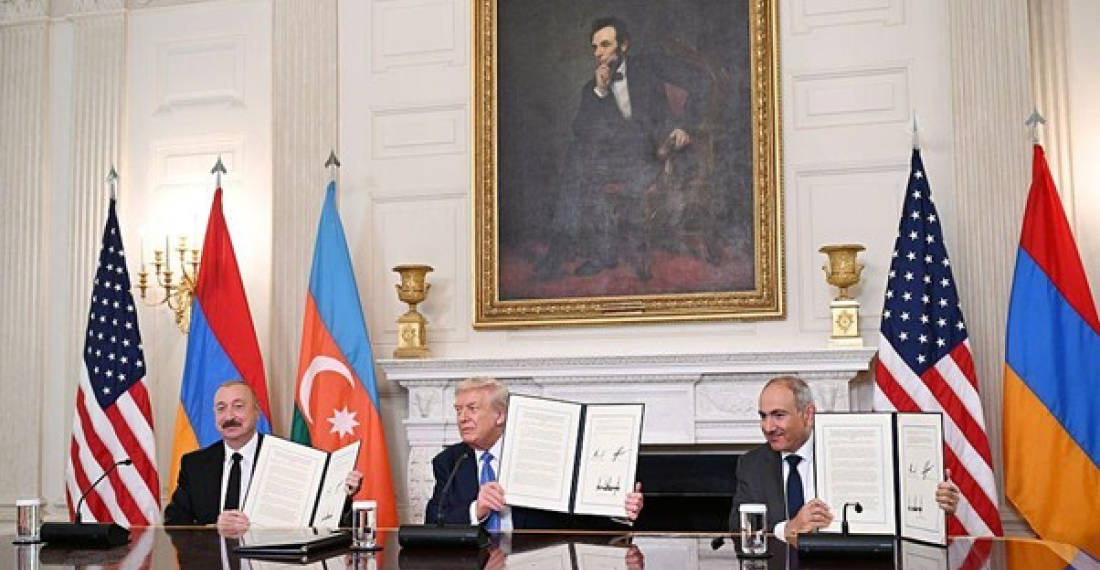
The meeting of president Ilham Aliyev of Azerbaijan, and prime minister Nikol Pashinyan of Armenia in the White House on 8 August 2025 has been described many times as being “historic”, and in many ways it was. However the presence and active participation of the president of the United States made it “special”.
However, Donald Trump managed to make the event “larger than life”. Trump was on his best behaviour. He was relaxed and happy. He piled profuse compliments on his two guests, and they replied in kind, indulging in flattery that at times was embarrassing. But you can excuse them. Never have two foreign leaders been so warmly welcomed in the White House.
The substance was thin: the peace agreement between Armenia and Azerbaijan was initialed but not signed; much of what was included in the Joint Declaration was aspirational, requiring further negotiations. But the symbolism and imagery was powerful. And in this case, it mattered.
The world has scrambled to welcome the Armenia-Azerbaijan meeting in Washington. The European Union was first: Commission president Ursula von der Leyden and Council president, Antonio Costa, issued a statement within minutes. Various other EU personalities followed on Saturday. There was an important statement by Turkey, followed by UK, Netherlands, Georgia, Saudi Arabia, Poland, UAE, France, Israel, the Central Asian countries and others. Statements were also issued by the UN, NATO, OSCE, Council of Europe, NATO PA and others.
The reaction from Russia came late on Saturday and was muffled. It was left to Russian Foreign Ministry spokesperson Maria Zakharova to say
"It should be remembered that the current stage of normalization of Armenian-Azerbaijani relations began with the direct support and central role of Russia, with the adoption of a trilateral statement at the highest level on November 9, 2020, on a ceasefire and all military operations in the Nagorno-Karabakh conflict zone. A Russian peacekeeping contingent has been deployed in the region, which has made an irreplaceable contribution to stabilizing the situation. We will always remember our peacekeepers who died in the performance of their duties," the diplomat emphasized.
Reconciliation between Azerbaijan and Armenia should be integrated into the regional context and based on a balance of interests, said Zakharova. She noted that the meeting of the leaders of Armenia and Azerbaijan held in Washington with the mediation of the United States deserves a positive assessment. The involvement of regional players in the search for solutions in the South Caucasus should not create new dividing lines, Zakharova emphasized.
The Russian Federation will further analyze Washington's statements on the unblocking of regional communications in the South Caucasus. Trilateral agreements with the participation of the Russian Federation in the field of unblocking of communications in the South Caucasus remain relevant, Zakharova noted.
The emperor is naked. Russia is loosing the South Caucasus and Zakharova is clutching to straws in an attempt to hide facts.
Domestic reaction is subdued
Reaction in Azerbaijan, and particularly in Armenia, has been subdued.
The president of the influential APRI Centre in Yerevan, Lara Setrakian, said, “Once the peace agreement is implemented it will turn Armenia firmly toward the West. It will also likely mean a reorientation of regional power dynamics, giving the United States strategic influence in Russia’s neighborhood and a foothold on the doorstep of Iran. The US wins big, with technology, critical minerals, and energy deals ahead. ”
But in the end the world reaction matters. And for the moment Aliyev and Pashinyan bask in it.
Source: commonspace.eu
No comments:
Post a Comment