AI Tool Launched to Detect Misdeclared and Dangerous Goods in Containers
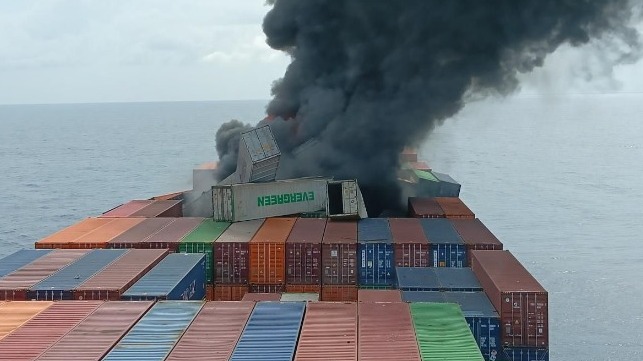
The latest tool in the fight against misdeclared and undeclared dangerous goods in containers is being launched by the World Shipping Council in its Cargo Safety Program. The industry-led initiative is using a new AI-powered screening tool in an attempt to identify the dangers that are a leading cause of fires and increase protection for crew, vessels, and the environment. At launch, carriers representing more than 70 percent of global TEU capacity have joined the program.
Misdeclared dangerous goods are a leading cause of ship fires, reported as responsible for more than a quarter of all cargo-related incidents, according to data from Allianz's Safety and Shipping Review 2025. The insurer warned in its analysis that ship fires are at their highest level in over a decade, including several high-profile incidents in recent weeks.
The Marie Maersk reached Malaysia yesterday, September 14, a month after the crew saw smoke coming from a container while they were off the coast of Africa. While they were able to contain the fire, Maersk has declared General Average to share the cost of the extraordinary firefighting effort. Last week, the hulk of Wan Hai 503 also finally arrived in a port of refuge after a devastating container fire and explosions, which contributed to the loss of four crewmembers and a vessel that was largely burnt out.
“We have seen too many tragic incidents where misdeclared cargo has led to catastrophic fires, including the loss of life,” said Joe Kramek, President and CEO of the World Shipping Council. “The WSC Cargo Safety Program strengthens the industry’s safety net by combining shared screening technology, common inspection standards, and real-world feedback to reduce risk.”
At the heart of the program is a digital cargo screening tool powered by the National Cargo Bureau’s (NCB) technology. The program combines AI-powered cargo screening and common inspection standards to identify misdeclared and undeclared high-risk shipments before they are loaded. In addition, it incorporates machine learning to help the tool get smarter and to adapt to new and emerging risks.
The system will scan millions of bookings in real time using keyword searches, trade pattern recognition, and AI-driven algorithms to identify potential risks. Alerts are reviewed by carriers and, when needed, verified through targeted physical inspections.
The World Shipping Council says it does not replace the fundamental obligation shippers have to declare dangerous goods accurately. However, the program will also establish common inspection standards for verifying shipments and an incident feedback loop to ensure lessons from real-world cases strengthen prevention.
The World Shipping Council recently warned that an analysis of port state inspection data showed that more than one-in-ten (11.39 percent) had a problem in 2024 out of more than 77,600 containers inspected. The report highlighted that deficiencies were up slightly from 2023 and at a new, recent high, with issues including misdeclared and undeclared dangerous goods, incorrect documentation, and improper packing.
By improving cargo screening, the World Shipping Council believes it will help prevent incidents, protecting crew, vessels, other cargo, and the environment. A similar effort launched in the past few years to help educate crews about container collapses and the dangers of parametric rolling contributed to declines in the number of boxes being lost overboard.
Photos: Progress as More Containers Are Removed in Long Beach Recovery
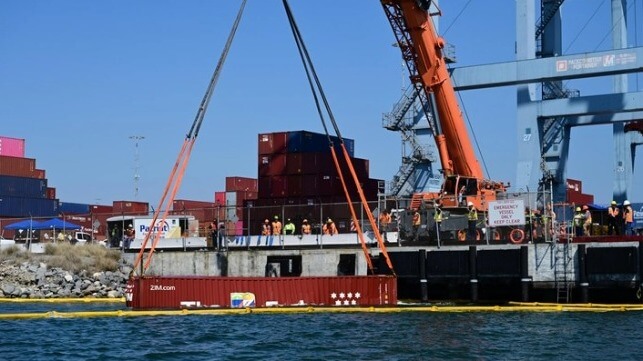
Efforts are continuing in the Port of Long Beach to clean up from last week’s container collapse. The Unified Command overseeing the operations reported as of Sunday, September 14, that nearly half of the containers estimated to have fallen from the vessel have been recovered, while they have also secured containers remaining aboard the containership Mississippi.
The Southern California US Coast Guard reported on Sunday that eight more submerged containers had been located and that they were being removed. In total, it said 32 containers had been recovered as of Sunday out of the estimated 75 boxes that fell from the Mississippi on September 9. The first two containers were recovered on Wednesday, the day after the incident, while the Coast Guard said sonar surveys were underway to locate the submerged containers. The Unified Command reports it is continuing to conduct surveys, drone overflights, and dive operations.


Two bays on the Mississippi collapsed on Tuesday, leaving numerous boxes askew. Some later fell onto the dock. Now, the port and the Unified Command are reporting unaffected containers have been secured. A small fuel leak from the emissions barge was also secured last week.
“In just a few days, we have made significant progress in securing the vessel cargo and recovering containers,” said Capt. Stacey Crecy, Commander, U.S. Coast Guard Sector Los Angeles – Long Beach. “This progress was made possible due to the dedication of all participating agencies, vessel managers, the Port of Long Beach, the ITS terminal, and highly skilled ILWU labor working together.”
Cargo operations are largely unaffected, they report, except at the single berth. A 500-yard safety zone remains in place, and the USCG is helping to navigate vessels around the zone to continue port operations.


The incident comes as the port continues to see strong volumes. The Port of Long Beach reported today that it had its second-busiest August on record and the sixth-busiest month in its 114-year history. Container volume was 901,846 TEU, which was down approximately 4.5 percent from July but only 1.3 percent down from the record set a year ago in August. Imports were down 3.6 percent and exports off more than 8 percent, while empties leaving the port were up 3.7 percent. The Port of Long Beach notes its volume is up 8.3 percent so far in 2025 to nearly 6.6 million TEU.
The Port of Long Beach notes that retailers have continued to rush merchandise imports during the pause in tariffs. Recently, the National Retail Federation, however, predicted that container imports would continue month-to-month declines before leveling off at a reduced rate.
20-Foot Standard Containers: Why They Remain a Popular Choice
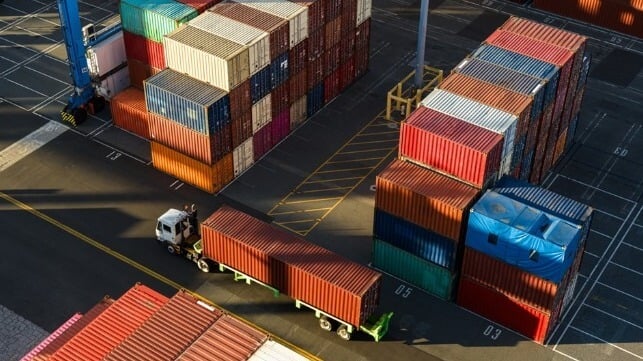
When it comes to storage and transportation needs, 20 ft standard containers continue to stand the test of time. These containers have been a staple in the shipping and logistics industry for decades. Their compact size, robust durability, and incredible versatility make them a go-to solution for businesses and individuals alike. Whether you’re moving cargo across the globe or seeking a reliable storage option, 20 ft standard containers deliver consistent performance without compromise.
Here’s a closer look at why these containers remain a popular choice for storage and transport.
What Are 20 ft Standard Containers?
A 20 ft standard container is a universally recognized shipping and storage unit crafted to meet strict ISO (International Organization for Standardization) guidelines. Measuring 20 feet in length, 8 feet in width, and 8.5 feet in height, these containers are compact yet spacious enough to accommodate a variety of cargo types.
Made from high-strength Corten steel, they are built to endure harsh environmental conditions while safeguarding the contents inside. They are also highly compatible with intermodal transportation, allowing them to transition effortlessly between ships, trucks, and trains.
Key Characteristics
Dimensions (approximate):
- External: 20 ft (6.06 m) long, 8 ft (2.44 m) wide, 8 ft 6 in (2.59 m) high
- Internal: ~5.9 m × 2.35 m × 2.39 m
Capacity:
- Volume: ~33 cubic meters (1,170 cubic feet)
- Payload: up to 28,000 kg (61,700 lbs), depending on shipping line regulations
- Material: Usually made of corten steel (weathering steel) for durability and rust resistance.
- Structure: Fully enclosed, with rigid walls, floor, and ceiling; single set of double doors at one end.
- ISO Standard: Fits intermodal transport (ships, trains, trucks).
Uses
- Transporting general cargo (boxes, pallets, machinery, furniture, textiles, electronics, etc.).
- Storage solution for businesses and construction sites.
- Conversion into offices, kiosks, or modular housing units.
Advantages
- Universal fit: Standard size for ships, trucks, and trains.
- Cost-efficient: More economical than larger containers for smaller loads.
- Versatile: Suitable for nearly any type of dry cargo.
- Widely available: The most common container size globally.
Features of 20 ft Standard Containers
What sets 20 ft standard containers apart is their well-rounded design that combines practicality, durability, and versatility. Here are some of the key features that make them indispensable:
- The size of these containers strikes a perfect balance — small enough to fit in tight spaces yet spacious enough to handle mid-to-large shipments.
- Built with corrosion-resistant steel, these containers are designed to withstand extreme weather, heavy handling, and prolonged usage without compromising their structural integrity.
- Their ISO compliance ensures easy integration into global shipping networks, making them a trusted choice for businesses operating across multiple channels.
- Equipped with heavy-duty locking systems, 20 ft containers ensure the safety of your goods by preventing unauthorized access.
- These containers keep your cargo safe from rain, wind, and pests, making them ideal for short- and long-term storage applications.
For businesses dealing with large inventories, these containers can be stacked securely, optimizing space usage at ports, warehouses, or job sites.
Benefits of 20 ft Standard Containers
The enduring popularity of these containers stems from the wide array of benefits they bring to the table:
- Whether you’re in manufacturing, agriculture, construction, or retail, these containers adapt to your needs seamlessly.
- Their manageable size makes them easy to transport and maneuver, yet they still offer plenty of interior space to store or ship cargo efficiently. With a total capacity of 33 cubic meters, they strike a perfect balance between size and usability.
- These containers are renowned for their longevity. Their corrosion-resistant steel construction ensures they remain operational even after years of use, making them an excellent long-term investment.
- Their compact size makes them more affordable to transport compared to larger containers. For businesses with smaller shipments or limited budgets, they provide an ideal cost-saving solution.
Whether you’re using them for international shipping or as stationary storage units, the 20 ft container is highly portable and fits well in diverse environments, from crowded city spaces to remote industrial sites.
When they’re no longer needed for shipping, these containers can be repurposed into innovative solutions like office spaces, storage sheds, or even homes, reducing waste and environmental impact.
Applications of 20 Ft Standard Containers
The adaptability of 20 ft containers has made them invaluable across various industries and operational scenarios. Here are some of the most common applications:
- Global shipping.
- On-site storage.
- Emergency relief.
- Construction industry.
- Warehousing.
Entrepreneurs and architects are converting these containers into retail shops, pop-up restaurants, and even modern homes, celebrating their structural integrity and flexible design.
Why Pelican Containers?
Pelican Containers prides itself on offering high-quality container solutions that cater to diverse business and personal requirements. 20 ft standard containers are durable, affordable, and available in a variety of conditions to meet your specific needs — whether you’re looking for new, used, or refurbished containers.
With competitive pricing and unbeatable service, Pelican Containers is your trustworthy partner for container solutions. This post is sponsored by Pelican Containers.
The opinions expressed herein are the author's and not necessarily those of The Maritime Executive.
No comments:
Post a Comment