Bogotá (AFP) – Colombia's largest drug-trafficking cartel has reached its "peak" and is entering a decline that could see it lay down its arms, a government negotiator involved in peace talks with the group told AFP.
Issued on: 25/09/2025 - FRANCE24

Colombian government negotiator Alvaro Jimenez says the country's largest drug-trafficking cartel has reached its "peak" and is entering a decline that could see it lay down its arms © Raul ARBOLEDA / AFP
The Clan del Golfo, which has origins in right-wing paramilitary organizations and calls itself the Gaitanista Army of Colombia, concluded a first round of peace talks in Qatar last week with the leftist government of Colombian President Gustavo Petro.
The talks are aimed at the group's demobilization in exchange for judicial benefits and security guarantees.
Alvaro Jimenez, the president's chief negotiator, said Wednesday that the Clan's "main activity" was illegal gold mining, and the government is offering them the chance to lay down their arms in exchange for "seeing their children grow up," even if they have to serve a few years in prison.
"They also know that this is an important moment and that they cannot grow any more, they have reached their peak," Jimenez told AFP in Bogota.
"What is beginning is a 'decline', from our point of view."
The cartel has suffered blows such as the arrest and 2022 extradition to the United States of its top commander Dairo Antonio Usuga, alias "Otoniel."
Its new leaders agreed to approach Petro to end the conflict that dates back to the mid-2000s.
The cartel, which also engages in racketeering, migrant smuggling and drug trafficking, counts between 6,000 and 7,000 members and collaborators, of whom at most 2,400 are armed, according to Jimenez.
The Clan del Golfo, which has origins in right-wing paramilitary organizations and calls itself the Gaitanista Army of Colombia, concluded a first round of peace talks in Qatar last week with the leftist government of Colombian President Gustavo Petro.
The talks are aimed at the group's demobilization in exchange for judicial benefits and security guarantees.
Alvaro Jimenez, the president's chief negotiator, said Wednesday that the Clan's "main activity" was illegal gold mining, and the government is offering them the chance to lay down their arms in exchange for "seeing their children grow up," even if they have to serve a few years in prison.
"They also know that this is an important moment and that they cannot grow any more, they have reached their peak," Jimenez told AFP in Bogota.
"What is beginning is a 'decline', from our point of view."
The cartel has suffered blows such as the arrest and 2022 extradition to the United States of its top commander Dairo Antonio Usuga, alias "Otoniel."
Its new leaders agreed to approach Petro to end the conflict that dates back to the mid-2000s.
The cartel, which also engages in racketeering, migrant smuggling and drug trafficking, counts between 6,000 and 7,000 members and collaborators, of whom at most 2,400 are armed, according to Jimenez.
Prison terms
While the price of gold is breaking records and global demand for cocaine is increasing, the government is offering Clan del Golfo members "a place to live within the Colombian legal system" so they can return to their families, Jimenez told AFP.
"It may not seem like much, but today that element is important for the leadership" of the cartel, he said.
Petro has been criticized for his policy of negotiating with armed groups, without having yet signed any peace agreements. Experts say that many such groups have grown more powerful in the meantime.
Congress is due to debate a bill to determine the legal benefits for armed groups that agree to disarm.
Any pact with the Clan del Golfo will involve prison terms, according to Jimenez.
"The discussion may revolve around how much (time) and how or where" they will have to serve prison sentences, the negotiator said.
No ceasefire
Petro's negotiations come as US President Donald Trump has removed Colombia from the list of countries allied in the fight against drugs, considering its efforts insufficient. Colombia reached historic highs in drug crops and cocaine production in 2023.
While Trump's advisors "persist in their vision of a permanent armed war on drugs," the Colombian government believes negotiations can provide an opportunity to end the conflict, Jimenez told AFP.
This is the second time Petro has reached out to the Clan del Golfo. A first attempt at a ceasefire failed in March 2023 after illegal gold miners blocking roads in northwestern Colombia, allegedly on the orders of drug traffickers, attacked security forces.
Jimenez said a truce is not currently being considered, nor is an end to the bombing of the cartel, an unprecedented action ordered by Petro.
There is a "clear criterion that we are not going to suspend operations against them," the negotiator said.
Qatar's experience
Confidential talks with the cartel's leadership began in December 2023, leading to the public meetings this month in Qatar.
Talks in Doha saw the Clan del Golfo and the Colombian government agree to develop a plan to "transfer power from the armed group" in five municipalities of the Antioquia and Choco regions -- strongholds of the cartel -- to "institutional power" with a government presence, according to Jimenez.
The group will also eradicate its drug crops there and, he said, has committed to respecting next year's general election process, when Colombians will decide Petro's successor.
© 2025 AFP
Colombia’s Antidrug Efforts And The ‘Failed Demonstrably’ Designation – Analysis
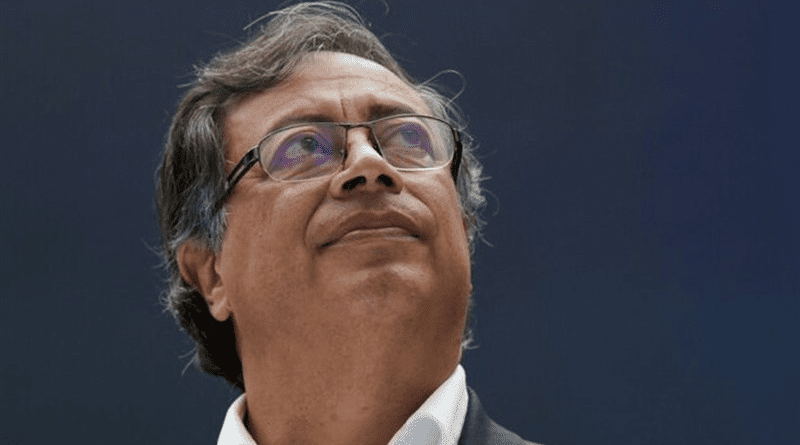
Colombia's Gustavo Petro. Photo Credit: Tasnim News Agency
About the authosr:Shelby B. Senger, Analyst in Foreign Affair
Clare Ribando Seelke, Specialist in Latin American Affairs
Source: This article was published by the Congressional Research Service (CRS)
CRS
The Congressional Research Service (CRS) works exclusively for the United States Congress, providing policy and legal analysis to committees and Members of both the House and Senate, regardless of party affiliation. As a legislative branch agency within the Library of Congress, CRS has been a valued and respected resource on Capitol Hill for nearly a century.
Colombia's Gustavo Petro. Photo Credit: Tasnim News Agency
September 25, 2025
By CRS
By Shelby B. Senger and Clare Ribando Seelke
On September 15, 2025, President Trump determined Colombia had “failed demonstrably,” for the first time in nearly 30 years, to meet its international counternarcotics obligations and to take the measures required by Section 489(a)(1) of the Foreign Assistance Act of 1961 (hereafter FAA).
This process is sometimes referred to as “decertification.” Pursuant to this designation, President Trump also determined, in accordance with Section 706(3)(A) of P.L. 107-228, that continuing U.S. assistance to Colombia in FY2026 is vital to U.S. national interests. Nevertheless, U.S. diplomatic disputes and drug policy differences with the government of President Gustavo Petro, whose “political leadership” the Presidential Determination faults for Colombia’s “failed” counternarcotics efforts, could intensify.
Congress may consider the impact of Colombia’s designation on bilateral security and counternarcotics cooperation as it considers whether to fund FY2026 assistance in support of such efforts. Congress also may assess how the designation may affect U.S.-Colombia relations and political conditions in Colombia in the lead-up to a presidential election scheduled for May 2026.
Designation and Assistance Restrictions
Pursuant to 22 USC 2291j-1, the President is to report to Congress not later than September 15 of each year his determination on the list of major illicit drug producing and drug transit countries as defined in 22 USC 2291(e). The President’s report also is to identify any such countries found during the previous 12 months to have “failed demonstrably” at making “substantial efforts” to counter illicit drugs by meeting the goals of and adhering to bilateral and international counternarcotics commitments, as well as taking legal and law enforcement measures to prevent and punish public corruption that facilitates illicit drug production and trafficking.
Pursuant to 22 USC 2291j-1, countries determined by the President to have failed demonstrably in their counternarcotics efforts are barred from receiving certain U.S. assistance at the start of the following fiscal year, unless the President determines that provision of such aid is “vital to the national interests of the United States.”
Types of U.S. Assistance Withheld
Pursuant to Section 481(e)(4) of the FAA (22 USC 2291(e)), U.S. assistance that can be withheld from designated countries includesmost forms of bilateral assistance authorized in the FAA (other than emergency, humanitarian, and counternarcotics assistance);
arms sales and financing under the Arms Export Control Act;
financing under the Export-Import Bank Act of 1945;
certain provisions of agricultural commodities;
assistance that furthers the objectives of the Human Rights and Democracy Fund;
assistance to combat trafficking in persons; and
certain global health assistance.
Withholding exceptions for counternarcotics-related assistance generally apply to funding provided through the International Narcotics Control and Law Enforcement (INCLE) foreign assistance account, as well as narcotics-related alternative development assistance and narcotics-related Economic Support Fund (ESF) assistance. The same exemption applies to funds for U.S. military-led security cooperation programs and activities to support foreign country drug interdiction and counter-drug activities.
Designation with a Waiver
Since the United States began designating countries in 1986, the United States has, with a few exceptions, restricted assistance only from countries with which it has adversarial relationships and to which it provides little assistance. Although the United States has issued a waiver from foreign aid restrictions, Colombia’s decertification may, nonetheless, have political and diplomatic ramifications.
Colombia has been a key U.S. security partner in South America for decades, though counternarcotics cooperation has been tested by President Petro’s opposition to forced coca eradication and his government’s peace negotiations with armed groups. Plan Colombia, a U.S.-funded counternarcotics and security initiative, supported Colombia to modernize its security forces, regain territory from illegally armed groups, and end a 50-year civil conflict.
U.S. assistance has also helped Colombia to become a leader of multinational maritime interdiction operations, serve as the primary U.S. and regional source of drug-related intelligence, and train security forces from other countries. While cooperation with Colombian security forces has continued, Congress has reduced assistance to Colombia and placed additional conditions on that assistance since Petro took office. The Presidential Determination praised “Colombia’s security institutions and municipal authorities,” while criticizing President Petro’s drug policies and “failed attempts to seek accommodations with narco-terrorist groups.”
President Petro has reportedly halted U.S. weapons purchases while denouncing the U.S. decertification and questioning what the U.S. government had done to address domestic fentanyl and cocaine consumption. He reportedly vowed to ignore U.S. pressure to use forced eradication on coca crops, despite coca crop eradication levels having declined by 83% from 2022 through 2024 and violence related to eradication efforts having occurred. In August 2025, for example, armed groups reportedly used a drone to shoot down an antinarcotics helicopter, killing 12 Colombian police eradicators.
While some analysts are uncertain of how decertification might affect future U.S.-Colombia relations, others expect it to worsen political polarization ahead of upcoming elections. Some assert that there are several indicators that the United States and Colombia will continue to partner on antidrug efforts, including the waiver permitting the continuation of assistance and statements by President Trump that he would change the designation if Colombia improves its coca eradication efforts and works with the United States to bring criminal leaders to justice.
Others argue that Petro has strongly opposed U.S.-backed drug policies to penalize coca growers and publicly criticized U.S. military strikes in Venezuela. With Colombia’s security conditions are worsening, some observers assert that Petro may pursue closer ties with the People’s Republic of China, which has offered security cooperation to countries in the region.
By CRS
By Shelby B. Senger and Clare Ribando Seelke
On September 15, 2025, President Trump determined Colombia had “failed demonstrably,” for the first time in nearly 30 years, to meet its international counternarcotics obligations and to take the measures required by Section 489(a)(1) of the Foreign Assistance Act of 1961 (hereafter FAA).
This process is sometimes referred to as “decertification.” Pursuant to this designation, President Trump also determined, in accordance with Section 706(3)(A) of P.L. 107-228, that continuing U.S. assistance to Colombia in FY2026 is vital to U.S. national interests. Nevertheless, U.S. diplomatic disputes and drug policy differences with the government of President Gustavo Petro, whose “political leadership” the Presidential Determination faults for Colombia’s “failed” counternarcotics efforts, could intensify.
Congress may consider the impact of Colombia’s designation on bilateral security and counternarcotics cooperation as it considers whether to fund FY2026 assistance in support of such efforts. Congress also may assess how the designation may affect U.S.-Colombia relations and political conditions in Colombia in the lead-up to a presidential election scheduled for May 2026.
Designation and Assistance Restrictions
Pursuant to 22 USC 2291j-1, the President is to report to Congress not later than September 15 of each year his determination on the list of major illicit drug producing and drug transit countries as defined in 22 USC 2291(e). The President’s report also is to identify any such countries found during the previous 12 months to have “failed demonstrably” at making “substantial efforts” to counter illicit drugs by meeting the goals of and adhering to bilateral and international counternarcotics commitments, as well as taking legal and law enforcement measures to prevent and punish public corruption that facilitates illicit drug production and trafficking.
Pursuant to 22 USC 2291j-1, countries determined by the President to have failed demonstrably in their counternarcotics efforts are barred from receiving certain U.S. assistance at the start of the following fiscal year, unless the President determines that provision of such aid is “vital to the national interests of the United States.”
Types of U.S. Assistance Withheld
Pursuant to Section 481(e)(4) of the FAA (22 USC 2291(e)), U.S. assistance that can be withheld from designated countries includesmost forms of bilateral assistance authorized in the FAA (other than emergency, humanitarian, and counternarcotics assistance);
arms sales and financing under the Arms Export Control Act;
financing under the Export-Import Bank Act of 1945;
certain provisions of agricultural commodities;
assistance that furthers the objectives of the Human Rights and Democracy Fund;
assistance to combat trafficking in persons; and
certain global health assistance.
Withholding exceptions for counternarcotics-related assistance generally apply to funding provided through the International Narcotics Control and Law Enforcement (INCLE) foreign assistance account, as well as narcotics-related alternative development assistance and narcotics-related Economic Support Fund (ESF) assistance. The same exemption applies to funds for U.S. military-led security cooperation programs and activities to support foreign country drug interdiction and counter-drug activities.
Designation with a Waiver
Since the United States began designating countries in 1986, the United States has, with a few exceptions, restricted assistance only from countries with which it has adversarial relationships and to which it provides little assistance. Although the United States has issued a waiver from foreign aid restrictions, Colombia’s decertification may, nonetheless, have political and diplomatic ramifications.
Colombia has been a key U.S. security partner in South America for decades, though counternarcotics cooperation has been tested by President Petro’s opposition to forced coca eradication and his government’s peace negotiations with armed groups. Plan Colombia, a U.S.-funded counternarcotics and security initiative, supported Colombia to modernize its security forces, regain territory from illegally armed groups, and end a 50-year civil conflict.
U.S. assistance has also helped Colombia to become a leader of multinational maritime interdiction operations, serve as the primary U.S. and regional source of drug-related intelligence, and train security forces from other countries. While cooperation with Colombian security forces has continued, Congress has reduced assistance to Colombia and placed additional conditions on that assistance since Petro took office. The Presidential Determination praised “Colombia’s security institutions and municipal authorities,” while criticizing President Petro’s drug policies and “failed attempts to seek accommodations with narco-terrorist groups.”
President Petro has reportedly halted U.S. weapons purchases while denouncing the U.S. decertification and questioning what the U.S. government had done to address domestic fentanyl and cocaine consumption. He reportedly vowed to ignore U.S. pressure to use forced eradication on coca crops, despite coca crop eradication levels having declined by 83% from 2022 through 2024 and violence related to eradication efforts having occurred. In August 2025, for example, armed groups reportedly used a drone to shoot down an antinarcotics helicopter, killing 12 Colombian police eradicators.
While some analysts are uncertain of how decertification might affect future U.S.-Colombia relations, others expect it to worsen political polarization ahead of upcoming elections. Some assert that there are several indicators that the United States and Colombia will continue to partner on antidrug efforts, including the waiver permitting the continuation of assistance and statements by President Trump that he would change the designation if Colombia improves its coca eradication efforts and works with the United States to bring criminal leaders to justice.
Others argue that Petro has strongly opposed U.S.-backed drug policies to penalize coca growers and publicly criticized U.S. military strikes in Venezuela. With Colombia’s security conditions are worsening, some observers assert that Petro may pursue closer ties with the People’s Republic of China, which has offered security cooperation to countries in the region.
About the authosr:Shelby B. Senger, Analyst in Foreign Affair
Clare Ribando Seelke, Specialist in Latin American Affairs
Source: This article was published by the Congressional Research Service (CRS)
CRS
The Congressional Research Service (CRS) works exclusively for the United States Congress, providing policy and legal analysis to committees and Members of both the House and Senate, regardless of party affiliation. As a legislative branch agency within the Library of Congress, CRS has been a valued and respected resource on Capitol Hill for nearly a century.
No comments:
Post a Comment