Lilongwe (Malawi) (AFP) – Malawi's ex-president Peter Mutharika was re-elected to head the impoverished southern African country with nearly 57 percent of votes, the election authority announced Wednesday, following polls dominated by soaring living costs.
Issued on: 24/09/2025 - RFI
 Supporters of Peter Mutharika, 85, and his Democratic Progressive Party (DPP) took to the streets in celebration © Amos GUMULIRA / AFP
President Lazarus Chakwera came second with 33 percent of ballots in the September 16 vote, the electoral commission said, hours after the incumbent had conceded defeat admitting his rival had an "insurmountable lead".
Supporters of Mutharika, 85, and his Democratic Progressive Party (DPP) took to the streets in celebration after Chakwera acknowledged in an address to the nation earlier Wednesday that he had lost his bid for a second term.
Mutharika, president between 2014 and 2020, campaigned on pledges of a "return to proven leadership" that criticised Chakwera's handling of the battered economy during his term, when Malawi also suffered drought and cyclones.
"A moment ago, I called Professor Mutharika directly to congratulate him on his historic victory and to wish him well," Chakwera said.
Even ahead of the official announcement of results, "it was clear that my main rival Peter Mutharika had already secured an insurmountable lead over me," said Chakwera, 70, a former pastor who heads the Malawi Congress Party (MCP).
The charismatic Chakwera came to power in the 2020 polls that ended the first term of Mutharika, a reserved constitutional law expert who spent decades out of Malawi including working as law professor in Washington.
Costs soared in the agriculture-dependent nation under his watch, with inflation reaching 33 percent and the prices of the staple food, maize, and of fertiliser skyrocketing.
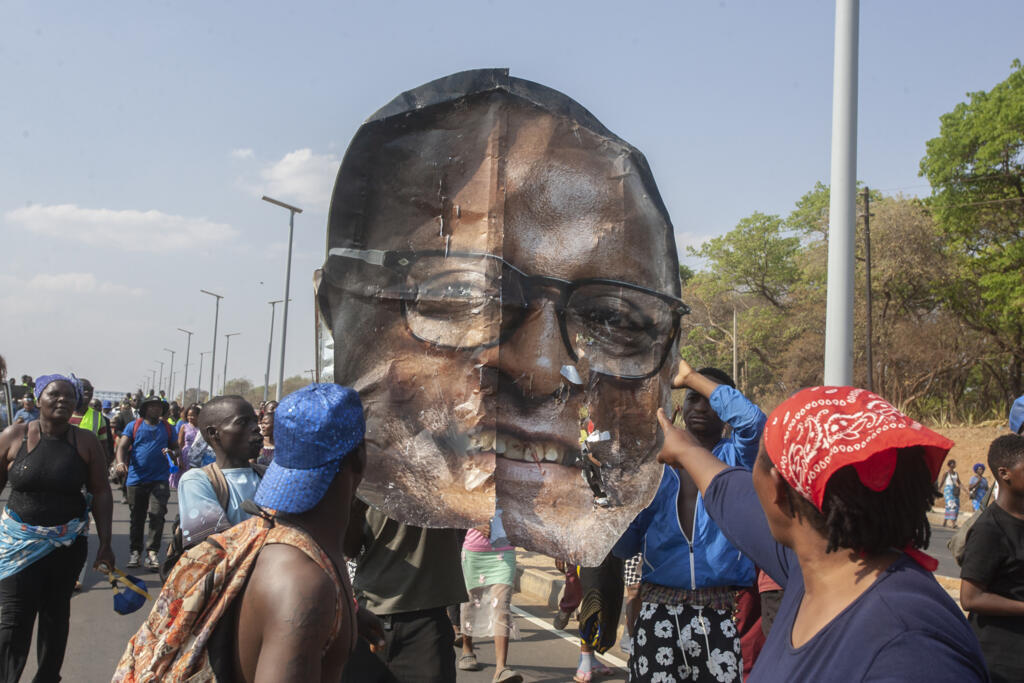
Unofficial tallies carried by local media showed Mutharika, known by his supporters as 'father', had a strong lead © Amos GUMULIRA / AFP
He also failed to deliver on promises to create a million jobs and tackle corruption in the nation of 21 million people, more than 70 percent of whom live in poverty, according to the World Bank's benchmark.
Almost as soon as results started coming in from polling stations last week, unofficial tallies carried by local media showed Mutharika, known by his supporters as "father", had a strong lead.
Among the hundreds of party supporters who celebrated Mutharika's comeback in the capital Lilongwe, Mary Duncan said: "We hope that 'father' will bring food security and the price of fertiliser price will go down and civil servant salaries will improve."
The MCP, Malawi's oldest political party, claimed to have evidence of irregularities in the vote, including tallies that did not match and alleged ballot stuffing. Chakwera urged the High Court Tuesday to compel the Malawi Electoral Commission to delay the results, but the bid was rejected.
"The anomalies do not necessarily mean that the election result projecting Professor Mutharika as the winner is not credible or a reflection of the will of the people," he said in his address.
He also failed to deliver on promises to create a million jobs and tackle corruption in the nation of 21 million people, more than 70 percent of whom live in poverty, according to the World Bank's benchmark.
Almost as soon as results started coming in from polling stations last week, unofficial tallies carried by local media showed Mutharika, known by his supporters as "father", had a strong lead.
Among the hundreds of party supporters who celebrated Mutharika's comeback in the capital Lilongwe, Mary Duncan said: "We hope that 'father' will bring food security and the price of fertiliser price will go down and civil servant salaries will improve."
The MCP, Malawi's oldest political party, claimed to have evidence of irregularities in the vote, including tallies that did not match and alleged ballot stuffing. Chakwera urged the High Court Tuesday to compel the Malawi Electoral Commission to delay the results, but the bid was rejected.
"The anomalies do not necessarily mean that the election result projecting Professor Mutharika as the winner is not credible or a reflection of the will of the people," he said in his address.
.jpg)
State of the economy
Mutharika has to be sworn into office between seven and 30 days of the announcement of his victory.
Voters who backed Mutharika were swayed by the relatively better state of the economy during his 2014-2020 term, analysts said, when he had assembled a strong economic team and brought inflation down to single digits, even though his tenure was also marred by allegations of corruption, food shortages and growing national debt.
During campaigning, he pledged economic growth and an end to a foreign exchange shortage that has restricted imports of fuel and fertiliser, saying: "I want to rescue this country."
"Malawians are longing for a better past," said Mavuto Bamusi, political analyst with the Malawi Political Science Association.
Chakwera "was a very good leader of the opposition and I think the expectation was that was going to translate into a very good and effective president," political science professor Boniface Dulani told AFP.
"But unfortunately, if you look at the economy, it's tanked. A lot of the things that they promised to do, they failed to do," he said.
© 2025 AFP
Mutharika has to be sworn into office between seven and 30 days of the announcement of his victory.
Voters who backed Mutharika were swayed by the relatively better state of the economy during his 2014-2020 term, analysts said, when he had assembled a strong economic team and brought inflation down to single digits, even though his tenure was also marred by allegations of corruption, food shortages and growing national debt.
During campaigning, he pledged economic growth and an end to a foreign exchange shortage that has restricted imports of fuel and fertiliser, saying: "I want to rescue this country."
"Malawians are longing for a better past," said Mavuto Bamusi, political analyst with the Malawi Political Science Association.
Chakwera "was a very good leader of the opposition and I think the expectation was that was going to translate into a very good and effective president," political science professor Boniface Dulani told AFP.
"But unfortunately, if you look at the economy, it's tanked. A lot of the things that they promised to do, they failed to do," he said.
© 2025 AFP
Uganda electoral commission clears Museveni and Bobi Wine to run for president
Uganda’s Electoral Commission has cleared octogenarian President Yoweri Museveni to seek re-election in polls scheduled for early next year, potentially extending his rule in the East African nation to nearly half a century. His rival, Bobi Wine, was also cleared on Wednesday afternoon.
Issued on: 24/09/2025 - RFI
Towards January 2026 polls
Museveni's was the first candidacy to be cleared by the elections body, which is charged with evaluating whether those seeking office meet legal requirements.
The body assessed this Wednesday the candidacy of Bobi Wine, 43, real name is Robert Kyagulanyi, a singer who has leveraged his pop stardom to galvanise a large support base among young voters.
The president's opponents have long accused him of using state patronage and the military to maintain his grip on power, and of using kidnappings and torture against adversaries, claims he denies.
In May, Museveni's son, who is also Uganda's military chief Muhoozi Kainerugaba, admitted to holding a missing opposition activist in his basement while threatening that Wine would be next.
(with Reuters)
Uganda’s Electoral Commission has cleared octogenarian President Yoweri Museveni to seek re-election in polls scheduled for early next year, potentially extending his rule in the East African nation to nearly half a century. His rival, Bobi Wine, was also cleared on Wednesday afternoon.
Issued on: 24/09/2025 - RFI
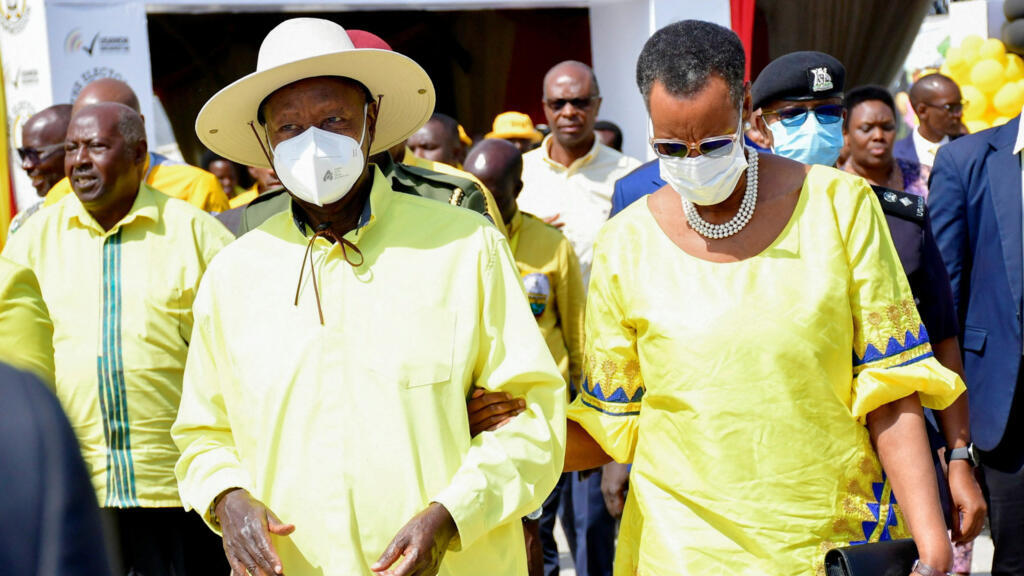
Uganda's President and the leader of ruling National Resistance Movement (NRM) party Yoweri Museveni and first lady Janet Museveni arrive at a ceremony for his nomination as presidential candidate at the Electoral Commission offices in Kampala, Uganda, on 23 September 2025. REUTERS - Abubaker Lubowa
The Electoral Commission made the announcement on Tuesday, near the capital, Kampala.
Uganda’s long-time President Yoweri Museveni will thus stand in the January 2026 elections, despite his nearly 40-year rule in the East African country, having been in power since 1986.
After the announcement, he urged supporters to back his vision for the future.
His party, the governing National Resistance Movement (NRM), had officially confirmed him in June as its presidential candidate.
Readied programme
In posts on social media, he thanked the NRM members for entrusting and electing him as their "Presidential flag bearer for the 2026-2031 term."
"In this economy, the GDP of Uganda has doubled currently in the recent Kisanja from $34 billion to $66 billion," he wrote. "You have everything today that you lacked in the past: electricity, roads, telephones, manpower, the educated people, and peace. That’s why we are being flooded by many investors because they are looking for a peaceful and profitable area where to invest."
He named among his priorities for this term wealth creation, education, infrastructure, the fight against crime and against corruption, and improvement in health and water provision.
The Electoral Commission made the announcement on Tuesday, near the capital, Kampala.
Uganda’s long-time President Yoweri Museveni will thus stand in the January 2026 elections, despite his nearly 40-year rule in the East African country, having been in power since 1986.
After the announcement, he urged supporters to back his vision for the future.
His party, the governing National Resistance Movement (NRM), had officially confirmed him in June as its presidential candidate.
Readied programme
In posts on social media, he thanked the NRM members for entrusting and electing him as their "Presidential flag bearer for the 2026-2031 term."
"In this economy, the GDP of Uganda has doubled currently in the recent Kisanja from $34 billion to $66 billion," he wrote. "You have everything today that you lacked in the past: electricity, roads, telephones, manpower, the educated people, and peace. That’s why we are being flooded by many investors because they are looking for a peaceful and profitable area where to invest."
He named among his priorities for this term wealth creation, education, infrastructure, the fight against crime and against corruption, and improvement in health and water provision.
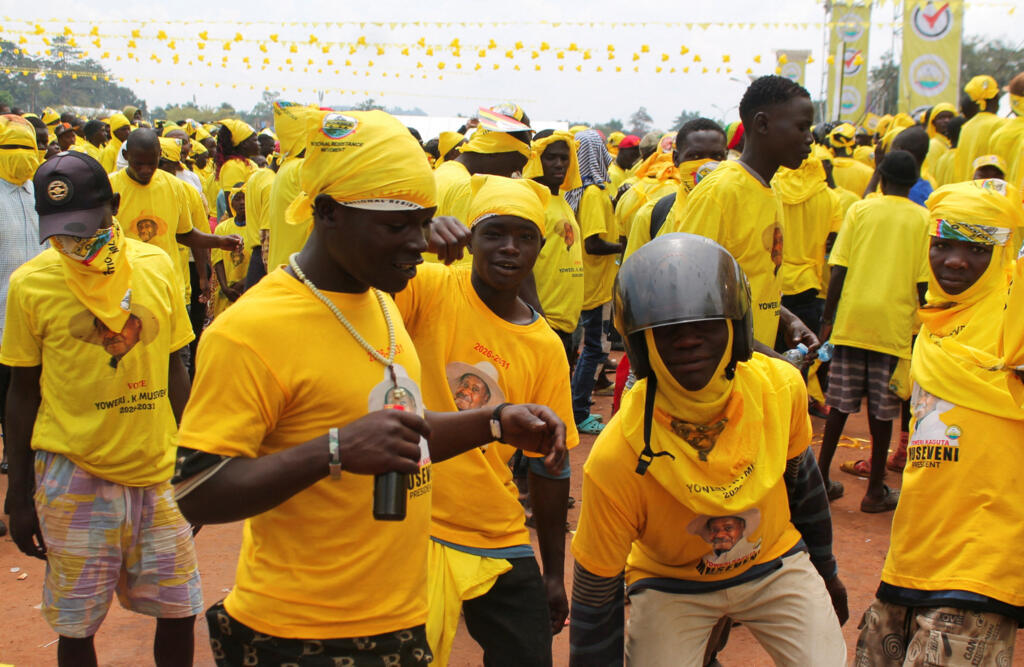
Supporters of Uganda's President and leader of ruling National Resistance Movement (NRM) party Yoweri Museveni attend his nomination rally at the Kololo ceremonial grounds in Kampala, Uganda, on 23 September 2025. REUTERS - Michael Muhati
Controversial figure
A former rebel, Museveni came to power as he was seen as a hero who brought back peace to Uganda.
After seizing power in 1986 through force, Museveni said the problem facing Africa was not its people but "leaders who want to overstay in power".
For the next ten years Uganda had no multiparty elections. The country operated under what he called the “Movement system”.
In 1996, Museveni organised Uganda’s first presidential election under this system, standing as the candidate of the Movement, and won with around 75 percent of the vote.
Multiparty politics was only restored in 2005, after a referendum, while , under pressure from Museveni, the parliament scrapped presidential term limits.
Museveni is now Africa's fourth longest-ruling leader, and his government has amended the constitution twice to remove age and term limits, allowing him to remain in office.
Since coming to power, has been credited with stabilising Uganda, promoting economic growth, and combating HIV/AIDS.
But critics denounce his government's suppression of political opponents, human rights abuses and corruption scandals.
Controversial figure
A former rebel, Museveni came to power as he was seen as a hero who brought back peace to Uganda.
After seizing power in 1986 through force, Museveni said the problem facing Africa was not its people but "leaders who want to overstay in power".
For the next ten years Uganda had no multiparty elections. The country operated under what he called the “Movement system”.
In 1996, Museveni organised Uganda’s first presidential election under this system, standing as the candidate of the Movement, and won with around 75 percent of the vote.
Multiparty politics was only restored in 2005, after a referendum, while , under pressure from Museveni, the parliament scrapped presidential term limits.
Museveni is now Africa's fourth longest-ruling leader, and his government has amended the constitution twice to remove age and term limits, allowing him to remain in office.
Since coming to power, has been credited with stabilising Uganda, promoting economic growth, and combating HIV/AIDS.
But critics denounce his government's suppression of political opponents, human rights abuses and corruption scandals.
Ugandan opposition denounces brutal crackdown ahead of 2026 elections
Towards January 2026 polls
Museveni's was the first candidacy to be cleared by the elections body, which is charged with evaluating whether those seeking office meet legal requirements.
The body assessed this Wednesday the candidacy of Bobi Wine, 43, real name is Robert Kyagulanyi, a singer who has leveraged his pop stardom to galvanise a large support base among young voters.
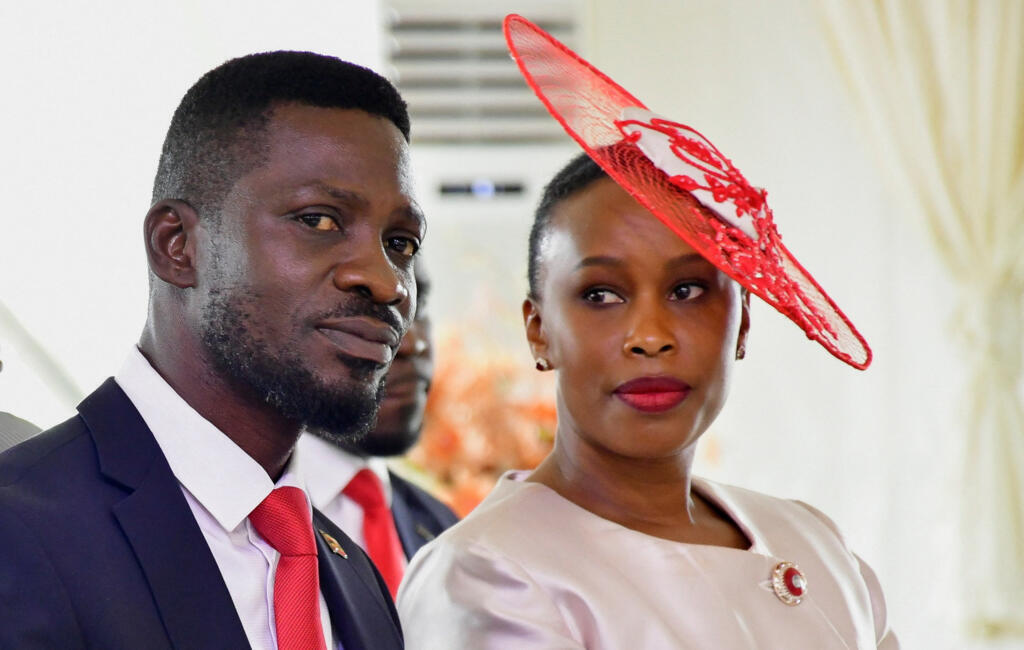
Robert Kyagulanyi, also known as Bobi Wine, of the National Unity Platform (NUP) party, and his wife Barbara Itungo Kyagulanyi, attend a ceremony for his nomination as a presidential candidate at the Electoral Commission offices in Kampala, Uganda, on 24 September 2025. REUTERS - Abubaker Lubowa
Museveni defeated Wine in 2021 by a wide margin, though Wine said his victory was stolen through ballot stuffing, intimidation by security forces and other irregularities.
Museveni defeated Wine in 2021 by a wide margin, though Wine said his victory was stolen through ballot stuffing, intimidation by security forces and other irregularities.
The president's opponents have long accused him of using state patronage and the military to maintain his grip on power, and of using kidnappings and torture against adversaries, claims he denies.
In May, Museveni's son, who is also Uganda's military chief Muhoozi Kainerugaba, admitted to holding a missing opposition activist in his basement while threatening that Wine would be next.
(with Reuters)
No comments:
Post a Comment