When Algeria’s Desert Produces Gold – OpEd
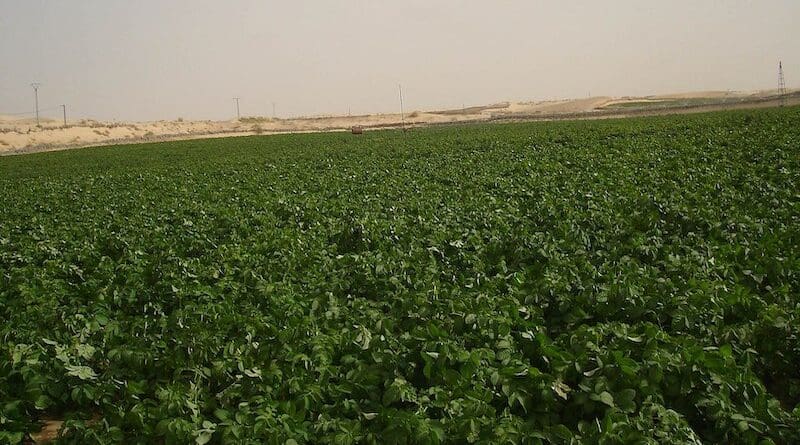 A center pivot irrigation potato field in Algeria.
Photo Credit: IRRIGATIONDZ, Wikipedia Commons
In recent years, Algeria has pursued a strategic shift toward developing desert agriculture, within the framework of state policies that grant concession contracts to farmers as well as local and international companies. This approach reflects a national will to make agriculture in the South a lever for food security and a tool for export diversification.
The Desert Turning into an Agricultural Hub
The Algerian desert offers vast areas suitable for cultivation, thanks to modern irrigation techniques and the use of underground water resources. Large-scale projects for grain, potatoes, and fodder production have already emerged, transforming the South into fertile ground for producing food that resembles gold in its strategic value.
Alongside desert agriculture, the olive sector occupies a central place in Algeria, with more than 500,000 hectares of olive groves. Although exports remain modest compared to major European producers, Algeria has significant opportunities to develop this sector by focusing on quality, branding, and smart marketing.
Europe’s Crisis Opens New Doors
Southern European countries such as Spain, Italy, and Greece have been hit by recurring climate crises — prolonged droughts and devastating wildfires — which have led to a decline in agricultural output, especially olives. This situation has created a gap in global markets, giving Algeria a historic opportunity to position its agricultural products as a reliable and sustainable alternative.
At the same time, Algeria itself faces challenges such as seasonal droughts and wildfires, which highlight the need for greater investment in agricultural research, modern technologies, and risk insurance to stabilize production.
To transform this wealth into real economic gains, Algeria must enhance value-added production, such as bottled olive oil, organic-certified products, and internationally recognized quality labels. Building strong national brands capable of reaching global consumers will be crucial for success.
Conclusion
The Algerian desert, once synonymous with barrenness, is now turning into a source of life and strategic production. With the rise of desert farming and the strengthening of the olive sector, Algeria has the potential to position itself as a leading player in regional and global food security.

Madjed Sakhri
Madjed Sakhri is an Algerian journalist with Iktisad Elbaled, specializing in trade,
No comments:
Post a Comment