How Microreactors Could Transform Nuclear Energy

- Microreactors offer portable, autonomous nuclear power for towns, campuses, industry, and military bases, with lower upfront costs than traditional plants.
- Despite their promise, investors remain wary due to a costly “chicken-and-egg” problem: factories need orders before production, but buyers want proven technology first.
- Studies warn that small reactors may generate more nuclear waste than expected, raising challenges for public acceptance and long-term energy policy.
Are microreactors the future of nuclear energy? Someday, nuclear reactors the size of shipping containers could power your hometown, but a huge number of regulatory hurdles will have to be cleared before nuclear power starts popping up in your backyard – and public buy-in will be critical.
After decades of relatively little change in nuclear power technology, there is currently a flurry of nuclear energy innovation taking place around the world. Scientists are looking into how to make nuclear power production more efficient, cost-effective, safe, and streamlined in response to an ever-growing need for reliable and carbon-free energy production. Like renewable energies, nuclear power is carbon-free, but unlike solar and wind power, the production potential of nuclear power is steady and constant, making it an attractive option for energy security in the decarbonization era.
Some of the potential new nuclear technologies garnering investor attention are small reactors and microreactors. In recent years nuclear energy development has been trending toward much smaller models in the interest of lowering up-front development costs and making new nuclear projects more easily deployable.
Most of the excitement and investment has been geared toward small modular reactors (SMRs), which many advocates believe could be the backbone of a nuclear renaissance in the United States and other countries that have begun to move away from nuclear power production. These modular models can be mass-produced in a factory setting and installed on-site alone or in clusters to create utility-scale nuclear power plants more quickly and cheaply than traditional large-scale models.
Microreactors, which have so far received less attention and funding support than SMRs, are much smaller. While a full-scale nuclear power plant would produce, on average, upward of 700 megawatts, and an individual SMR would produce about 300 megawatts, a microreactor’s output would be around 10 megawatts.
While microreactors are much smaller, they could be used to power entire towns for a relatively low up-front cost, and they have unique selling points compared to SMRs and traditional nuclear power plants. They’re safer than larger models, and they’re so small that they could be brought in on a truck or barge, hugely easing the installation process. Plus, microreactors do not require any on-site workers for their operation and maintenance, and can be operated remotely and autonomously.
“Microreactors have the ability to provide clean energy and have passive safety features, which decrease the risk of radioactive releases,” Euro News reported earlier this year. “They are also much cheaper than bigger plants as they are factory-built and then installed where they are needed in modules.”
All of these benefits mean that microreactors could be enormously useful in a wide range of contexts. A recent article in The Conversation touts their utility, saying that “this technology could benefit college campuses, remote communities in Alaska primarily powered by oil and diesel, tech companies looking for reliable electricity for AI data centers, companies in need of high-temperature heat for manufacturing and industrial processes, mining operations that need a clean energy source and even military bases in search of a secure source of energy.”
The problem is that while the microreactors themselves would be relatively low-cost, building the facilities to construct these microreactors would be a massive and expensive undertaking. And so far no one has been willing to take that risk. Investors want guaranteed orders before they build such a factory, and potential buyers want to see the technology built, tested, and proven before they place an order. “It’s a catch-22,” says The Conversation’s Aditi Verma.
There’s another considerable downside to widespread deployment of microreactors and small modular reactors – surprisingly large amounts of nuclear waste. A Stanford study found that “most small modular reactor designs will actually increase the volume of nuclear waste in need of management and disposal, by factors of 2 to 30,” said lead author Lindsay Krall. “These findings stand in sharp contrast to the cost and waste reduction benefits that advocates have claimed for advanced nuclear technologies.”
Community buy-in is essential to get microreactors off the ground, but those communities need to seriously consider the cost of managing all that nuclear waste. The many benefits of microreactors may still be worth it, but nuclear waste is a major cost to taxpayers that should not be overlooked.
By Haley Zaremba for Oilprice.com
Why the World Can’t Easily Wean Itself Off Russian Nuclear Fuel
- Russia supplies roughly 40% of the world’s enriched uranium, leaving the EU and other nations dependent despite efforts to diversify.
- Global uranium demand is projected to rise nearly 75% by 2040, but production from existing mines is expected to halve, creating a severe supply gap.
- The U.S., U.K., and Europe are investing in domestic uranium mining and enrichment capacity, but new projects face high costs, regulatory hurdles, and long lead times.
As the dominant producer of enriched uranium, Russia became the world’s main supplier of the fuel needed to power nuclear energy projects, as many countries find it difficult to decrease their dependency on Moscow for the fuel. Russia supplies around 40 percent of the world’s enriched uranium, followed by China (17 percent), France (12 percent), the U.S. (11 percent), the Netherlands (8 percent), the U.K. (7 percent), and Germany (6 percent). Shifting dependence away from Russia has been very difficult, as alternative supplies simply do not exist in the way they do for other energy sources, such as oil and gas.
In June, the European Commission said it did not plan to impose limits on the EU’s import of Russian enriched uranium alongside a proposal on the potential ban of Russian gas imports by the end of 2027. After initially saying that it would introduce trade measures targeting enriched uranium, the EU energy commissioner Dan Jorgensen said, “That will also come, but in the first stage, we’ll be focusing on the gas.” He added, “The question about nuclear is, of course, complicated, because we need to be very sure that we are not putting countries in a situation where they do not have the security of supply. So, we’re working as fast as we can to also make that a part of the proposal.”
In 2023, Russia continued to supply 38 percent of the EU’s enriched uranium and 23 percent of its raw uranium, according to the think-tank Bruegel. The EU spent around $1.18 billion on Russian nuclear fuel in 2024, according to EC estimates. Meanwhile, five EU countries – Bulgaria, the Czech Republic, Finland, Hungary and Slovakia – all have Russian-designed reactors that were developed to run on Russian fuel. All except Hungary have now signed deals to use alternative suppliers, although the shift away from Russian uranium is expected to take several years.
Meanwhile, the global demand for enriched uranium is expected to grow significantly in the coming decades as several countries invest in a new era of nuclear expansion. A report published by the World Nuclear Association (WNA) in September said that the global demand for uranium is expected to increase by almost a third to around 86,000 tonnes by 2030 and to rise to 150,000 tonnes by 2040. However, to meet this demand while decreasing reliance on Russian uranium, several countries will need to invest in accelerated permitting, mining innovations, and new exploration for uranium.
The report showed that uranium production from existing mines is expected to halve between 2030 and 2040, resulting in a significant supply gap. As many countries around the globe begin to invest in new nuclear reactors, as well as alternative projects such as small modular reactors (SMRs), there will simply not be enough fuel to power these operations if greater efforts are not made to finance new uranium operations.
Kazakhstan is currently the world-leader in uranium production, now contributing 40 percent of the global supply, of which the country owns around half. Meanwhile, Russia continues to dominate the world’s enrichment capacity. The world’s uranium market is seeing annual growth of between one to two percent, according to estimates. Boris Schucht, the CEO of uranium enrichment firm Urenco, said, “It’s a small, growing market. It’s a limited market, [that’s] not very big, and it’s very expensive to develop technologies in this market. So that makes the market pretty complex.”
The Dutch-British-German consortium decided to terminate all its existing Russian contracts in 2022 and now aims to increase its capacity of Low Enriched Uranium (LEU) by 1.8 million Separative Work Units across its four sites in Eunice, New Mexico, the Netherlands, Germany, and the U.K. This is one of many companies looking to start to increase their LEU supply to meet the growing global demand.
The U.S. has ramped up efforts to mine uranium in recent years, increasing production from 22,680 kg in 2023 to 307,082 kg in 2024. It commenced large-scale exploration drilling activities in 2024, in a bid to reduce reliance on Russia, drilling 1,324 holes. Under the Biden administration, the U.S. Department of Energy worked to expand domestic commercial LEU. Before leaving office, in December, Biden announced the selection of six companies from which it can sign contracts to procure LEU to incentivise the development of new uranium production capacity in the United States.
Meanwhile, in 2024, the U.K. said it would be the first European nation to produce advanced nuclear fuel, with plans to develop Europe’s first high-assay low-enriched uranium (HALEU) facility. The U.K. government awarded $267.1 million to Urenco to develop the enrichment facility, which is expected to start producing fuel in 2031, and will be ready for domestic use and export within the next decade.
The global demand for enriched uranium is expected to grow significantly in the coming decades in response to a nuclear revival in several countries. However, producing the uranium needed to fuel a new nuclear era will be extremely complex, due to the strict sectoral regulations and the current limited global production capacity. Greater funding must be invested in research and development, as well as into new production facilities around the globe to support the world’s nuclear energy aims.
By Felicity Bradstock for Oilprice.com
The Nuclear Company partners with Nucor to boost US nuclear power supply
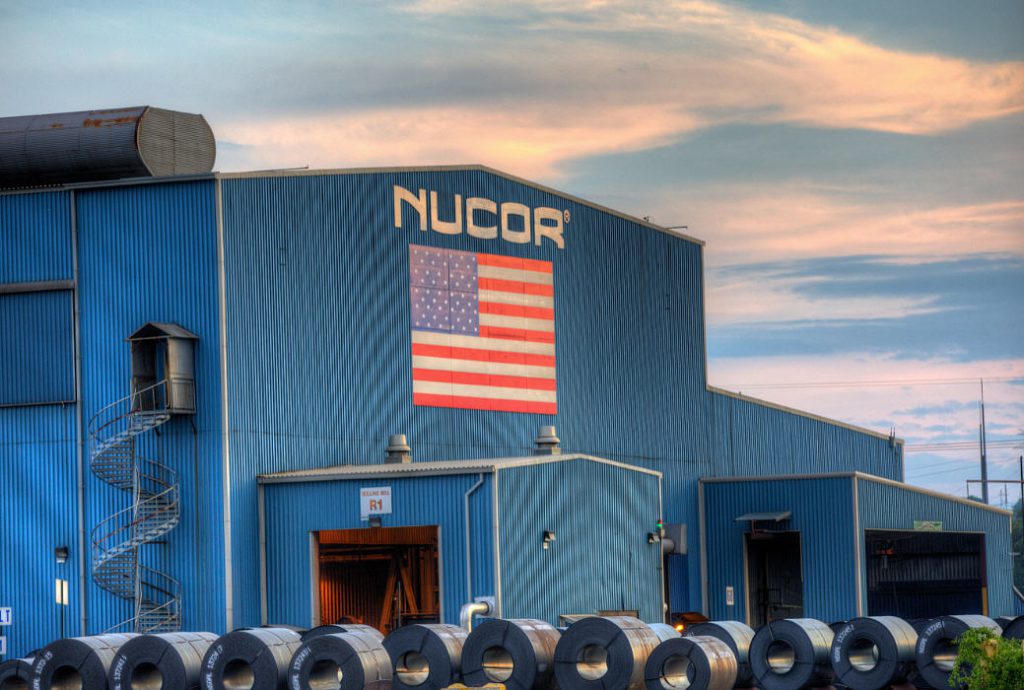
The Nuclear Company said on Friday that it has signed a strategic agreement with US steelmaker Nucor Corporation to boost the country’s nuclear power supply chain and support domestic manufacturing.

TNC, a US nuclear deployment company, said the companies will assess the use of NQA-1 steel and related infrastructure for gigawatt-scale nuclear reactors as per the American Society of Mechanical Engineers’ certification standards.
The partnership supports executive orders from President Donald Trump targeting 400 gigawatts (GW) of nuclear capacity by 2050, including construction of 10 large-scale reactors in the next five years, TNC said.
The US has launched an effort to speed development of power plants and transmission lines after Trump on his first day back in office in January issued an order declaring an energy emergency as artificial intelligence, data centers, and electric vehicles are boosting power demand for the first time in two decades.
TNC’s partnership also aims to help the US compete with China and Russia, which have expanded their nuclear reactor fleets rapidly in recent years, it said.
“Our partnership with Nucor will protect America’s national security, help achieve energy independence and create a more resilient economy,” said TNC CEO Jonathan Webb.
(By Sarah Qureshi; Editing by Marguerita Choy)
Groundworks begin for second Bailong unit
_28322.jpg)
The excavation of the foundation pit for Bailong 2 began on 28 September, State Power Investment Corporation (SPIC) subsidiary Guangxi Nuclear Power Company Ltd announced.
The construction of Phase I (units 1 and 2) of the Bailong plant was among approvals for 11 new reactors granted by China's State Council in August last year. An investment of about CNY40 billion (USD5.6 billion) is planned for the two CAP1000 units - the Chinese version of the Westinghouse AP1000 - which are expected to take 56 months to construct.
Excavation of about 66,000 cubic metres of earth to form the foundation pit of unit 1 - which will eventually be 12.2 metres deep and cover an area of about 3,000 square metres - began on 30 December. The excavation of the two nuclear island foundation pits utilises a "vertical slope construction technique with support first and excavation later", Guangxi Nuclear Power noted.
"Thanks to the dedicated efforts of all builders, unit 1 is steadily progressing toward achieving its high-quality FCD [first concrete pouring] goals," the company said. "During the initial phase of the excavation for unit 2, the company, in collaboration with all participating units, fully incorporated feedback from the unit excavation, systematically reviewed prerequisites, optimised construction techniques, and completed the construction of the foundation pit retaining structure cast-in-place piles and crown beams on schedule, laying a solid foundation for the smooth progress of the unit 2 nuclear island excavation."
Once Bailong units 1 and 2 are put into operation, the annual power generation of the plant will be about 20 billion kilowatt-hours, Guangxi Nuclear Power said. It noted that this can reduce the consumption of standard coal by about 6 million tonnes and reduce carbon dioxide emissions by about 16 million tonnes annually.
Four CAP1400 reactors are also planned to be built at the site - located about 24 kilometres from the border with Vietnam and about 30 kilometres southwest of China General Nuclear's Fangchenggang nuclear power plant - in later phases.
Oklo tests fuel assembly at DOE lab
_16652.jpg)
The company worked with Argonne's thermal-hydraulics team and used the lab's test facilities to study how coolant flows through a fuel assembly across a range of operating conditions. The tests measured parameters such as pressure drop and flow distribution, providing data that will benchmark Oklo’s simulations with full-scale performance, the company said.
The testing was done under a US Department of Energy (DOE) Gateway for Accelerated Innovation in Nuclear (GAIN) voucher. The GAIN initiative was launched in 2016 to help businesses overcome critical technological and commercialisation challenges of nuclear energy technologies through a voucher system, giving stakeholders access to the DOE's R&D facilities and infrastructure to support the cost-effective development of innovative nuclear energy technologies.
"These full-scale, prototypical tests are vital in moving us from design into production," said Oklo co-founder and CEO Jacob DeWitte. "The work we're doing through GAIN at Argonne delivers real-world data that will ultimately inform the manufacturing parameters of our fuel-assembly design."
Oklo's Aurora powerhouse is a fast neutron reactor that uses heat pipes to transport heat from the reactor core to a supercritical carbon dioxide power conversion system to generate electricity. Building on the design and operating heritage of the Experimental Breeder Reactor II (EBR-II), which ran in Idaho from 1964 to 1994, it uses metallic fuel to produce electricity and usable heat, and can operate on fuel made from fresh HALEU or used nuclear fuel. The company recently broke ground for its first powerhouse at a site at Idaho National Laboratory.
By combining Argonne's experimental capabilities with Oklo's ability to design and build prototypic Aurora components as part of its design, build, and test cycle, the effort supports the company's cost-effective approach to building large-scale parts for its powerhouses, Oklo said.
No comments:
Post a Comment