Trump wants piece of company in charge of America’s biggest lithium mine

The Trump administration is seeking an equity stake of as much as 10% in Lithium Americas as it renegotiates terms of the company’s $2.26 billion Energy Department loan for its Thacker Pass lithium project with General Motors, two people familiar with the discussions told Reuters.

The proposed stake is the latest example of the Trump administration intervening directly in the American economy as it has in taking stakes in Intel, MP Materials and other US tech and minerals firms to promote industries it sees as critical to national security.
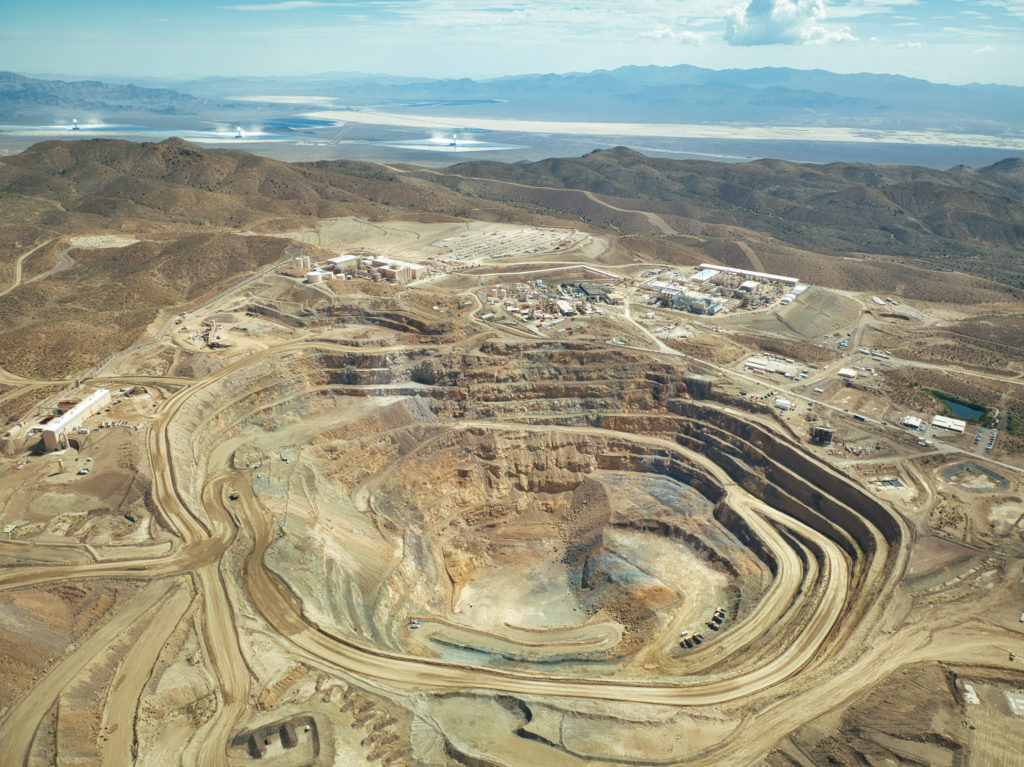
Slated to become the Western Hemisphere’s largest source of lithium when it opens in 2028, the Thacker Pass mine has been under construction for nearly a year with more than 600 contractors at the site roughly 25 miles (40 km) south of Nevada’s border with Oregon.
Thacker Pass is seen as a linchpin in building a domestic supply chain part of Washington’s long-standing drive to boost US production of lithium, a metal used to make batteries for electric vehicles and other electronics.
“President Trump supports this project. He wants it to succeed and also be fair to taxpayers,” a White House official told Reuters. “But there’s no such thing as free money.”
Shares of Lithium Americas rose by roughly 80%, from around $3 a share to $5.54 a share, in aftermarket trading following the news.
The project has long been touted by both Republicans and Democrats as a key way to boost US critical minerals production and cut reliance on China, the world’s largest lithium processor.
The US produces less than 5,000 metric tons of lithium at a Nevada facility owned by Albemarle. Thacker Pass’s first phase is expected to produce 40,000 metric tons of battery-quality lithium carbonate per year, enough for up to 800,000 EVs.
China plays a dominant role in the global lithium supply chain, producing more than 40,000 metric tons each year, making it the third-largest producer after Australia and Chile. China’s influence is far greater in refining, where it processes over 75% of the world’s lithium into battery-grade material.
The $2.93 billion Thacker Pass project was approved by Trump at the end of his first term. The loan from the Department of Energy’s Loan Programs Office (LPO) was closed last year by Biden administration officials.
The loan has a 24-year term, with interest rates based on the US Treasury rate as each tranche is drawn.
Lithium Americas was slated to make its first draw on the loan earlier this month but Trump officials sought to renegotiate terms amid concerns about the company’s ability to repay the loan given low lithium prices due to Chinese overproduction, according to the sources.
Discussions over the loan’s potential reevaluation were first reported by the Washington Free Beacon. The administration’s request for an equity stake has not been previously reported.
GM, which invested $625 million in the mine last year for a 38% stake, has the right to buy all of the project’s lithium from its first phase and a portion from the second phase for 20 years, although Trump officials are now seeking a guarantee that GM will buy the metal, according to the sources.
The equity request came during discussions in recent months over the loan’s amortization schedule, with Lithium Americas proposing to shift when part of the loan’s principle would be repaid although not the repayment timeline itself or the total interest the Loan Programs Office would receive, according to one of the sources.
In response to that request and in order to close the loan and secure the funding, Lithium Americas earlier this week offered the government no-cost warrants that would equate to 5% to 10% of its common shares, as well as funds to cover any fees incurred by changing the amortization schedule, according to one of the sources.
Trump officials also are pushing to have GM relinquish its control over parts of the project and transfer them to Washington, according to one of the sources.
GM, which is relying on Thacker Pass to supply much of its lithium needs for its electrification push called the loan a “necessary part of the financing to commercialize this important national resource” and noted that Trump “strongly supported” the mine in his first term.
“We’re confident in the project, which supports the administration’s goals,” a GM spokesperson told Reuters.
Lithium Americas declined to comment on the ongoing negotiations, but said: “We respect the LPO’s decision to pursue a restructure and remain in active discussions with the (Department of Energy) and our partner, GM, and will provide an update at the appropriate time.”
Washington has safeguards in place to protect its investment as part of the original loan terms, including several clauses that give the government the option to take over the project if it is delayed or faces major cost overruns.
Lithium Americas, which has a market value of roughly $750 million, is one of several companies – including ioneer, Exxon Mobil, Standard Lithium and others – developing US lithium projects.
(By Ernest Scheyder and Jarrett Renshaw; Editing by Veronica Brown and Michael Learmonth)
A PIECE OF THE ACTION STAR TREK
US rare earths champion says Pentagon deal not easily replicable
MP Materials Corp., the US rare earths producer that’s received government investment to support construction of domestic capacity, is warning the unprecedented move won’t be easily repeated for other companies.
The Pentagon agreed to a $400 million preferred equity investment in MP in July, not long after the US faced the threat of industrial shutdowns triggered by China’s curbs on exports of rare earth magnets. The deal — also including a supply agreement with a guaranteed floor price — was seen as a transformative moment for an industry plagued by cycles of boom and bust even before this year’s crisis.
The move also triggered widespread discussion about how much support could be extended to other companies, both inside and outside the US. Chief executive officer James Litinsky, who co-founded MP in 2017 to resurrect a dormant Californian mine, said the company’s spectrum of assets — from mines to magnet plants — was one key to the deal.
“One unique thing that we offered is that we’re the only company in the world that’s fully vertically integrated, and if the government is going to support a solution, they need to make sure that the solution works,” Litinsky said in an interview on the sidelines of a rare earths event in Toronto. “You really have to have a full supply chain offering before you go to the US government” for support, he added.
The Pentagon deal was put together after Beijing’s grip on global supply of rare earth magnets proved pivotal in fighting a trade war with Washington. It also constituted a major government intervention to ensure future supply of a strategic product on national security grounds, and it meant the Trump administration has effectively created a national champion.
MP Materials’ shares have more than doubled since the Pentagon investment was unveiled, and rare earth stocks worldwide have soared as prices for the critical materials rally. The Australian government is also considering a floor price for rare earths, and there’s growing expectation for a bifurcated global market in which producers outside China have more protection against volatile prices.
Litinsky said America’s interventionist tack should ultimately create “normal” market pricing for ex-China producers. “The Chinese are going to come to a realization that it’s a fool’s errand to attack this industry,” he said on a conference panel earlier.
Another major talking point at the Toronto event was just how quickly the US is ramping up its own capacity, partly as a result of earlier investments and partly in response to the China shock this year. Adamas Intelligence, the consultancy and organizer of the Toronto event, sees domestic US magnets capacity briefly matched with demand in 2028 before demand from sectors like robotics, drones and electric vehicles takes off.
No comments:
Post a Comment