Iran and Russia Discuss Boosting Nuclear Energy Cooperation

Russia and Iran this week discussed boosting their cooperation in nuclear energy, including in building small nuclear reactors (SMRs) in the Islamic Republic, Iranian media report.
Mohammad Eslami, director of the Atomic Energy Organization of Iran (AEOI), discussed nuclear energy cooperation in Tehran with Nikolai Spassky, Deputy CEO for International Relations at Rosatom, Russia’s state-owned nuclear energy company.
Spassky was returning a visit by Eslami to Moscow last month, during which Iran and Russia signed a memorandum of understanding (MoU) on cooperation in construction of small nuclear power plants in Iran.
The two countries sanctioned by the West have also signed a MoU on collaboration on the Iran–Hormoz Nuclear Power Plant Project, which envisages the construction of four 1,250-megawatt reactors.
Earlier this year, Iran and Russia vowed to enhance their energy cooperation as Russian companies signed a deal to develop oilfields in Iran and the countries discuss the creation of a natural gas hub in the Islamic Republic.
Iran and Russia signed in January a so-called Comprehensive Strategic Partnership Treaty, which included – among various other commitments – a pledge to expand cooperation in the energy sector, including in energy supply and swap operations.
Russia and Iran have been deepening their cooperation, including in the energy sector, for years, and especially after the Russian invasion of Ukraine cut off a lot of Moscow’s previous oil and gas customers.
The boosting of nuclear energy cooperation with Russia comes as Iran remains defiant as the UN sanctions snapped back in place at the end of September.
Ahead of the return of the UN sanctions adding to U.S. sanctions, Iranian Oil Minister Mohsen Paknejad said, referring to Iran’s oil exports to China, “They will continue, we have no problem.”
“In the last years, we have faced such severe restrictions from the unjust and unilateral U.S. sanctions that, in practice, [U.N. sanctions] won't add much to this situation,” the Iranian minister said, as carried by Reuters.
By Tsvetana Paraskova for Oilprice.com
Anfield gets greenlight to build uranium mine in Utah
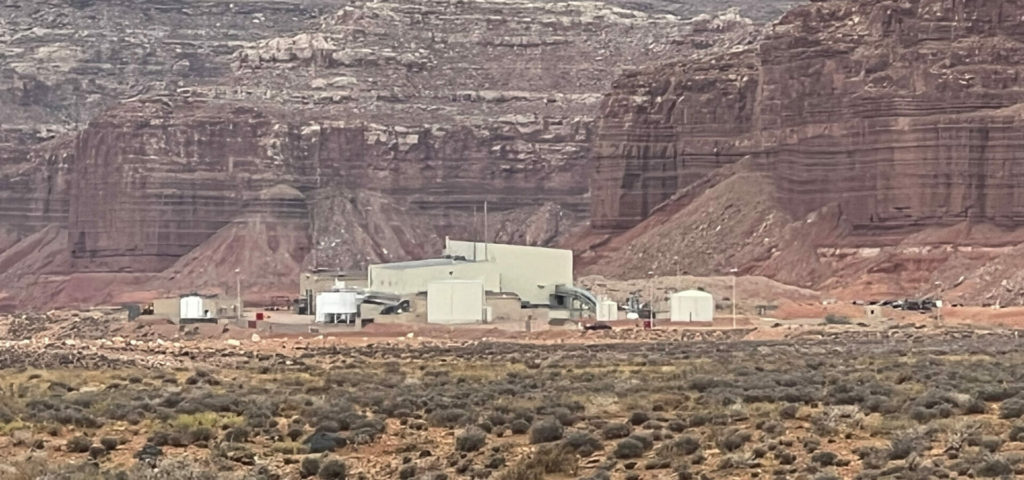
Anfield Energy (NASDAQ: AEC; TSXV: AEC) is one step closer to becoming the next US uranium producer after securing all approvals to begin construction of its Velvet-Wood uranium project in San Juan County, Utah.

The approval, granted by the Utah Department of Oil, Gas and Mining, would allow for the acceleration of mine preparation, construction, and ultimately, production, the company said in a press release issued on Tuesday.
Velvet-Wood is the first mining project that the US Interior Department approved for expedited permitting, as part of President Donald Trump’s national energy emergency declaration earlier this year.
The property combines two separate areas that together hold 4.6 million lb. of uranium oxide equivalent (eU3O8) in the measured and indicated category. The Velvet area hosts a historic mine with 4 million lb. of U3O8 production between 1979 and 1984. Once in operation, most of the mining at Velvet-Wood is expected to take place underground, targeting known deposits left from earlier operations.
Anfield’s share price jumped on this positive development, with its Toronto-listed stock gaining 8.5% at C$12.80 apiece for a market capitalization of C$201 million. Its newly listed NASDAQ shares also rose 7%.
According to Anfield, it has been pushing to begin mine construction this year, and the Utah state approval would allow it to commence its near-term plans, including reopening of the mine portal, mine dewatering and construction of surface facilities.
Corey Dias, CEO of Anfield, also noted that the project has a small environmental footprint, which is “advantageous to the company’s aim to pursue near-term production.”
The proposed uranium mine is a key piece of Anfield’s integrated mine-to-mill strategy, underpinned by its Shootaring Canyon mill, one of only three licensed, permitted and constructed conventional uranium mills in the country.
Philippines prepares for nuclear new-build
_75178.jpg)
In a circular signed on 2 October by Energy Secretary Sharon Garin, the Department of Energy (DOE) formally established the policy foundations for the Philippines' first commercially developed and operated nuclear power plant, designated as the Pioneer NPP.
Under the circular, the department said the Pioneer NPP will be treated as a baseload facility and granted priority dispatch in coordination with the DOE, the Independent Market Operator, and the System Operator, "regardless of the nuclear technology deployed". It said this "ensures a competitive investment environment for the Pioneer NPP, paving the way for further nuclear developments that will reinforce the country's long-term energy security".
Within 90 days of the circular's issuance, the DOE will explore government participation models and financing options in collaboration with the Department of Finance, Department of Economy, Planning, and Development, the Maharlika Investment Corporation, and other relevant agencies. At the same time, grid readiness will be prioritised to ensure seamless integration of nuclear power into the transmission system.
To support long-term financial viability, flexible contracting mechanisms such as auctions, direct contracting, or aggregation for industrial and economic zone use will be introduced. In parallel, the Energy Regulatory Commission, in consultation with stakeholders, will implement a Regulatory Asset Base (RAB)-type model or a similar capital recovery mechanism, anchored on minimum contract terms of 25 years, extendable for another 25 years.
Complementing these provisions, the Pioneer NPP will be automatically certified as an Energy Project of National Significance, giving it access to incentives and fast-track processing.
"This is more than just a policy document, it is an investment signal,” Garin said. "By establishing clear rules for nuclear integration, we are giving confidence to investors, partners, and stakeholders that the Philippines is ready to responsibly and strategically adopt nuclear energy as part of its clean energy transition. Nuclear will complement renewables by providing reliable, stable baseload capacity - ensuring that our economy has the energy security it needs to grow while meeting climate goals."
Nuclear ambitions
In response to the 1973 oil crisis, the Philippines decided to build the two-unit Bataan plant. Construction of Bataan 1 - a 621 MWe Westinghouse pressurised water reactor - began in 1976 and it was completed in 1984 at a cost of USD460 million. However, due to financial issues and safety concerns related to earthquakes, the plant was never loaded with fuel or operated. The plant has since been maintained. There have been several proposals over the years to either start up the plant or convert it to a gas-fired plant.
In March 2022, then President Rodrigo Duterte signed an executive order that outlined the government's position for the inclusion of nuclear energy in the Philippines' energy mix, taking into account economic, political, social and environmental objectives. The country aims to have its first nuclear power plants operational by 2032, with an initial capacity of 1,200 MW, expanding to 2,400 MW by 2035 and reaching 4,800 MW by 2050.
IAEA completes modernisation of its laboratories
_44715.jpg)
The IAEA Seibersdorf facility, which opened in 1962, houses eight nuclear applications laboratories working in food and agriculture, human health, environmental monitoring and assessment, as well as two safeguards analytical laboratories for nuclear verification.
The IAEA and its member states launched an initiative in 2014 - known as the Renovation of the Nuclear Applications Laboratories (Renual) - to modernise the laboratories to maintain their capacities to respond effectively to these demands in years to come.
Recognising the importance of all the laboratories in helping member states address a range of existing and emerging development challenges, in September 2020 IAEA Director General Rafael Mariano Grossi announced his intention to complete the modernisation of the Seibersdorf laboratories. The final phase of the modernisation initiative, called Renual2, was to construct a new building to house the three laboratories that had not yet been modernised in Renual's earlier phase. A groundbreaking ceremony for the new building was held in October 2022.
A ceremony was held on Wednesday to mark the inauguration of the new Curie-Meitner Nuclear Applications Centre, which will house the Plant Breeding and Genetics Laboratory, the Terrestrial Environment and Radiochemistry Laboratory, and the Nuclear Science and Instrumentation Laboratory.
Alongside the new Curie-Meitner Centre, Renual2 also brings new state-of-the-art greenhouses essential to developing climate-smart agriculture and improved water resource management and a fully refurbished space for the dosimetry laboratory to support cancer control and ensure patients receive safe radiation doses.
"This achievement is more than a renovation; it's the result of vision, commitment and partnership," Grossi said. "The new Curie-Meitner Centre enables our scientists and partners from around the world to work together, innovate and deliver tangible solutions that improve health, food security and environmental protection."
The completion of Renual2 was made possible through the support of the IAEA's Member States and partners. A total of 52 Member States contributed extrabudgetary resources, alongside in-kind and institutional support from governments and organisations.
The inauguration of the Curie-Meitner Centre follows the opening on 17 September of the new IAEA Visitor Centre, also in Seibersdorf - a first-of-its-kind space where visitors can experience the agency's mission and discover how nuclear science and technology is addressing global challenges.
Deadline extended to allow wider participation in Indian small reactor RFP
_54639.jpg)
Bharat Small Reactors - or BSRs - are described as compact 220 MWe pressurised heavy water reactors that are tailored for "captive use". Minister of Finance Nirmala Sitharaman announced in the July 2024 budget that the government would partner with the private sector to set up BSRs as part of its efforts to achieve net-zero goals.
The Request for Proposals from Indian users to finance and build a proposed fleet of 220 MW Bharat Small Reactors to help decarbonise Indian industry was issued by India's nuclear power operator on 31 December 2024 with a deadline of 31 March, but this has already been extended several times. In June, Nuclear Power Corporation of India Ltd (NPCIL) said it was extending the due date for proposals - which had already been extended twice - to 30 September to accommodate "requests from many more industrial houses/industries who have expressed keenness to implement the BSR(s) for achieving their targets for decarbonising their power consumption, and have requested NPCIL to extend the date for proposal submission."
An update to the RFP, issued by NPCIL on 29 September now moves the proposal due date to 31 March 2026.
According to that document, around 70 delegates from 27 "private/public industries" attended a pre-proposal meeting held in February. By 29 September, six companies had submitted documents to proceed with the RFP process.
Interested parties
The six companies named in the latest update are Hindalco Industries Ltd, Jindal Steel & Power Ltd, Tata Power Co, Reliance Industries, JSW Energy Ltd and Adani Power Ltd.
Hindalco Industries, Jindal Steel & Power, Tata Power Co and Reliance Industries are named as having submitted the documents specified in the RFP for the signature of non-disclosure agreements (NDA) and collected tentative Bill of Quantities, plant performance data, and operation and maintenance expenditure data after signing NDAs. JSW Energy Ltd and Adani Power Ltd have submitted the documents for signing NDAs, which are "under evaluation and further processing".
According to the NPCIL document, these companies have also identified probable sites for BSRs and submitted preliminary site reports for 16 sites. Five of these are in Gujarat, four in Madhya Pradesh, three in Odisha, two in Andhra Pradesh, and one each in Jharkand and Chhattisgarh. NPCIL said it has written to the state governments of Gujarat, Madhya Pradesh and Odisha "requesting to extend necessary support for site investigation activities and land & water allocation for setting up BSR".
The companies had requested an extension of the 30 September deadline "as they need more time to evaluate the respective sites and work out the CAPEX and O&M cost of BSR", amongst other things, NPCIL said. In addition, "more industries have shown interest in setting up BSR and are in communication with NPCIL", it added.
"As the global business landscape shifts decisively toward green energy, Indian industries are increasingly recognising the strategic importance of securing carbon-free, clean power for their operations. This transition is not only critical for maintaining global competitiveness but also essential to avoid potential trade barriers inked to carbon intensive exports."
"BSR initiative being part of NPCIL's broader commitment to support India's clean energy transition … it has been decided to extend the deadline for submission of proposal."
The RFP envisages that the BSR users would be responsible for all the capital and operating expenditure for the project from pre-project and throughout its entire life cycle including decommissioning. The project would be constructed by the user under the supervision and control of NPCIL, and transferred to NPCIL for operation on completion of construction. In return, the user would have the rights to the electricity generated by the plant for meeting its own captive power requirements, but would also be able to sell electricity to other customers subject to the applicable regulations.
Arabelle and Framatome sign Cernavoda agreements
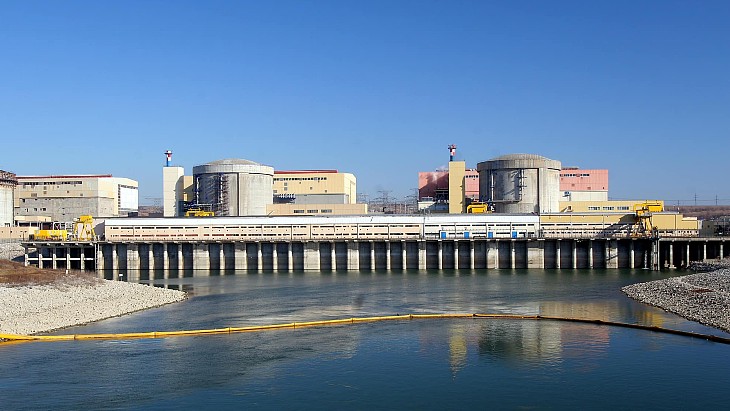
Arabelle Solutions, which like Framatome is a subsidiary of France’s EDF, will provide equipment and services for the refurbishment of Cernavoda 1’s turbine-generator, as part of the 30-year life extension project.
The agreement with Framatome "establishes the framework under which Framatome and SNN will collaborate to implement the production of lutetium-177 medical radioisotopes at Cernavoda NPP, operate the equipment and infrastructure resulting from the implementation of this project and, in the future, develop other projects related to the production of medical radioisotopes".
Nuclearelectrica and Framatome aim to launch the irradiation commercial service in 2028, helping provide supplies for an area of medicine which now sees around 49 million radioisotopes procedures per year.
Cosmin Ghita, Nuclearelectrica CEO, said: "Our goal is to provide Romania with energy security, clean energy, and standards of excellence through international partnerships, expertise, and local and national development … we want to contribute not only to energy security and the achievement of decarbonisation and ESG targets, but also to areas where nuclear energy can prove its usefulness."
Catherine Cornand, CEO of Arabelle Solutions, said: "We are proud to support the refurbishment of Cernavoda Unit 1, a project of strategic importance for Romania’s energy future. This contract reflects our commitment to delivering proven, reliable, and innovative technologies that enable the safe, long-term operation of nuclear assets, while providing reliable, low-carbon electricity to future generations."
Grégoire Ponchon, CEO of Framatome, said: "This agreement underscores Framatome and Nuclearelectrica’s commitment to strengthening the supply chain for lifesaving radioisotopes in Europe and across the globe. Framatome is proud to leverage its expertise in the fight against cancer and help facilitate mass access to nuclear medicine."
Background
Cernavoda is the only nuclear power plant in Romania and consists of two 650 MWe Candu reactors. Unit 1 went into commercial operation in 1996 and unit 2 in 2007. Most of the work on units 3 and 4 - like units 1 and 2, Candu-6 reactors - was done in the 1980s prior to the fall of the government of Nicolae Ceausescu in 1989. It was reported in 2021 that unit 3 was 52% complete and unit 4 30% complete. Work is now planned to finish units 3 and 4, with scheduled commercial operation in 2030 and 2031.
The unit 1 refurbishment project began in 2017 and is currently in the second of three phases, with infrastructure work beginning in August for the project. In December Nuclearelectrica signed the engineering, procurement and construction contract for the estimated EUR1.9 billion (USD2.2 billion) refurbishment with a consortium of Korea Hydro & Nuclear Power, AtkinsRéalis's Candu Energy, Canadian Commercial Corporation and Ansaldo Nucleare. The third phase, scheduled for 2027 to 2029, starts with the shutdown of unit 1 and includes all the work required on it and its recommissioning.
Candu units are pressurised heavy water reactors designed to operate for 30 years, with a further 30 years available subject to refurbishment. This includes the replacement of key reactor components such as steam generators, pressure tubes, calandria tubes and feeder tubes. It involves removing all the reactor's fuel and heavy water and isolating it from the rest of the power station before it is dismantled. Thousands of components, including those that are not accessible when the reactor is assembled, are inspected, and all 480 fuel channels and 960 feeder tubes are replaced during the high-precision rebuild.
EDF completed its acquisition of a portion of GE Vernova's nuclear conventional islands technology and services - including its Arabelle steam turbines - in May last year. The transaction included the manufacturing of conventional island equipment for new nuclear power plants as well as related maintenance and upgrade activities for existing nuclear plants outside of the Americas. EDF's acquisition of the business - at that time, known as GE Steam Power - was first announced in early 2022 and the final agreement was signed in the November of that year.
NANO to build Illinois MMR facility
_81570.jpg)
The company announced its plans for the new facility alongside Illinois Governor JB Pritzker and the Illinois Department of Commerce and Economic Opportunity (DCEO).
The facility will enable the company to establish its operations and create 50 new full-time jobs, NANO said. The project is to receive USD6.8 million in incentive awards from the Reimagining Energy and Vehicles in Illinois (REV Illinois) programme, a competitive incentive programme under the DCEO designed to bolster Illinois manufacturing in the clean jobs economy, which is described by the DCEO as a key component of the Pritzker Administration's work to increase investment in clean energy as well as advanced manufacturing.
"I'm proud to welcome NANO Nuclear to Illinois' growing clean energy economy," said Governor JB Pritzker. "Our qualified workforce, unmatched infrastructure, and competitive incentives all make Illinois the best state for companies investing in clean energy production. With support from REV Illinois, this critical investment from NANO Nuclear will create new jobs for hardworking Illinoisans and promote innovative strides in clean energy solutions."
The facility is expected to support nuclear engineers, component manufacturers, researchers, and support personnel who will work in collaboration with the University of Illinois Urbana-Champaign on NANO Nuclear's lead project, the KRONOS micro modular reactor (MMR) Energy System, the company said today. In July, it announced it had acquired a 23,537-square-foot demonstration and office facility on a 2.75-acre plot in Oak Brook, Illinois to support the development of KRONOS.
"This new hub will play a central role in our work to construct, demonstrate, and ultimately commercialise our KRONOS MMR Energy System in collaboration with the University of Illinois Urbana-Champaign," NANO Nuclear CEO James Walker said. "We are committed to using this facility to attract top talent from across the country to achieve our goals, and we're excited to continue growing our story in Illinois."
NANO acquired the Micro Modular Reactor Energy System technology through its USD85 million acquisition of Ultra Safe Nuclear Corporation's (USNC's) nuclear technology, which was completed in January, and has signed a strategic collaboration agreement with the University of Illinois Urbana-Champaign to construct the first research KRONOS micro modular reactor on the university's campus.
According to company information, pending Canadian governmental approvals of the acquisition, further demonstrations of KRONOS MMR are expected to take place at Canadian Nuclear Laboratories' Chalk River site in Ontario. A location for the 15 MWt (5 MWe) demonstration plant was picked out at Chalk River as long ago as 2023.
No comments:
Post a Comment