It’s possible that I shall make an ass of myself. But in that case one can always get out of it with a little dialectic. I have, of course, so worded my proposition as to be right either way (K.Marx, Letter to F.Engels on the Indian Mutiny)
Friday, October 10, 2025
CU
Blackrock-backed Peru copper port to expand as China rivalry heats up
Latin America’s top copper-shipping hub — co-owned by BlackRock Inc. — has secured approval for a $700 million expansion as it seeks to retain a key Chinese customer.
The Matarani port in southern Peru won government clearance to invest in new infrastructure to handle rising exports from mines coming online in the world’s No. 3 copper producer, according to operator Terminal Internacional del Sur SA, or Tisur. The upgrade, authorized under a decree this month, forms part of a 30-year extension of Tisur’s concession, allowing it to bypass a competitive tender for the operating rights.
The green-light marks a major boost for a company in which BlackRock’s Global Infrastructure Partners arm acquired a 50% stake in 2023, and positions Matarani to better compete with Chinese-backed ports in Peru. Chinese groups are developing the $1.3 billion Chancay port north of Lima and were awarded the San Juan de Marcona project, 280 miles north of Matarani.
“There’s undoubtedly a geopolitical element in how the big investments in Peruvian ports have been taking place,” Tisur general manager Mauricio Nuñez del Prado said in an interview.
Matarani serves Las Bambas, owned by China’s MMG Ltd., as well as operations run by Freeport-McMoRan Inc., Glencore Plc, and Hudbay Minerals Inc. The port aims to handle copper from projects by Teck Resources Ltd. and Southern Copper Corp. that are expected to start producing later this decade.
Las Bambas, Matarani’s main Chinese client, has indicated it’s evaluating alternatives, including the planned San Juan de Marcona port. “Las Bambas is actively conducting studies around the San Juan port area,” the company said in a presentation earlier this year.
Nuñez del Prado said the Las Bambas contract with Matarani expires in 2029, and the port hopes to renew it by offering competitive terms. “It will always be their prerogative — either for economic or geopolitical reasons — to seek alternatives,” he said.
In a response to questions, Las Bambas said it currently has no plans to change ports but regularly reviews logistics to optimize shipments and mitigate community impacts along Peru’s Southern Road Corridor. “Any future changes would be evaluated against commercial considerations,” it said.
Nuñez del Prado said Matarani’s integrated infrastructure gives it a logistical edge.
“There’s no other installation like this in the world that handles copper from five medium-to-large mines in one place,” he said, citing the combination of truck and rail links that deliver concentrate directly inside the port.
(By Marcelo Rochabrun)
Zambia’s record copper production meets a red-hot market
Zambia is poised for record copper production this year, bolstering its standing as a key global supplier just as prices surge and demand is set to grow.
A wave of accidents and disruptions at major mines has squeezed supply and helped drive copper prices up more than 20% this year, and Zambia stands out as one of the few places where output is rising. If it can deliver while rivals stumble, the cash-strapped nation could reap a major windfall.
Zambia plans to seize the moment and expand production. Firms including Barrick Mining Corp., First Quantum Minerals Ltd. and Sinomine Resource Group Co. are investing about $10 billion to boost output. President Hakainde Hichilema, up for re-election in August, has made rapid copper growth central to his pitch, targeting output of 3 million tons annually by early next decade. That would be more than triple current levels.
“We believe in audacious goals,” Jito Kayumba, the president’s special assistant for finance and investment, said in an interview in Zambia’s capital, Lusaka. “We are determined to get to that milestone.”
The global shift to electrify industry, transport and increase renewable power generation is set to underpin rising copper demand. The metal’s use in grids, batteries and construction makes it strategically critical for the energy transition.
Copper is trading near a record high and was up 2.1% at $10,887.50 a ton as of 9:16 a.m. in London. Banks including Goldman Sachs Group Inc. expect further gains as the market moves into a deficit later this decade. The bank raised its 2026 forecast by 5% in an Oct. 6 note. It means producers in Zambia, able to ramp up output, have a rare chance to capitalize on higher prices and lift profits.
The rally stems largely from a string of supply shocks. Earlier this year, a giant copper mine in the Democratic Republic of Congo flooded and Chile suffered its deadliest mining collapse in decades. Last month, a mud flow at the world’s second-biggest copper mine prompted operator Freeport-McMoRan Inc. to slash its production guidance for this year and next. This week, Teck Resources Ltd. cut output guidance for its flagship copper mine in Chile.
Zambia is Africa’s second-biggest copper producer after neighboring Democratic Republic of Congo. Bloomberg calculations show miners have announced more than $10 billion of investments that could add roughly 1.2 million tons of annual output in the 2030s, compared with 821,000 tons last year.
The biggest project now under way is a $2 billion expansion of Barrick’s Lumwana mine near the Congolese border — the centerpiece of the gold producer’s move into copper. Once complete in 2028, Barrick expects to recoup its investment in less than two years if current market levels hold. The work — which management said was progressing slightly ahead of schedule when Bloomberg visited in August — is a mammoth endeavor to double annual production by blasting multiple existing pits into a single vast crater.
Relations between copper producers and Zambia’s government have often been uneasy. Privatization in the 1990s revived the industry after years of state mismanagement, but investment slowed in the 2010s amid frequent tax hikes and disputes over revenue.
Under Hichilema’s pro-business administration, investors are once again racing to tap Zambia’s copper riches — helped by historically high prices.
“The level of investment that’s coming in right now, I don’t think that can be matched in the history of Zambia,” First Quantum chief executive officer Tristan Pascall said in an interview. The company, Zambia’s biggest producer, was among the first to buy assets after privatization, along with Glencore Plc and Anglo American Plc.
Still, the government’s 3 million-ton target won’t be met by the investments pledged so far. Several projects face major hurdles — notably an ambitious underground expansion at a mine controlled by Indian billionaire Anil Agarwal. KoBold Metals Co’s plan to spend more than $2 billion to build the firm’s first mine is also a challenging undertaking.
To get close to the goal, exploration efforts will need to bear fruit too, with global miners including Barrick, Anglo American, Ivanhoe Mines Ltd. and Rio Tinto Group prospecting across the country.
Hichilema hopes Zambia will surpass 1 million tons of production this year for the first time in a century of commercial mining — a boost to government coffers as it emerges from a bruising debt restructuring. The deal with creditors, including bondholders and China, offers larger payouts if the economy outperforms.
Zambia “seems to be on a remarkable turnaround path,” Barclays analysts Michael Kafe and Andreas Kolbe said in an Oct. 7 note to clients after visiting the country. “Major extraction companies have begun to respond to the business-friendly environment that the Hichilema administration has pursued.”
(By William Clowes and Matthew Hill)
Antofagasta ignites Centinela mine expansion with new pit
The Encuentro pit will serve as the main ore source for Centinela’s second concentrator. (Image courtesy of Antofagasta.)
Chilean miner Antofagasta (LON: ANTO) has launched the next phase of its copper growth strategy with the first blast at the Encuentro Sulphides pit at its Centinela mine in the country’s north.
The blast marks the start of initial stripping activities that will supply higher-grade sulphide ore for the Centinela second concentrator, which is at the core of Antofagasta’s $4.4 billion expansion project for the mine.
The ore will complement feed from the existing Esperanza South pit, strengthening Centinela’s production profile. Antofagasta aims to boost its copper output by 30% in the medium term thanks to the expansion, optimizing value from Centinela’s 2.6 billion tonnes of ore reserves.
Approved in July 2025 with an estimated $1 billion investment, the Encuentro Sulphides project is expected to complete its stripping phase by 2028. The deposit, included in Antofagasta’s 2024 year-end reserves, holds about 738 million tonnes grading 0.45% copper, along with by-products of 0.17 g/t gold and 0.015% molybdenum. This compares favourably with Centinela’s broader sulphide reserve grade of 0.41% copper.
The Centinela mining complex, located in Chile’s Antofagasta region, was created in 2014 from the merger of the Esperanza and El Tesoro mines. It produces copper concentrates containing gold and silver through milling and flotation, among other processes.
Powering growth
Once operational, the Encuentro Sulphides pit will serve as the main ore source for Centinela’s second concentrator, which will add 95,000 tonnes per day of processing capacity. The concentrator will use high-pressure grinding rolls and other modern processing technologies to boost efficiency and recovery.
Centinela’s second concentrator is expected to begin operations in 2027. At the peak of construction, more than 13,000 people will be employed, supporting local and regional economies. The project will extend Centinela’s operational life by 30 years.
Over its first decade of operation, the facility is projected to produce an average of 170,000 tonnes of copper-equivalent output annually, including about 144,000 tonnes of copper, 130,000 oz of gold, and 3,500 tonnes of molybdenum.
Centinela’s expansion adds a second concentrator and tailings deposit 7 kms away, built in two phases. (Image courtesy of Antofagasta.)
The Second Concentrator project also entails major infrastructure upgrades — enhancing Centinela’s raw seawater pumping system, adding new tailings storage facilities, and improving energy and logistics systems. These developments will reinforce operational reliability and sustainability as Centinela ramps up production.
During pre-stripping, roughly 186 million tonnes of material will be moved over two years. The project will progressively introduce autonomous mining equipment, building on the successful use of autonomous haul trucks at Esperanza Sur. Full autonomy is targeted for January 2026.
Smart, sustainable mining
Centinela is recognized as a global leader in innovation. It pioneered large-scale thickened tailings technology and became the first company in Chile to secure permits for depositing tailings in inactive pits. The project has earned awards from the Chilean Association of Consulting Engineers (2022) and the Antofagasta Industrial Association (2025).
The mine also leads in efficient raw seawater use, autonomous operations, and the supply of 100% renewable electricity. With the Second Concentrator, Centinela will nearly double its processing capacity, create jobs, and open new opportunities for local suppliers — strengthening its economic contribution to the Antofagasta Region.
Analysts have trimmed output forecasts following a series of accidents and disruptions at mines in Chile, the Democratic Republic of Congo, and Indonesia, prompting expectations of significant supply deficits.
Worries intensified after Freeport-McMoRan (NYSE: FCX) declared force majeure at its Grasberg mine in Papua, Indonesia — the world’s second-largest copper operation — after severe flooding halted production. The company confirmed over the weekend that all seven missing workers were found dead following the discovery of five additional bodies.
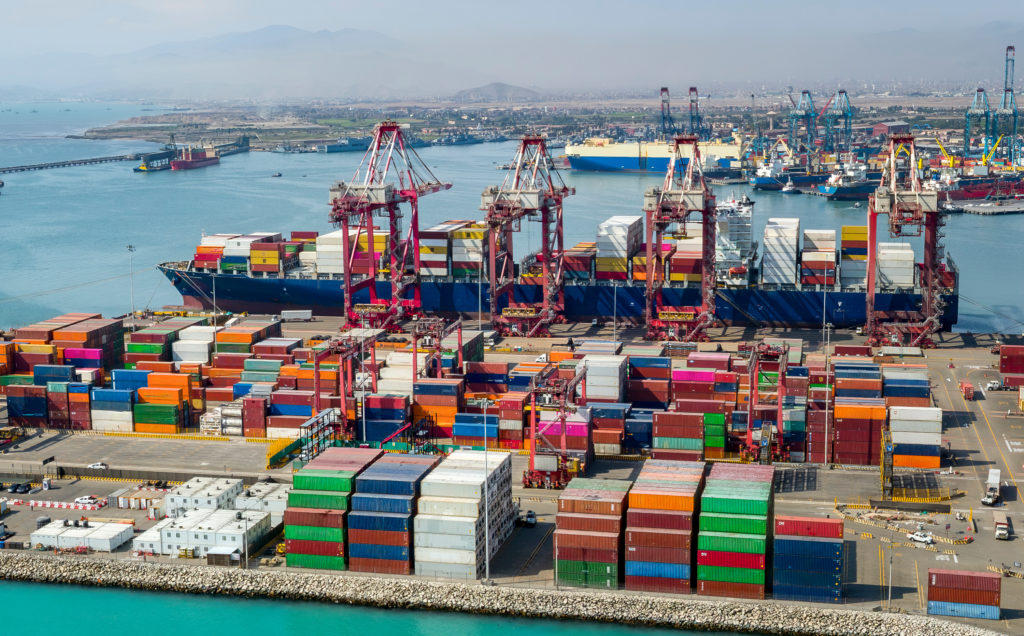 Port of Callao in Lima, Peru. Stock image.
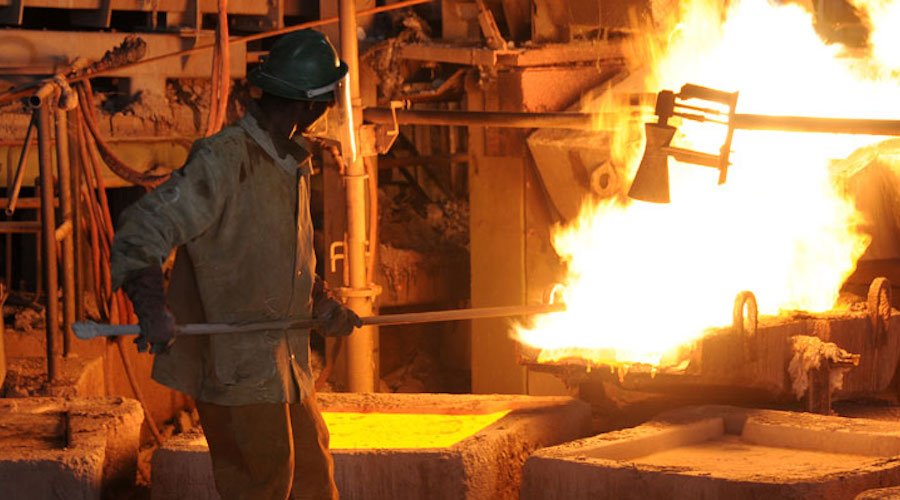 Konkola Copper Mines smelter. (Photo: Vedanta)
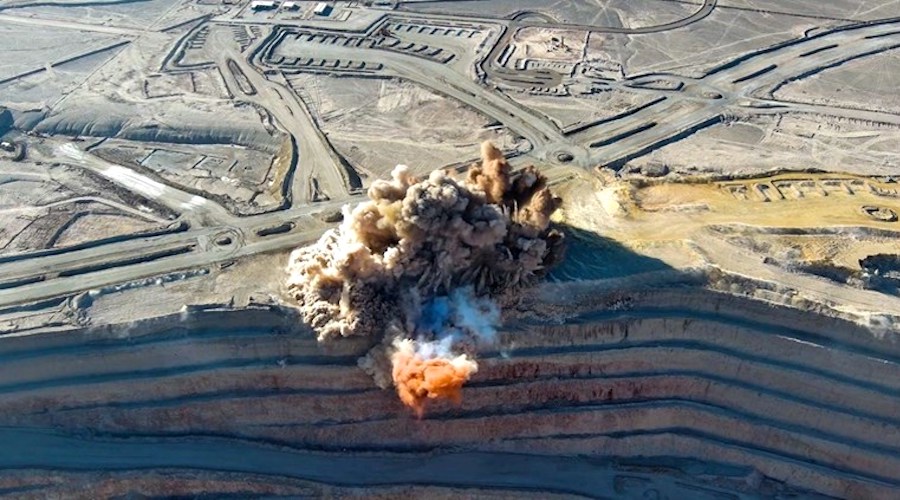 The Encuentro pit will serve as the main ore source for Centinela’s second concentrator. (Image courtesy of Antofagasta.)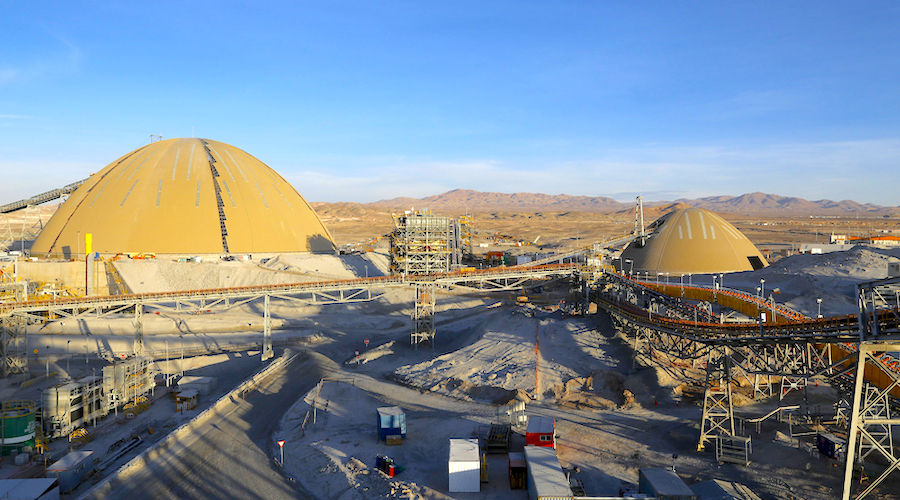
No comments:
Post a Comment