
By The Canadian Press
Updated: October 20, 2025

The Bank of Canada’s survey of businesses shows confidence across the country is still weak thanks largely to persistent trade uncertainty from the United States.
The central bank’s quarterly business outlook survey released Monday shows tariffs and lingering questions about the trade dispute are still holding many firms back from investing in their operations and expanding payrolls.
The Bank of Canada summarizes answers from its survey into a single indicator of business confidence and sales expectations. This measure improved marginally from the second quarter of the year – when the U.S. tariff campaign took full force – but was still well below historical averages.
Uncertainty remains the top concern cited among Canadian businesses, though relatively fewer are reporting worries about financial, economic and political conditions from the previous quarter. Cost pressures, slowing demand and taxes and regulations round out the top four concerns pressing businesses in the third quarter.
Firms are spending more on routine maintenance rather than growing their businesses, the survey reported.
Most exporters report their goods are still entering the U.S. tariff-free, but firms in the steel and aluminum industries are expressing doubt that overseas markets can offset the hit from higher duties in the U.S. market.
“Although some exports of primary aluminum have been redirected to Europe, these exporters view this strategy as an unsustainable alternative to U.S. market access because of concerns about long-term profitability,” the business outlook survey said.
Business in Saskatchewan also told the Bank of Canada that Chinese tariffs on canola and other agricultural products are weighing on their investment plans.
The survey showed nearly a third of businesses are now expecting a recession to hit Canada, up five percentage points from the last survey.
The Bank of Canada also released its related quarter survey of consumers on Monday showing tariffs are still weighing on Canadians’ finances.
That report showed two-thirds of Canadians are expecting a recession – “a much larger share than before the (trade) conflict began” – though most households feel their own financial health has improved from the previous quarter.
Businesses were reporting stronger consumer spending patterns compared to sharp lows at the beginning of the year. Lower interest rates from the Bank of Canada, cheaper gas prices and still-strong “Buy Canadian” demand was helping to offset lower sales from economic uncertainty, that survey reported.
The Bank of Canada’s overall consumer indicator improved in the third quarter but, like the measure for businesses, remains well below historical averages.
Dragging down this indicator was deteriorating confidence in the labour market.
Public sector workers reported a lower probability of leaving or finding a new job, which the report said could be linked to the federal government’s cost-cutting review.
The surveys which gauge business and consumer health come ahead of the Bank of Canada’s next interest rate decision set for Oct. 29.
This report by The Canadian Press was first published Oct. 20, 2025.
Canada offers tariff relief to some steel, aluminum products from US, China
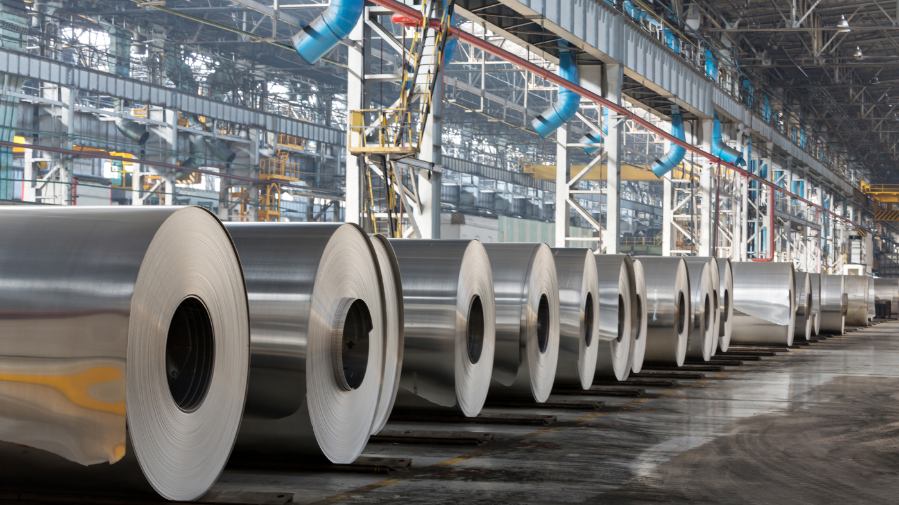
Canada offered tariff relief on some steel and aluminum products imported from the US and China, a government document showed, in efforts to help domestic businesses battered by a trade war on two fronts.

Prime Minister Mark Carney is negotiating with US President Donald Trump, who imposed tariffs on Canadian steel and aluminum. His team also met with Chinese counterparts last week in an effort to secure relief on Chinese tariffs on Canadian agricultural goods.
Canada’s economy has come under strain as the impact of tariffs on Canadian exports to the US and China has taken a toll. Carney has rolled back many of the retaliatory tariffs his predecessor imposed on US imports as he tries to strike a deal with Trump.
In an amendment to the surtax remission order of 2024 on Chinese imports, the Ministry of Finance granted remission on some steel and aluminum varieties imported from China that are not produced in Canada, a document issued on Friday showed.
The order came into effect on October 15 and more details regarding the remission order will be published on November 5, the ministry’s communication to the industry showed.
The ministry also exempted from tariffs some US steel and aluminum products primarily linked to public health, national security, manufacturing, agriculture and food packaging, the document said.
“The remission process is to protect people who are in the downstream sector … to deal with exceptional circumstances,” Finance Minister François-Philippe Champagne said in remarks to reporters on Monday.
He said these were a group of very specific products that are needed to enter Canada to maintain the supply chains and will not impact much in terms of how much counter-tariffs are being collected.
(By Promit Mukherjee and Divya Rajagopal; Editing by Mark Porter)
U.S. tariffs could ‘put us over the edge,’ says Canadian steel group
October 19, 2025

An industry leader from the Canadian Institute of Steel Construction says a plan is needed to confront the impacts of U.S. trade actions on Canadian steel and aluminum.
In March, the U.S. placed a 25 per cent tariff on Canadian steel and aluminum, with Canada then enforcing a 25 per cent retaliatory tariff on American steel.
The U.S. doubled its tariffs on Canadian steel and aluminum to 50 per cent in June.
Canada also has a 25 per cent tariff on Chinese steel and aluminum.
Recently, the federal government announced that some steel and aluminum from China and the U.S. would be exempt from Canadian tariffs.
Keanin Loomis, president and CEO of the Canadian Institute of Steel Construction, says with anxiety and fear of job losses in the industry, retaliation is important.
“We do have to stay strong and certainly exact as much pain as we can from the United States on this, but certainty we need a plan,” Loomis told CTV News Channel on Sunday.
“We need to have a real focus on domestic procurement while we’re trying to maintain our access to the U.S. markets. We need to know that projects that are being done here, infrastructure dollars that are being spent here, especially taxpayer dollars that are being spent here, are using Canadian fabricators and Canadian steel to the best extent possible.”
In May, federal Industry Minister Mélanie Joly wrote in a post on X that Canada is fighting the current tariffs with retaliatory ones, stating: “Our steel and aluminum workers and businesses deserve no less than our full commitment.”
Loomis says the impacts of the U.S. tariffs on Canadian steel and aluminum have been felt in the industry.
“I know that many of the steel producers in Canada have been really adamant to not lay off parts of their workforce, and thus far, we haven’t seen a lot,” he said. “But this might be the thing that puts us over the edge and calls into question the short to mid-term sustainability of our operations.”
Loomis says he is continuing to talk to U.S. counterparts, but the change will have to come from the U.S.
“Many (Americans) do not agree with this,” he said. “Everybody in the U.S. knows that tariffs are attacks, (and) really only a couple entities, these are steel producers in the U.S. who have outsized influence with the Trump administration, ... are going to be benefitting from this, at the expense of the rest of the U.S. and Canadian economy.”
“The change is going to come from the inside. It’s hard for us as Canada to exert the type of pressure that we need, but (we can) help Americans wake up to the fact that this is punishing them as much as it is us.”
Robin Della Corte
No comments:
Post a Comment