SPACE/COSMOS
As global warming worsens, so may space communications
Higher CO2 concentrations in the atmosphere increase the strength of sporadic-E and lower the altitude at which it occurs
Kyushu University
image:
Photo of the Earth with radio waves, depicted in purple, flowing across it. HF and VHF waves travel through the ionosphere. But a phenomenon called sporadic-E can interfere with these frequencies. Researchers found that as CO2 levels in our atmosphere rise, sporadic-E may become stronger, occur at lower altitudes, and persist longer at night.
view moreCredit: Huixin Liu/Kyushu University
Fukuoka, Japan—Researchers at Kyushu University have found that rising CO2 levels in our atmosphere could lead to future disruptions in shortwave radio communications, including systems used for air traffic control, maritime communication, and radio broadcasting.
While we know that increasing CO2 levels in our atmosphere causes global warming at Earth's surface, something different is happening in the ionosphere located 100 km above sea level. Up there, it’s cooling.
“This cooling doesn’t mean it is all good. It decreases the air density in the ionosphere and accelerates wind circulation,” explains Professor Huixin Liu of Kyushu University’s Faculty of Science, who led the study published in Geophysical Research Letters. “These changes affect the orbits and lifespan of satellites and space debris and also disrupt radio communications through localized small-scale plasma irregularities.”
One such irregularity is known as ‘sporadic-E' or ‘Es,’ a phenomenon where a dense layer of metal ions forms at an altitude of 90 to 120 km.
“As the name suggests, Es are sporadic and difficult to predict. However, when they occur, they can disrupt HF and VHF radio communications,” continues Liu. “Our results revealed that, at high CO₂ levels, Es tend to become stronger, occur at lower altitudes, and persist longer at night.”
Using a whole-atmosphere model, Liu and her team developed simulations of the upper atmosphere under two different CO2 concentrations: at normal concentrations of 315 ppm, and then at 667 ppm (the average atmospheric CO2 level in 2024 was 422.8 ppm). They then evaluated changes in vertical ion convergence (VIC), which drives Es.
Their simulations revealed that, at higher atmospheric CO2 levels, VIC is enhanced globally at altitudes of 100-120 km; the Es hotspots shift downward by approximately 5 km; and their diurnal patterns change. Further investigation revealed that these changes were caused by lower atmospheric density and wind disturbances.
“These findings are the first of its kind to show how increasing CO2 affects the occurrence of Es, revealing new insight into cross-scale coupling processes between neutral air and ionosphere plasma. In other words, they show how global climate-driven changes can impact small-scale plasma phenomena in space,” explains Liu. “Considering our findings, the telecommunications industry will need to develop a long-term vision that accounts for the impacts of global warming and climate change in their future operations. Global warming affects not just the Earth but extends well into space.”
###
For more information about this research, see "How does increasing CO2 concentration affect the ionospheric Sporadic-E formation?" Farhan Naufal Rifqi, Huixin Liu, Lihui Qiu, Chihiro Tao, Hiroyuki Shinagawa Geophysical Research Letters, https://doi.org/10.1029/2025GL117911
About Kyushu University
Founded in 1911, Kyushu University is one of Japan's leading research-oriented institutions of higher education, consistently ranking as one of the top ten Japanese universities in the Times Higher Education World University Rankings and the QS World Rankings. Located in Fukuoka, on the island of Kyushu—the most southwestern of Japan’s four main islands—Kyushu U sits in a coastal metropolis frequently ranked among the world’s most livable cities and historically known as Japan’s gateway to Asia. Its multiple campuses are home to around 19,000 students and 8,000 faculty and staff. Through its VISION 2030, Kyushu U will “drive social change with integrative knowledge.” By fusing the spectrum of knowledge, from the humanities and arts to engineering and medical sciences, Kyushu U will strengthen its research in the key areas of decarbonization, medicine and health, and environment and food, to tackle society’s most pressing issues.
Journal
Geophysical Research Letters
Method of Research
Experimental study
Subject of Research
Not applicable
Article Title
How does increasing CO2 concentration affect the ionospheric Sporadic-E formation?
Article Publication Date
23-Oct-2025
NTU Singapore scientists propose carbon-neutral data centres in space
Study shows how satellites could harness unlimited solar energy and the cold vacuum of space to power a greener digital future
Peer-Reviewed Publicationimage:
Corresponding author, NTU Prof Wen Yonggang (left) and co-author Prof Ong Yew Soon (right), at a research facility in the College of Computing and Data Science.
view moreCredit: NTU Singapore
Study shows how satellites could harness unlimited solar energy and the cold vacuum of space to power a greener digital future
An out-of-this-world idea: placing data centres in space could pave the way for sustainable computing with unlimited solar energy and free cooling, says scientists from Nanyang Technological University, Singapore (NTU Singapore).
The researchers outline a practical path to building carbon-neutral data centres in Low Earth Orbit (LEO), a concept particularly relevant to land-scarce cities like Singapore, where limited land and high real estate costs make conventional data centres increasingly expensive.
Published in the peer-reviewed journal Nature Electronics, the study presents a framework for how satellites equipped with advanced processors could serve as orbital edge and cloud data centres.
Led by NTU Associate Provost (Graduate Education) Professor Wen Yonggang, who is the Alibaba-NTU President's Chair in Computer Science and Engineering, the new paper asserts that space offers two unparalleled environmental advantages, virtually unlimited solar energy and natural radiative cooling enabled by the extreme cold temperatures.
Together, these conditions could enable orbital data centres to operate with net-zero carbon emissions. The timing is crucial, as AI-driven computing demand is projected to rise by 165 per cent by 2030[1].
In Singapore, data centres already account for about seven per cent of national electricity use, a figure expected to reach 12 per cent by 2030[2].
“Space offers a true sustainable environment for computing. We must dream boldly and think unconventionally, if we want to build a better future for humanity,” said Prof Wen, who also holds the role of Dean, Graduate College and is a faculty member from the College of Computing and Data Science.
“By harnessing the sun’s energy and the cold vacuum of space, orbital data centres could transform global computing. Our goal is to turn space into a renewable resource for humanity, expanding AI capacity without increasing carbon emissions or straining Earth’s limited land and energy resources,” explains Prof Wen, a serial innovator who first invented and demonstrated multi-screen casting technology in 2013, now widely used across computers, tablets, mobile phones and TVs.
Harnessing the physics of space for sustainability
Unlike Earth-based data centres that struggle with cooling and power demand, particularly in dense urban environments where both energy and land are limited, space facilities could rely entirely on sunlight for power and dissipate heat directly into deep space, which has an average temperature of 2.7 Kelvin (−270.45 degrees Celsius).
This makes space an ideal environment for high-performance computing. Low Earth Orbit (LEO), located roughly 160 to 2,000 kilometres above Earth, offers a cost-effective altitude already used by many commercial satellite systems.
The team has proposed two models in which this concept could work:
- Orbital Edge Data Centres – Imaging or sensing satellites equipped with AI accelerators could process raw data directly in orbit, transmitting only the essential processed information to Earth. This approach can reduce data transmission volumes by over a hundred times, significantly lowering energy consumption and latency.
- Orbital Cloud Data Centres – Constellations of satellites fitted with servers, broadband links, solar panels and radiative coolers could collectively perform complex computing tasks, from scientific simulations to AI model training.
The researchers noted that rather than building a single massive facility in space, these distributed constellations are technologically feasible with today’s satellite and computing advancements and could be scaled up over time.
To validate the carbon-neutral potential of such a system, the team worked with NTU deep tech spin-off Red Dot Analytics – co-founded by Prof Wen – to develop a digital twin model of the space-based data centre.
Their virtual model simulated expected power consumption, cooling and solar energy generation, showing that the cold vacuum of space will allow heat to be released more efficiently than on Earth.
Land scarcity and increasing costs of building data centres
The study notes that land and energy constraints make data centres costly in cities like Singapore, the world’s second most expensive market for such facilities[3], with costs averaging US$13.80 per watt of IT load or about US$11.7 million per megawatt.
High land prices, infrastructure costs and power-supply limits constrain physical expansion, prompting renewed interest in sustainable, space-efficient alternatives.
In contrast, orbital data-centre models avoid these constraints, requiring no physical land, minimal cooling infrastructure, and offering global scalability without geographical limitations.
Life-cycle sustainability and technological readiness
While rocket launches remain carbon-intensive, the NTU study introduces a new metric, life-cycle carbon usage effectiveness (CUE), which showed that solar-powered orbital data centres could offset their launch emissions within a few years of operation.
Advances such as reusable rockets, electrical slingshot launchers, radiation-hardened electronics and space-qualified chips are also accelerating progress.
Companies like AMD have already developed space-grade processors[4], while NTU’s deep-tech spin-off Zero Error Systems provides fault-tolerant semiconductor technology[5] that allows consumer-grade hardware to operate reliably in space.
NTU Vice President (Innovation and Entrepreneurship) Professor Louis Phee said the study reflects the innovative spirit that NTU nurtures in its students and scientists.
“To tackle humanity’s greatest challenges, we need creative and interdisciplinary researchers working hand in hand with entrepreneurs,” said Prof Phee.
“Over the past decade, NTU has built a strong foundation of patents and technology spin-offs that are poised to tap emerging trends such as sustainable computing and the space economy. These efforts are opening new markets for Singapore and reinforcing our leadership in sustainability and advanced computing.”
This research reflects NTU Singapore’s commitment to addressing global challenges through innovation and sustainable technologies, as part of its Sustainability Manifesto.
NTU is ranked 5th globally and 1st in Asia for the subject of Data Science and Artificial Intelligence in the 2025 QS World University Rankings by Subject.
The research was supported in part by multiple funding sources, including the Gopalakrishnan-NTU Presidential Postdoctoral Fellowship awarded to first author Dr Ablimit Aili, A*STAR MTC Programmatic Project, National Research Foundation, Singapore (NRF) and the Alibaba-NTU Global e-Sustainability CorpLab (ANGEL).
###
[1] Goldman Sachs Research. (2025, February 4). AI to drive 165% increase in data centre power demand by 2030. Goldman Sachs Insights. https://www.goldmansachs.com/insights/articles/ai-to-drive-165-increase-in-data-center-power-demand-by-2030.html
[2] Infocomm Media Development Authority (IMDA). (2025, February). Turning the red dot, green: Helping data centres get better at staying cool. IMDA Blog. https://www.imda.gov.sg/resources/blog/blog-articles/2025/02/red-dot-analytics-help-data-centres-be-cool
[3] Singapore Business Review. (2024, October 9). Singapore emerges as the world’s 2nd most expensive data centre market. Singapore Business Review. https://sbr.com.sg/information-technology/news/singapore-emerges-worlds-2nd-most-expensive-data-centre-market
[4] AMD. (2022, November 15). AMD announces completion of Class B qualification for first space-grade Versal adaptive SoCs enabling on-board AI processing in space. AMD Newsroom. https://www.amd.com/en/newsroom/press-releases/2022-11-15-amd-announces-completion-of-class-b-qualification-.html
[5] Zero Error Systems. (2025, February 27). ZES debuts radiation-tolerant System-on-Module for space applications. Zero Error Systems. https://zero-errorsystems.com/zes-debuts-radiation-tolerant-system-onmodule-for-space/
A proposed framework of how space-based data centres could work for edge computing and cloud computing.
Credit
NTU Singapore
Corresponding author, NTU Prof Wen Yonggang (right) and co-author Prof Ong Yew Soon (left), discussing the concept of orbital data centres as compared to a conventional data centre that they are currently in.
Credit
NTU Singapore
Journal
Nature Electronics
Method of Research
Computational simulation/modeling
Article Title
The development of carbon-neutral data centres in space
Article Publication Date
27-Oct-2025
Spain completes its 'most ambitious space project' with the launch of the satellite SpainSat NG II
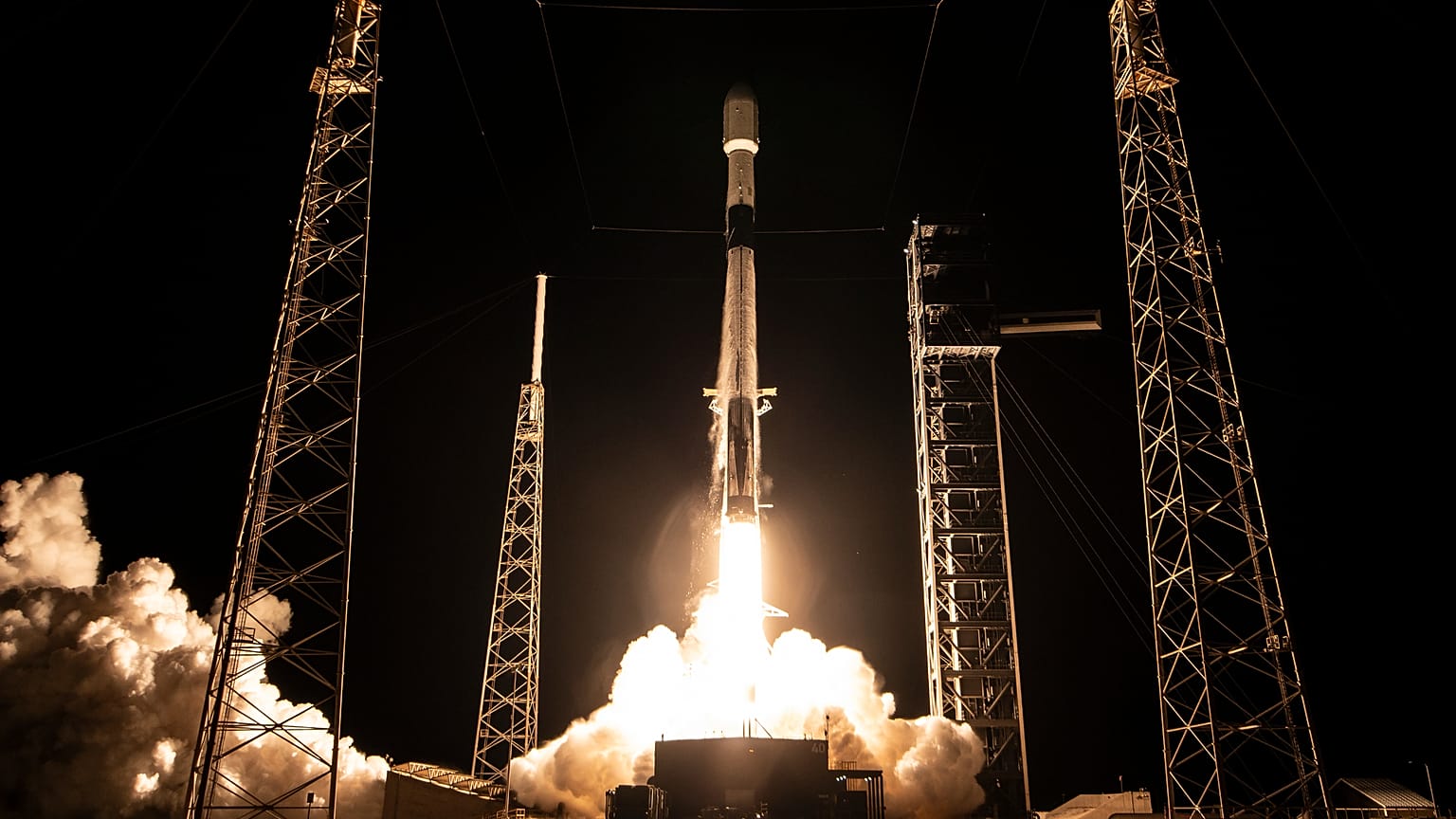
The SpainSat NG II satellite successfully took off from Cape Canaveral aboard a SpaceX Falcon 9. With it, Spain completes its SPAINSAT NG secure communications programme and reinforces its role as a technological and strategic reference in space.
The SpainSat NG II secure communications satellite took off on Friday from the Cape Canaveral base in Florida (USA) aboard a SpaceX Falcon 9 rocket, after a slight technical delay.
Its launch into orbit marks a new milestone in the Spanish space race, completing the SPAINSAT NG Programme constellation, considered the most ambitious space project in the country's history due to its complexity and the extensive participation of Spanish industry.
A large Spanish delegation made up of representatives from the Ministry of Defence, the Armed Forces, Hisdesat, the company that owns and operates the satellite, and companies from the aerospace sector, responsible for more than 45 per cent of the industrial development of the device, travelled to the launch centre.
Airbus, which built SpainSat NG-II, said in a press release the launch of this second satellite "completes the SpainSat NG programme, the most ambitious space project in Spain's history and the most advanced government communications system in Europe".
The launch, initially scheduled for Thursday, was postponed for a day due to a technical problem with the rocket. SpaceX repaired a damaged safety system cable in time, allowing the schedule to remain on schedule with only a 24-hour delay.
At more than six tonnes in weight and 7.3 metres high, SpainSat NG II is among the world's most advanced communications satellites. It offers secure and resilient capabilities for the Spanish Armed Forces, NATO, the European Commission and allied countries.
According to Hisdesat's CEO, Miguel Ángel García Primo, the satellite has passed all the pre-flight tests. After its launch, it will travel for five to six months until it reaches its geostationary position, some 36,000 kilometres from Earth.
SpainSat NG II is the 'twin' of SpainSat NG I, launched last January. Together they will form a constellation covering nearly two-thirds of the planet, from the Americas to Asia, including Europe, Africa and the Middle East.
Both satellites incorporate pioneering technologies: state-of-the-art antennas, protection systems against interference and cyberattacks, and reinforced shields against nuclear phenomena in the upper atmosphere.
With this mission, Spain consolidates its technological sovereignty and strengthens Europe's strategic autonomy in secure satellite communications, placing it among the global leaders in the aerospace sector.
Coronal mass ejections at the dawn of the solar system
Young stars ejecting plasma could give us clues into the Sun's past
Kyoto University
image:
Artist's depiction of a coronal mass ejection from EK Draconis. The hotter and faster ejection is shown in blue, while the cooler and slower ejection is shown in red.
view moreCredit: NAOJ
Kyoto, Japan -- Down here on Earth we don't usually notice, but the Sun is frequently ejecting huge masses of plasma into space. These are called coronal mass ejections (CMEs). They often occur together with sudden brightenings called flares, and sometimes extend far enough to disturb Earth's magnetosphere, generating space weather phenomena including auroras or geomagnetic storms, and even damaging power grids on occasion.
Scientists believe that when the Sun and the Earth were young, the Sun was so active that these CMEs may have even affected the emergence and evolution of life on the Earth. In fact, previous studies have revealed that young Sun-like stars, proxies of our Sun in its youth, frequently produce powerful flares that far exceed the largest solar flares in modern history.
Huge CMEs from the early Sun may have severely impacted the early environments of Earth, Mars, and Venus. However, to what extent explosions on these young stars exhibit solar-like CMEs remains unclear. In recent years, the cool plasma of CMEs has been detected by optical observations on the ground. However, the high velocity and expected frequent occurrence of strong CMEs in the past have remained elusive.
In order to resolve this problem, an international team of researchers, including Kosuke Namekata of Kyoto University, sought to test whether young Sun-like stars produce solar-like CMEs.
"What inspired us most was the long-standing mystery of how the young Sun's violent activity influenced the nascent Earth," says Namekata. "By combining space- and ground-based facilities across Japan, Korea, and the United States, we were able to reconstruct what may have happened billions of years ago in our own solar system."
The team's analysis included simultaneous ultraviolet observations by the Hubble Space Telescope and optical observations by ground-based telescopes in Japan and Korea. Their target was the young solar analogue EK Draconis. Hubble observed far-ultraviolet emission lines sensitive to hot plasma, while the three ground-based telescopes simultaneously observed the hydrogen Hα line, which traces cooler gases. These simultaneous, multi-wavelength spectroscopic observations allowed the research team to capture both the hot and cool components of the ejection in real time.
These observations led to the first evidence of a multi-temperature coronal mass ejection from EK Draconis. The team found that hot plasma of 100,000 degrees Kelvin was ejected at 300 to 550 kilometers per second, followed about ten minutes later by a cooler gas of about 10,000 degrees ejected at 70 kilometers per second. The hot plasma carried much greater energy than cool plasma, suggesting that frequent strong CMEs in the past could drive strong shocks and energetic particles capable of eroding or chemically altering early planetary atmospheres.
Theoretical and experimental studies support the critical role that strong CMEs and energetic particles can play in initiating biomolecules and greenhouse gases, which are essential for the emergence and maintenance of life on an early planet. Therefore, this discovery has major implications for understanding planetary habitability and the conditions under which life emerged on Earth, and possibly elsewhere.
The research team noted that the success of this study was achieved through international teamwork and precise coordination between space- and ground-based observatories.
"We were happy to see that, although our countries differ, we share the same goal of seeking truth through science," says Namekata.
###
The paper "Discovery of multi-temperature coronal mass ejection signatures from a young solar analogue" appeared on 27 October 2025 in Nature Astronomy, with doi: 10.1038/s41550-025-02691-8
About Kyoto University
Kyoto University is one of Japan and Asia's premier research institutions, founded in 1897 and responsible for producing numerous Nobel laureates and winners of other prestigious international prizes. A broad curriculum across the arts and sciences at undergraduate and graduate levels complements several research centers, facilities, and offices around Japan and the world. For more information, please see: http://www.kyoto-u.ac.jp/en
Journal
Nature Astronomy
Method of Research
Data/statistical analysis
Subject of Research
Not applicable
Article Title
Discovery of multi-temperature coronal mass ejection signatures from a young solar analogue
Article Publication Date
27-Oct-2025
In global collaboration, IU scientists unlock secrets to the building blocks of the universe
Researchers are one step closer to answering one of the biggest questions in science: why is the universe filled with matter instead of nothing?
Scientists at Indiana University have achieved a breakthrough in understanding the universe thanks to a collaboration between two major international experiments studying neutrinos, which are ubiquitous, tiny particles that stream through everything in space but barely interact with anything around them. The results, published in the journal Nature, bring researchers closer to answering one of the biggest questions in science: why is the universe filled with matter, such as stars, planets, and life, instead of nothing?
The discovery stems from a first-of-its-kind joint analysis between the NOvA experiment in the United States and T2K in Japan, two of the world’s most advanced long-distance neutrino experiments. Together, the projects are helping scientists peer into the invisible world of neutrinos and their antiparticles, shedding light on why the universe did not annihilate itself in the first instant after the Big Bang.
In both experiments, neutrinos are fired from particle accelerators and detected after traveling long distances underground. The challenge is immense: out of trillions upon trillions of particles, only a handful leave detectable traces. Sophisticated detectors and software then reconstruct these rare events, providing clues about how neutrinos transform as they move.
The study reflects IU’s decades of leadership in particle physics. IU researchers have played key roles in building detector components, analyzing data, and training early-career scientists. Mark Messier, Distinguished Professor and Chair of the Physics department within the College of Arts and Sciences at IU Bloomington, has occupied leadership roles with the project since 2006. Also involved in the project from IU are physicists Jon Urheimand James Musser (Emeritus), Astronomy Professor Stuart Mufson (Emertius), and Jonathan Karty in the Chemistry department in the College at IU.
Tiny Particles, Enormous Questions
Neutrinos are among the most abundant particles in the universe. They have no electric charge and nearly no mass, making them extraordinarily difficult to detect. But that same elusiveness makes them scientifically priceless.
Understanding neutrinos could help explain one of the greatest puzzles in cosmology: why the universe is made of matter. Theoretically, the Big Bang should have produced equal parts matter and antimatter, which would have annihilated each other completely; when a particle meets its mirror opposite, both disappear in a burst of energy. But when the Big Bang occurred something tipped the balance, creating a greater abundance of matter, which led to the formation of stars, galaxies, and life today.
Physicists suspect that neutrinos may hold the answer. Neutrinos come in three types, or “flavors,” electron, muon, and tau, essentially three versions of the same tiny particle. Neutrinos possess the unusual ability to oscillate and transform from one “flavor” to another as they travel through space, and the way these oscillations occur, and whether they differ between neutrinos and their antimatter counterparts, could reveal why matter won out over antimatter in the early universe.
Uniquely, the new Nature study combines data from two of the world’s premier neutrino observatories. NOvA (the NuMI Off-axis νe Appearance experiment) sends a beam of neutrinos through the Earth 810 kilometers from its source at the Fermi National Accelerator Laboratory near Chicago to a 14,000-ton detector in Ash River, Minnesota. Japan’s T2K shoots a beam of neutrinos 295 kilometers from the J-PARC accelerator in Tokai to the giant Super-Kamiokande detector under Mount Ikenoyama.
Why? Analyzing data jointly from both experiments significantly improves scientists’ ability to pin down how neutrinos behave, a task that has challenged researchers for decades. This is important because, according to a press release from Nature, “Combining the analyses takes advantage of the complementary sensitivities of the two experiments and demonstrates the value of collaboration.” With NOvA using a longer baseline through Earth, and T2K using a shorter but more intense beam, researchers were able to cross-check their findings with unprecedented precision.
By merging their datasets, the research teams achieved a more accurate measurement of the parameters that govern neutrino oscillation, especially those related to detected asymmetry between neutrinos and antineutrinos. The joint study’s results focus on something called CP symmetry (charge-parity symmetry), reflecting the idea that matter and antimatter should behave like perfect mirror images; the rules of physics should stay exactly the same for both.
But that’s not what scientists observe, because the universe is made almost entirely of matter, with hardly any antimatter left behind from the Big Bang. The study’s results suggest an imbalance in how neutrinos and antineutrinos oscillate, suggesting they violate CP symmetry. Meaning, neutrinos may act differently from their antimatter twins, and that hint could be the first step toward explaining why our universe contains matter at all.
“We’ve made progress on this really big, seemingly intractable question: why is there something instead of nothing?” said Professor Messier. “And, we’ve set the stage for future research programs that aim to use neutrinos to tackle other questions.”
The work underscores how large-scale scientific projects pay dividends well beyond physics. The technologies developed to detect neutrinos, from high-speed electronics to advanced data processing, find applications downstream in industry. The joint study is funded by a grant from the U.S. Department of Energy.
“There has been transformative technological innovation across all sectors of society that’s come out of high-energy physics,” noted Messier. “Further, next-generation scientists immerse themselves in data science, in machine learning, artificial intelligence, and in electronics, and then go into industries with the deep skills they’ve gained while trying to answer these really difficult questions.”
The NOvA and T2K teams include hundreds of scientists from more than a dozen countries, representing a global partnership spanning the U.S., Europe, and Japan. The combined analysis highlights the positive outcomes when scientists share resources and expertise.
In this light, IU Ph.D. students currently involved in the joint study include Reed Bowles, Alex Chang, Hanyi Chen, Erin Ewart, Hannah LeMoine, and Maria Manrique-Plata. Moreover, Messier and colleagues have supervised numerous IU graduate and undergraduate students on NOvA since the experiment started in 2014.
This collaboration offers a glimpse of how future major experiments in particle physics may operate. For Indiana University and its partners, the discovery paves the way for research that expands on the joint study’s findings.
“As a physicist I find it fascinating that a huge question, like why there’s matter in the universe instead of antimatter, can be broken down into smaller, step-by-step questions,” said Messier. “Instead of being dumbstruck by the enormity of it, we can actually make progress toward an answer about why we’re here in the universe.”
Journal
Nature
Article Title
Joint neutrino oscillation analysis from the T2K and NOvA experiments
Article Publication Date
22-Oct-2025
Andreas Kaufer appointed as next ESO Director General
ESO
image:
Andreas Kaufer, Director of Operations, in front of the Very Large Telescope's Unit Telescope 2.
view moreCredit: ESO/Max Alexander
The Council of the European Southern Observatory (ESO) has appointed Andreas Kaufer to be the new ESO Director General. Kaufer, who is currently ESO Director of Operations, will succeed Xavier Barcons, who will remain as Director General until the end of August 2026.
“We are delighted that Andreas Kaufer has accepted the position of the next Director General of ESO. As someone who has been steering ESO operations for over 17 years, he is ideally suited to lead the organisation in the coming years, which will see the completion of ESO’s Extremely Large Telescope (ELT) and the search for the next innovative ESO programme,” says President of ESO Council Tom Ray.
He added: “I am grateful that Xavier Barcons has tirelessly led this organisation since September 2017 and will continue to do so in the coming months. He has ensured enormous progress on a variety of ESO projects, particularly on the construction of the ELT, while effectively addressing many challenges.”
Andreas Kaufer, who was born in Heidelberg, Germany, will succeed Xavier Barcons in September 2026. Kaufer received a PhD in astronomy from Heidelberg University in 1996 and then worked at the Heidelberg State Observatory, building astronomical instruments and doing research in the fields of variable atmospheres of massive stars and in the chemical evolution of galaxies. He joined ESO in 1999, first contributing to the startup of operations of the then newly built Very Large Telescope. He became Director of the La Silla Paranal Observatory in 2006 and has been Director of Operations at ESO since 2008, a role in which he is responsible for the end-to-end operations of the ESO observatories in Chile and the European segment of the ALMA operation.
“I am extremely pleased that the ESO Council selected Andreas Kaufer to lead ESO in the coming years,” says Barcons. “Having worked closely with him during my tenure, I know Andreas is a very capable, reliable, visionary and humble leader who is extremely dedicated to this organisation. He will undoubtedly guide ESO well through the successes and challenges the next few years will bring.”
“I feel very honoured to take on the leadership of ESO, following Xavier’s excellent tenure,” says Kaufer. “I am committed to enabling the highest quality research by keeping ESO at the forefront of technology, delivering the ELT to completion, and protecting the unique sites in Chile that make it all possible. I also look forward to discovering what the search for the next ESO programme will bring and to working together with ESO’s committed, world-class staff, in Chile and Germany, in the years to come.”
More information
The European Southern Observatory (ESO) enables scientists worldwide to discover the secrets of the Universe for the benefit of all. We design, build and operate world-class observatories on the ground — which astronomers use to tackle exciting questions and spread the fascination of astronomy — and promote international collaboration for astronomy. Established as an intergovernmental organisation in 1962, today ESO is supported by 16 Member States (Austria, Belgium, Czechia, Denmark, France, Finland, Germany, Ireland, Italy, the Netherlands, Poland, Portugal, Spain, Sweden, Switzerland and the United Kingdom), along with the host state of Chile and with Australia as a Strategic Partner. ESO’s headquarters and its visitor centre and planetarium, the ESO Supernova, are located close to Munich in Germany, while the Chilean Atacama Desert, a marvellous place with unique conditions to observe the sky, hosts our telescopes. ESO operates three observing sites: La Silla, Paranal and Chajnantor. At Paranal, ESO operates the Very Large Telescope and its Very Large Telescope Interferometer, as well as survey telescopes such as VISTA. Also at Paranal, ESO will host and operate the south array of the Cherenkov Telescope Array Observatory, the world’s largest and most sensitive gamma-ray observatory. Together with international partners, ESO operates ALMA on Chajnantor, a facility that observes the skies in the millimetre and submillimetre range. At Cerro Armazones, near Paranal, we are building “the world’s biggest eye on the sky” — ESO’s Extremely Large Telescope. From our offices in Santiago, Chile we support our operations in the country and engage with Chilean partners and society.
No comments:
Post a Comment