A Woman’s Turn To Lead The UN – OpEd
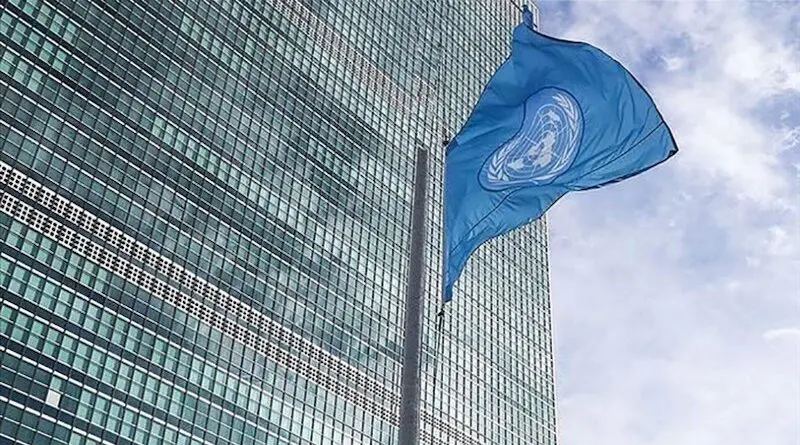
United Nations flag. Photo Credit: Tasnim News Agency
October 16, 2025
By Simon Hutagalung
The United Nations exists at a vital point in its development. The organisation stands at a critical point because Secretary-General António Guterres will soon finish his term, while the organisation needs to resolve its built-in conflicts.
For nearly eight decades, the UN has championed gender equality as a fundamental tenet of human rights and development; nevertheless, its highest office has remained exclusively male. The gap between what the UN stands for and what it does creates a credibility crisis that worsens because of deteriorating global governance systems. The appointment of a female Secretary-General would represent progress because it would align the UN leadership structure with its declared values. The United Nations now has a critical chance to advance gender equality through selecting its first female Secretary-General who will break the tradition of male leadership and demonstrate its dedication to universal participation in global decision-making.
The Secretary-General position remains empty of female candidates because of established discriminatory practices. Since 1945, nine different men from different parts of the world have held this position, although numerous highly qualified women who have headed UN agencies and peacekeeping missions and national governments have been excluded from consideration. The pattern shows an existing global system problem because international system leadership positions emerge from political agreements instead of performance-based selection or representative participation. The United Nations faces an intense credibility crisis regarding gender equality because it demands member states to advance women’s empowerment in political and business sectors and civil society, yet the organisation does not apply this principle to its leadership positions. The institution loses its moral power because of this contradiction which weakens its ability to promote women’s rights in areas where these rights face opposition.
The issue is further complicated by the symbolic significance of the Secretary-General’s office. The chief administrative officer position receives this title, but it exercises significant power through soft power mechanisms. The Secretary-General leads international diplomacy through their leadership, which establishes global priorities and provides ethical direction during emergencies. The lack of female leaders in this position maintains the false impression that global governance operates mainly under male leadership, which supports patriarchal systems instead of transforming them. Research conducted in political science and organisational studies shows that leadership groups with diverse members achieve better conflict resolution and negotiation results and develop more innovative long-term policies. The international community faces a loss of complete leadership diversity because women continue to be barred from leading the UN.
Nonetheless, the pathway to appointing a female Secretary-General is fraught with challenges. The selection process operates with no transparency because the Security Council exercises control through its veto power, which belongs to its five permanent members. This framework enables geopolitical interests to overshadow considerations of gender equality and institutional reform. A female candidate who presents an alternative vision for the UN will face opposition because her approach challenges existing power structures. The selection process has operated through a regional rotation system since its beginning while following an informal policy to shift the position between various global areas. The principle of geographic diversity protects female candidates from marginalisation because it guarantees their region will have an opportunity to run for office. The integration of gender and geopolitical elements produces a major challenge.
The situation becomes more difficult because of cultural and political resistance. Member states that operate under patriarchal systems create challenges for the United Nations because some people doubt women’s ability to lead the organisation. The UN system encounters bureaucratic obstacles which prevent it from making necessary changes. The public would observe a female Secretary-General through a gendered lens because people would judge her leadership style based on preconceived notions about women. Organisations practice tokenism when they appoint women to leadership roles for equality purposes but fail to grant them the power to create meaningful organisational transformations. Such an outcome would not only fail to advance gender justice but could also engender cynicism regarding the UN’s commitment to its own ideals.
The selection of a female Secretary-General continues to be justified by both moral and operational considerations. The issue falls under the category of justice according to normative standards. The UN demonstrates no real backing for gender equality because it maintains male leaders in positions of power. Strategically, it pertains to effectiveness. Women leaders have proven themselves to be highly effective in peacebuilding and humanitarian response and international negotiation. The world has seen transformation through female leadership because of prominent figures including Gro Harlem Brundtland and Ellen Johnson Sirleaf and Michelle Bachelet. The careers of these women show that qualified female candidates do exist, yet political leaders fail to demonstrate the commitment needed to advance them.
The broader system of worldwide governance confirms this finding. The international system now experiences a legitimacy crisis because of increasing nationalistic movements and international power struggles, and decreasing confidence in global organisations. The United Nations receives criticism because of its slow pace of operation and its bureaucratic structure, which separates it from everyday people’s experiences. The appointment of a female Secretary-General would send a strong signal about UN reform, but it would not fix the existing structural issues right away. The message would connect with younger people because they view gender equality as an essential matter of justice and legitimacy.
The selection process for the following Secretary-General needs to be based on a transparent and inclusive system which selects a woman leader who demonstrates both qualifications and leadership abilities to implement reform and vision. Member states need to move beyond treating gender equality as a symbolic gesture because it serves as an essential strategic requirement. The selection process requires continuous monitoring from civil society groups and regional organisations, and the global media, to stop qualified female candidates from being removed through hidden political arrangements. The selection of a female Secretary-General would solve historical gender discrimination and bring back the United Nations’ ethical reputation, which needs urgent improvement. The United Nations stands at a critical point because it needs to demonstrate leadership through its own actions to preserve its position as the protector of human rights and equality. The time for a woman in this pivotal role is now, not in some distant future.
The opinions expressed in this article are the author’s own.
References
Heymann, J., Sprague, A., & Raub, A. (2025). National Action to Reduce Barriers to and Bias against Women’s Leadership: A Comparative Analysis of Laws and Policies in 193 Countries. Journal of Comparative Policy Analysis Research and Practice.
Herten-Crabb, A., Mũrage, A., Smith, J., & Wenham, C. (2025). An opportunity for gender transformation? UN Women’s policy response to COVID-19. Global Public Health.
UN Women. (2025). Gender equality in 2025: Gains, gaps, and the USD 342 trillion choice. UN Women.

Simon Hutagalung
Simon Hutagalung is a retired diplomat from the Indonesian Foreign Ministry and received his master's degree in political science and comparative politics from the City University of New York. The opinions expressed in his articles are his own.
No comments:
Post a Comment