France raised its bird flu alert to the highest level on Wednesday after a rise in new cases in poultry and backyard flocks, triggering stricter biosecurity rules including the confinement of birds.
Issued on: 22/10/2025 - RFI

France has raised its bird flu alert to the highest level following new outbreaks in poultry and wild birds. AP - Bob Edme
A government decree in the Journal officiel confirmed the risk level will move from “moderate” to “high”, the top tier in the national alert system.
The move means poultry must now be sheltered and protected from contact with wild birds – an early precaution compared with previous years.
Authorities said the decision was prompted by “the dynamic spread of highly pathogenic avian influenza (HPAI) in migratory flyways crossing France”, with new cases detected among migratory wild birds on French territory.
Officials warned these birds could pass the virus to domestic flocks.
In just 10 days, five outbreaks of HPAI have been confirmed across the country – two on commercial poultry farms and three in smaller backyard holdings. The new decree aims to “reinforce surveillance and prevention measures” to limit further spread.
Hundreds of geese slaughtered as bird flu grips France's Dordogne
A government decree in the Journal officiel confirmed the risk level will move from “moderate” to “high”, the top tier in the national alert system.
The move means poultry must now be sheltered and protected from contact with wild birds – an early precaution compared with previous years.
Authorities said the decision was prompted by “the dynamic spread of highly pathogenic avian influenza (HPAI) in migratory flyways crossing France”, with new cases detected among migratory wild birds on French territory.
Officials warned these birds could pass the virus to domestic flocks.
In just 10 days, five outbreaks of HPAI have been confirmed across the country – two on commercial poultry farms and three in smaller backyard holdings. The new decree aims to “reinforce surveillance and prevention measures” to limit further spread.
Hundreds of geese slaughtered as bird flu grips France's Dordogne
Early warning
France classifies bird flu risk in three categories – negligible, moderate and high. The level had remained “negligible” since May before being raised to “moderate” last week.
This year’s shift to the highest alert comes earlier than usual. In previous seasons, it was typically activated in November or December.
Under the “high risk” designation, birds must be sheltered indoors or protected by nets. On larger farms with more than 50 birds, feeding and watering systems must also be covered to prevent contamination from wild species.
Smaller flocks must be either confined or kept under netting.
Since October 2023, France has slightly eased certain confinement rules to ease the strain on free-range producers.
Poultry farmers raising chickens and guinea fowl can, from eight weeks of age, and turkeys from 10 weeks, let their birds outside – but only in restricted areas and without needing prior approval from local authorities.
Laying hens kept outdoors may also continue to roam within a reduced enclosure, provided farmers obtain the green light from their regional prefecture.
Europe in midst of worst ever bird flu outbreak, authorities warn
A Europe-wide concern
According to the European health surveillance platform ESA, 37 outbreaks of avian influenza were reported in poultry holdings across the EU between 1 August and 12 October, with additional cases since then – including several in France.
While the jump to “high risk” status will add new constraints for French farmers, officials hope early action will prevent a repeat of the devastating waves of bird flu seen in recent years.
With tighter monitoring and earlier containment, authorities aim to keep both flocks and consumers safe as migratory birds begin their autumn journeys.
(with newswires)
Taiwan detects first cases of swine fever
Taipei (AFP) – Taiwan has culled dozens of pigs after detecting its first cases of African swine fever, with the agriculture ministry saying Thursday no other infections have been detected elsewhere on the island.
Issued on: 23/10/2025 - FRANCE24
Taipei (AFP) – Taiwan has culled dozens of pigs after detecting its first cases of African swine fever, with the agriculture ministry saying Thursday no other infections have been detected elsewhere on the island.
Issued on: 23/10/2025 - FRANCE24
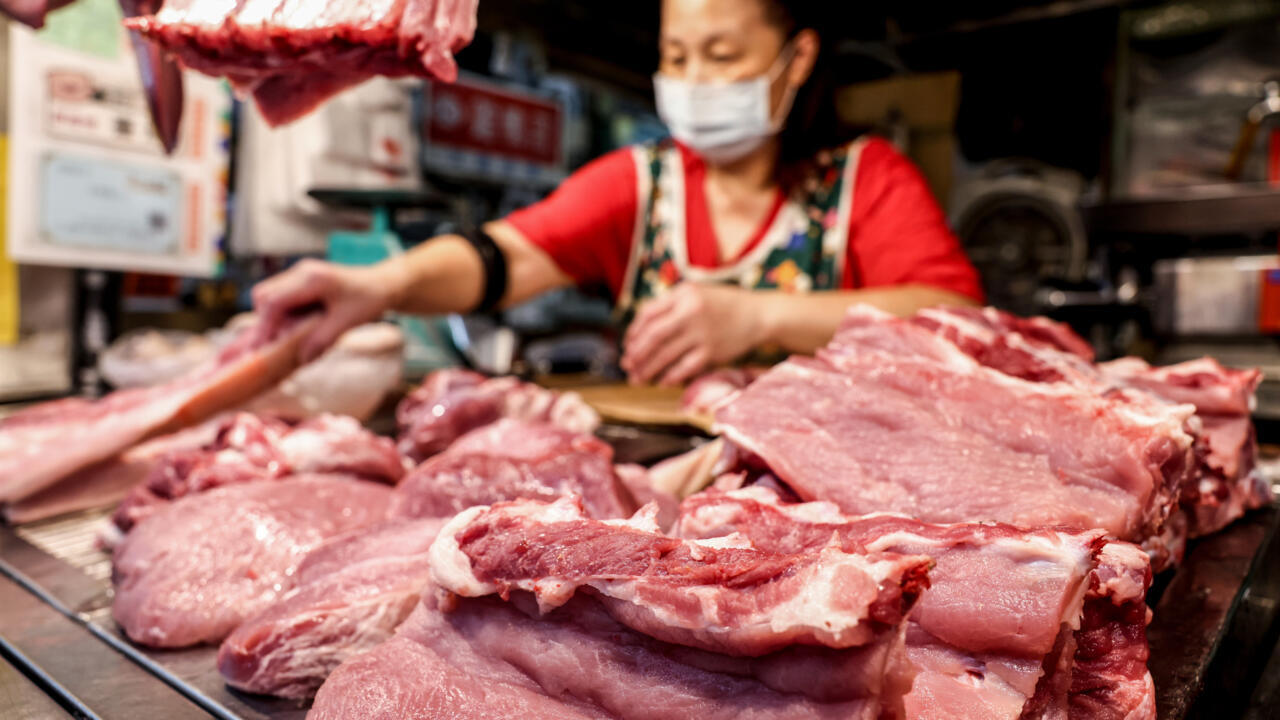
A vendor cuts meat at a pork stall at a local traditional market in Keelung. Taiwan has culled dozens of pigs after detecting its first cases of African swine fever © I-Hwa Cheng / AFP
The virus -- which does not affect humans -- is highly contagious and fatal for pigs, and an outbreak is potentially devastating for the pork industry, experts say.
"No abnormalities have been observed (elsewhere) so far," Deputy Agriculture Minister Tu Wen-jane told a news conference in the central city of Taichung where the infections were detected.
Samples of dead pigs at a farm in Wuqi district tested positive for swine fever this month and 195 pigs were culled, the ministry said Wednesday.
Taichung authorities were tracing the whereabouts of 28 pigs from the farm that were sold in markets, Lin Nien-nung, from the ministry's Animal and Plant Health Inspection Agency, said Thursday.
The ministry said a three-kilometre (nearly two-mile) "control zone" was set up to prevent the infection from spreading, while the transport and slaughter of pigs across the island is banned for five days.
Taiwan has around five million pigs and the pork industry generates about NT$70 billion (US$2.3 billion) a year, official data show.
President Lai Ching-te has urged the public to "not panic" and called on local governments, livestock associations and pig farmers to be "highly vigilant".
"If any abnormal deaths or suspected animal infections are found among pigs, please immediately report them to the local animal quarantine authorities," Lai said in a Facebook post.
© 2025 AFP
The virus -- which does not affect humans -- is highly contagious and fatal for pigs, and an outbreak is potentially devastating for the pork industry, experts say.
"No abnormalities have been observed (elsewhere) so far," Deputy Agriculture Minister Tu Wen-jane told a news conference in the central city of Taichung where the infections were detected.
Samples of dead pigs at a farm in Wuqi district tested positive for swine fever this month and 195 pigs were culled, the ministry said Wednesday.
Taichung authorities were tracing the whereabouts of 28 pigs from the farm that were sold in markets, Lin Nien-nung, from the ministry's Animal and Plant Health Inspection Agency, said Thursday.
The ministry said a three-kilometre (nearly two-mile) "control zone" was set up to prevent the infection from spreading, while the transport and slaughter of pigs across the island is banned for five days.
Taiwan has around five million pigs and the pork industry generates about NT$70 billion (US$2.3 billion) a year, official data show.
President Lai Ching-te has urged the public to "not panic" and called on local governments, livestock associations and pig farmers to be "highly vigilant".
"If any abnormal deaths or suspected animal infections are found among pigs, please immediately report them to the local animal quarantine authorities," Lai said in a Facebook post.
© 2025 AFP
No comments:
Post a Comment