UK
Half-way point in rail nationalisation as Greater Anglia returns to public hands
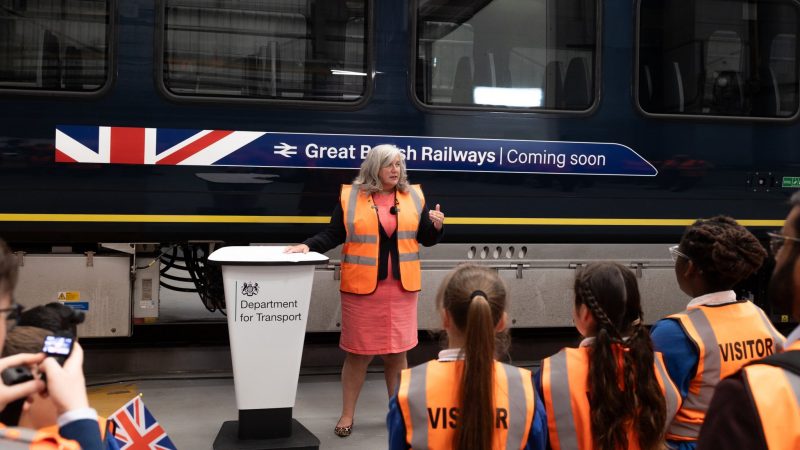
Train services operated by Greater Anglia will be brought into public ownership this weekend, marking the half-way point in the nationalisation of the nation’s rail network.
Public ownership of the railways was one of the key pledges Labour made upon its return to office last year, with promises to improve services and drive down fares.
As Greater Anglia services transfer into public ownership on Sunday, almost half of rail passenger journeys that Great British Railways will ultimately be responsible for will be operated by publicly owned companies.
The rail operator, which covers routes across the East of England and parts of London, boasts being the country’s most punctual service.
Transport Secretary Heidi Alexander said: “From this Sunday, passengers commuting into Norwich or heading for a day out in Cambridge will be travelling on services that are owned by the public, and run with their interests front of mind.
“We’re reforming a fragmented system and laying the foundations for a more reliable, efficient and accountable railway – one that puts passengers first and delivers the high standards they rightly expect.”
Subscribe here to our daily newsletter roundup of Labour news, analysis and comment– and follow us on Bluesky, WhatsApp, X and Facebook.
It comes after South Western Railways and c2c were both returned to public ownership earlier in the year. West Midland Trains and Govia Thameslink Railway are expected to follow suit in 2026, meaning that eight out of ten passenger rail journeys will be on publicly owned services by the middle of next year.
Martin Beable, managing director for Greater Anglia, said: “I am very proud of what we have achieved here in East Anglia over the past thirteen years, significantly improving standards, investing in a complete fleet of new trains, and working closely with the local community.
“Moving into public ownership is an exciting opportunity to build on this success. By working more closely with the wider family of publicly owned operators, we can share expertise, drive innovation, and deliver even better journeys for our passengers across the Anglia region.
“This transition also brings us one step closer to Great British Railways – a simpler, more unified network that puts passengers at its heart. Together, we can create a railway that drives growth, sustainability, and pride for the communities we serve and right across the UK.”
High fares hurt working Londoners and students, and exacerbate social isolation – new briefing

OCTOBER 5, 2O25
London’s high public transport fares obstruct access to employment opportunities, education and reasonable living standards, a briefing published today by Fare Free London shows.
Working Londoners spend many extra hours a week – and, in some cases, many extra hours a day – commuting, to avoid expensive trains and use cheaper but slower buses.
Students tangle with trade-offs between housing costs, which are lower outside the capital, and travel costs that are much higher.
London’s tube and train fares are among the world’s highest. They exacerbate social isolation and mental illness among the most vulnerable Londoners. They obstruct people’s ability to socialise, to take their children places, and to access London’s cultural treats.
The briefing, Fares Unfair: London public transport and the cost of living crisis, is based on the results of a survey conducted over the summer by volunteer researchers.
Pearl Ahrens of Fare Free London said: “We did not have the intention, or capacity, to survey a demographically representative group of Londoners. We focused on the way that the relatively high cost of public transport in London affects lower-income households, whose views are often least heard.
“Nearly half of our respondents said they worry about costs every time they use public transport. More than half said they use cheaper modes of transport because better ones are too expensive. This often meant people taking long journeys by bus instead of tube.”
Respondents’ quotes in the survey are a stark reminder of the yawning gap between London’s wealthiest and poorest households.
One takes a journey from Lewisham to the Royal Docks using three buses and the Woolwich Ferry, “to save the money I would have to spend if I took the Underground or the DLR”. Another takes an hour’s journey to school by bus, double the time it would take by train.
A single man told one of our researchers of how he had had a cleaning job in Zone 1. To start work at 7.0 am, he caught a bus from SE18 at 5.0 am, got off in Zone 2 and walked the rest of the way.
A single mother of two daughters explained how she takes three buses to work, from SE9 to Piccadilly. She described herself as “struggling to make ends meet – doing a balancing act”, and having to limit her daughters’ weekend outings due to travel costs.
Another respondent commented: “Every time I step out of the house, I spend more money on travel than even groceries. It disconnects me from seeing my family as well as my friends.”
The briefing urges the Greater London Authority and the Mayor’s office to consider how the impact of high fares affects policy goals including those in the Mayor’s Transport Strategy and policies on tackling social inequality.
It urges that these issues are included in discussions about the funding basis of Transport for London, to “consider how this can be changed, to reduce and eventually abolish reliance on fares income.”
More information at farefreelondon.org.
Image: 1967 Stock train at Finsbury Park in 2010. Creator: Tom Page Copyright: Creative Commons Attribution-Share Alike 2.0 Generic
No comments:
Post a Comment