Nuclear startup Hadron Energy to go public in $1.2B deal
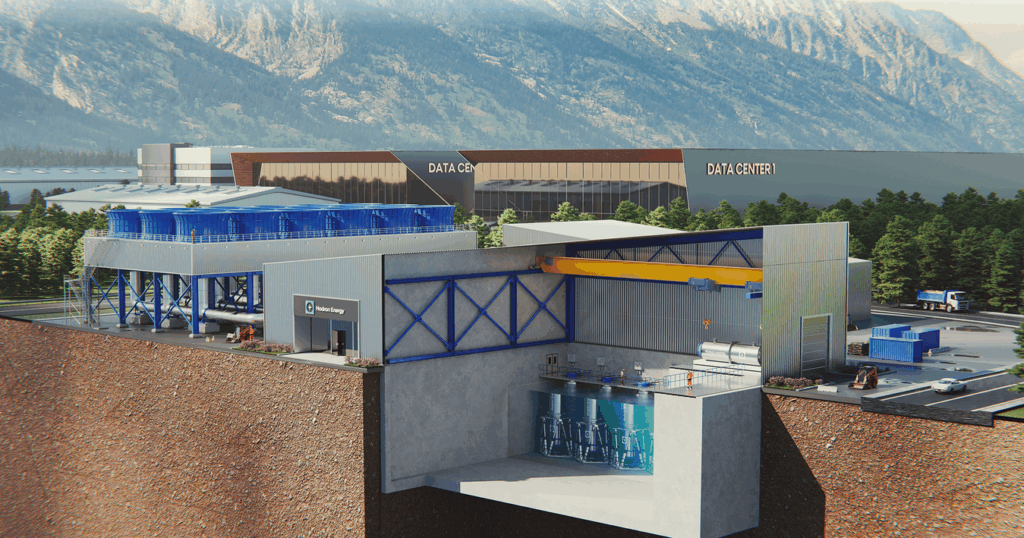
Nuclear startup Hadron Energy has announced it will go public on the Nasdaq via a $1.2 billion business combination with GigCapital7 Corp, a Private-to-Public Equity firm.

The deal will provide approximately $200 million in net proceeds, which will be used to accelerate product development and commercial deployment of Hadron’s technology, it said. The deal is expected to close in Q1 2026.
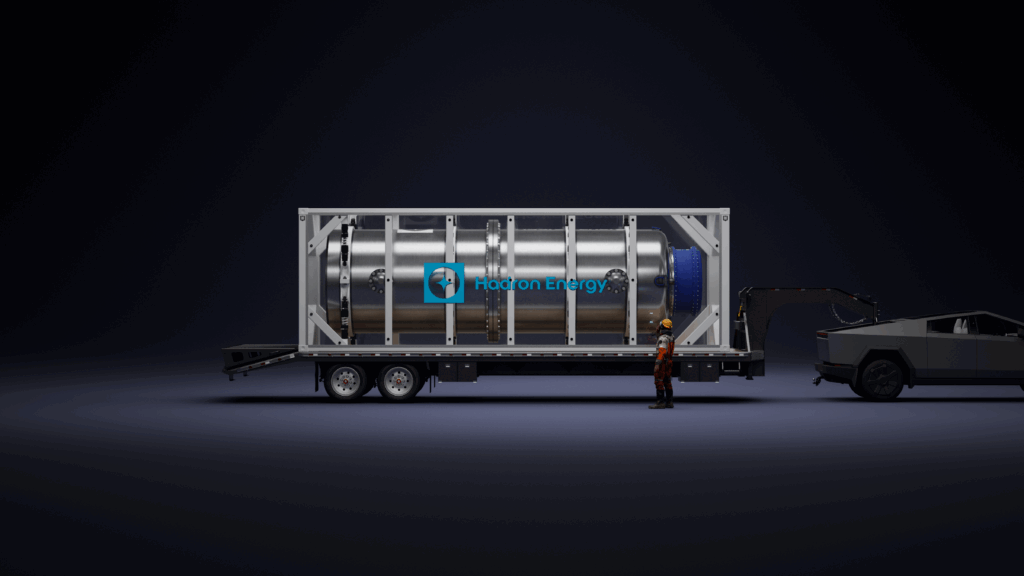
The Redwood City, California-based company said it has designed a micro modular reactor (MMR) built on light water reactor technology with an operationally efficient 10-year fueling cycle.
MMRs are miniaturized nuclear power plants being increasingly used in AI data center infrastructure, and can power mining operations by providing a low-carbon source of electricity and heat, replacing diesel generators and reducing emissions. MMRs produce between 1 and 20 megawatts of electric power per 1 module.
“We’re at a $1.2 billion dollar valuation. We’re excited about the opportunity to service not only data center customers, but also more remote industrial applications,” Sam Gibson, founder and CEO of Hadron Energy, told MINING.com in an interview. “In the mining industry, there is a lot of interest and very high demand for our product.”
There are currently 94 nuclear reactors operating in the United States across 54 power plants at full scale, variations of light water designs.
Gibson said the company’s focus is miniaturizing reactors in a mass manufacturable package that can then be distributed to remote applications or data centers.
“We don’t have to have an external water supply,” Gibson said. “And ultimately, we have demand ranging anywhere from 10 megawatts, which is one unit, all the way up to even gigawatt scale deployments, which is 1,000 megawatts plus.”
“Plenty of uranium supply”
Uranium is a crucial source of reliable baseload power as nuclear energy, and the US requires an estimated 32 million pounds of uranium annually for its current nuclear reactors. Energy Fuels’ White Mesa Mill in Utah is the only producing mill in the US.
In 2024, the US purchased 50 million pounds of uranium, but only produced 677,000 pounds, according to the Energy Information Administration.
But Gibson said uranium supply is not currently an issue for the company.
“One of our uranium suppliers has about 1.7 million pounds of uranium ore right now. So the supply is there.”
Gibson said it comes down to the energy density of uranium and the enrichment, pointing out that typically 5% enriched and below is what’s used in the commercial industry today.
“Our reactor is using slightly higher enrichment, which enables us to have a smaller core. We are primarily focused on reactor development.”
Hadron is working on the engineering and licensing side to begin producing the reactors at scale, and Gibson said what puts Hadron at the forefront is that there’s still not a licensed microreactor on the market today.
“When it came to incorporating, we had a lot of the groundwork already worked out. So that’s why we’ve been able to make such rapid progress on the regulatory side, on the engineering design side,” he said.
“Historically, you’ll have reactors that have fueling cycles of about two years, but since we’re using a higher enrichment, that gives our core life a longer life and it enables us to have even a more compact design. Those are really the key innovations we’re working on here. That’s the entire goal – a 24-7 energy producing source.”
Holtec cancels plans for New Mexico interim storage facility
Holtec International has announced that plans to build a consolidated interim storage facility for used nuclear fuel in New Mexico have been cancelled.
_15541.jpg)
"After discussions with our longtime partner in the HI-STORE project, the Eddy-Lea Energy Alliance, and due to the untenable path forward for used fuel storage in New Mexico, we mutually agreed upon cancelling the agreement. This allows for ELEA to work to redevelop the property in a manner that fits their needs and allows Holtec to work with other states who are amenable to used fuel storage based on the recent DOE work on public education and outreach," Holtec said in a statement.
Holtec and the Eddy-Lea Energy Alliance (ELEA) - which includes the cities of Hobbs and Carlsbad as well as Eddy County and Lea County - signed a memorandum of agreement in 2015 covering the design, licensing, construction and operation of a facility modelled on Holtec's HI-STORM UMAX dry storage system. Known as the HI-STORE CISF (for Consolidated Interim Storage Facility), the proposed facility was to have been built at a site located between Carlsbad and Hobbs in Lea County on land owned by ELEA and would provide an option for storing used nuclear fuel from US power reactors until a permanent repository should become available. Used fuel was to be transported by rail to the CSIF.
The initial application for the HI-STORE facility included storage of up to 8,680 tonnes tons of uranium in commercial used fuel with future amendments for up to 10,000 storage canisters, according to Holtec information.
The US Nuclear Regulatory Commission (NRC) issued a final licence to Holtec to build and operate HI-STORE in 2023. But in March 2024, the Fifth Circuit Court of Appeals published a decision to "vacate" the licence following a similar ruling against another Interim Storage Partners' licence to provide interim storage in Texas. In June this year, the Supreme Court ruled that the plaintiffs in the Texas case did not have standing to challenge the Nuclear Regulatory Commission’s decision to provide a permit to Interim Storage Partners.
Holtec, together with the NRC and the federal government, had filed Supreme Court petitions asking for the licence to be reinstated.
Technology licensing is landmark for US uranium remediation
Regulatory approval means Disa Technologies Inc's High-Pressure Slurry Ablation technology can be used to remediate abandoned uranium mine waste at inactive mine sites while opening the possibility of recycling uranium recovered from the waste.
_87273.jpg)
The US Nuclear Regulatory Commission (NRC) accepted Disa's application for a licence to use its technology to remediate abandoned mine waste at inactive mine sites in April, when the regulator set a schedule for a detailed technical review and developed and deployed a clear, first-of-its-kind regulatory framework which saw the licensing approval process completed in six months - much quicker than the 18-24 months it might have taken previously.
Disa's patented High-Pressure Slurry Ablation (HPSA) technology is a mechanical process leveraging collisions between particles. It exploits the difference in Mohs hardness - a scale for measuring the relative hardness of minerals - between a base mineral and target mineral to selectively liberate the target mineral. The process can be used to upgrade critical minerals from both mined ore and legacy waste.
There are more than 15,000 sites associated with abandoned uranium mine waste - or AUM waste - waste across the western USA, largely from Cold War-era mining activities. Many of these sites are located on or near tribal lands. But options to safely treat or contain the contaminated material have up to now been limited and costly, according to Disa.
High-Pressure Slurry Ablation technology offers the first scalable method to remediate this waste safely and economically, the company said, separating and cleaning the material at the source, and making it possible to recycle uranium while dramatically reducing the volume of material requiring long-term disposal.
The NRC licence allows Disa to deploy its High-Pressure Slurry Ablation systems under federal oversight to treat abandoned uranium mine waste across multiple states. It builds on years of collaboration among federal and tribal partners, including the Navajo Nation Environmental Protection Agency (NNEPA). Disa also said it had received strong support and engagement throughout the licensing process from a diverse coalition of environmental, nuclear energy, and community stakeholders, including the Navajo Nation and other tribal leaders, ClearPath Action, Good Energy Collective, Third Way, Nuclear Innovation Alliance, Breakthrough Institute, Native Nuclear (formerly the Tribal Consent-Based Coalition), Generation Atomic, academic leaders from several US universities, and numerous bipartisan Members of Congress from both chambers.
Disa CEO, president, and co-founder Greyson Buckingham expressed his gratitude to key stakeholders including the NRC's Chairman and Commissioners, the senators of Arizona and Wyoming, and Navajo Nation leadership, for their support, saying the licence is "a turning point" in tackling legacy uranium contamination. "For decades, AUM sites have been viewed as a burden too complex and costly to clean up. Today, we have a clear, regulated pathway to do it faster, safer, and at lower cost - while recycling valuable resources that support our nation's energy future," he said.
"The Navajo Nation is proud to help with this critical breakthrough," said Buu Nygren, President of the Navajo Nation. "By combining innovative technology with regulatory leadership, we have a new path to remediate legacy uranium sites to restore our lands to safe, productive use and to protect our precious groundwater resources … I encourage continued discussions at the federal level to ensure a safe legacy cleanup is performed in a timely manner."
Uranium has momentum amid policy tailwinds, fundamentals: Sprott
The uranium market has momentum on its side as it looks to end 2025 on a strong note, with several catalysts lined up to fuel a sector seen as critical for the future of energy, says Sprott.
In a report released on Thursday, the firm listed three key developments that could lift uranium even further, namely the US government’s critical minerals policy, accelerating demand for the nuclear fuel, and concerns surrounding supply.
In the first case, Sprott analysts led by Jacob White pointed to the Trump administration’s intent to stockpile more uranium to alleviate the persistent supply gap for US utilities and the country’s heavy reliance on foreign supply, in particular that of Russia. The plan, if enacted, could result in billions of dollars in funding towards building a secure uranium supply and the required nuclear technologies, reinforcing a bullish outlook for the sector, Sprott said.
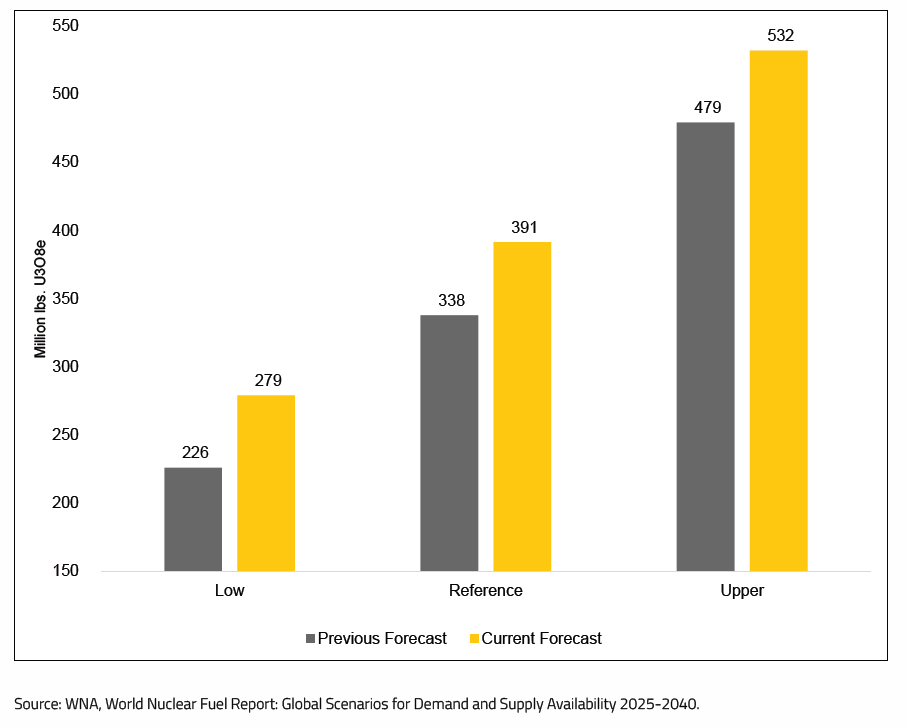
Secondly, Sprott said it is increasingly confident in uranium’s long-term fundamentals, especially after the World Nuclear Association’s (WNA) September symposium. It pointed to a WNA report that outlined lofty demand expectations, from the current 175 million lb. of U3O8 equivalent annually to 391 million lb. by 2040, representing a 124% growth.
Importantly, the WNA forecast was more than double its previous, highlighting a surge in optimism over nuclear fuel use, especially with a “new class” of demand from hyperscalers such as Microsoft.
Lastly, Sprott’s bullish sentiment is reinforced by a structurally tight supply amid expectations of declining output from the world’s top producers such as Kazatomprom and Cameco, as well as execution risks across the development pipeline. Also, it stated that the WNA report had missed some of the key production cuts, meaning the uranium market could be even tighter than headline figures suggest.
Bullish outlook intact
Sprott said these factors will be critical in driving the momentum in uranium as the current cycle progresses. In September, market sentiment turned sharply positive as fresh capital flowed in and supply tightened, leading to an 8% rise in uranium prices during the month and a rebound to $82/lb., it wrote.
The rebound followed months of dislocation, which saw uranium prices reach a maximum spread of $17/lb. This, as Sprott said, was not “sustainable” for a market that is in a structural deficit position.
Doubling down on its bullish outlook, the Sprott Physical Uranium Trust (TSX: U.U for USD; U.UN for CAD) has continued to buy up uranium and now holds over 72 million lb. — maintaining its position as the world’s largest physical uranium holder. Year to date, the Trust has gained about 8.7%, with a market capitalization exceeding $6 billion.
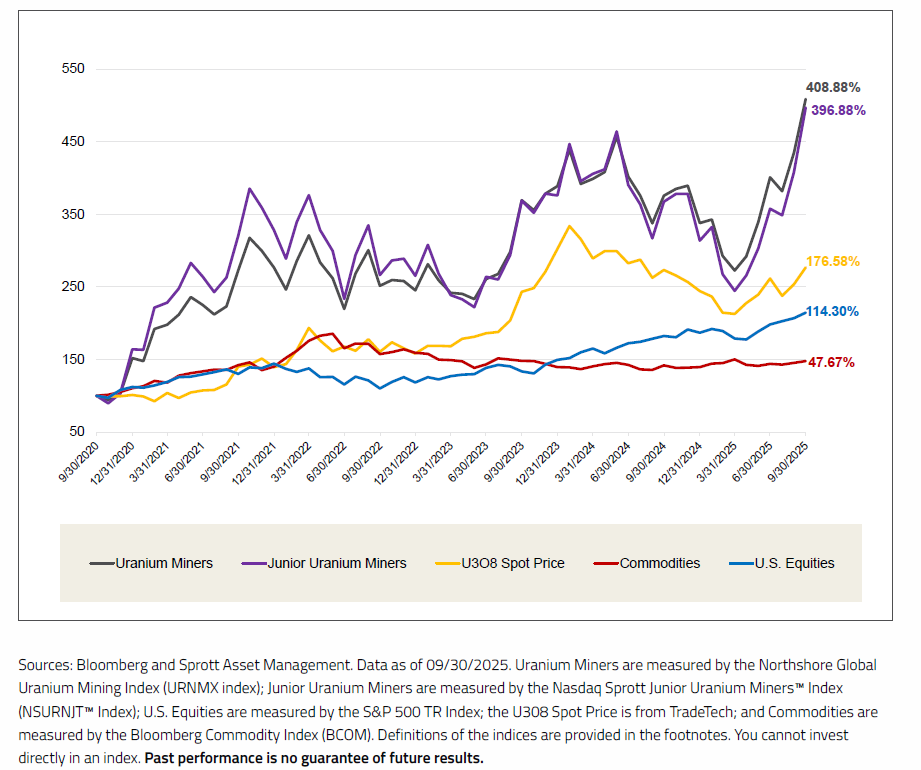
Meanwhile, uranium equities have delivered impressive performances, with the Sprott Uranium Miners ETF rising by over 50% this year. Over the past five years, uranium and related equities have significantly outperformed other asset classes, according to Sprott.
Advanced fuel material samples ready for irradiation testing
_10109.jpg)
The material samples, which were manufactured at Idaho National Laboratory (INL), are now ready to be inserted into the lab's Advanced Test Reactor (ATR) for irradiation testing, which is expected to begin later this year.
The enriched uranium-zirconium alloy coupon samples match the composition intended for Lightbridge's future commercial Lightbridge Fuel product, and were manufactured and loaded into capsules under stringent quality control and process validation protocols, the company said. The experiment assembly will be placed in the reactor core for irradiation testing.
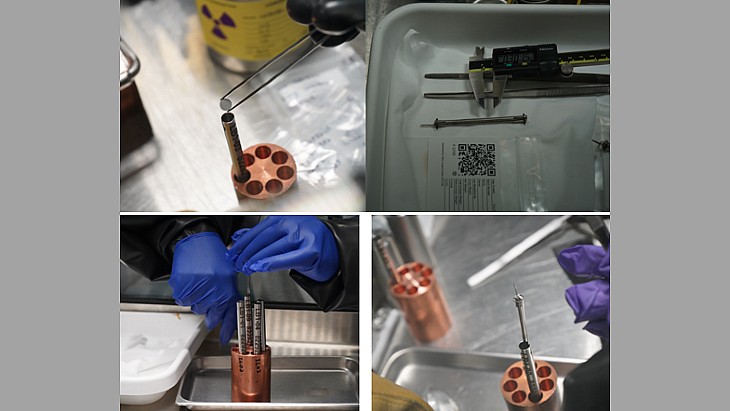
Fuel is loaded into rodlet holders (Image: Lightbridge)
The irradiation testing programme and post-irradiation examination activities aim to generate critical irradiation performance data which will support the company's regulatory licensing and commercialisation efforts for deployment of Lightbridge Fuel.
"We are proud to collaborate with Lightbridge on the assembly of this irradiation experiment," said Jess Gehin, Associate Laboratory Director for Nuclear Science & Technology at Idaho National Laboratory. "This is an important step in testing and validating the performance of Lightbridge's advanced fuel in a test reactor environment."
"We are pleased to complete this final step in preparation of the experiment assembly for irradiation testing," Lightbridge Vice President of Engineering Scott Holcombe said, describing it as a pivotal milestone for Lightbridge Fuel development. "This achievement brings us closer to obtaining the rigorous irradiation testing data required for regulatory approval and eventual commercialisation of Lightbridge Fuel."
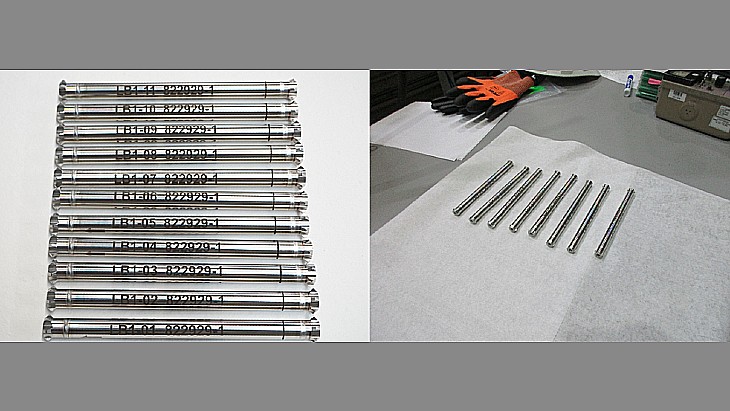
Capsules containing Lightbridge Fuel material samples ready before loading into the assembly (Image: Lightbridge)
Lightbridge Fuel is described by the company as a proprietary next-generation nuclear fuel technology for existing light water reactors and pressurised heavy water reactors which it says significantly enhances reactor safety, economics, and proliferation resistance. It is also developing Lightbridge Fuel for new small modular reactors.
ATR is a pressurised water reactor which produces neutrons, rather than heat, and is used to perform irradiation testing of many nuclear materials and fuels. The irradition testing is being carried out under a Cooperative Research and Development Agreement between Lightbridge and INL.
INL has shared further images of the process to load the capsules into the experimental assembly.
Grossi says progress made on restoring Zaporizhzhia power
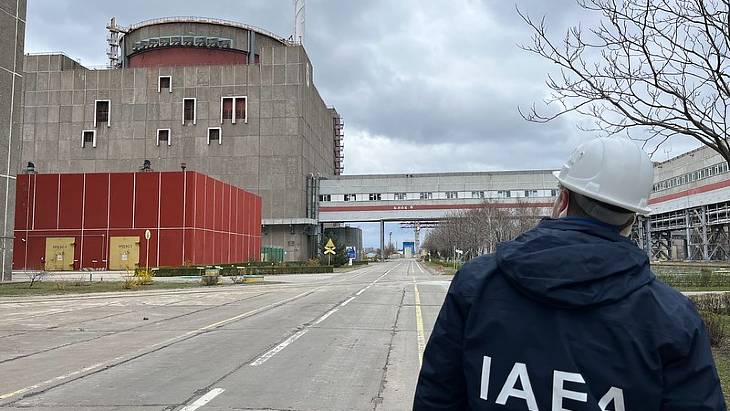
Rafael Mariano Grossi, Director General of the International Atomic Energy Agency (IAEA), said: "Following intensive consultations, the process leading to the re-establishment of off-site power - through the Dniprovska and Ferosplavna-1 lines - has started. While it will still take some time before the grid connection of the Zaporizhzhia nuclear power plant (ZNPP) has been restored, the two sides have engaged with us in a constructive way to achieve this important objective for the sake of nuclear safety and security. No one stands to gain from a further deterioration in this regard."
External power was lost by the plant - which is on the frontline of Ukrainian and Russian troops - on 23 September, and it has since been relying on its fleet of emergency diesel generators for the power required for essential safety functions, including powering cooling pumps.
Before the war, there were 10 different external power lines to the plant, but that number has fallen since the start of the war in February 2022. Five months ago its last 330 kV backup power line was disconnected, leaving no supply when the sole operational 750 kV power line source was cut.
Both sides blame the damage on military activities and have said that the military situation has stopped them from being able to repair the damage. Grossi has had frequent contact with both sides as part of efforts to find a way forward.
The IAEA's latest update says: "The focus has been on creating the necessary security conditions for repairs to be carried out on the damaged sections of the 750 kV Dniprovska and the 330 kV Ferosplavna-1 power lines, located on opposite sides of the frontline near the ZNPP."
It is the tenth time that the plant has lost external power, although on previous occasions it was for a matter of hours rather than the current case of weeks. Seven emergency diesel generators are operating, with 13 on standby.
The IAEA team at the plant report that there has been no temperature increase within the coolant in the reactors or the used fuel pools and radiation levels at the site remain normal. They do continue to hear military action, including on Tuesday evening when they heard "five explosions one after the other, occurring close to the site and shaking windows in their building".
The six-unit Zaporizhzhia nuclear power plant has been under Russian military control since early March 2022. All its units are shut down.
Excavation works begin for Uzbekistan small modular reactor
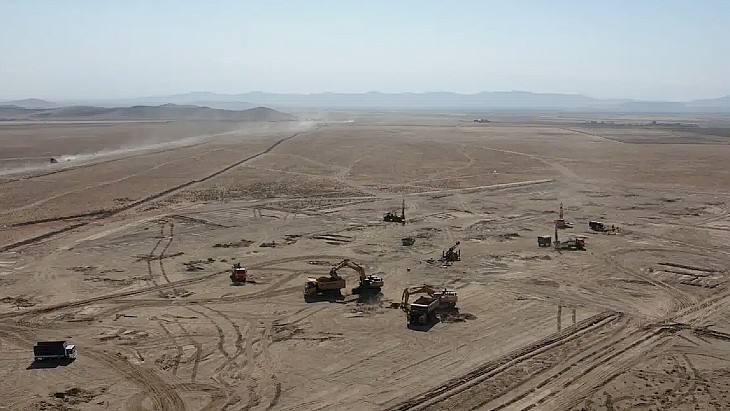
The first cubic metres of soil were excavated in a ceremony attended by Pavel Bezrukov, vice president and director of the construction project at Atomstroyexport JSC, Abdujamil Kalmuratov, Head of the Directorate for the Construction of a Nuclear Power Plant State Enterprise, and Ulugbek Mustafoyev, Governor of the Jizzakh region.
Alexei Likhachev, director general of Rosatom, said during the event: "Today marks the beginning of a new phase in the implementation of the nuclear power generation project in Uzbekistan. As with all our international projects, the construction is designed with a high degree of localisation. The work is being carried out by Uzbek subcontractors. Rosatom will build the plant, which will have a service life of at least 60 years, and will provide all necessary support during its operation. We look forward to many decades of fruitful and mutually beneficial cooperation."

Rosatom's director general took part in the event via video-link (Image: Rosatom)
Uzbekistan's Uzatom said that 27 test and research boreholes have been drilled, with engineering surveys and design and preparatory works under way and a plan for design documentaton to be submitted for review by the end of the year, with first concrete for the first SMR unit expected to be poured in March 2026.
Rosatom began manufacturing reactor equipment in May, with a 205-tonne ingot of special alloy steel cast which will form the reactor vessel.
And an agreement was signed at the end of September during World Atomic Week in Moscow which multiplied the capacity of the proposed project to include two large units - VVER-1000s - in addition to two 55 MW RITM-200N SMRs. Originally the plan had been for up to six SMRs.
The RITM-200N is a water-cooled reactor adapted from nuclear-powered icebreakers' technology, with power of 190 MWt or 55 MWe and with an intended service life of 60 years. The first unit is scheduled to go critical in late 2029.
It is the first export order for Russia's SMR. The first land-based version is currently being built in Yakut, Russia, with the launch of the first unit scheduled for 2027. Rosatom says that its combination of active and passive safety systems means the SMR plants will achieve the highest possible safety standards.
Meanwhile, according to Russia's Tass news agency, negotiations are under way targeting a spring 2026 scheduled signing of a contract for the GW-scale units, with one of the issues being agreement that there would be at least 70% localisation of workers on the project.
Long-term safety at Armenian plant assessed
_99629.jpg)
The Armenian Nuclear Power Plant (ANPP) comprises two Russian-built 376 MWe VVER reactors which started operating in 1976 and 1980, respectively. Both units were taken offline in 1988 due to safety concerns regarding seismic vulnerability, although they both continued to operate and had not sustained any damage in a major earthquake in the region earlier that year. Unit 2 was restarted in 1995, and is subject to ongoing safety improvements. Unit 1 is now being decommissioned.
In October 2021, the Armenian Nuclear Regulatory Authority (ANRA) issued a permit to the operator to continue operating unit 2 until September 2026. This is beyond the originally granted licence, which was until the end of 2021. The operator has requested permission from ANRA to operate the unit for an additional 10 years, until September 2036.
A Safety Aspects of Long-Term Operation (SALTO) peer review is a comprehensive safety review addressing strategy and key elements for the safe long-term operation (LTO) of nuclear power plants. SALTO missions complement IAEA Operational Safety Review Team (OSART) missions which are designed as a review of programmes and activities essential to operational safety. SALTO peer reviews can be carried out at any time during the lifetime of a nuclear power plant, though according to the IAEA the most suitable time lies within the last 10 years of the plant's originally foreseen operating period. SALTO and OSART reviews are carried out at the request of the IAEA Member State in which the review is to take place.
An IAEA team completed a ten-day SALTO mission to the Armenian plant on 9 October, which built upon a previous SALTO mission in 2018 and a follow-up mission held in 2021. The ten-person team included experts from Argentina, the Netherlands, Romania, Ukraine, the UK and the USA, as well as two IAEA staff members and two observers from Hungary and the World Association of Nuclear Operators.
"The plant has clearly made progress since previous missions and has done a lot to address the previous SALTO findings," said team leader and IAEA Nuclear Safety Officer Bryce Lehman, who noted that many ageing management and LTO activities were in alignment with IAEA safety standards. "We encourage the plant to continue implementing the remaining activities for LTO and to address the review findings."
The team identified good performances that will be shared with the nuclear industry globally, including: continuously improving organisational practices, adopting international best practices and experience from the first LTO period to improve the approach and documentation for the upcoming second LTO period; conducting periodic reviews of the seismic qualification programme, considering the latest knowledge and international operating experience; and implementing a comprehensive modernisation process performed by the staff of the plant.
The team also provided suggestions and recommendations to further improve safe LTO, for example, the plant should: update the existing plant programmes to fully address ageing management for the upcoming second LTO period; complete the qualification programme for equipment in harsh environments and fully implement it for LTO; and effectively implement the ageing management programmes for civil structures.
"We appreciate the IAEA's support in ageing management and preparation for our second LTO period," said ANPP Chief Engineer Artur Grigoryan. "It is very important for us to get an external review of our ageing management activities. The competencies and experience of the IAEA team will help us identify areas for improvement. The results of this mission will help us improve our activities for safe LTO and further align our activities with IAEA safety standards."
A draft report has been provided to plant management and ANRA. They have the opportunity to make factual comments on the draft, with the final report to be submitted to them and the Armenian government within three months.
Dismantling of Hamaoka 1 reactor under way
_52728.jpg)
Hamaoka 1 and 2 are both boiling water reactors, starting up in 1973 and 1978, respectively. Unit 1 had a capacity of 540 MWe while unit 2's capacity was 840 MWe. Chubu decided to close both units in January 2009 as they required expensive modifications to meet seismic standards imposed after the July 2007 Niigata Chuetsu offshore earthquake.
The utility submitted a decommissioning plan for Hamaoka 1 and 2 in June 2009, which was subsequently revised in September of that year. The overall plan divided the decommissioning of the two units into four stages. The first stage is for preparations for dismantling work at the units, while the second stage covers the dismantling and removal of equipment surrounding the reactors. The third stage is for the dismantling of the reactors themselves, while the fourth covers the demolition of buildings at both units.
The plan was approved by the Ministry of Economy, Trade and Industry in November 2009, when Chubu began stage 1 of the decommissioning programme.
Having completed stage two work at both units, on 18 December last year the Nuclear Regulation Authority approved Chubu's application to move to the third stage of decommissioning at the units.
Chubu announced on 17 March that it had removed the upper lid of the pressure vessel of unit 2, marking the start of the dismantling of the reactor itself. As well as the reactor pressure vessel, the reactor internals and radiation shielding surrounding the vessel will be dismantled.
Hamaoka 1 and 2 are the first two commercial nuclear power reactors in Japan to enter the reactor dismantling phase.
Chubu plans to dismantle units 1 and 2 over a period of about 12 years, starting with the reactor of unit 2 first. The decommissioning of the two reactors is expected to be completed in fiscal 2042 after the reactor buildings are demolished.
No comments:
Post a Comment