Port of Los Angeles Seeks Proposal for Potential New Container Terminal
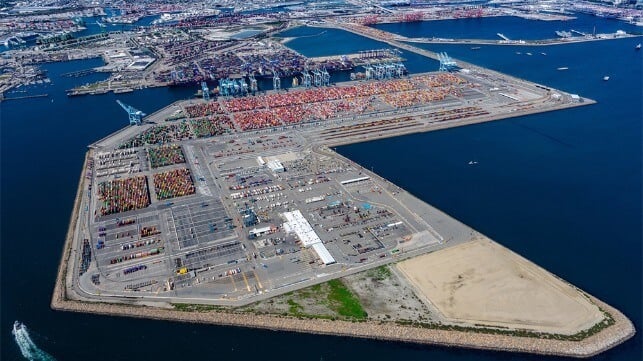
The Port of Los Angeles has started the first public steps in what could be a decade’s decade-long effort to develop its next container terminal. The port published a Request for Proposal from interested parties to participate in the pre-development of the new terminal known as Pier 500.
Proposals are due by January 29, 2026, and they expect to select an entry to enter into a public-private pre-development agreement. The goal is to scope the project’s financial feasibility, procure entitlements, and handle other requirements needed before the project is implemented, and the build-out could begin.
The Port of Los Angeles currently has seven major container terminals and six intermodal rail yards for the handling of containers. It is generally the busiest container port in the United States, mostly rivaled by neighboring Long Beach, and from time to time, the Port of New York and New Jersey. Los Angeles peaked in 2021 at 10.7 million TEU and again at nearly 10.3 million in 2024. Despite the trade uncertainties, the port was approximately 4.5 percent ahead of last year as of the end of August, having handled more than 6.9 million TEU, although volumes were expected to decline in the fall. On a monthly basis, the port has twice exceeded 1 million TEU, in May 2021 and again in July 2025.
“For the first time in a generation, the Port of Los Angeles plans to build a new container terminal to meet global supply chain demand for decades into the future,” said Port of Los Angeles Executive Director Gene Seroka. “The development of the cleanest terminal possible would enhance our efficiency and sustainability while creating new jobs in our communities.”
Located in natural deep water on the southern tip of the port’s Terminal Island, Seroka says the project site would greatly increase port cargo efficiency, as it would allow for bigger, next generation cargo ships. Carriers have so far reserved the 24,000-plus TEU ultra-large container vessels for routes to Europe, but Los Angeles has handled a few ULCCs, although generally the routes see the sub-20,000 TEU large vessels.
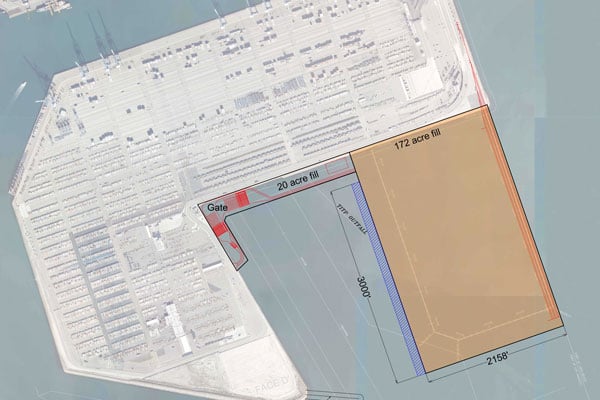
Rendering of the proposed area for the Pier 500 terminal (Port of Los Angeles)
As proposed, Pier 500 would be a 200-acre site with two new berths and approximately 3,000 linear feet of new available wharf along the Pier 400 Channel. The proposed Pier 500 project would allow the Port to leverage existing available space. The port identified a submerged site of 124 acres, infrastructure that was added during the construction of the adjacent Pier 400 before it was completed in 2002, which would now be used to create Pier 500.
Pier 400, the site of APM Terminal, opened in August 2002, is currently the largest container terminal at the port. APM highlights it has a capacity of 4.4 million TEU and five berths with a total of 507 acres and 19 super post-Panamax ship-to-shore cranes. Pier 400 is the largest container port terminal in the Western Hemisphere.
The pre-development process for Pier 500 will include all necessary environmental assessments as required under the California Environmental Quality Act and the National Environmental Policy Act (NEPA). The entire proposed Pier 500 project—from pre-development, entitlement procurement, and environmental review to full build-out and operation—is expected to take approximately 10 years.
New York Launches Next Phase of Revitalization for Brooklyn Marine Terminal
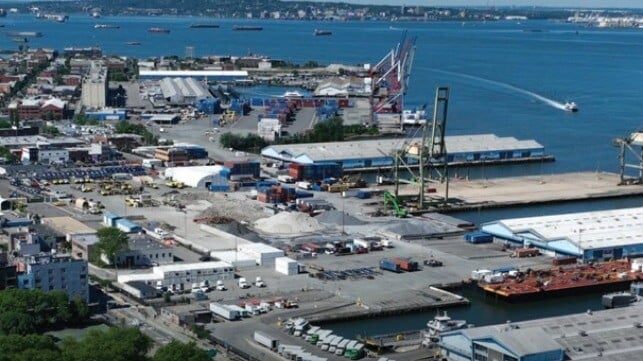
New York is moving forward with its plan to expand port operations through the revitalization of the Brooklyn Marine Terminal (BMT). Once a key part of the operations, the plan seeks to end 50 years of disinvestment and decay while supporting the transformation of the area into a modern maritime port and vibrant mixed-use community.
The New York City Economic Development Corporation (NYCEDC) assumed operational control of BMT in May 2024 from the Port Authority of New York and New Jersey, which has overseen the port and regional transportation for more than a century. The City and State of New York announced a $95 million plan to enhance maritime operations on the Brooklyn waterfront in 2024, focusing on BMT, which encompasses 122 acres of the waterfront in a neighborhood known as Red Hook and includes one of the current cruise terminals in the port. The city announced an initial $80 million investment that would be used to stabilize and repair Piers 7, 8, and 10, and to fund the planning for the waterfront.
NYCEDC has launched a Request for Expression of Interest to solicit proposals from domestic and international port operators, developers, and maritime industrial businesses. The companies have till December 15 to submit their comments as the city seeks input on the optimal size, layout, and economically viable uses of the commercial port.
The RFEI is part of the Vision Plan previously approved for BMT that is backed by $418 million in city, state, and federal funds. The funds will be used to transform the dilapidated marine terminal into a 60-acre, all-electric maritime port.
NYCEDC is seeking comments from those interested in acting as the operator/developer of the entire port facility or interested in a portion of the property. They can become a tenant of the port operator.
The Economic Development Corporation has already commenced work to improve the port. Earlier this year, NYCEDC executed three maritime contracts totaling an initial $18 million, including $15 million for a new electric ship-to-shore crane, $2 million for fender repairs to Pier 10, and $1 million for the demolition and removal of four out-of-service cranes. Demolition and removal of the four out-of-service cranes was completed in September.
The Brooklyn waterfront has seen revitalized interest in the past few years. Construction began in 2024 for the planned wind port facility at the South Brooklyn Marine Terminal. The 73-acre site is being revitalized into what was billed as one of the nation’s largest dedicated offshore wind ports. It will be used to support Empire Wind 1, which is being developed by Equinor.
This next phase of the port development is proceeding as a new economic impact study was released by the Shipping Association of New York and New Jersey. It highlights that the Port of New York and New Jersey is the largest container operation on the East Coast and the third largest port in the United States. At times, it has surpassed the volumes of either Los Angeles or Long Beach. NY/NJ has a current capacity of nearly 8.7 million TEU and handles over 410,000 vehicles as well as nearly 68,000 tons of breakbulk and 36.1 million tons of bulk cargo. It is also a strong cruise port handling nearly 2.4 million passengers, mostly in a season trade.
The report finds that the port supports a total of nearly 580,000 jobs, including 277,800 workers directly employed in the port industry. The Port of New York and New Jersey accounted for $18.1 billion in tax revenue in 2024.
Port of Long Beach Icon Mario Cordero is Set to Retire
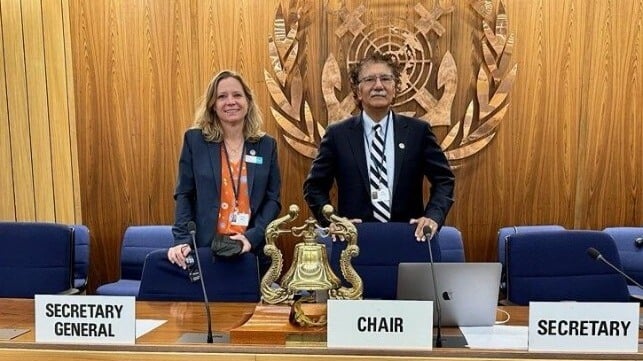
Port of Long Beach's longtime CEO, Mario Cordero, plans to retire at the end of 2025, his office announced Thursday.
Cordero has been at the helm at Long Beach for more than eight years, including some of the most challenging and rewarding periods in its history. During the COVID-19 era, container volumes collapsed, then rebounded to record levels - putting strain on America's gateway ports to adjust to changing demand.
"His calm and reassuring manner was a great source of strength for the workforce, industry and community before, during and after the global pandemic,” said Long Beach Harbor Commission President Frank Colonna in a statement. “He will be missed at the port, but I’m very happy for him to soon begin enjoying his well-deserved retirement.”
Cordero was born in Los Angeles to immigrant parents, and was first in his family to attend college. He became a lawyer, and practiced law for three decades. In 2003 he was appointed to the Board of Harbor Commissioners, and served on it for two terms, including time as its president. Early in his tenure, he proposed the port's landmark Green Ports Policy, a commitment to environmental protection that was adopted in 2005 and has guided decisionmaking for two decades. Since its enactment, the port has cut all three major health-related pollutant categories (NOx, SOx and PM).
In 2011, then-President Barack Obama appointed Cordero to serve on the Federal Maritime Commission; Cordero took on the role of FMC chairman from 2013-17, until the first Trump administration. That year, he returned to Long Beach to become the port's new CEO, at the request of the board of harbor commissioners.
A prominent figure in the North American ports industry, Cordero leaves behind a legacy of decades of service to maritime commerce. "He has guided one of the world’s busiest seaports through unprecedented times with vision and steady leadership, always keeping people and community at the center. Mario is a true Long Beach public servant, and his impact will be felt for generations to come," said Long Beach Mayor Rex Richardson in a statement.
The board of harbor commissioners is still considering its options for a new CEO and expects that the process will take months.
“I could not be more grateful for what has been the opportunity of a lifetime to lead the Port of Long Beach over these past several years. While I’ll miss being in the center of the action for international trade, I know that I’m leaving the Port in the very capable hands of our Board of Harbor Commissioners and the exemplary staff,” said Cordero. “It’s been a very rewarding experience and I have amassed wonderful memories that I will cherish forever.”
No comments:
Post a Comment