Sanctioned Russian Tanker Breaks Down in Suez Canal
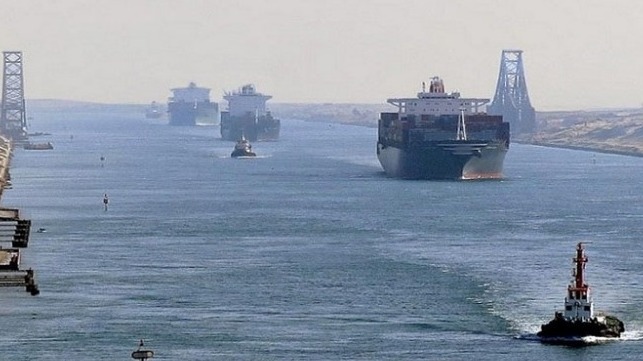
A sanctioned Russian crude oil tanker traveling as part of the southbound convoy in the Suez Canal broke down on Tuesday, October 28, briefly interfering with transits. The Suez Canal Authority is emphasizing its quick response to get the tanker, which had grounded, back underway.
The ship, which is currently trading under the name Komander, is another flagrant example of the tactics of the shadow fleet. Built in 2004, the 150,580-dwt tanker has had four names and six flags in the past three years. It passed in 2023 to Gatik Shipmanagement, well-known for its operation of Russian shipping, and reported its flag in 2023 as Gabon, 2024 in Panama, and in 2025 it listed Guyana (which was believed to be false), Comoros, and since September it lists Russia. During these times, the vessel has identified as Heracles, Krishna 1, Prudence, and since September Komander.
It is listed in the databases as being owned by a Hong Kong company and managed from Russia. The United States, the UK, and the EU have all listed it in their sanction packages for transporting Russian oil above the G7 price cap. It is a Suezmax class tanker with the Canal Authority reporting an 80,000-ton cargo. The vessel is 274 meters (899 feet) in length.
The tanker is believed to have loaded its current cargo in Murmansk and is likely bound for China. It was part of the Suez Canal convoy heading south today, and the authority reports it received a report at midday that the tanker’s engine was malfunctioning. It drifted out of the lane and grounded at kilometer 47.
The Suez Canal Authority dispatched five tugs, and they began a towing operation to refloat and realign the tanker in the channel. The authority says the first part of the operation was completed in just 30 minutes. They then began towing the tanker south to the lakes area.
The Suez Canal Authority said all traffic has resumed normal operations. They reported that a total of 34 vessels were making the transit in both directions today, representing a total of 1.4 million net tons. Reports said the Komander was the last ship in the 19-vessel southbound convoy.
Russia May Have Installed Spying Devices on Grave Site of Ferry Estonia
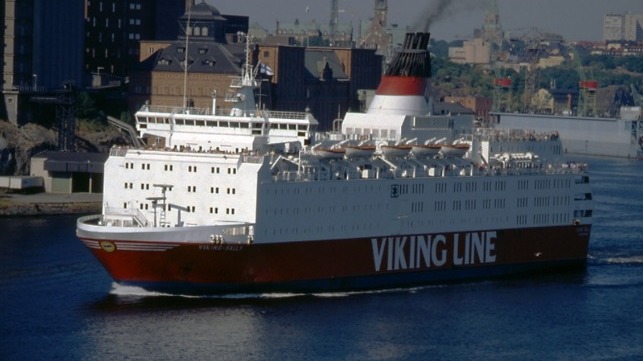
The wreck of the ferry Estonia is a protected grave site in the Baltic Sea, and diving is prohibited at the location of the tragic accident. Taking advantage of these protections, Russia's subsea intelligence service may have used the wreckage as a training ground and a mounting fixture for underwater espionage devices, according to a new investigative report by German outlets NDR, WDR and Süddeutsche Zeitung.
The loss of the Estonia is among the most discussed and debated marine casualties in living memory. On the night of September 27, 1994, the ro/pax ferry got under way from Tallinn to Stockholm in rough weather, with winds of up to 40 knots and waves of up to 20 feet. In the early hours of the next morning, passengers and crew heard a loud bang. The vessel's bow visor broke loose, resulting in flooding and free surface effect on her vehicle decks. The Estonia listed to 60 degrees within just 15 minutes, eliminating the possibility of launching lifeboats, and the vessel sank in less than an hour after the first signs of trouble. In cold water, many of those who managed to abandon ship perished, and only 137 out of 989 people aboard ultimately survived.
After the sinking, a treaty signed between Baltic nations prohibited visits to the wreck site. Civilian private investigative expeditions dove to the Estonia site anyways in 2020-21, over the objections of regional authorities; officially-sponsored efforts continued through 2024. With these limited exceptions, the wreck has remained largely undisturbed over the decades.
This isolation and treaty protection suits the interests of Russia's secretive and well-resourced Main Directorate for Deep-Sea Research (GUGI), according to the new German report. GUGI is an operator of "research" vessels and deep-diving submarines, and it sits in its own command structure directly under the Russian Ministry of Defense. It is widely believed to be the leading practitioner of underwater surveillance and sabotage within Russia's military system, and is allegedly involved in the effort to map out NATO member states' subsea cables and pipelines. Its manned submarine assets are believed to be capable of tampering with or emplacing assets on the seabed.
Subsea intelligence agencies have an essential role to play in submarine warfare, and it is their job to apply the best available oceanographic research and technology to hunt other nations' boats. The U.S., Russia and China all operate deep-sea listening networks to track each others' submarines; the best-known example is the U.S. SOSUS system, a vast surveillance enterprise constructed in the Cold War to monitor Soviet submarine movements.
The Baltic presents operational challenges for hiding such subsea listening devices, according to the German report. A sandy bottom provides few secure and tucked-away spots to place the gear, leaving it vulnerable to detection and seizure. The wreck of the Estonia may have been used to resolve this issue, military intelligence representatives told the German reporters. It provides hard mounting points on a complex structure that is almost never visited, in an ideal location in the middle of the central Baltic. GUGI used the site for training, the sources said, and may also have installed subsea navigation beacons and listening devices on the wreckage.
Sweden's government contracted for a complete photogrammetric survey of the wreck in 2022, and it obtained about 45,000 images of the entirety of the site. These were assembled into a complete 3D model. If any unauthorized devices were present, they could have been detected at that time; no untoward findings were reported publicly.
Finnish and Estonian authorities answered the reporting consortium's questions, but did not confirm the reports directly. The Estonian foreign ministry noted that Russia's operations in the Baltic have become much more aggressive since 2022; beginning in January 2025, NATO member states ramped up monitoring of Russian activity with the launch of Operation Baltic Sentry, a patrol mission intended to deter "hybrid warfare" sabotage and surveillance.
Top image: MV Estonia, ex name Viking Sally (Mark Markefelt / CC BY-SA 4.0)

No comments:
Post a Comment