Copyright AP Photo
By Amandine Hess
Published on 17/10/2025 - EURONEWS
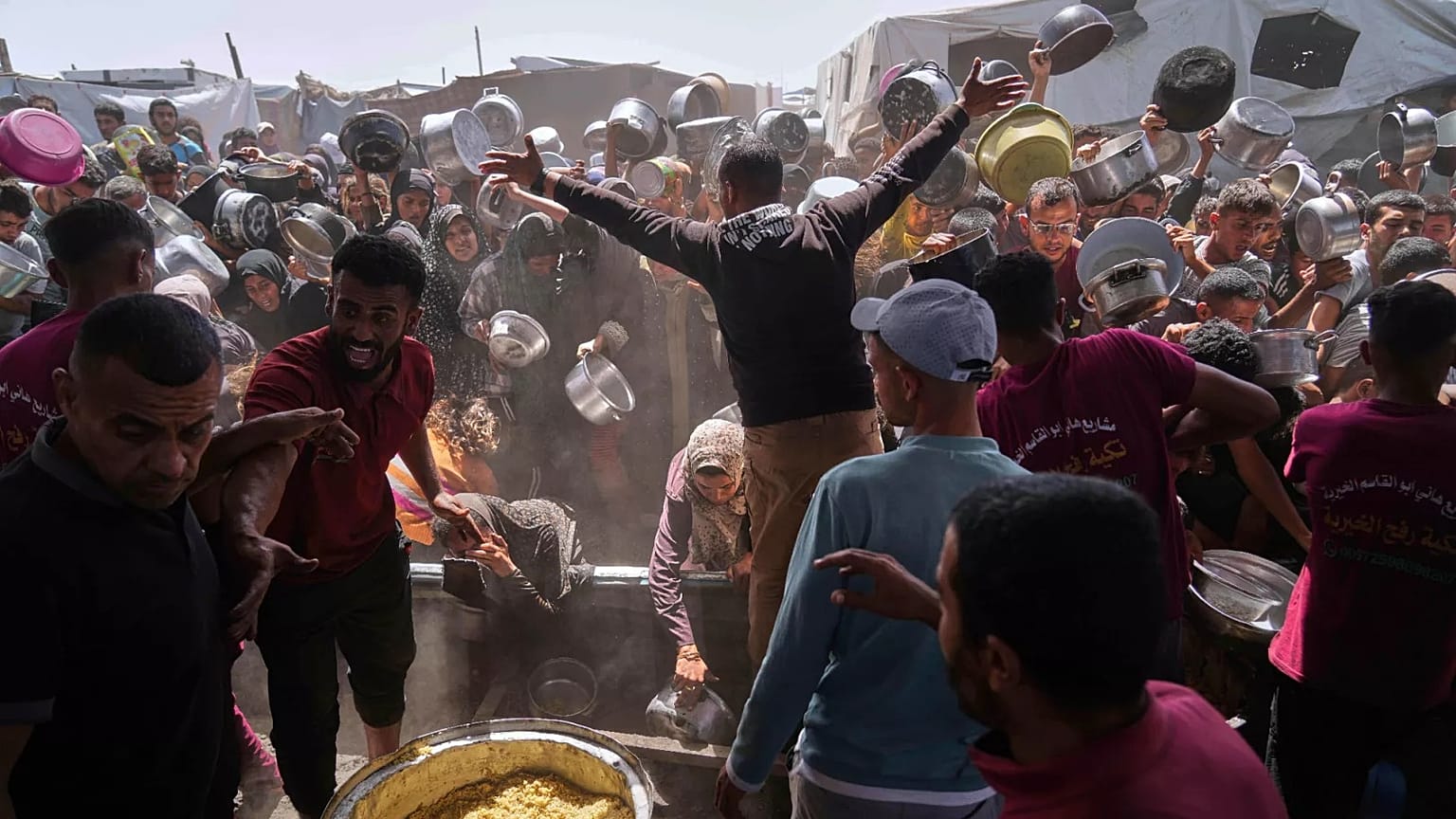
Israel says the reduced amount of aid is in response to Hamas allegedly breaching the truce agreement by returning the bodies of deceased Israeli hostages too slowly.
The European Commission has called on Israel to lift restrictions on the delivery of aid to Gaza, one week after the ceasefire between Israel and Hamas came into force.
The agreement, brokered by US President Donald Trump, stipulates that Israel must grant passage to 600 aid trucks daily.
So far, Israel has limited the flow of aid with authorities only allowing the entry of half the agreed-upon amount daily.
Israel says that's in response to Hamas allegedly breaching the truce agreement by returning the bodies of deceased Israeli hostages too slowly.
For instance, 319 tonnes of shelter items sent through the EU Humanitarian Air Bridge (HAB), including tents and winter kits, are still waiting to enter Gaza from warehouses in Amman and Al-Arish, the Commission told Euronews.
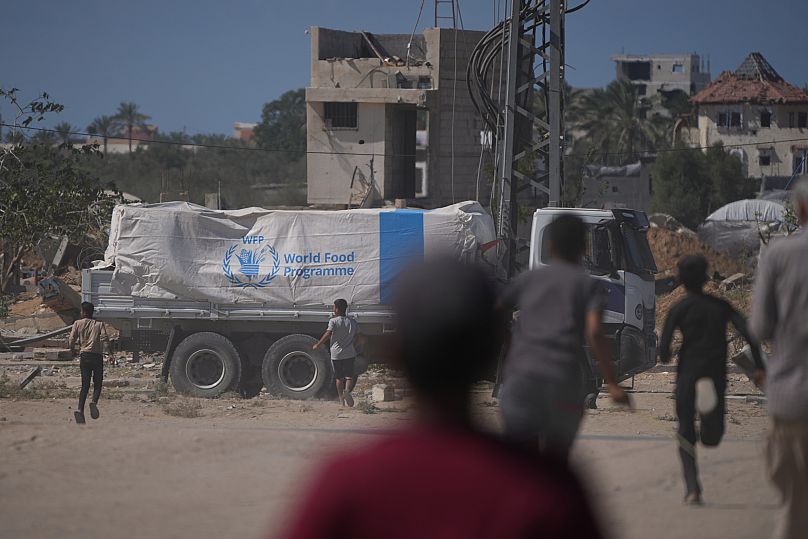
A spokesperson for the Commission says there are many bureaucratic obstacles hampering NGOs' ability to distribute aid, such as the current registration criteria imposed by Israel which can lead to the deregistration of some organisations.
"We need to get more food in," Eva Hrncirova, European Commission spokesperson told Euronews.
"We cooperate, for example, with World Food Programme, a UN partner. World Food Programme has about 170,000 tonnes of food ready to be delivered to Gaza and this would be enough for three months for all the population of Gaza to have nutrition," she said.
NGOs and international organisations have begun increasing delivery efforts, the Commission says. The UN has lifted the staff ceiling in Gaza to allow agencies to deploy more staff and the World Food Programme is maximising cargo inflow to Gaza to enhance nutrition programs and support bakeries, which can now supply 105,000 people with 2 kgs bread bundles every day.
The EU has three humanitarian warehouses in Gaza, the Commission adds. The Daraj warehouse in North Gaza was evacuated in September 2025 and can no longer be operated, while stocks have been transferred to the operational Musadar and Zawayda warehouses.
"The needs in Gaza are immense. We have famine which means that basically everything is needed now. Obviously priority is food, nutrition, but also hygiene, medical, obviously equipment, healthcare, water. We also try to get in fuel to be able to power the services," Hrncirova said.
The European Commission also demanded access to Gaza for its staff and urged Israeli authorities to open all crossing points into Gaza.
It noted that of the four main ones, only two are currently open: Kerem Shalom and Kissufim, both located in the southern part of Gaza.
Jerusalem (AFP) – The United Nations' aid chief took stock of the monumental task of restoring basic necessities in the devastated Gaza Strip on Saturday, and Israel received the remains of another October 7 hostage as a ceasefire entered its second week.
Issued on: 18/10/2025 - FRANCE24
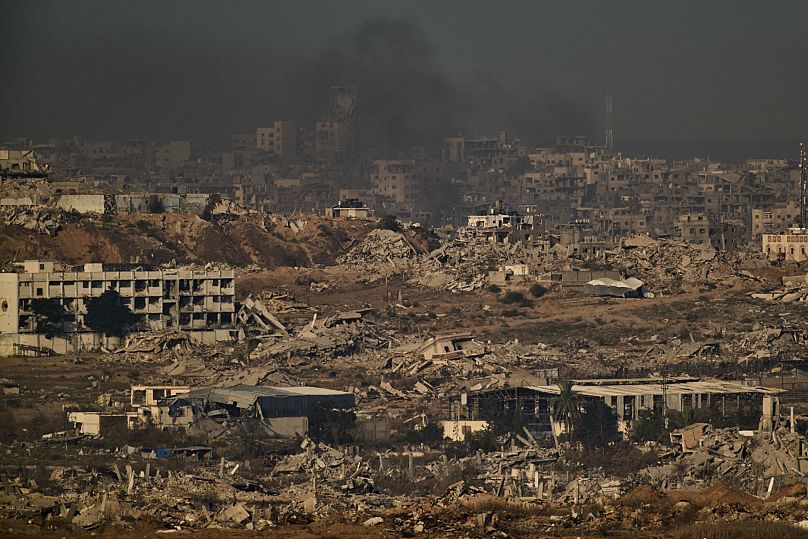
In a short convoy of white UN jeeps, relief coordinator Tom Fletcher and his team wound their way through the twisted rubble of shattered homes to inspect a wastewater treatment plant in Sheikh Radwan, north of Gaza City.
"I drove through here seven to eight months ago when most of these buildings were still standing and, to see the devastation, this is a vast part of the city, just a wasteland, and it's absolutely devastating to see," he told AFP.
The densely packed cities of the Gaza Strip, home to more than two million Palestinians, have been reduced to ruins by two years of bombardment and intense fighting between Hamas and the Israeli army.
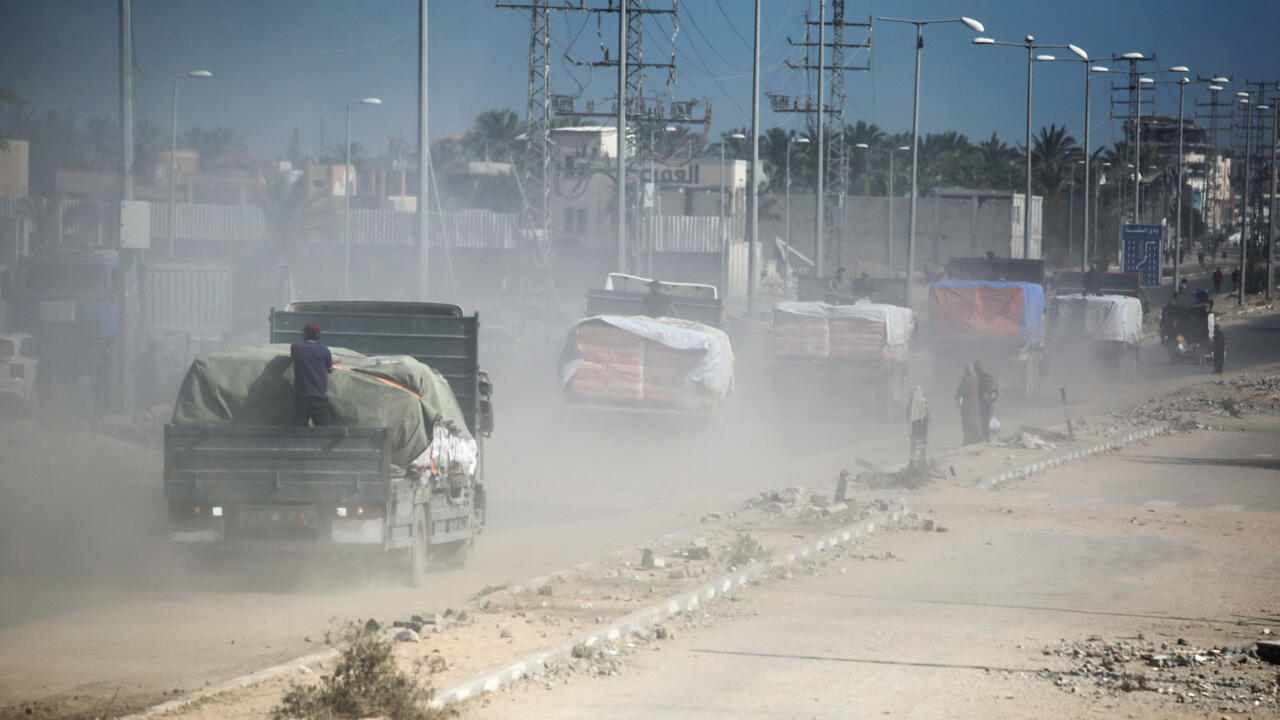
Just over a week since US President Donald Trump helped broker a truce, the main border crossing to Egypt has yet to be reopened, but hundreds of trucks roll in daily via Israeli checkpoints and aid is being distributed.
Hamas has returned the final 20 surviving hostages it was holding and has begun to hand over the remains of another 28 who died.
On Friday night, it turned over a set of remains identified by Israel as Eliyahu Margalit, 75, who died in the October 2023 attack that ignited the war in Gaza.
Digging latrines
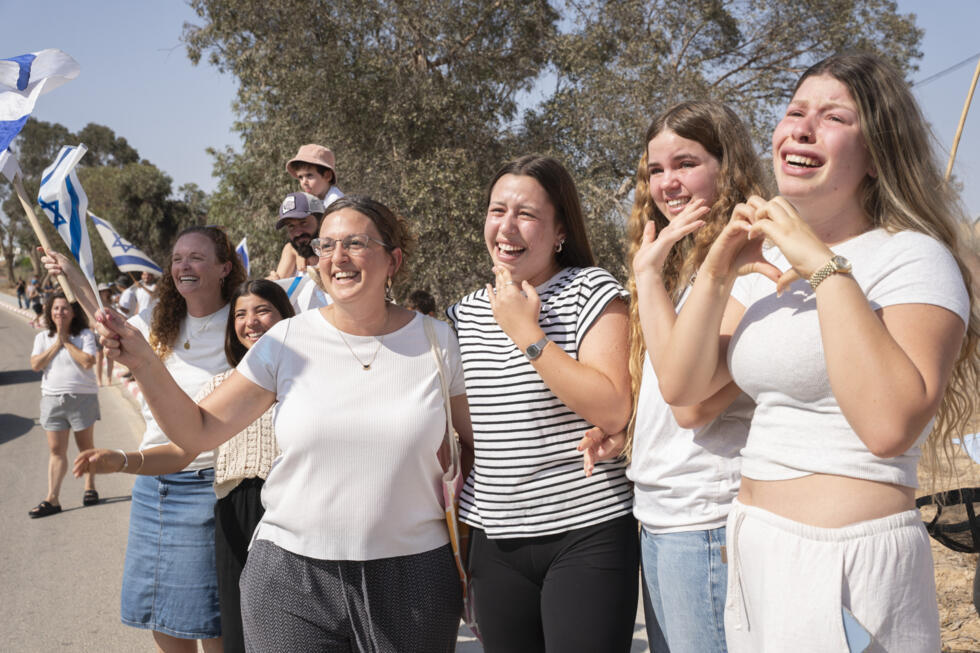
Surveying the damaged pumping equipment and a grim lake of sewage at the Sheikh Radwan wastewater plant, Fletcher said the task ahead for the UN and aid agencies was a "massive, massive job".
The British diplomat said he had met residents returning to destroyed homes trying to dig latrines in the ruins.
"They're telling me most of all they want dignity," he said. "We've got to get the power back on so we can start to get the sanitation system back in place.
"We have a massive 60 day plan now to surge in food, get a million meals out there a day, start to rebuild the health sector, bring in tents for the winter, get hundreds of thousands of kids back into school."
According to figures supplied to mediators by the Israeli military's civil affairs agency and released by the UN humanitarian office, on Thursday some 950 trucks carrying aid and commercial supplies crossed into Gaza from Israel.
Relief agencies have called for the Rafah border crossing from Egypt to be reopened to speed the flow of food, fuel and medicines, and Turkey has a team of rescue specialists waiting at the border to help find bodies in the rubble.
Hostage remains
Israel's Prime Minister Benjamin Netanyahu approved the ceasefire but is under pressure at home to restrict access to Gaza until the remaining bodies of the hostages taken during Hamas's brutal attacks have been returned.
On Saturday, his office confirmed that the latest body, returned by Hamas via the Red Cross on Friday night, had been identified as Margalit, the elderly farmer who was known to his friends at the Nir Oz kibbutz as "Churchill".
"He was a cowboy at heart, and for many years managed the cattle branch and the horse stables of Nir Oz," said the Hostages and Missing Families Forum, a support group founded by relatives of the hostages.
"He was connected to the 'Riders of the South' group whose members shared a love of horseback riding for over 50 years. On October 7, he went out to feed his beloved horses and was kidnapped from the stable."
Margalit had been married with three children and three grandchildren. His daughter Nili Margalit, also taken hostage, was freed during the war's first brief truce in November 2023.
In a statement confirming he had been identified and his remains returned to his family, Netanyahu's office said "we will not compromise ... and will spare no effort until we return all of the fallen abductees, down to the last one".
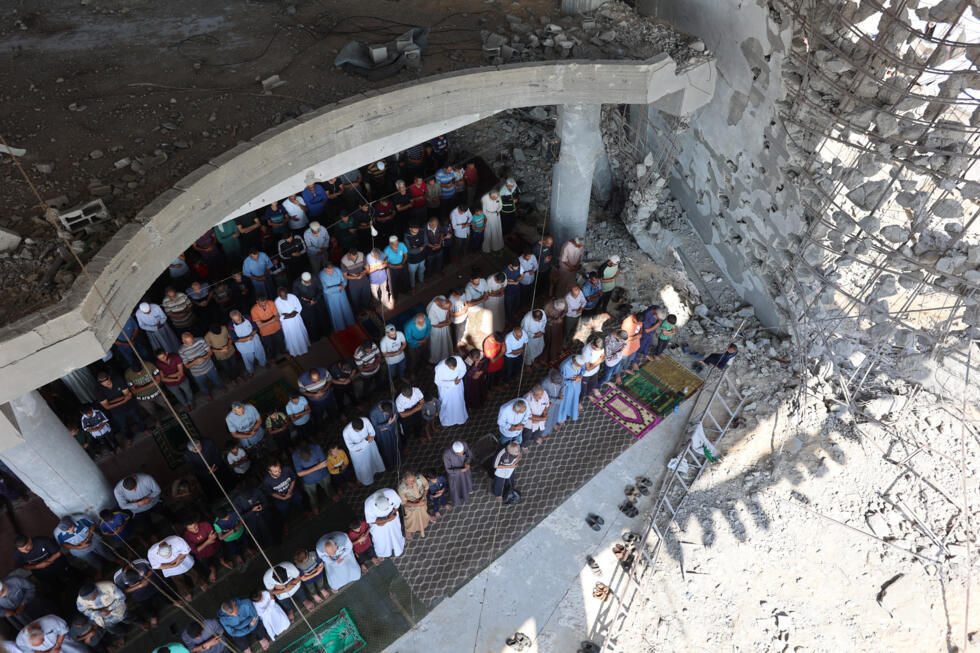
Hamas spokesman Hazem Qassem said on Friday that the group "continues to uphold its commitment to the ceasefire agreement... and it will continue working to complete the full prisoner exchange process".
Under the ceasefire agreement between Israel and Hamas, negotiated by Trump and regional mediators, the Palestinian militant group has returned all 20 surviving hostages and the remains of 10 out of 28 deceased ones.
burs-dc/jd/smw
© 2025 AFP
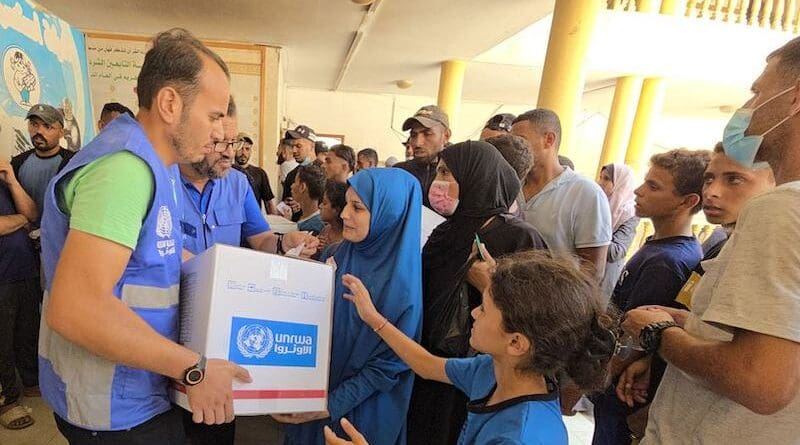
An UNRWA staff member distributing aid to affected civilians in Gaza. Photo Credit: UNRWA
October 18, 2025 0 Comments
By UN News
The UN World Food Programme (WFP) has warned food aid cannot reach everyone in Gaza unless all border crossings are opened, particularly in the north where famine was declared in August.
The agency says it already has enough supplies in place to feed the entire population of the Strip for three months – if full access is granted by Israel.
One week into the fragile ceasefire, WFP has been bringing in an average of 560 tonnes of food each day.
“The ceasefire deal has opened a narrow window of opportunity, and WFP is moving very quickly to scale up food assistance and reach families who have endured months of blockade, displacement and hunger,” said Abeer Etefa, WFP Senior Regional Communications Officer and Spokesperson for the Middle East, North Africa and Eastern Europe.
Speaking to journalists in Geneva, Ms. Etefa said teams and supply networks were fully mobilised.
Five distribution points now open
“We’re still below what we need, but we’re getting there,” she noted. Five food distribution points are now operating across Gaza, focusing on women and children. “Our goal is to expand to 145 distribution points across all of Gaza—that’s the scale we’re aiming for,” she added.
Aid agencies stress that sustained access and multiple crossings are essential to reach everyone in need. Only two crossings are currently open, and those in the north remain closed, restricting deliveries to the hardest hit areas.
“Roads are blocked and destroyed. This is a huge limitation to transport,” Ms. Etefa said.
Because of access and security constraints, no food distributions have yet taken place in Gaza City, only nutrition supplies for children and pregnant or breastfeeding women.
Jens Laerke, spokesperson for the UN aid coordination office (OCHA), said the northern crossings remain closed “because the Israeli authorities have not opened them”.
He added that road repairs and clearance of unexploded ordnance are also essential for safety and access. “It is very important to have these openings in the north, as that is where the famine took hold,” he said.
Fletcher says UN determined to deliver
UN relief chief Tom Fletcher joined the aid effort in Gaza on Friday, saying humanitarian teams are delivering on a 60-day plan to massively scale up life-saving work.
He said though the challenges ahead are immense, the UN is determined to deliver on the humanitarian possibilities created by US President Donald Trump’s peace deal.
The Humanitarian Affairs chief drove to Deir al Balah, where he visited the Castle Bakery – one of nine that the World Food Programme (WFP) supports across southern and central Gaza.
UN Spokesperson Stéphane Dujarric said the ceasefire has meant that the bakery can access fuel and flour, allowing it to produce up to 300,000 loaves of pita bread per day.
170,000-tonne aid scale up
According to WFP, 57,000 tonnes of food are already pre-positioned in Egypt, Jordan and inside Israel, with plans to scale up to 170,000 tonnes – enough for 1.6 million people over three months. “Beyond that, we need to maintain at least three months of stocks at all times,” Ms. Etefa said.
On 16 October, 950 trucks entered Gaza, including eight carrying fuel and three carrying gas, according to OCHA. Around of third of them passed through UN-coordinated mechanisms.
UN Women: Recovery must be led by women and girls
UN Women’s Chief of Humanitarian Action, Sofia Calltorp, urged the international community on Friday to turn Gaza’s fragile ceasefire into a recovery led by women and girls.
“We have heard from so many women and girls across Gaza since the ceasefire began – a mix of fragile hope, deep exhaustion and quiet strength,” she said.
“For the first time in months, some can seek care, receive aid and sleep without the sound of airstrikes. But hope, on its own, is not enough.”
Ms. Calltorp stressed that over one million women and girls need food aid and a quarter of a million require urgent nutrition support. “This ceasefire is our window to deliver fast, to stop famine where it has begun and prevent it where it looms,” she said.

UN News
News provided by UN News Centre

October 18, 2025
By Altaf Moti
The recent Gaza ceasefire is more than a temporary truce. It is a revealing moment that exposes shifting power dynamics in the Middle East and the growing global recognition of the Palestinian struggle.
While the agreement is fragile, it has forced regional and international actors to confront realities that Israel has long tried to suppress. This ceasefire is not simply a tactical deal; it reflects a changing regional order in which the Palestinian issue has re-emerged as a central question of justice and political legitimacy.
A Transactional Deal with Deep Implications
The ceasefire between Israel and Hamas is transactional. It was negotiated step by step, focusing on immediate exchanges and temporary measures rather than a long-term vision. It represents only the first phase of what could become a broader process, but it can also collapse at any time if parties fail to meet their commitments.
Israel enters this process with considerable military strength. It remains the dominant power on the ground. Nothing significant moves without its approval. Yet its ability to dictate terms unilaterally is being challenged by the growing involvement of regional states and global mediators. Qatar, Turkey, Egypt, and the United States all played essential roles in shaping the deal. These actors are increasingly balancing Israeli power, using diplomacy, mediation, and security guarantees to shape outcomes.
Shifting Regional Power Dynamics
The composition of the negotiating table reflects a “new Middle East.” In the past, large Arab states dominated diplomacy through pan-Arab initiatives. Today, smaller Gulf states have emerged as critical mediators because of their unique connections to both Western governments and groups like Hamas. Turkey and Egypt also play active roles.
This redistribution of influence reduces Israel’s ability to isolate the Palestinian question. Regional actors have realized that normalization with Israel, without addressing Palestinian rights, does not bring real stability. The ceasefire negotiations show that Israel cannot bypass Palestinian demands by relying only on bilateral deals with Arab governments.
Israel’s Position of Power and Its Limits
Israel continues to rely on overwhelming military force to impose its will. However, this strategy has reached its limits. After months of bombardment in Gaza, Israel faced growing international criticism for massive civilian casualties, destruction of infrastructure, and collective punishment. Global opinion shifted sharply, and many states began pressing for accountability.
At the same time, internal political divisions in Israel weakened its ability to produce a coherent long-term strategy. Concessions from Israel required political pressure from external actors. Even the United States had to push hard to bring the Netanyahu government to accept aspects of the ceasefire. This shows that Israel’s power is not absolute and that international pressure can shape its behavior.
The Ceasefire Does Not Address Core Issues
Despite its significance, the ceasefire does not resolve any of the core political questions. Gaza’s future governance, border control, security arrangements, and reconstruction remain unsettled. The Israeli occupation of Palestinian land continues. There is no agreed plan for Palestinian sovereignty or for ending decades of systemic discrimination and displacement.
Many analysts have described the ceasefire as tactical rather than strategic. Without addressing root causes, such agreements remain temporary. This view is echoed by Palestinian voices who stress that occupation and injustice are the real sources of instability.
Palestinian Voices Reasserted
The conflict has brought the Palestinian issue back to the international agenda. In recent years, Israel sought to normalize relations with Arab states while bypassing Palestinian rights. This strategy has now been exposed. The war and the subsequent ceasefire have shown that no regional arrangement can be stable without a just solution for Palestinians.
It is also clear that normalization without justice is meaningless. Palestinians demand sovereignty, dignity, and independence. Temporary truces and economic incentives cannot replace these fundamental rights. The ceasefire has strengthened the moral and political claim of Palestinians on the global stage.
Implementation is the Real Test
The success or failure of the ceasefire depends on implementation. Mediators must monitor and enforce commitments. Without credible guarantees, the deal can collapse. Regional actors must remain engaged to keep the process alive.
Enforcement mechanisms are essential. In the absence of accountability, Israel has often violated past agreements with little consequence. The international community must ensure that violations are addressed and that Palestinian rights are upheld. Failure to do so will lead to renewed conflict.
Despite years of stagnation, the two-state solution remains the only viable path to lasting peace. No alternative exists that can deliver stability, security, and justice. For Palestinians, this means an independent state with real sovereignty. For Israelis, it means accepting that occupation cannot continue indefinitely without consequences.
The ceasefire provides a narrow opening to restart meaningful political discussions. If seized wisely, it could mark the beginning of a broader transformation. If ignored, it will become another missed opportunity.
A Moment of Choice
The Gaza ceasefire reveals two competing paths. One is the continuation of occupation, repression, and cycles of war — a path that has led to destruction, isolation, and moral condemnation for Israel. The other is a shift towards justice, recognition of Palestinian rights, and genuine regional cooperation.
Palestinians have shown resilience in the face of overwhelming force. Their cause has re-emerged with renewed strength. Regional states and global powers now face a clear test: whether they will allow Israel to continue policies of domination, or whether they will support a fair and lasting political solution.
This ceasefire is not an end. It is a signal of changing realities. Israel’s military power remains strong, but its ability to control the political narrative is weakening. The Palestinian issue has regained international urgency. Regional actors have become more assertive.
A transactional deal can be transformed into a political breakthrough if there is sustained pressure for justice and accountability. The world must not allow Israel to turn this moment into another temporary pause before renewed violence. Genuine peace can only come through ending occupation and recognizing Palestinian rights. Anything less will ensure that history repeats itself.

Altaf Moti writes on diverse topics such as politics, economics, and society.
Could Gaza’s ceasefire process draw lessons from Northern Ireland’s path to peace?
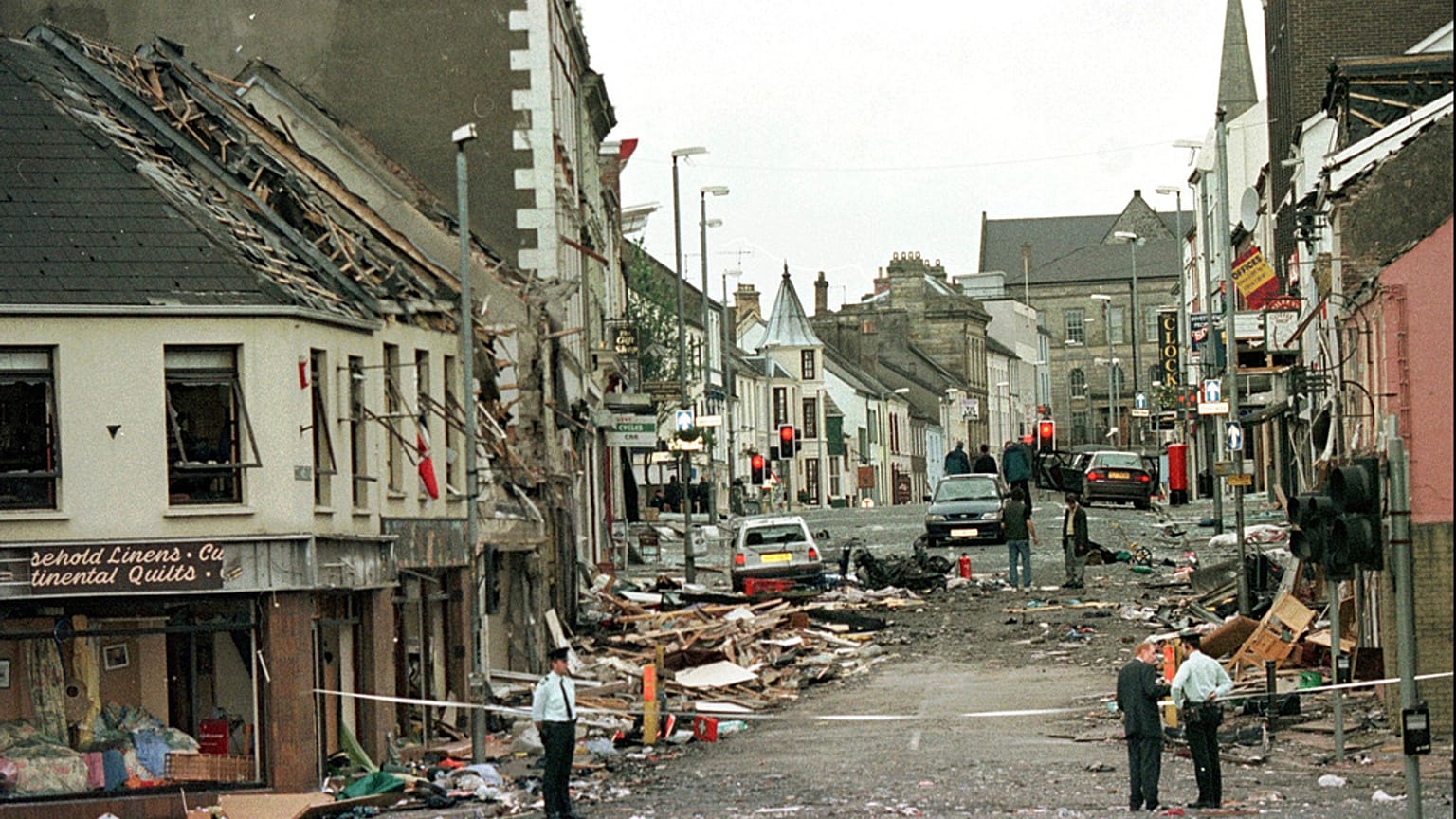
'If there was a broad lesson from the success of Northern Ireland, it’s that an inclusive process worked – and I mean inclusive in the full sense, all different parties, even including militants,' Peter McLoughlin.
As Palestinians and Israelis wait to see what comes after the ceasefire in Gaza, some are looking to Northern Ireland’s peace process in the 1990s for lessons on how to move from war to peace.
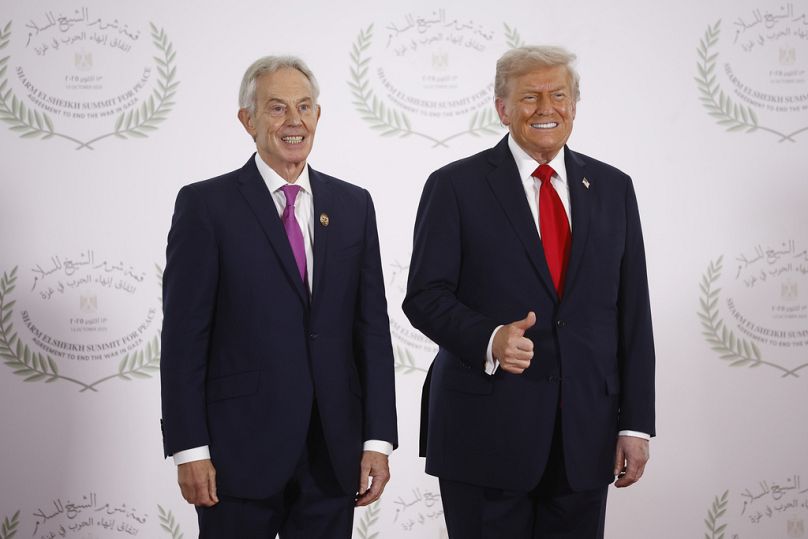
Two figures from that process, former Prime Minister Tony Blair and his former chief of staff Jonathan Powell, are back in the spotlight as they are involved in talks with the United States and other countries about Gaza’s future.
Prime Minister Keir Starmer said this week that “drawing on our experience in Northern Ireland, we stand ready to play a key role in the decommissioning of Hamas’ weapons and capability.”
During “the Troubles,” around 3,600 people were killed and 50,000 wounded in three decades of violence over Northern Ireland’s status. A peace deal, the Good Friday Agreement, was finally signed in 1998. It ended most of the fighting and led to the disarming of the Irish Republican Army (IRA) and other militant groups.
The Trump-backed plan for Gaza is much narrower. It does not deal with the wider Israeli–Palestinian conflict which began decades before the latest war. It doesn't offer a path either to Palestinian statehood, something Israel rejects but that is seen internationally as the only way to resolve the conflict.
The plan calls for Hamas to disarm, something the group refuses to do, though it says it might hand some weapons to a Palestinian or Arab authority.
In Northern Ireland, the IRA’s refusal to give up its weapons was a major problem that threatened the peace process.
Experts say there are similarities, but also major distinctions, between the Northern Ireland conflict and the devastating war in Gaza, which was sparked by Hamas’ 7 October attack on Israel, in which 1,200 people were killed and 251 taken hostage.
Israel's retaliatory offensive has reduced much of Gaza to rubble, led to famine and killed nearly 68,000 Palestinians, according to the local authorities.
Kristian Brown a politics lecturer at Ulster University in Belfast, said “The level of challenge in the Middle East now is monumental,” adding “The level of bitterness, the sense of immediate threat and the levels of destruction (in Northern Ireland) were not as cataclysmic as Gaza.”
The Irish Republican Army eventually agreed to put its arsenal “beyond use” through a secret process monitored by an international group. This happened while political talks were under way to settle the main disputes, something that more than three decades of US-led peace efforts in the Middle East have failed to accomplish.
In Northern Ireland, disarmament was slow. The IRA began giving up its weapons in 2001 and finished in 2005, seven years after the peace deal. Several other British loyalist and Irish republican militant groups also disarmed as part of the process.
“The British might be able to counsel patience and pragmatism,” said Niall Ó Dochartaigh, a professor of political science at the University of Galway. “The IRA leadership had to be helped in various ways to make that argument (for disarmament) within the organisation.
“Ultimately, decommissioning only happened in the Irish case once the IRA was satisfied that there was a political settlement bedded down,” he added. And while “the contours of a compromise settlement emerged quite early in Northern Ireland,” a similar consensus in the Middle East appears far off.
Fragile power-sharing
The 20-point plan for Gaza includes steps from ceasefire to reconstruction but leaves big questions unanswered, such as the future of Jerusalem, the return of Palestinian refugees, security arrangements, future borders and the scores of Israeli settlements and violence in the occupied West Bank.
The Good Friday Agreement was clearer, setting up a local government and power-sharing system. But even that peace has faced challenges, with occasional attacks and political crises over the years.
Despite this, Northern Ireland remains mostly peaceful. Parties once linked to violence, like Sinn Féin, now play major political roles.
According to Peter McLoughlin, a senior lecturer in politics and history at Queen’s University Belfast, the key to success of Northern Ireland's peace process was "Engaging those involved with violence and bringing them down democratic paths”.
He said excluding Hamas, which has ruled Gaza since 2007, in the future of the strip, could be a problem.
“If there was a broad lesson from the success of Northern Ireland, it’s that an inclusive process worked – and I mean inclusive in the full sense, all different parties, even including militants," McLoughlin said.
“Hamas is being excluded from the political process and is expected to give up its weapons," he added. “I don’t know how feasible that is.”
The return of key players
Tony Blair is seen as possible advisers for Gaza by Trump. Blair, prime minister from 1997 to 2007, also served as envoy to Israel and the Palestinians for the “Quartet”: the US, EU, Russia and UN. But he remains controversial for backing the Iraq War in 2003 and Trump has acknowledged that Blair might not be “an acceptable choice to everybody” in the region.
Meanwhile Jonathan Powell, Starmer’s national security adviser, who attended recent talks in Egypt was praised by US Middle East special envoy Steve Witkoff for “incredible input and tireless efforts” in reaching the agreement.
But Bronwen Maddox, the director of Chatham House, the UK-based international affairs institute, was skeptical about drawing parallels between the two processes. She said Britain “can play a small diplomatic part” in Gaza, but probably not a decisive one.
The Northern Ireland peace deal “was a successful and really important peace negotiation," she said. "But it was very much of itself, I think.”
No comments:
Post a Comment