Video: Spanish Police Chase Down Boat Laden with 6,500 Kilos of Cocaine
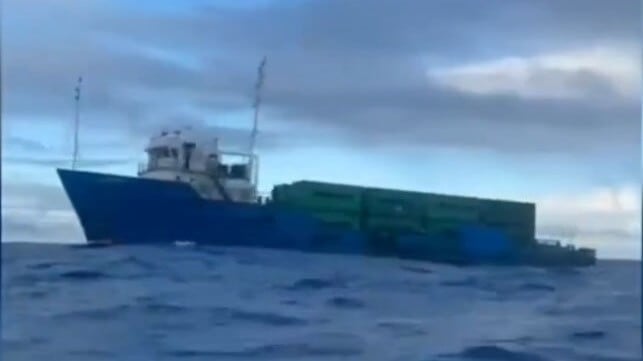
Spain’s National Police detailed a large drug bust that they report is a major blow to the smuggling operations. The bust involved international cooperation and a hunt to intercept the vessel as it made its way across the Atlantic.
This latest case began with a tip on October 8 from the U.S. Drug Enforcement Administration that reported a drug cartel was planning an effort to transport a large quantity of cocaine across the Atlantic. Ultimately, they tagged a supply ship leaving Panama’s Cristobal anchorage as the vessel suspected of undertaking the transport of the drugs.
The Spanish Navy was coordinating with the drug enforcement authorities and the police in an effort to locate the vessel as it crossed the Atlantic. Policía Nacional reports they used the information provided, as well as their experience with the modus operandi of the smugglers. They estimated the likely route of the vessel.
The Spanish Navy set up an interception effort to catch the vessel. At approximately 9:30 p.m. local time, on October 22, they identified the vessel and launched the interception. They were approximately 600 miles off the Canary Islands in international waters.
The vessel, registered in Tanzania, was a 54-meter (177-foot) supply ship. Pictures show containers stacked on the vessel’s deck.
The boarding party was able to gain access to the ship and rounded up nine crewmembers. During a search of the vessel, the police reported they became suspicious of structures they identified as not believed to be part of the ship. A closer search revealed cocaine hidden in these structures. The total haul is reported to be 6,500 kilos with an estimated street value of €340 million ($396 million).
The police report the ship was heading to the port of Vigo on the Spanish mainland. It is a busy commercial and fishing port.
The nine crewmembers aboard the vessel were placed under arrest. The police hauled the ship into the Port of Arinaga, Gran Canaria, on October 26.
It is the latest in a series of similar busts reported by the authorities, where the cartels have actually taken control of the ships and run them on smuggling trips. The Canary Weekly news outlet reports that Spain, in recent months, made large busts, including 13 tonnes of cocaine in Algeciras seized in November, 3.6 tonnes in Galicia in September, and 1.7 tonnes in Valencia earlier this month.
Amidst Soaring Port Corruption, Antwerp Struggles to Sustain Rule of Law
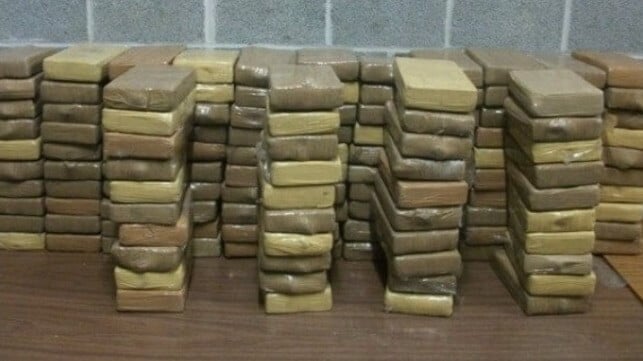
Antwerp's giant container port is notorious for cocaine smuggling, and for all of the ills that go with it - gangs, violence, bribery and corruption. These vices have seeped out into the surrounding community for years, and have gotten so bad that one investigator warns that the city could turn into a "narco-state" - an economy dominated by the illicit influence of traffickers and lacking the rule of law.
In an open letter published Monday on the website of Belgium's courts system, an anonymous investigating judge warned that a culture of corruption permeates Antwerp's docks and is working its way into the police and judicial system.
"The investigations I led in recent years—and I'm only one of 17 investigating judges in Antwerp—have led to the arrests of key port employees, customs officers, police officers, counter staff in various cities and municipalities, and, unfortunately, also justice officials in prisons and even here in this building," the judge wrote.
It starts on the quayside, and the money is so good that it is hard to resist. Moving a single container can earn a port worker more than $100,000. Retrieving one duffle bag of cocaine from a box can bring in $50,000. On the other hand, refusing to play the game and cooperate with the gangs can result in threats of violence, which are unfortunately quite credible. Smuggling gangs can even contract out an attack using open markets on social media.
"A home attack with a bomb or weapons of war, a home invasion, or a kidnapping are all easily ordered online. You don't even need to go to the dark web; a Snapchat account is all it takes. Moreover, it's not even expensive; often, a few hundred euros is enough," the judge reported.
The prevalence of violence in and around the smuggling system extends to the judiciary. Some investigators live under police protection due to serious threats from the gangs, and sometimes have to relocate to a safehouse for months at a time - all without government compensation for the extra expense.
"It is already becoming more difficult to find judges willing to rule in such cases – they are often attacked personally," the judge warned. "How long will it be before a colleague feels compelled, for their own safety, to conjure up a procedural error to avoid having to sign a conviction?"
To resolve this, the judge called for comprehensive insurance against attack damage; the ability to issue rulings anonymously; the removal of magistrate's home addresses from public databases; blocking inmates' cell phones to prevent them from coordinating crime from within jail; and a system-wide protocol for responding to threats.
"The consequences of cell phone use in prison appear to be seriously underestimated. Nearly all inmates appear to be able to use them, and in virtually all devices seized and read, we encounter new or continuing crimes," the judge warned. "You can read about the attacks in Antwerp in the newspaper. A very large number of these attacks appear to have been ordered from within the prison."
The problem could get worse before it gets better, if predictions about the volume of cocaine shipments to Europe prove accurate. The EU market is growing fast, thanks to widespread availability and falling cocaine prices, and it is among the likeliest destinations for any extra available product. Amidst soaring output in producing regions in South America, smugglers may be looking for a new home for kilos that would ordinarily flow to the United States via the Caribbean and Central American routes. Those supply lines are under heavy pressure from American airstrikes on smuggling boats, which have augmented the record-setting conventional interdiction efforts in the Eastern Pacific.
"Experience shows that criminal networks respond with detours, new transit countries," German Drug and Addiction Commissioner Hendrik Streeck told Bild last week. "For Germany, that would mean possible shifts along sea and land routes, as well as in digital distribution. . . .The U.S. administration’s announced ‘war on drugs’ could further intensify this."
No comments:
Post a Comment