Issued on: 23/10/2025 - FRANCE24
The US military killed five alleged drug smugglers in strikes against two vessels in the eastern Pacific Ocean, US Defense Secretary Pete Hegseth said on Wednesday, in an expansion of the Trump administration's use of the armed forces in its counter-narcotics campaign. On Wednesday afternoon, Hegseth said the military attacked a vessel in the eastern Pacific Ocean and killed two men on Tuesday. It was the first known US military operation in the Pacific since President Donald Trump kicked off a new offensive against the drug trade. France24 International Affairs Editor Andrew Hilliar gives his insights.
Video by: Andrew HILLIAR
Video: U.S. Kills Three as Attacks on Pacific Drug Smuggling Expand
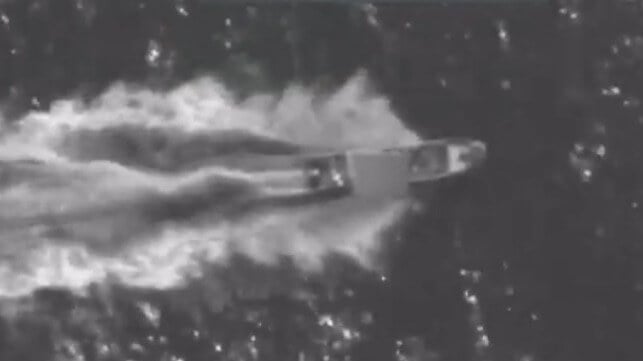
Hours after revealing the United States has expanded its lethal strikes to stop drug smuggling to the Pacific, a second strike was reported. It is seen as an escalation of the efforts that had previously highlighted the interdictions of boats with the arrest and seizure of the narcotics.
The second strike in the Eastern Pacific was announced by Pete Hegseth in a social media posting. He said three individuals were killed in the strike, which took place in international waters. Like the previous attack, the U.S. did not associate the boat with any specific country but instead said it was transiting along “a known narco-traffic route.”
In addition to the footage of the boat exploding and burning in the aftermath, the video includes scenes of apparent bales floating in the ocean. Critics have pointed out that the U.S. has not, in the past, confirmed the presence of drugs on the boats nor revealed the amount of narcotics that are being destroyed in these attacks.
“These strikes will continue, day after day. These are not simply drug runners – there are narco-terrorists,” writes Hegseth, continuing to use the administration's elevated language. Labeling them as terrorists is seen as a justification for the use of lethal force. “We will find them and kill them, until the threat to the American people is extinguished,” vows Herseth.
The administration previously acknowledged seven strikes in the Caribbean, having started in early September and continuing through last week. It reported killing 32 people, with only two known survivors of the attacks. The first reported strike in the Pacific killed two people.
The White House and Hegseth have asserted that the targeting is taking place through the use of intelligence and is focusing on known drug smuggling routes. The Navy and Coast Guard have also increased their presence in both the Caribbean and Eastern Pacific to support the increased efforts are interdiction.
Washington (AFP) – President Donald Trump and his Colombian counterpart Gustavo Petro traded angry threats Wednesday as the United States announced strikes on two alleged drug-smuggling boats in the Pacific Ocean that left five people dead.
Trump branded Petro a "thug" and suggested he was a drug trafficker leading his country to ruin, prompting the leftist leader to vow: "I will defend myself legally with American lawyers."
The US president also said vital military aid to Bogota had been cut and warned Petro -- a sharp critic of the strikes -- to "watch it," while Secretary of State Marco Rubio called the Colombian leader a "lunatic."
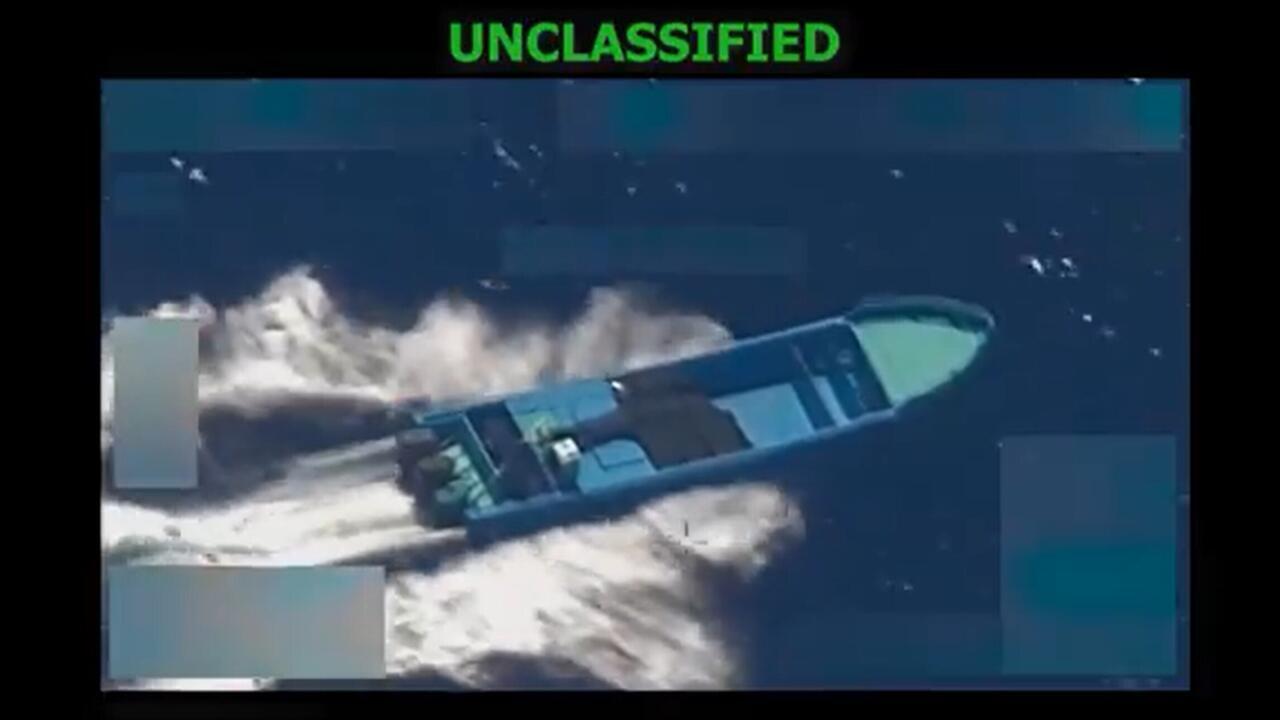
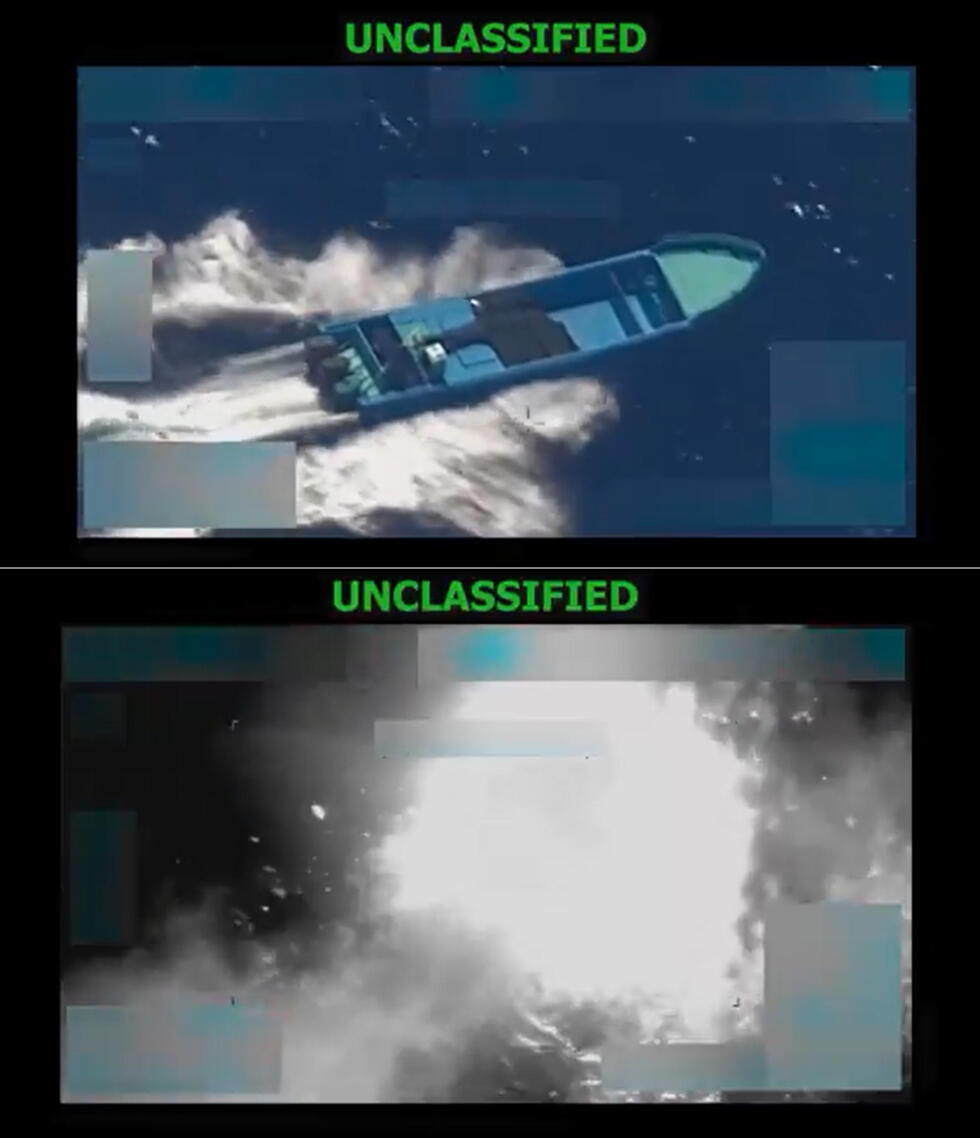
Defense Secretary Pete Hegseth meanwhile announced two strikes on boats in the Pacific -- one on Wednesday and another the day before -- in social media posts showing the vessels being engulfed in flames.
"Just as Al-Qaeda waged war on our homeland, these cartels are waging war on our border and our people. There will be no refuge or forgiveness -- only justice," wrote Hegseth.
The strikes, which Hegseth said were carried out in international waters, bring the total number of such US attacks to at least nine, with 37 people dead, according to US figures.
Until now the strikes had only taken place in the Caribbean.
The origin of the targeted vessels -- eight boats and one semi-submersible -- has not been disclosed, though some were destroyed off Venezuela's coast.
'Unacceptable'
At least one came from Trinidad and Tobago, another from Colombia, families of those killed told AFP.
Washington has deployed stealth warplanes and Navy ships as part of what it calls counter-narcotics efforts, but has yet to release evidence that its targets were drug smugglers.
The Pentagon told Congress the United States is in "armed conflict" with Latin American drug cartels, designating them as terrorist groups and describing suspected smugglers as "unlawful combatants."
Experts say the summary killings are illegal even if they target confirmed traffickers.
Regional tensions have flared, with Colombia recalling its ambassador to Washington and Venezuela accusing the United States of plotting to overthrow President Nicolas Maduro, who said Wednesday that his country has 5,000 Russian man-portable surface-to-air missiles to counter US forces.
Colombia is the world's top cocaine producer, but has worked for decades alongside the United States to curb production, which is controlled by a range of well-funded paramilitary, cartel and guerrilla groups.
But relations have soured markedly since Trump and Petro have taken power, with the fued intensifying in recent weeks over the Republican president's deadly anti-drug campaign.
"Under no circumstances can one justify that kind of threats and accusations that have no basis whatsoever," Colombian ambassador Daniel Garcia-Pena told AFP after being recalled to Bogota for consultations.
"There are elements that are unacceptable," he said, visibly alarmed after being told what Trump had said minutes before.
"We are facing a US government that is trying to change the paradigm of its international relations" Garcia-Pena added, "where uncertainty unfortunately plays a very important role."
"At stake here is a historic relationship of more than 200 years that benefits both the United States and Colombia," he said.
© 2025 AFP
A Trumpian Headache
President Donald Trump’s use of the U.S. military to kill persons on speed boats in international waters, or in territorial waters claimed by other sovereign nations – all 1,500 miles from the U.S. – has posed grave issues of due process. The Constitution’s guarantee of due process requires it for every person, not just Americans. The operative language of the Fifth Amendment is that “No person… shall be deprived of life, liberty, or property without due process of law.”
The Trump administration has claimed that it can kill whomever it designates as an unlawful enemy combatant – it prefers the political phrase “narco-terrorist” – and the due process it provides is the intelligence gathered by American spies and the White House analysis of that intelligence. This secret analysis, the government’s argument goes, satisfies the president that the folks he has ordered killed are engaging in serious and harmful criminal behavior, and somehow is a lawful and constitutional substitute for the jury trial and its attendant procedural protections that the Constitution commands.
To be fair, I am offering an educated guess as to the administration’s argument. The reason we don’t know the argument precisely is that the Department of Justice calls it classified. This is, of course, a non sequitur. How could a legal argument possibly be secret in light of well-settled First Amendment jurisprudence? It can’t. The Supreme Court has ruled consistently that there are no secret laws or secret rationales for employing the laws. Moreover, it has ruled that the First Amendment assures a public window on government behavior whenever it seeks to take life, liberty or property.
The last time we went through efforts to obtain the government’s legal argument for presidential targeted killing was during the Obama administration. When President Barack Obama ordered the CIA to kill Anwar al-Awlaki and his son – both natural born American citizens – it, too, claimed a secret legal rationale. Yet some brave soul who had access to that rationale leaked it to the press. The rationale likened killing al-Awlaki and his 16-year-old son to police shooting at fleeing bank robbers who are shooting at the police.
The Obama justification was absurd, as al-Awlaki was not engaged in any violent acts. He had been followed by 12 intelligence agents during his final 48 hours of life. Those agents couldn’t legally arrest him, because he hadn’t been charged with a crime, but in the Obama logic, they could legally kill him.
When those of us who monitor the government’s infidelity to the Constitution publicly pointed out the flaws in the Obama argument, it reverted to the argument that I suspect the current administration is secretly using. Namely, that its secret internal deliberations are a constitutionally adequate substitution for traditional due process.
It gets worse.
Before al-Awlaki and his son were murdered, al-Awlaki’s father unsuccessfully brought an action in the U.S. District Court in Washington, D.C., against President Obama, in which he argued that the president was planning to kill his son, and he sought an injunction against that. The DOJ argued that there were no such plans in the works and – even if there were – the father lacked standing to seek the injunction since, by his own admission, the president’s plans were aimed at his son, not him. The Constitution requires standing – only those truly and directly and uniquely harmed by a defendant may invoke the protection of a federal court.
During the oral argument on the government’s successful motion to dismiss the elder al-Awlaki’s case, the court opined that the son – the one who was murdered mere weeks after this case was dismissed – would have had standing to sue. The son and the grandson were literally evaporated by a CIA drone while peacefully sitting at an outdoor cafe in Yemen.
Now back to the Trump administration and its murdering persons on the high seas. The stated public reason for doing so – this is a political reason, not a valid legal one – is that it is better to kill these folks before the drugs they are carrying reach their willing American buyers.
But these killings are premised on success, so that there are no survivors to bring a cause of action against the president and the government. Last week, the Department of Defense announced to its dismay that in one of the seven attacks on speedboats in the Caribbean, it failed to kill all the passengers, and two survivors were “rescued” and arrested by the U.S. Navy.
Surely the administration did not expect this legal quagmire. An arrest can only be based on probable cause of crime. What probable cause did the Navy have to arrest the survivors after it had destroyed their boat and any evidence in the boat? Of course, the government won’t say. What legal rationale did the administration employ when deciding what to do with the survivors? Again, the government won’t say. If they were the narco-terrorist monsters – again, a political phrase, not a legal one – that President Trump has claimed them to be, why did the Navy set them free?
This is not a matter of trusting President Trump or not, or of approving of his goals or not. It is a matter of complying with due process procedures as old as the republic. The sine qua non of due process is a fair, transparent and indifferent evaluation of evidence by a neutral judicial officer before guilt can be established and punishment administered – all pursuant to statutes duly enacted. Channeling Justice Felix Frankfurter, the history of human freedom is paying careful attention to the procedures the government employs.
Now the administration has on its hands that which it most feared – living plaintiffs with standing to challenge the president’s authority in a federal court. They have claims for attempted murder and kidnapping. Those of us who believe that the Constitution means what it says welcome this challenge.

No comments:
Post a Comment