AG
Silver price soars to record following Comex outage
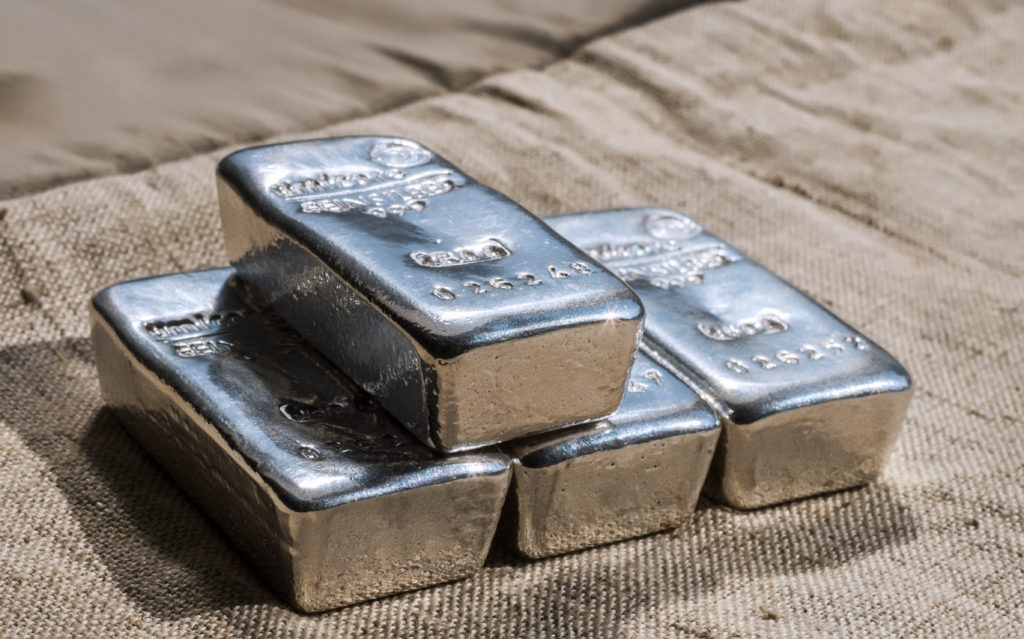 Stock image.
Silver soared to an all-time high on Friday following an outage on the Comex due to what the exchange operator CME calls a “cooling system failure”.

Spot prices rose 4% to a new record of $55.66 per oz., surpassing its peak set last month during a historic squeeze in the London market. Three-month futures also jumped 5%, trading within a similar range.
The rally comes amid erratic price moves and thin liquidity in the silver market, as the Comex recovers from one of its worst outages in years. Trading of futures was halted for over 11 hours prior to resumption in US morning time.
“It impacted a lot of the futures markets globally; it certainly had more of an impact on some of the key industrial metals, some of the commodity-linked futures markets,” Christopher Kramer, a portfolio manager and senior trader at Neuberger Berman, told Reuters.
“The market impact is quite significant because without the CME, spreads on spot gold prices, for example, would typically widen with spot liquidity providers not having much confidence in pricing without the future,” Fawad Razaqzada, market analyst at City Index and Forex.com, also said.
Silver’s new high comes just over a month after a severe supply squeeze in the dominant silver trading hub in London, which sent prices soaring above levels in Shanghai and New York.
While an inflow of 54 million oz. into the UK has since eased the squeeze, the global market still remains tight. Silver inventories in warehouses linked to the Shanghai Futures Exchange recently hit their lowest level since 2015, while Shanghai Gold Exchange volumes are back to the smallest in more than nine years, according to bourse and brokerage data.
Traders are also monitoring any potential tariff on silver after the precious metal was recently added to the US Geological Survey list of critical minerals. While 75 million oz. have left the vaults of the Comex futures exchange in New York since early October, according to Bloomberg, fears of a sudden premium for US silver have caused some to hesitate before shipping metal out of the country.
Supported by uncertainties around US trade policy, the precious metal has risen more than 72% this year, even outperforming its more recognized peer gold.
Silver soared to an all-time high on Friday following an outage on the Comex due to what the exchange operator CME calls a “cooling system failure”.
Spot prices rose 4% to a new record of $55.66 per oz., surpassing its peak set last month during a historic squeeze in the London market. Three-month futures also jumped 5%, trading within a similar range.
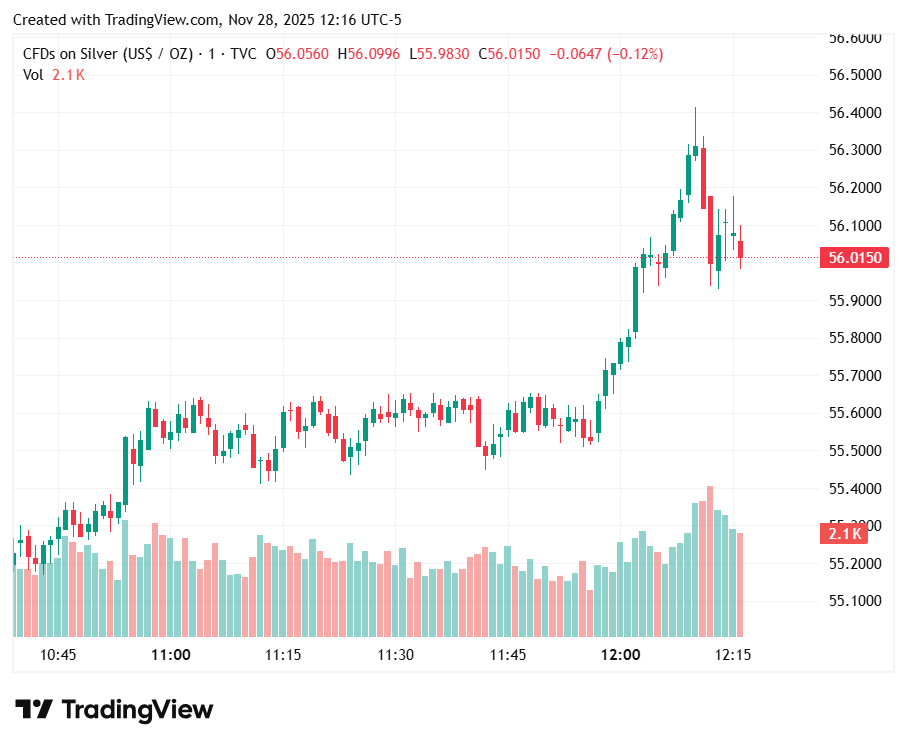
The rally comes amid erratic price moves and thin liquidity in the silver market, as the Comex recovers from one of its worst outages in years. Trading of futures was halted for over 11 hours prior to resumption in US morning time.
“It impacted a lot of the futures markets globally; it certainly had more of an impact on some of the key industrial metals, some of the commodity-linked futures markets,” Christopher Kramer, a portfolio manager and senior trader at Neuberger Berman, told Reuters.
“The market impact is quite significant because without the CME, spreads on spot gold prices, for example, would typically widen with spot liquidity providers not having much confidence in pricing without the future,” Fawad Razaqzada, market analyst at City Index and Forex.com, also said.
Silver’s new high comes just over a month after a severe supply squeeze in the dominant silver trading hub in London, which sent prices soaring above levels in Shanghai and New York.
While an inflow of 54 million oz. into the UK has since eased the squeeze, the global market still remains tight. Silver inventories in warehouses linked to the Shanghai Futures Exchange recently hit their lowest level since 2015, while Shanghai Gold Exchange volumes are back to the smallest in more than nine years, according to bourse and brokerage data.
Traders are also monitoring any potential tariff on silver after the precious metal was recently added to the US Geological Survey list of critical minerals. While 75 million oz. have left the vaults of the Comex futures exchange in New York since early October, according to Bloomberg, fears of a sudden premium for US silver have caused some to hesitate before shipping metal out of the country.
Supported by uncertainties around US trade policy, the precious metal has risen more than 72% this year, even outperforming its more recognized peer gold.
World’s largest silver bar unveiled in Dubai

The Dubai Multi Commodities Centre (DMCC) has introduced the world’s largest silver bar in celebration of the founding of the United Arab Emirates.
The bullion — weighing 1,971 kilograms and measuring 1.3 metres long — has set a Guinness World Record, and it serves as a symbol of the UAE’s national ambition, craftsmanship and innovation, DMCC said in a press release.
As part of a landmark project involving DMCC and leading industry players, the bar is now set to be tokenized through DMCC’s Tradeflow platform, marking the first time a Guinness-recognized metal bar will undergo tokenization under a regulated framework.
The initiative follows DMCC’s recently announced strategic partnership with the Dubai Virtual Assets Regulatory Authority (VARA), designed to accelerate the development of secure, transparent and scalable frameworks for tokenized commodities.
The tokenization project brings together UAE-based precious metals refiner Sam Precious Metals, responsible for the bar’s production; Tokinvest, a VARA-regulated platform leading the digital tokenization and issuance process; and Brink’s, which will oversee secure storage and logistics.
This world-first initiative forms a key milestone in DMCC’s expanding program to advance commodities tokenization and enhance transparency, traceability and legal certainty across global precious metals markets.
Tokinvest will register the asset on DMCC Tradeflow, the UAE’s leading online system for registering and pledging commodities – ensuring robust oversight and a trusted environment for fractional ownership, subject to regulatory approvals.
“This initiative reflects DMCC’s broader mission to connect trade, commodities, finance and technology, demonstrating how physical assets can be digitized and accessed through trusted and transparent frameworks,” Ahmed Bin Sulayem, executive chairman and CEO of DMCC, stated.
“As we accelerate our tokenization program with key partners including VARA, Sam Precious Metals, Tokinvest and Brink’s, projects like this reinforce Dubai’s position as the global benchmark for practical, investable and regulated real-world asset innovation,” he added.
Under its partnership with VARA, the parties will advance pilot projects across gold, diamonds and other physical assets; enhancing investor education and market awareness; and collaborating on data sharing and sector analysis to inform future regulatory policy.
“Dubai continues to show the world what regulated innovation looks like. Tokenizing a Guinness-record-breaking bar of silver, weighing 1,971 kg to mark the formation of the UAE, is not only an honour but a milestone for the entire RWA industry,” said Scott Thiel, co-founder and CEO of Tokinvest.
The silver bar was unveiled at the 13th Dubai Precious Metals Conference earlier this week.
Site visit: Minaurum eyes first resource at Alamos in Mexico within weeks
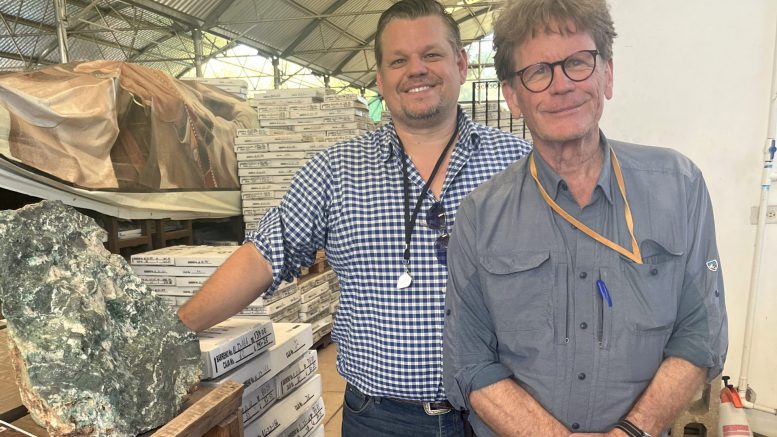
On a plateau high up in the Alamos mountain ranges of Mexico’s Sonora state, Stephen Maynard casts a sweeping gesture across the valley, indicating where the two main shoots of the Promontorio vein zone intersect at the Alamos silver project.
Maynard, the vice-president of exploration at Minaurum Gold (TSXV: MGG; US-OTC: MMRGF), sees the potential as the company targets an initial resource by year’s end that might hold 50 million oz. silver-equivalent oz. grading over 300 grams per ton. Four rigs were turning during a November site visit.
“The dual zone runs right down through the valley – the vein zones are all in the footwall side of that structure,” the executive said, noting Minaurum has identified 26 separate vein zones. “We’ve drilled 19 of them, and have hit significant mineralization in 12 or more.”
Vancouver-based Minaurum Gold’s Alamos project, initially a small historic district with three known veins, has significantly expanded. After eight years of exploration, the entire project now covers 370 sq. km, and the core 5,000-metre area currently undergoing resource drilling is permitted for underground mining.
Watch a video of the site visit:
The drill program has already returned high‑grade intercepts.
“That maiden resource is going to be developed on just two of the 26 vein zones, so we have considerable potential to expand that resource in the future,” Maynard said.
Last month, Minaurum reported 5.85 metres grading 380 grams silver per tonne (476 grams silver‑equivalent) from 373.75 metres depth and 21.45 metres of 54 grams silver and 0.37 gram gold (for 220 grams silver-equivalent) from 156 metres depth.
“Drilling at both Europa and Promontorio continues to confirm the continuation of strong, wide zones of high-grade silver mineralization at depth and along strike,” Minaurum CEO Darrell Rader said in an Oct. 16 release.
Coeur, Agnico
The consolidation potential in the district is high, with tier-one companies working towards production in what amounts to a modern southern Sonora exploration boom.
Coeur Mining (NYSE: CDE) obtained rights to the nearby Las Chispas operation in 2015 and began production in 2022. Agnico Eagle Mines’ (TSX, NYSE: AEM) Pinos Altos mine, just over the Chihuahua state border, produced 88,433 oz. gold last year, with another 80,000 oz. in the current forecast.

The Minaurum team is the same it brought on board from Silvercrest after Coeur acquired it in a $1.7-billion (C$2.4-billion) deal last year. Most recently, the team defined high-grade veins in the historical Las Chispas district.
Maynard has spent more than 30 years on precious-metal exploration, mainly in Latin America. He was instrumental in the discovery of the Cerro de San Pedro gold deposit with Metallica Resources, now part of New Gold (TSX: NGD), and Eldorado Gold’s (TSX: ELD; NYSE: EGO) Efemçukuru gold deposit in Turkey.
The 1-km-long Promontorio zone consists of many veins, where drilling has confirmed significant skarn/carbonate replacement mineralization. This zone, along with Europa, is one of the highest-priority targets. Minaurum has, to date this year, completed 35 holes on the Europa, Promontorio and Travesia vein zones as part of a $9-million, 10,000-metre infill drilling program.
The team is also examining historical workings – outcropping markings above ground and handwritten notes left at key junctures throughout the old mine’s underground workings.
Silver-rich history
A significant silver boom occurred in the region after Jesuit missionaries discovered rich silver and gold deposits in 1683, and a vein discovered in the 17th century in nearby La Aduana gave rise to the nearby town of Álamos itself.
The Alamos system produced about 200 million oz. silver from then to the 1910-1920 Mexican Revolution from three separate mines. Historical reports indicate mine widths of up to 20 metres grading more than 2,000 grams silver per tonne and 3-4% copper.
“Álamos exists today because of the bountiful silver mines in the area,” the Alamos History Association reports. Álamos grew into a major mining and religious hub in colonial Mexico, according to historical records.
During this time, the old Promontorio mine was a continuous producer for over 150 years, with a historic mint record of 46 million oz. of refined silver.
“When we looked at these articles from a hundred years ago, and we were asking the same questions – I imagine it just evolved that way,” Maynard said.

Underground, Maynard led the tour group through the old tunnels, pointing to historical exploration evidence along the way – documents pinned to the walls, contained in plastic binders, with sketches of grade findings – signalling where to focus drilling and which areas to pass over.
Along the path, an altar is carved into the stope wall, with several catholic prayer candles – perhaps a monument to the Jesuit priests who made this discovery centuries ago.
‘Chuqui’
Resource-definition drilling continues to cut high grades.
A second batch of results last month brought the tally of completed holes to 35 and included 4.8 metres of 154 grams silver (287 grams silver-equivalent) from 334.9 metres depth, including 0.5 metre of 771 grams silver and 0.5 gram gold (for 1,029 grams silver-equivalent) at Promontorio and 3.08 metres of 369 grams silver (for 523 grams silver-equivalent) from 494.45 metres depth at Europa.
In the core shack, Rader and Maynard point out differences between the zones and identify minerals in the laid out drill core. They also proudly display a high-grade specimen embedded in the Promontorio vein – what the locals call a “Chuqui” meaning “the good stuff.”
ESG pitch
Minaurum has strong community relations and ESG credentials.
In addition to being the only permitted “new” silver discovery in Mexico, the company has signed 29-year agreements with local communities, covering exploration through exploitation.
The company is also tying up water resources by considering strategic acquisitions of reservoirs.
The drills turn around the clock, manned by Indigenous staff. Donkeys bring diesel fuel to the rigs high up in the mountains – an homage to the historical mining transport methods.
These docile and well-cared-for creatures each trek up the narrow mountain path with two jerrycans strapped to their backs, leaving the lowest possible environmental impact.

Minaurum plans to raise more funds early next year to support the resource update and fund progress towards outlining 100 million ounces.
The share structure shows more than 400 million shares outstanding, with large holdings by European investors, family offices and private equity groups.
When it comes to resource expansion drilling, as Ryder notes, “We’re not afraid to step out.”
No comments:
Post a Comment