Putin orders road map for Russian rare earths extraction
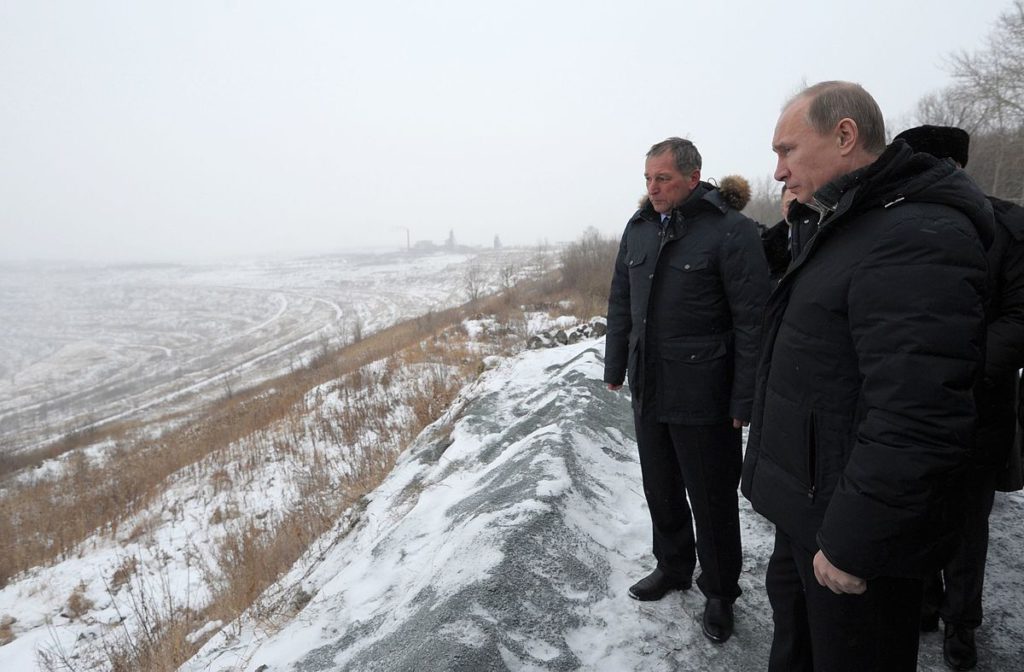
Russian President Vladimir Putin on Tuesday ordered the Russian cabinet to draw up by December 1 a road map for the extraction of rare earth minerals.

In a list of tasks for ministers published on the Kremlin website, Putin also ordered the cabinet to take measures to develop transport links at Russia’s borders with China and North Korea.
Rare earths – used in smartphones, electric vehicles and weapons systems – have taken on vital strategic importance in international trade.
In April, US President Donald Trump signed a deal with Ukraine that will give the US preferential access to new Ukrainian minerals deals and fund investment in the country’s reconstruction.
Russia says it is also interested in partnering with the US on rare earth projects, but prospects have been held up by a lack of progress towards ending the war in Ukraine.
China, the dominant producer of rare earths, has hit back at US tariffs this year by placing restrictions on their export.
Putin’s order – a summary of action points from a Far Eastern Economic Forum he attended in Vladivostok in September – did not go into detail about Russia’s rare earths plan.
Among other points, he also instructed the government to develop “multimodal transport and logistics centres” on the Chinese and North Korean borders.
Putin said the locations should include two existing railway bridges linking Russia and China and a planned new bridge to North Korea which he said must be commissioned in 2026.
Both of Russia’s far eastern neighbours have deepened economic ties with Moscow since Western countries imposed sanctions on it over its war in Ukraine.
(By Mark Trevelyan and Felix Light; Editing by Andrew Osborn)
Can Africa ride critical minerals wave to economic boom?
As global powers scramble for critical minerals, African countries are pushing for new investment to process more of their own raw materials and meet their people’s demands for economic growth and jobs, analysts say.
To capitalize on the burgeoning demand, the continent must address power shortages, skills gaps, trade barriers and limited industrial capacity.
“This is an unprecedented opportunity for Africa to get on the value-chain bandwagon,” said Hany Besada, senior fellow at the Firoz Lalji Institute for Africa at the London School of Economics and associate professor at the Wits School of Governance.
Africa has around 30% of the world’s mineral reserves, including cobalt, lithium and nickel.
The International Energy Agency expects lithium demand to grow fivefold by 2040, graphite and nickel demand to double and demand for cobalt and rare earth elements to increase by 50% to 60% by 2040.
Africa needs to “build local value chains that integrate mining with refining and manufacturing and innovation, and this goes hand-in-hand with the green transformation of the continent’s economies,” Besada said.
For example, Zimbabwe, Africa’s top lithium producer, has been nudging mining companies to process the minerals in the country to help lift its economy.
“We are creating new jobs, not only in the mining sector, but in the value addition of our minerals,” Evelyn Ndlovu, minister of environment, climate and wildlife, told the Thomson Reuters Foundation. “We have got a lot of people coming in to invest in Zimbabwe.”
China’s Zhejiang Huayou Cobalt said in October it would start producing lithium sulphate during the first quarter of 2026 from its new $400 million plant in Zimbabwe.
At the United Nations’ COP30 climate talks in Brazil in November, African countries hope to win support, especially from the Global South, to ensure demand for the minerals fuelling the digital economy and clean energy transition translates into growth, jobs and development.
Africa “wants to be a meaningful participant and beneficiary of the green economy,” said Ibrahima Aidara, deputy Africa director at the National Resource Governance Institute.
“That means an industrial policy that creates jobs, protects rights and enables countries to climb the value chain and not be trapped at the bottom.”
What stands in the way
Aidara pointed to the Democratic Republic of Congo, which supplies 70% of the world’s cobalt, as an example of a country where mineral wealth has led to child labour, displacement and armed conflict.
Across Africa, barriers to mineral processing – called beneficiation – include a lack of electricity, high tariffs between African countries, infrastructure gaps and cumbersome customs procedures.
“Addressing barriers to trade is critical … If you don’t do that, efforts towards (mineral) beneficiation and industrialization remain aspirational,” Besada said.
Regional cooperation is also key, including initiatives like the African Continental Free Trade Area (AfCFTA), designed to unify all 1.4 billion people in more than 50 nations into a single market.
US President Donald Trump’s imposition of tariffs could give momentum to the AfCFTA, which was officially launched in 2021 but has less than half of member states actively trading under the framework.
The African Union’s Green Minerals Strategy, launched this year, and the Lobito Corridor railway, which connects Zambia’s copper belt to Angola’s Atlantic coast, are examples of cooperation that can help make Africa more than a mere supplier.
In West Africa, the minerals boom has sparked a resurgence of resource nationalism, with countries, particularly military regimes like the one in bauxite-rich Guinea, imposing conditions on foreign mining companies to force value addition.
But Aidara said this approach might not ensure lasting benefits to local communities.
“This problem … is bigger than individual countries. We believe at (the) national level we need … well-defined and evidence-based strategies to leverage minerals and create more economic and industrialization opportunities.”
Listening to Gen Z
The demand for better use of resources is also coming from Africa’s streets.
Over the past year, so-called Gen Z protests from Kenya to Madagascar have seen young Africans express their frustration over everything from corruption to power cuts. Demonstrations in Madagascar led to the fall of the president in October.
“Civil society groups and large populations, including the young, hunger for change. With digital proliferation, they see how things have changed in neighbouring countries,” Besada said.
Governments, even dictatorial ones, are mindful that this engaged population may no longer accept that only rich elites, whether they are foreign or local, benefit from national resources.
Growing African middle classes also play a role.
“They pay taxes, they have more of an interest in how economies are shaped and run. They have more to lose if things go badly, and governments understand this,” Besada said.
At COP30, the drive to ensure the energy transition benefits local populations will be on the agenda.
More than 100 civil society groups, including Amnesty International and rights organizations from Brazil to Indonesia, want governments to put transition minerals, and communities affected by mining, at the centre of climate action.
They urged the United Nations and governments to work with Indigenous peoples and civil society, among others, to strengthen governance of the sector.
“Without a drastic shift, the transition will exacerbate and entrench unjust practices and repeat the exploitative patterns of the past,” the groups said in an open letter.
(By Clar Ni Chonghaile and Kim Harrisberg; Editing by Jack Graham and Ayla Jean Yackley)
EU, China created special channel to ensure rare earth supplies, commissioner says
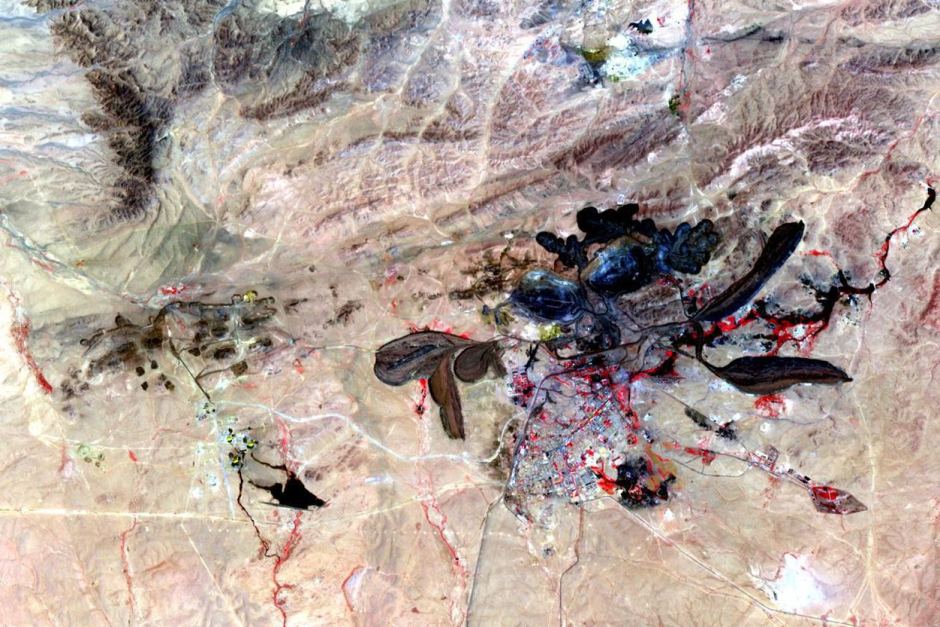
The European Union has established a “special channel” of communication with Chinese authorities to secure the flow of rare earth materials vital for EU industries, EU Trade Commissioner Maros Sefcovic said on Wednesday.
The move follows China’s export controls on rare earths, which raised concerns in Europe after their introduction earlier this year about potential disruptions to the production of electric vehicles, wind turbines and other technologies that depend on permanent magnets.
A series of deals with Europe and the US later eased the supply crunch, while the European Union, the US and others are also racing to build alternatives to the Chinese rare earth supply chain.
Sefcovic said he had discussed the issue directly with Chinese Commerce Minister Wang Wentao several times, stressing that poorly managed export procedures could have a “very negative impact on production and manufacturing in the EU”.
Sefcovic was speaking in Kuwait, where he was attending the 2025 GCC-EU Business Forum, and made the remarks in response to a Reuters question.
Brussels and Beijing agreed to prioritize applications from European companies, and through the new channel, officials on both sides are working together to review and fast-track export permits for rare earth materials, he said.
According to Sefcovic, European firms have submitted around 2,000 applications to Chinese authorities since the controls came into force, with just over half already approved.
He said Brussels was continuing to press Beijing for faster processing of the remaining cases, while simultaneously working to diversify supply by developing new sources in Europe, including from rare earth and magnet production in Estonia.
On Tuesday, the EU Commission said EU and Chinese officials had discussed general licenses to ease the export of rare earths, to match the kind of licenses the United States says it secured from China.
(By Ahmed Hagagy; Editing by Aidan Lewis)
No comments:
Post a Comment