AU
Fresnillo enters Canada with $556M Probe Gold acquisition
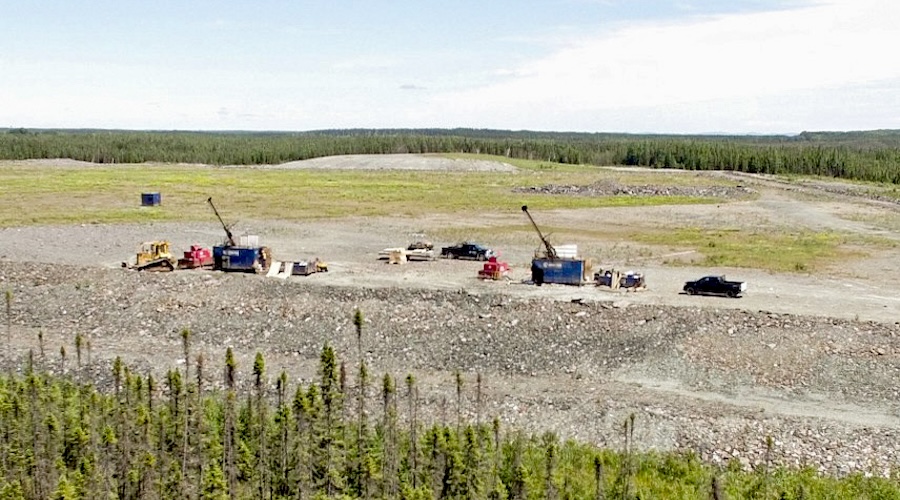
Mexican precious metals miner Fresnillo (LON: FRES) is acquiring Canada’s Probe Gold (TSX: PRB) for C$780 million ($556 million) in cash, marking the company’s first entry into Canada.

Fresnillo will pay C$3.65 per share, representing a 39% premium to Probe Gold’s last closing price and 24% above its 30-day average as of Oct. 30. The deal gives Fresnillo access to Probe’s 10 million ounces of gold reserves, including 8 million ounces at the Novador project in Quebec’s Val-d’Or Mining Camp.
The acquisition also includes the early-stage Detour Gold Quebec property, which Fresnillo said could benefit from its technical expertise and exploration experience.
Shares in Fresnillo, the world’s largest silver producer and one of Mexico’s biggest gold miners, rose 1.7% to 22.86p in early London trading. The stock has surged more than 250% this year, buoyed by a 50% rise in gold prices, which climbed above $4,030 a troy ounce in early Friday trade, as well as by a 70% rise in silver prices this year to $49.04 per ounce as of Friday.
Focus on Mexico
Fresnillo CEO Octavio Alvídrez said the acquisition aligns with the company’s strategy of pursuing disciplined, value-driven mergers and acquisitions, while focusing on early-stage precious metals projects that complement its core operations.
He added that Probe’s assets would “meaningfully” strengthen Fresnillo’s project pipeline, with Mexico remaining central to its growth strategy.
Probe Gold CEO David Palmer said in a separate statement that after nearly a decade of development, it was time to hand over Novador to a more experienced operator capable of advancing it through permitting and construction. The project is expected to produce more than 200,000 ounces of gold annually for over a decade.
Fresnillo said it plans to continue developing Novador following the deal’s completion. The company currently operates eight mines and holds exploration projects in Peru and Chile.
All directors and officers of Probe, along with Eldorado Gold (TSX: ELD)(NYSE: EGO), which collectively owns about 12% of the company, have agreed to support the transaction.
China ends gold tax break in setback for key bullion market
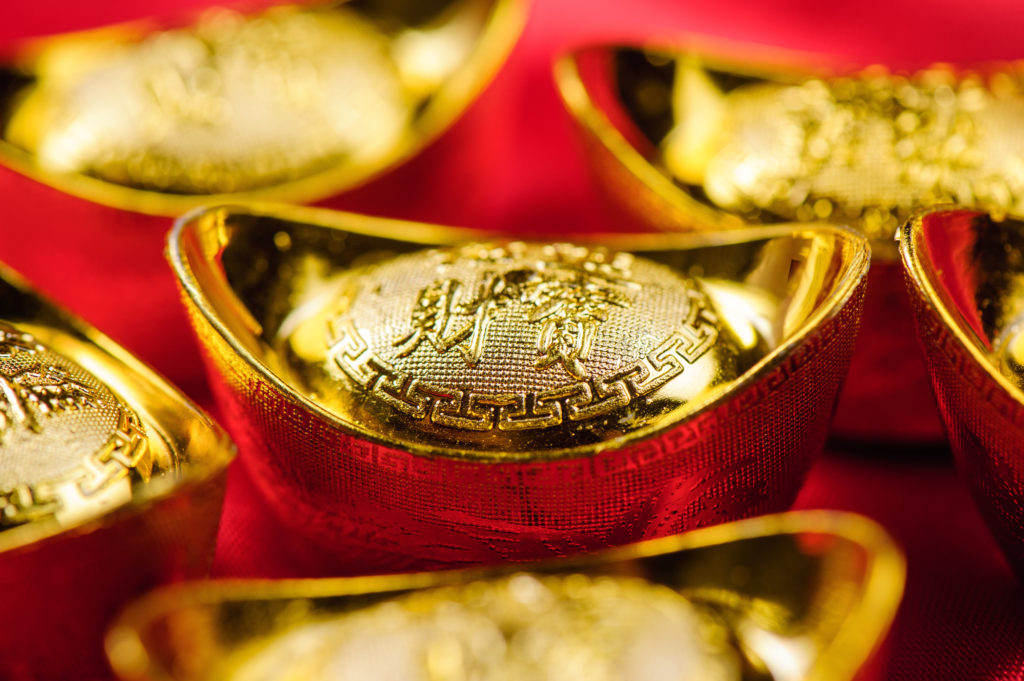
China is scrapping a long-standing gold tax incentive in a potential setback for consumers in one of the world’s top bullion markets.
Starting on Nov. 1, Beijing will no longer allow retailers to offset a value-added tax when selling gold they bought from the Shanghai Gold Exchange, whether sold directly or after processing, according a new legislation from the Ministry of Finance.
The rule covers both investment products – such as high-purity gold bars and ingots, as well as coins approved by the People’s Bank of China – and non-investment uses including jewelry and industrial materials.
The move should bolster government revenue at a time when a sluggish property market and weak economic growth have strained public coffers. But the changes will also likely increase the cost of buying gold for Chinese consumers.
A buying frenzy among retail investors around the world recently helped gold’s record-breaking rally move to overbought territory, setting the precious metal up for an abrupt correction.
Gold’s worst rout in more than a decade coincided with a reversal of relentless buying through exchange-traded-funds, which had been on the rise since late May. It also matched the end of seasonal buying linked to festivities in India. A trade truce between the US and China, meanwhile, eased demand for bullion as a haven asset.
But gold is still holding near the $4,000-an-ounce milestone it breached earlier in October, and many of the fundamentals that pushed it higher are expected to remain: buying by global central banks, US interest-rate cuts, and a host of global uncertainties that still make its perceived safety appealing to investors.
Many in the industry still see prices nearing $5,000 an ounce in about a year.
(By Yihui Xie)
GNOMES OF ZURICH
Record gold profit adds shine to Swiss National Bank’s results
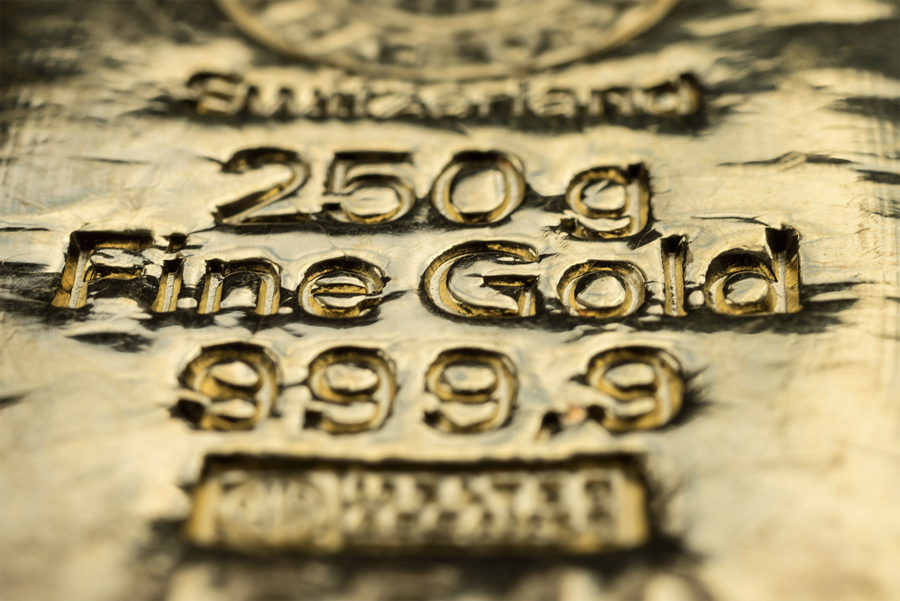
The Swiss National Bank reported on Friday a third-quarter profit of 27.93 billion Swiss francs ($35 billion), helped by the booming value of its gold reserves.
The central bank posted a valuation gain of 14.33 billion francs on its gold holdings between June and September, up from the 4.41 billion franc gain on the precious metal last year.
It is a record gold profit since the SNB started using the market value of the metal in its profit calculations in 2000.
It was also significantly more than the average quarterly profit the central bank has made from its gold holdings over the last 10 years, which was less than 2 billion francs, according to UBS calculations.
Safe-haven demand
The SNB, with unchanged gold holdings of 1,040 metric tons, has benefited from gold prices, which have risen by 53% this year as investors hedged against increased political and geopolitical uncertainties.
The weakening US dollar has also made gold cheaper for holders of other currencies, boosting demand, while rate cuts by the Federal Reserve have reduced the yield from other less risky assets like US. Treasuries, making gold more attractive.
“It’s very unusual for the SNB to make so much profit from gold, but the gains reflect the big price gains gold has had this year,” said UBS economist Florian Germanier.
“The profit is purely a nice side effect of having an asset which is considered the ultimate safe haven and which the SNB is required to hold to diversify its holdings and to carry out monetary policy,” he added.
During the third quarter, the SNB also reported a gain of 13.63 billion francs from its foreign currency positions, the bonds and stocks it has bought with foreign currencies it has purchased.
As a result, the central bank improved its third-quarter profit to 27.93 billion francs, up from a 5.67 million franc profit a year earlier.
($1 = 0.7931 Swiss francs)
(By John Revill; Editing by Ludwig Burger, Mark Potter and Emelia Sithole-Matarise)
Global gold demand climbs 3% to quarterly record as investment soars, WGC says
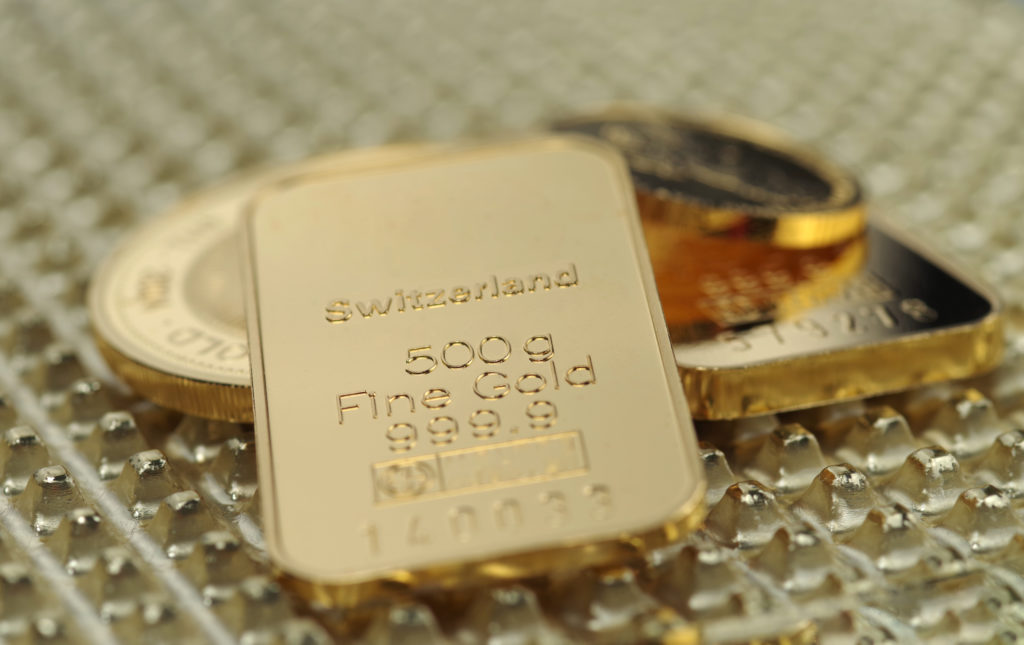 Gold bars and gold coins. Stock image.
Global gold demand rose by 3% year-on-year to 1,313 metric tons, the highest quarterly number on record, in the third quarter as investment demand soared, the World Gold Council said on Thursday.
Spot gold prices are up 50% so far this year after hitting a record high of $4,381 an ounce on October 20 on safe-haven demand driven by geopolitical tensions, US tariff uncertainty and more recently a wave of fear-of-missing-out or “FOMO” buying.
“The outlook for gold remains optimistic, as continued US dollar weakness, lower interest rate expectations, and the threat of stagflation could further propel investment demand,” said Louise Street, senior markets analyst at the World Gold Council.
“Our research indicates the market is not yet saturated.”
Demand for gold bars and coins rose 17% in the third quarter, led by India and China, while inflows into physically backed gold exchange-traded funds jumped by 134%, said the WGC, an industry body whose members are global gold miners.
Together these categories offset a continuing sharp fall in gold jewellery fabrication, the largest category of physical demand, which fell 23% to 419.2 tons as high prices affected purchases by buyers all other the world.
Central banks, another major source of gold demand, increased purchases by 10% to 219.9 tons in the third quarter, the WGC estimated, based on reported purchases and its assessment of unreported buying.
Central banks have bought 634 tons in January-September, “trailing behind the exceptional highs of the last three years, but comfortably above pre-2022 levels,” the WGC said.
On the supply front, recycling added 6% and mine production increased by 2% in the third quarter, bringing the quarterly gold supply to a record high.
(By Polina Devitt; Editing by Ronojoy Mazumdar)
Global gold demand rose by 3% year-on-year to 1,313 metric tons, the highest quarterly number on record, in the third quarter as investment demand soared, the World Gold Council said on Thursday.
Spot gold prices are up 50% so far this year after hitting a record high of $4,381 an ounce on October 20 on safe-haven demand driven by geopolitical tensions, US tariff uncertainty and more recently a wave of fear-of-missing-out or “FOMO” buying.
“The outlook for gold remains optimistic, as continued US dollar weakness, lower interest rate expectations, and the threat of stagflation could further propel investment demand,” said Louise Street, senior markets analyst at the World Gold Council.
“Our research indicates the market is not yet saturated.”
Demand for gold bars and coins rose 17% in the third quarter, led by India and China, while inflows into physically backed gold exchange-traded funds jumped by 134%, said the WGC, an industry body whose members are global gold miners.
Together these categories offset a continuing sharp fall in gold jewellery fabrication, the largest category of physical demand, which fell 23% to 419.2 tons as high prices affected purchases by buyers all other the world.
Central banks, another major source of gold demand, increased purchases by 10% to 219.9 tons in the third quarter, the WGC estimated, based on reported purchases and its assessment of unreported buying.
Central banks have bought 634 tons in January-September, “trailing behind the exceptional highs of the last three years, but comfortably above pre-2022 levels,” the WGC said.
On the supply front, recycling added 6% and mine production increased by 2% in the third quarter, bringing the quarterly gold supply to a record high.
(By Polina Devitt; Editing by Ronojoy Mazumdar)
No comments:
Post a Comment