Scramble for Sudan’s resources fuels brutal civil war
By AFP
November 20, 2025

The Ariab company gold mine in the Sudanese desert, 800 kilometres northeast of the capital Khartoum, on October 3, 2011 - Copyright AFP Kazuhiro NOGI
Guillaume Lavallee and Celia Lebur
Behind the civil war tearing Sudan apart for more than two years lie the country’s natural riches, with foreign powers vying for control of its gold, fertile farmland and coastline.
Raging since April 2023, the conflict between the regular army and the paramilitary Rapid Support Forces (RSF) has escalated in recent weeks with the RSF’s capture of the major city of El-Fasher in Darfur at the end of October.
The army has been backed by Egypt, Saudi Arabia, Iran and Turkey, while the RSF relies on the patronage of the United Arab Emirates (UAE), according to regional experts.
Officially, all parties deny providing direct support to either side in a conflict which has killed tens of thousands of people, displaced nearly 12 million more and triggered one of the world’s worst humanitarian crises.
– Farmland, trade corridor –
The swathes of fertile farmland in Sudan, Africa’s third-largest country and a potential agricultural breadbasket, have whetted the appetite of the desert Gulf countries across the Red Sea.
Before the war, the UAE poured vast funds into Sudan, with Emirati businesses controlling tens of thousands of hectares of land and agricultural products making up a significant portion of Sudan’s pre-war exports to the country.
Prior to the 2019 coup that ousted President Omar el-Bashir, the Saudis and Qataris had also negotiated sometimes massive investments in agriculture in Sudan.
At the same time, “with Sudan’s coastline along the Red Sea, linking the Mediterranean to the Indian Ocean, there’s the prospect of influencing global maritime traffic, security and trade through (its) ports and naval bases,” said Atlantic Council researcher Alia Brahimi.
The Gulf states are far from the only powers with an interest in the strategic corridor, through which around 10 to 12 percent of goods shipped worldwide flows.
Besides the UAE, Russia and Turkey have also attempted to either secure port concessions or obtain a naval base in Sudan — though those negotiations have either failed or been put on ice.
– UAE and friends –
Soon after the conflict broke out, the army-backed government broke off relations with the UAE, accusing the Emiratis of siding with the RSF.
The army insists that the UAE has sent weapons to the paramilitaries and hired mercenaries sent via Chad, Libya, Kenya or Somalia to fight alongside them — claims denied by Abu Dhabi.
In May, Amnesty International published an investigation into photos of bomb debris it said showed the UAE had supplied RSF with Chinese weapons.
From the war’s outbreak, Amdjarass airport in eastern Chad has played a key role in keeping the RSF well-stocked, acting as a hub for cargo planes from the UAE flying over the border to the paramilitaries’ fiefdom in the Darfur region, according to UN reports.
More recently, separatist-controlled eastern Libya has supplanted Chad as the main Emirati supply route towards Sudan, said Emadeddin Badi, a researcher at the Global Initiative Against Transnational Organized Crime.
The region’s leader is Libyan military commander Khalifa Haftar, whose administration in Benghazi rivals the UN-recognised government in the north and has enjoyed UAE patronage since 2014.
Since June, “you have… well north of 200 military cargo flights that landed in eastern Libya between Benghazi and Kufra directly and presumably delivered weapons to the RSF,” said Badi.
A report by US-based watchdog The Sentry found that Haftar has “been a key fuel supplier to the RSF” throughout the war, because of his “deep loyalty to the Emirati government”. Those continuous supplies had allowed the RSF to move and conduct operations in Darfur, it said.
– Thirst for gold –
After the 2011 independence of South Sudan, home to pre-breakaway Sudan’s largest oil fields, gold became central to Sudan’s exports.
According to the central bank, Sudan produced just over 80 tonnes of gold per year before the war’s outbreak, exporting $2.85 billion worth of the precious metal in 2021.
But official gold production plummeted after the fighting broke out, with underground mining and trafficking networks taking over, according to a recent Chatham House study.
“Economic competition between the (Sudanese army) and the RSF in gold mining and trade was also a leading driver of the current war,” the research institute said.
Whether it comes from the regular Sudan army via Egypt or from the RSF via Chad, South Sudan or Libya and other African countries, much of the gold will then end up in Dubai.
According to the Swiss NGO Swissaid, which accuses the UAE of being “a global hub for gold of dubious origin”, the Gulf state imported 70 percent more gold from Sudan in 2024 — on top of the many tonnes purchased from neighbouring countries.
“Not only does gold bankroll fighter loyalty, the smuggling of missiles or the purchase of drones, it gives multiple stakeholders a clear economic interest in the continuation of the conflict,” said Brahimi, the Atlantic Council researcher.
– Drone aid –
Along with Iran, Turkey has supplied the Sudanese army with long-range drones, which “made a big difference” in the recapture of the capital Khartoum from the RSF in March, according to Badi.
But those drones, intended to either spy on or bomb the targets, have become less effective in recent months as the RSF beefed up its air defences, which is “part of the reason why they lost El-Fasher as well”, he added.
In turn, the army-backed government has accused the UAE of sending drones, notably Chinese-made ones, to the RSF.
On top of this, “the RSF has from the start of the conflict, recruited a contingent of foreign mercenaries,” said Thierry Vircoulon, an associate researcher at the French Institute of International Relations.
Russians, Syrians, Colombians and people from the Sahel countries are among the guns for hire on the RSF’s payroll, Vircoulon added.
burs-gl-cl/sbk/pma/db/kjm
By AFP
November 20, 2025
The Ariab company gold mine in the Sudanese desert, 800 kilometres northeast of the capital Khartoum, on October 3, 2011 - Copyright AFP Kazuhiro NOGI
Guillaume Lavallee and Celia Lebur
Behind the civil war tearing Sudan apart for more than two years lie the country’s natural riches, with foreign powers vying for control of its gold, fertile farmland and coastline.
Raging since April 2023, the conflict between the regular army and the paramilitary Rapid Support Forces (RSF) has escalated in recent weeks with the RSF’s capture of the major city of El-Fasher in Darfur at the end of October.
The army has been backed by Egypt, Saudi Arabia, Iran and Turkey, while the RSF relies on the patronage of the United Arab Emirates (UAE), according to regional experts.
Officially, all parties deny providing direct support to either side in a conflict which has killed tens of thousands of people, displaced nearly 12 million more and triggered one of the world’s worst humanitarian crises.
– Farmland, trade corridor –
The swathes of fertile farmland in Sudan, Africa’s third-largest country and a potential agricultural breadbasket, have whetted the appetite of the desert Gulf countries across the Red Sea.
Before the war, the UAE poured vast funds into Sudan, with Emirati businesses controlling tens of thousands of hectares of land and agricultural products making up a significant portion of Sudan’s pre-war exports to the country.
Prior to the 2019 coup that ousted President Omar el-Bashir, the Saudis and Qataris had also negotiated sometimes massive investments in agriculture in Sudan.
At the same time, “with Sudan’s coastline along the Red Sea, linking the Mediterranean to the Indian Ocean, there’s the prospect of influencing global maritime traffic, security and trade through (its) ports and naval bases,” said Atlantic Council researcher Alia Brahimi.
The Gulf states are far from the only powers with an interest in the strategic corridor, through which around 10 to 12 percent of goods shipped worldwide flows.
Besides the UAE, Russia and Turkey have also attempted to either secure port concessions or obtain a naval base in Sudan — though those negotiations have either failed or been put on ice.
– UAE and friends –
Soon after the conflict broke out, the army-backed government broke off relations with the UAE, accusing the Emiratis of siding with the RSF.
The army insists that the UAE has sent weapons to the paramilitaries and hired mercenaries sent via Chad, Libya, Kenya or Somalia to fight alongside them — claims denied by Abu Dhabi.
In May, Amnesty International published an investigation into photos of bomb debris it said showed the UAE had supplied RSF with Chinese weapons.
From the war’s outbreak, Amdjarass airport in eastern Chad has played a key role in keeping the RSF well-stocked, acting as a hub for cargo planes from the UAE flying over the border to the paramilitaries’ fiefdom in the Darfur region, according to UN reports.
More recently, separatist-controlled eastern Libya has supplanted Chad as the main Emirati supply route towards Sudan, said Emadeddin Badi, a researcher at the Global Initiative Against Transnational Organized Crime.
The region’s leader is Libyan military commander Khalifa Haftar, whose administration in Benghazi rivals the UN-recognised government in the north and has enjoyed UAE patronage since 2014.
Since June, “you have… well north of 200 military cargo flights that landed in eastern Libya between Benghazi and Kufra directly and presumably delivered weapons to the RSF,” said Badi.
A report by US-based watchdog The Sentry found that Haftar has “been a key fuel supplier to the RSF” throughout the war, because of his “deep loyalty to the Emirati government”. Those continuous supplies had allowed the RSF to move and conduct operations in Darfur, it said.
– Thirst for gold –
After the 2011 independence of South Sudan, home to pre-breakaway Sudan’s largest oil fields, gold became central to Sudan’s exports.
According to the central bank, Sudan produced just over 80 tonnes of gold per year before the war’s outbreak, exporting $2.85 billion worth of the precious metal in 2021.
But official gold production plummeted after the fighting broke out, with underground mining and trafficking networks taking over, according to a recent Chatham House study.
“Economic competition between the (Sudanese army) and the RSF in gold mining and trade was also a leading driver of the current war,” the research institute said.
Whether it comes from the regular Sudan army via Egypt or from the RSF via Chad, South Sudan or Libya and other African countries, much of the gold will then end up in Dubai.
According to the Swiss NGO Swissaid, which accuses the UAE of being “a global hub for gold of dubious origin”, the Gulf state imported 70 percent more gold from Sudan in 2024 — on top of the many tonnes purchased from neighbouring countries.
“Not only does gold bankroll fighter loyalty, the smuggling of missiles or the purchase of drones, it gives multiple stakeholders a clear economic interest in the continuation of the conflict,” said Brahimi, the Atlantic Council researcher.
– Drone aid –
Along with Iran, Turkey has supplied the Sudanese army with long-range drones, which “made a big difference” in the recapture of the capital Khartoum from the RSF in March, according to Badi.
But those drones, intended to either spy on or bomb the targets, have become less effective in recent months as the RSF beefed up its air defences, which is “part of the reason why they lost El-Fasher as well”, he added.
In turn, the army-backed government has accused the UAE of sending drones, notably Chinese-made ones, to the RSF.
On top of this, “the RSF has from the start of the conflict, recruited a contingent of foreign mercenaries,” said Thierry Vircoulon, an associate researcher at the French Institute of International Relations.
Russians, Syrians, Colombians and people from the Sahel countries are among the guns for hire on the RSF’s payroll, Vircoulon added.
burs-gl-cl/sbk/pma/db/kjm
Darfur’s governor said this week that 27,000 people were killed in the days following RSF’s el-Fasher siege last month.
By Sharon Zhang ,
November 21, 2025
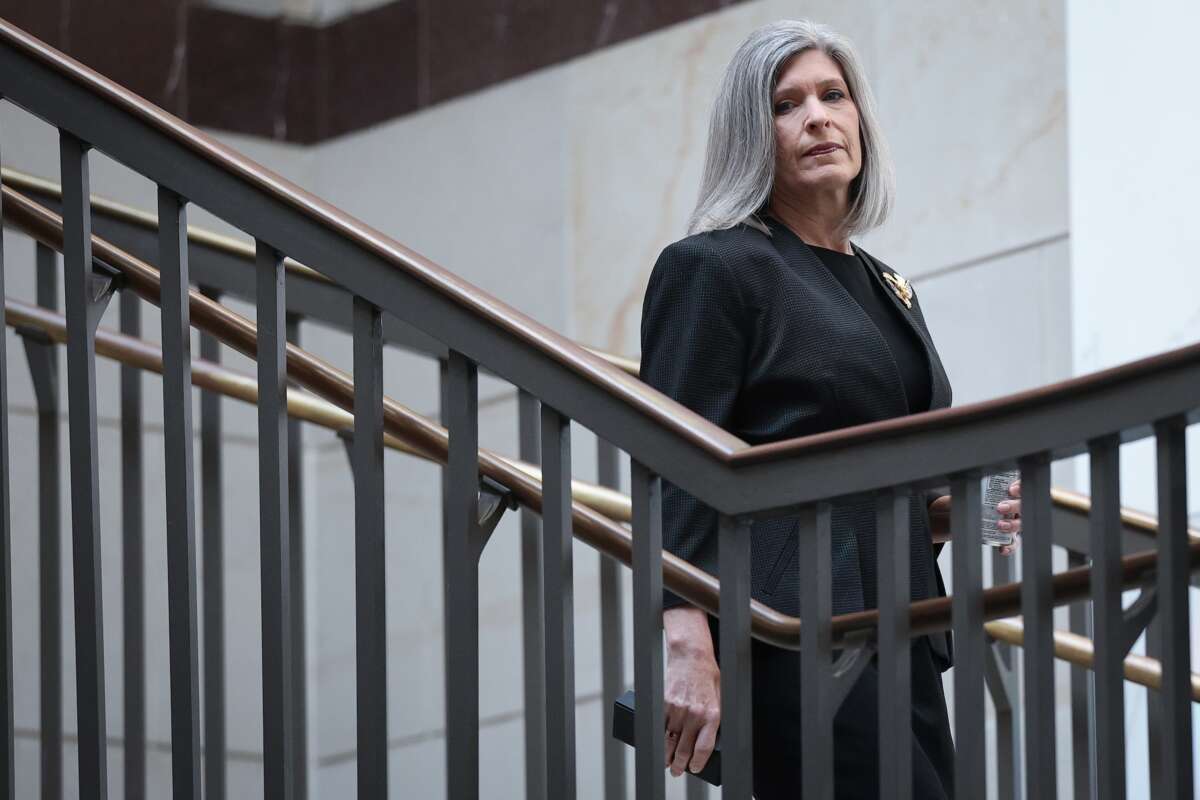
Sen. Joni Ernst (R-Iowa) arrives for a closed briefing for members of the Senate Armed Services Committee at the U.S. Capitol on July 29, 2025 in Washington, D.C.. The subject of the briefing was U.S. strikes on Iran conducted on June 22, 2025.
Win McNamee / Getty Images
On Thursday, Senate Republican Joni Ernst (Iowa) blocked an attempt to pass a bill aimed at using U.S.’s leverage to bring an end to the genocide in Sudan by suspending arms shipments to the United Arab Emirates.
Sen. Chris Van Hollen (D-Maryland) called for unanimous consent on his bill, the Stand Up for Sudan Act, to bar the U.S. from selling or issuing a license for weapons until the White House certifies that the UAE is “not providing materiel support to the Rapid Support Forces in Sudan.”
The move comes three weeks after the Rapid Support Forces, known as the RSF, took over the Sudanese military’s last major outpost in North Darfur, the capital city of el-Fasher. The paramilitary group swept through the city searching for civilians to kill, conducting field executions and invading a hospital, killing everyone inside.
UN officials estimate that 2,000 people were killed, though other estimates have been far higher, with Darfur’s governor Minni Arko Minnawi saying that 27,000 people were killed in three days following the siege. Pools of blood and piles of bodies were so vast that they could be seen from space, researchers found. RSF forces then moved to dig mass graves to dump the bodies in, Yale University experts said, based on satellite imagery.
“They turned the city into a killing field, going house to house rounding up people to torture and murder because of their ethnicity,” said Van Hollen in remarks on the Senate floor.
On Thursday, Senate Republican Joni Ernst (Iowa) blocked an attempt to pass a bill aimed at using U.S.’s leverage to bring an end to the genocide in Sudan by suspending arms shipments to the United Arab Emirates.
Sen. Chris Van Hollen (D-Maryland) called for unanimous consent on his bill, the Stand Up for Sudan Act, to bar the U.S. from selling or issuing a license for weapons until the White House certifies that the UAE is “not providing materiel support to the Rapid Support Forces in Sudan.”
The move comes three weeks after the Rapid Support Forces, known as the RSF, took over the Sudanese military’s last major outpost in North Darfur, the capital city of el-Fasher. The paramilitary group swept through the city searching for civilians to kill, conducting field executions and invading a hospital, killing everyone inside.
UN officials estimate that 2,000 people were killed, though other estimates have been far higher, with Darfur’s governor Minni Arko Minnawi saying that 27,000 people were killed in three days following the siege. Pools of blood and piles of bodies were so vast that they could be seen from space, researchers found. RSF forces then moved to dig mass graves to dump the bodies in, Yale University experts said, based on satellite imagery.
“They turned the city into a killing field, going house to house rounding up people to torture and murder because of their ethnicity,” said Van Hollen in remarks on the Senate floor.

US Urged to End Arms Sales to UAE as It Backs Genocidal Paramilitary in Sudan
The US has provided the UAE with billions of dollars’ worth of weapons, even as it’s funneled weapons into Sudan. By Sharon Zhang , Truthout October 30, 2025
“This could have been prevented. We had warning, and we could have done more to stop it — and we can still do more now to stop the ongoing genocide,” the senator went on. “We have not effectively used our leverage and influence to end the war. Because throughout this conflict, we, the United States, have continued to send weapons to the United Arab Emirates, the UAE, who we know are arming the murderous RSF.”
Ernst objected to the bill. In remarks, Ernst suggested that the potential threat from Iran that would spawn out of suspending weapons to the UAE was more pressing than the ongoing genocide in Sudan.
“Applying a blanket ban on the export of U.S. defense articles to the UAE leaves our partners in the region unequipped to deter any act of aggression and sends a message of weakness to our adversaries, like Iran and its terrorist proxies,” Enrst said, calling instead for diplomatic solutions for “stabilizing Sudan.”
Stories out of Sudan have been horrific. Survivors of the el-Fasher takeover say that they are being hunted down by the RSF after fleeing the city — with tens of thousands fleeing, but only a small fraction of them making it to the next town over, humanitarian officials have reported.
UN Emergency Relief Coordinator Tom Fletcher said this week that Sudan is “now the epicenter of human suffering in the world,” and an “absolute horror show” as a result of the siege.
Van Hollen condemned Ernst’s move as “shameful.” “If the UAE is telling us the truth when they say that they’re not sending any of their weapons to the RSF to help fuel the genocide in Sudan, why do my colleagues protest so loudly against this measure?” he asked, pointing out that arms transfers wouldn’t be affected if the UAE were not actually backing the RSF.
“I’m very disappointed that our colleagues cannot join together in a bipartisan manner to just use a little bit of American influence to try to stop a genocide in Darfur,” he said.
Ernst’s objection comes despite widespread consensus that the RSF is committing genocide in Sudan. The State Department, under the Biden administration, declared a genocide in January. The Biden administration also confirmed that the UAE is supplying weapons to the RSF, a finding that has been supported by numerous reports and evidence from weapons found within the country.
The Trump administration has also called for withholding arms in attempts to cut off the RSF.
“Something needs to be done to cut off the weapons and the support that the RSF is getting as they continue with their advances,” said Secretary of State Marco Rubio last week, per Reuters.
Rubio suggested that this would include the UAE. “We know who the parties are that are involved … that’s why they’re part of the Quad, along with other countries involved,” he said, likely referring to the U.S., Egypt, Saudi Arabia, and the UAE.
President Donald Trump has also signaled interest in ending the slaughter.
“Tremendous atrocities are taking place in Sudan. It has become the most violent place on Earth and, likewise, the single biggest Humanitarian Crisis,” Trump said in a post on Truth Social on Wednesday, after his meeting with Saudi Arabia Crown Prince Mohammed bin Salman. “We will work with Saudi Arabia, United Arab Emirates, Egypt, and other Middle Eastern partners to get these atrocities to end, while at the same time stabilizing Sudan.”
Trump ignores the fact that his administration has put millions of peoples’ lives at risk with his dismantling of the U.S. Agency for International Development (USAID), which last year provided 44 percent of Sudan’s humanitarian aid budget.
Truthout is a vital news source and a living history of political struggle. If you think our work is valuable, support us with a donation of any size.
No comments:
Post a Comment