'International incident': 'Terrifying standoff' as US troops mistakenly invade Mexico
David McAfee
November 20, 2025
Mexico’s president rejects Trump’s suggestion of US strikes on cartel targetsDavid McAfee
November 20, 2025
RAW STORY
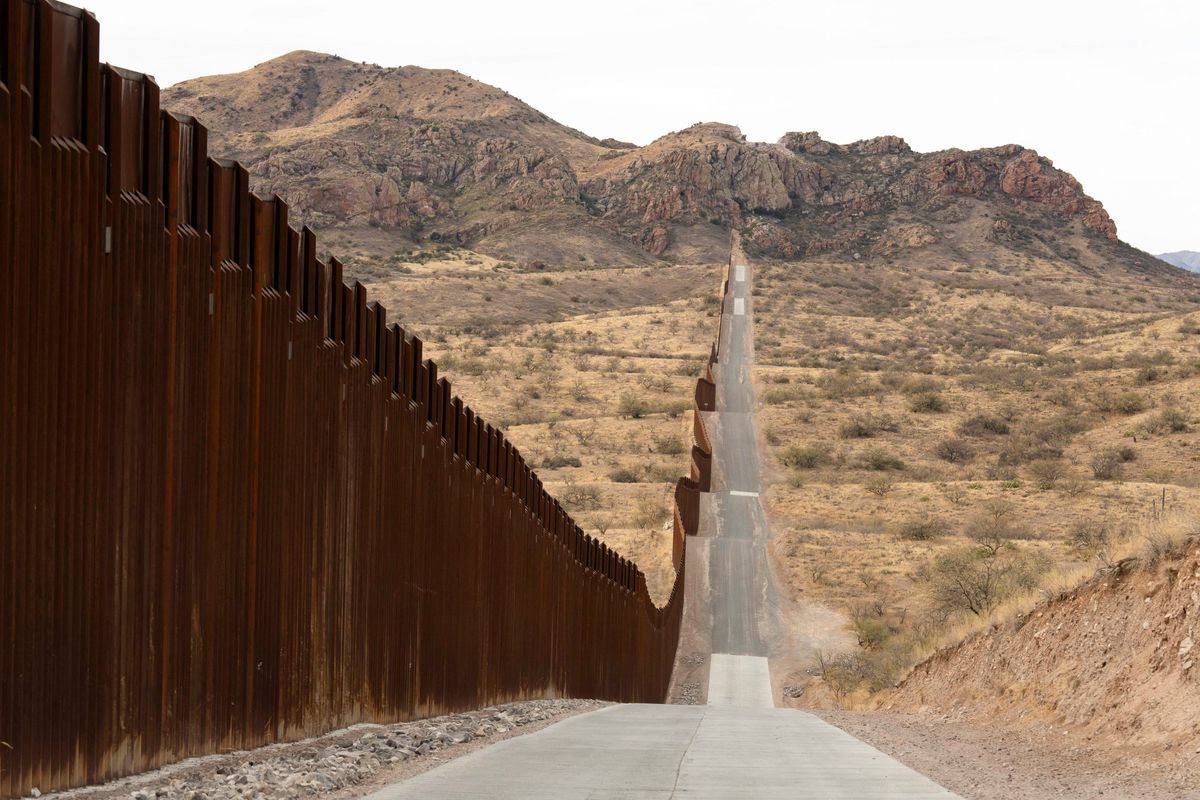
The U.S.-Mexico border fence sprawls up to Fresnal Peak, a mountain that may be destroyed to continue building the border fence, near Sasabe, Arizona, U.S. January 22, 2025. REUTERS/Rebecca Noble
American troops "pulled up on a Mexican beach" and created a "terrifying standoff," according to a new report.
According to at least one news report, "American troops pulled up on a Mexican beach in a dramatic escalation of tensions after Donald Trump threatened to bomb the country."
"US 'contractors' arrived by boat on Monday at Playa Bagdad, driving signs into the sand near where the Rio Grande empties into the Gulf of Mexico," the Thursday report states. "Alarmed witnesses quickly alerted officials and heavily armed Mexican security personnel rushed to the scene on trucks mounted with machine guns in a terrifying standoff."
The report continues:
"The Pentagon, in a deeply embarrassing statement, admitted that its troops were mistaken when they landed on the beach. The Mexican personnel watched as the Americans drove six signs into the ground, which said: 'Warning: restricted area.' Written in English and Spanish, they claimed that the beach was the property of the US Department of Defense and had been declared restricted by 'the commander.' They also said unauthorized access or photography was not allowed in that area and that 'if you are found here, you may be detained and searched.' Mexico's foreign affairs ministry said its navy removed the signs from the sand, which it believed were on Mexican territory."
Ex-prosecutor Ron Filipkowski chimed in on social media on Thursday:
"Apparently dips--- Hegseth’s 'lethal warfighters' landed inside the Mexican border by mistake and created an international incident."
The U.S.-Mexico border fence sprawls up to Fresnal Peak, a mountain that may be destroyed to continue building the border fence, near Sasabe, Arizona, U.S. January 22, 2025. REUTERS/Rebecca Noble
American troops "pulled up on a Mexican beach" and created a "terrifying standoff," according to a new report.
According to at least one news report, "American troops pulled up on a Mexican beach in a dramatic escalation of tensions after Donald Trump threatened to bomb the country."
"US 'contractors' arrived by boat on Monday at Playa Bagdad, driving signs into the sand near where the Rio Grande empties into the Gulf of Mexico," the Thursday report states. "Alarmed witnesses quickly alerted officials and heavily armed Mexican security personnel rushed to the scene on trucks mounted with machine guns in a terrifying standoff."
The report continues:
"The Pentagon, in a deeply embarrassing statement, admitted that its troops were mistaken when they landed on the beach. The Mexican personnel watched as the Americans drove six signs into the ground, which said: 'Warning: restricted area.' Written in English and Spanish, they claimed that the beach was the property of the US Department of Defense and had been declared restricted by 'the commander.' They also said unauthorized access or photography was not allowed in that area and that 'if you are found here, you may be detained and searched.' Mexico's foreign affairs ministry said its navy removed the signs from the sand, which it believed were on Mexican territory."
Ex-prosecutor Ron Filipkowski chimed in on social media on Thursday:
"Apparently dips--- Hegseth’s 'lethal warfighters' landed inside the Mexican border by mistake and created an international incident."
Mexico’s President Claudia Sheinbaum on Tuesday firmly ruled out allowing any US military strikes on Mexican soil, after President Donald Trump said he would support such action to curb drug trafficking. She reiterated that Mexico will co-operate on intelligence but will not permit foreign intervention.
Issued on: 19/11/2025
By: FRANCE 24
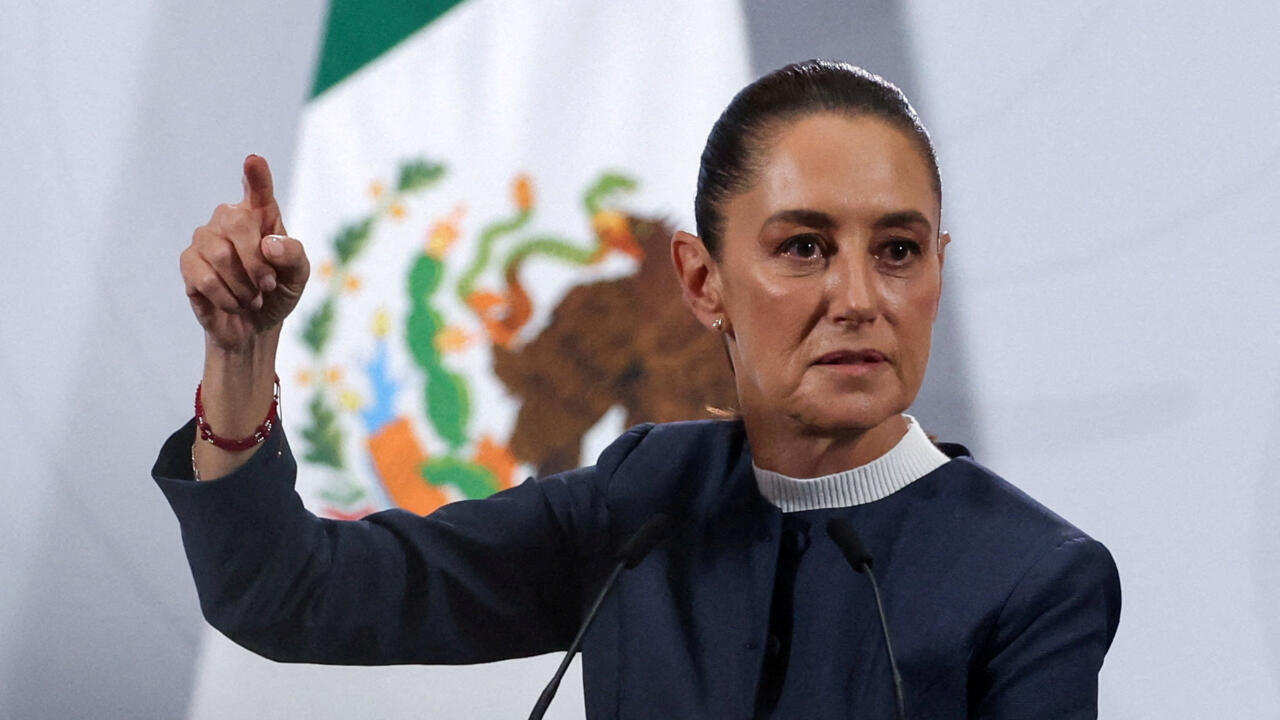
Mexico's President Claudia Sheinbaum speaks during a press conference at the National Palace in Mexico City, Mexico November 3, 2025. © Henry Romero, Reuters, file photo
Mexico's president on Tuesday ruled out allowing US strikes against cartels on Mexican soil, a day after President Donald Trump said he was willing to do whatever it takes to stop drugs entering the United States.
“It’s not going to happen,” President Claudia Sheinbaum said.
“He (Trump) has suggested it on various occasions or he has said, ‘We offer you a United States military intervention in Mexico, whatever you need to fight the criminal groups,’” she said. “But I have told him on every occasion that we can collaborate, that they can help us with information they have, but that we operate in our territory, that we do not accept any intervention by a foreign government.”
Sheinbaum said she had given this message to Trump and to US Secretary of State Marco Rubio on previous occasions and that they had understood.
“Would I want strikes in Mexico to stop drugs? OK with me, whatever we have to do to stop drugs,” Trump said Monday, adding that he’s “not happy with Mexico”.
The US embassy in Mexico shared a video on X later Monday that included previous comments from Rubio saying that the United States would not take unilateral action in Mexico.
Meanwhile, Mexican and US diplomats were trying to sort out Tuesday what may have been an actual US incursion.
On Monday, men arrived in a boat at a beach in northeast Mexico and installed signs designating land that the US Department of Defense considered restricted.
Mexico’s foreign affairs ministry said late Monday that the country’s navy had removed the signs, which appeared to be on Mexican territory. On Tuesday, Sheinbaum said that the International Boundary and Water Commission, a binational agency that determines the border between the two countries, was getting involved.
The signs, driven into the sand near where the Rio Grande empties into the Gulf of Mexico, caused a stir after witnesses reported men in a boat arriving at Playa Bagdad and erecting them.
The signs read in English and Spanish, “Warning: Restricted Area”, and stated that the land was department of defense property declared restricted by “the commander.” They prohibited unauthorised access, photography or drawings.
The US Embassy in Mexico on Tuesday shared a Pentagon comment confirming that contractors putting up signs to mark the “National Defense Area III” had placed them at the mouth of the Rio Grande.
“Changes in water depth and topography altered the perception of the international boundary’s location,” the statement said. “Government of Mexico personnel removed six signs based on their perception of the international boundary’s location.”
The Pentagon said the contractors would “co-ordinate with appropriate agencies to avoid confusion in the future”.
Mexico had contacted its consulate in Brownsville, Texas, and then the US Embassy in Mexico City. Eventually, it was determined that contractors working for a US government entity had placed the signs, Sheinbaum said.
“But the river changes its course, it breaks loose and according to the treaty you have to clearly demarcate the national border,” Sheinbaum said during her daily press briefing.
The area is close to the SpaceX Starbase, which sits adjacent to Boca Chica Beach on the Texas side of the Rio Grande.
The facility and launch site for the SpaceX rocket programme is under contract with the department of defense and NASA, which hopes to send astronauts back to the moon and eventually to Mars.
In June, Sheinbaum said the government was looking into contamination from the SpaceX facility after pieces of metal, plastic and rocket debris were reportedly found on the Mexican side of the border following a test explosion.
The area also carries the added sensitivity of Trump’s push to rename the Gulf of Mexico as the “Gulf of America”, a proposal Mexico has also rejected.
(FRANCE 24 with AP)
Mexico's president on Tuesday ruled out allowing US strikes against cartels on Mexican soil, a day after President Donald Trump said he was willing to do whatever it takes to stop drugs entering the United States.
“It’s not going to happen,” President Claudia Sheinbaum said.
“He (Trump) has suggested it on various occasions or he has said, ‘We offer you a United States military intervention in Mexico, whatever you need to fight the criminal groups,’” she said. “But I have told him on every occasion that we can collaborate, that they can help us with information they have, but that we operate in our territory, that we do not accept any intervention by a foreign government.”
Sheinbaum said she had given this message to Trump and to US Secretary of State Marco Rubio on previous occasions and that they had understood.
“Would I want strikes in Mexico to stop drugs? OK with me, whatever we have to do to stop drugs,” Trump said Monday, adding that he’s “not happy with Mexico”.
The US embassy in Mexico shared a video on X later Monday that included previous comments from Rubio saying that the United States would not take unilateral action in Mexico.
Meanwhile, Mexican and US diplomats were trying to sort out Tuesday what may have been an actual US incursion.
On Monday, men arrived in a boat at a beach in northeast Mexico and installed signs designating land that the US Department of Defense considered restricted.
Mexico’s foreign affairs ministry said late Monday that the country’s navy had removed the signs, which appeared to be on Mexican territory. On Tuesday, Sheinbaum said that the International Boundary and Water Commission, a binational agency that determines the border between the two countries, was getting involved.
The signs, driven into the sand near where the Rio Grande empties into the Gulf of Mexico, caused a stir after witnesses reported men in a boat arriving at Playa Bagdad and erecting them.
The signs read in English and Spanish, “Warning: Restricted Area”, and stated that the land was department of defense property declared restricted by “the commander.” They prohibited unauthorised access, photography or drawings.
The US Embassy in Mexico on Tuesday shared a Pentagon comment confirming that contractors putting up signs to mark the “National Defense Area III” had placed them at the mouth of the Rio Grande.
“Changes in water depth and topography altered the perception of the international boundary’s location,” the statement said. “Government of Mexico personnel removed six signs based on their perception of the international boundary’s location.”
The Pentagon said the contractors would “co-ordinate with appropriate agencies to avoid confusion in the future”.
Mexico had contacted its consulate in Brownsville, Texas, and then the US Embassy in Mexico City. Eventually, it was determined that contractors working for a US government entity had placed the signs, Sheinbaum said.
“But the river changes its course, it breaks loose and according to the treaty you have to clearly demarcate the national border,” Sheinbaum said during her daily press briefing.
The area is close to the SpaceX Starbase, which sits adjacent to Boca Chica Beach on the Texas side of the Rio Grande.
The facility and launch site for the SpaceX rocket programme is under contract with the department of defense and NASA, which hopes to send astronauts back to the moon and eventually to Mars.
In June, Sheinbaum said the government was looking into contamination from the SpaceX facility after pieces of metal, plastic and rocket debris were reportedly found on the Mexican side of the border following a test explosion.
The area also carries the added sensitivity of Trump’s push to rename the Gulf of Mexico as the “Gulf of America”, a proposal Mexico has also rejected.
(FRANCE 24 with AP)
No comments:
Post a Comment