World Nuclear News
Official request made to extend Spain's Almaraz nuclear units
_13946.jpg)
The decision, taken at an extraordinary meeting on Thursday of the board of directors and the general assembly of shareholders, seeks to extend the life of the two units to 2030.
They are currently scheduled to be shut down in 2027 as part of Spain’s 2019 nuclear phase-out policy.
The company said it had agreed to "officially request the Ministry for Ecological Transition and the Demographic Challenge to modify the operating licence for the two units of the Almaraz Nuclear Power Plant, extending their operation until June 2030.
"Centrales Nucleares Almaraz-Trillo (CNAT) wishes to reiterate its commitment to continue operating the Almaraz Nuclear Power Plant safely, reliably, and efficiently, maintaining the high standards that place it among the best nuclear power plants in the world".
Growing calls for phase-out rethink
Spain's seven operating nuclear power reactors - Almaraz I and II, Ascó I and II, Cofrentes, Trillo and Vandellós II - generate about 20% of its electricity. Under the country's nuclear phase-out plans, agreed in 2019, four reactors are scheduled to close by the end of 2030 - including the two Almaraz ones - while the remaining three reactors will shut by 2035.
In February the Spanish nuclear industry called for a rethink of the plans with a manifesto - signed by 32 companies, including Empresarios Agrupados-GHESA (EAG), Framatome, GDES, GE Vernova, IDOM and Westinghouse - saying: "We urge the initiation of a dialogue and renegotiation of the 2019 agreement on the phased shutdown of nuclear power plants. This agreement was made under an industrial, geopolitical, social and economic context that is vastly different from today's reality.
"Our industrial network must not see its competitiveness reduced due to the decision to shut down nuclear power plants starting in 2027, beginning with the Almaraz nuclear power plant, without first securing a viable alternative involving all CO2-free energy sources."
The companies said that extending the operation of Spain's nuclear power plants "would ensure the sustainability of our increasingly demanding energy system without jeopardising security of supply or the expansion of renewable infrastructures. Additionally, it would reinforce geostrategic independence from other nations".
However, the manifesto notes that to achieve this "it is crucial to ensure the economic viability of nuclear power plants, with a special emphasis on the excessive tax burden imposed on the sector".
Spanish nuclear power plants, it says, have been modernised and are capable of operating for many more years, "up to 60 or even 80, in line with global trends".
In the same month, the Plenary Session of the Spanish Congress approved a proposal calling for the government to implement a series of measures that would reverse the country's decision to phase out nuclear power. The proposal, presented by the right-wing People's Party, was passed on 12 February, with 171 votes in favour, 164 against and 14 abstentions.
Almaraz Nuclear Power Plant currently supplies more than 7% of the electricity consumed in Spain, equivalent to 4 million homes, and employs about 4,000 people. Almaraz units I and II are pressurised water reactors with a net capacity of 1011 MWe and 1006 MWe respectively. Unit I entered commercial operation in 1983 with unit II following the next year. The plant is owned by Iberdrola (53%), Endesa (36%), and Naturgy (11%).
CNAT said Almaraz meets all the requirements of the Periodic Safety Review approved by the Spanish Nuclear Safety Council (CSN) in 2020 and valid until 2030. It added that with "an annual investment of EUR50 million (USD58 million) for the improvement, upgrading, and modernisation of its equipment, the Almaraz Nuclear Power Plant is in optimal technical condition to continue operating" and cites the example of its "sister plant, North Anna Nuclear Power Plant" in the USA which has been given permission to operate for up to 80 years.
Sellafield awards multi-year 'high hazard risk reduction' contracts
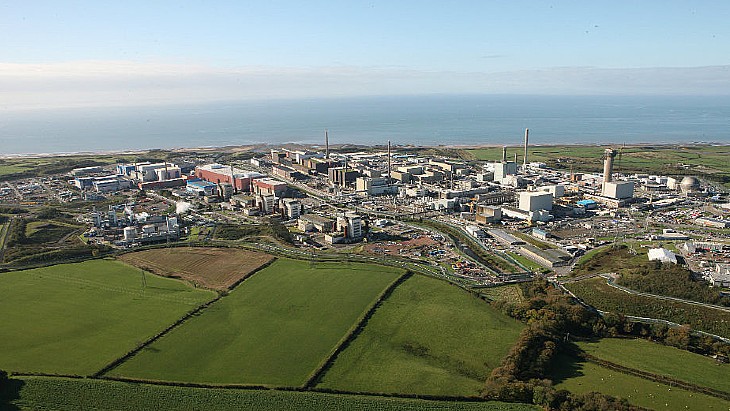
Four separate lots went to competitive tenders and form part of the Decommissioning and Nuclear Waste Partnership which lasts for an initial nine years with an option to extend for a further six years.
The Decommissioning Alliance, a joint venture of Amentum, AtkinsRéalis and Westinghouse, has been selected for the retrieval of hazardous waste from legacy ponds at the site. These include the First Generation Magnox Storage Pond - which operated for more than 30 years from the late 1950s - and the Pile Fuel Storage Pond, which was built in the 1940s.
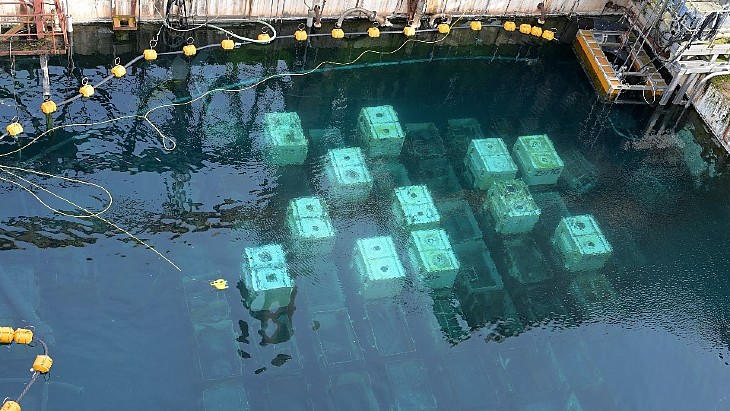
The First Generation Magnox Storage Pond (Image: Sellafield Ltd/Gov.uk)
Retrievals from the Pile Fuel Storage Pond began in the 1990s, 20 years after it entered care and maintenance. Sellafield says that 76% of the radioactivity has been removed and it is now entering its final phase of retrievals: "Our priority today is to continue to retrieve the remaining inventory of waste in the pond - solid ILW, sludge, sludge debris and fuel materials - so it can be treated appropriately and placed into safe, modern storage."
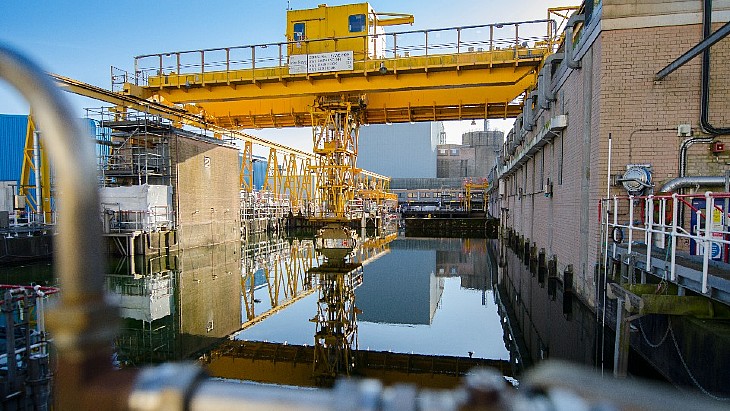
The Pile Fuel Storage Pond (Image: Sellafield Ltd/Gov.uk)
Amentum said it plans to "deploy pioneering, robot-operated technology such as the Bulk Sludge Retrieval Tool, a vacuum suction system for safely removing radioactive sludge from nuclear fuel ponds and pumping it away for processing and packaging. Remotely operated vehicles will be used for inspection, sampling, retrieval, cutting and handling of waste in high-radiation zones, enabling safer and more efficient high-hazard reduction, while innovative methods for transferring radioactive waste from storage skips into shielded containers will improve efficiency by reducing overall volumes".
A2R, a joint venture of Altrad and AtkinsRéalis, and Amentum have been selected to carry out remediation work. Amentum said their work includes clearance of redundant buildings to make land available for re-ruse and also preparatory decommissioning work on the old nuclear reactor complexes and fuel facilities.
Nuclear Decommissioning Solutions combines Altrad, Cavendish Nuclear and Shepley Engineers, with its framework director Mike Lacey saying of its retrievals lot: "We will work together with our Sellafield Silos Partner to support this nationally important programme of retrieval operations. By working collaboratively, in all aspects of our joint undertaking, we will create a lasting legacy and safe environment for future generations. In committing to the proposed long-term sustainability plan with our partners, which will be at the heart of everything we do, we will continue to deliver real social impact and value to the local communities."
Chris Conboy, managing director - Nuclear EMEA, AtkinsRéalis, on behalf of A2R, said: "Altrad and AtkinsRéalis have supported Sellafield Ltd for over three decades. Through the DNWP Framework, we will continue to deploy our knowledge, commitment and shared expertise to deliver complex remediation and waste treatment services safely, sustainably, and efficiently, helping Sellafield to deliver on its mission and in the lasting impact it has on the local community."
Loren Jones, senior vice president, Amentum, said: "We will bring world-class, multidisciplinary, end-to-end engineering and project management capabilities to the UK's most significant nuclear legacy challenges while also delivering outstanding performance on safety, collaboration, social impact and key supply chain management."
John Murphy, operations director, Westinghouse Environmental Services UK and The Decommissioning Alliance Chair, said the alliance was "a world-class blend of engineering, project management and nuclear innovation capabilities. We are delighted that we will be able to bring these to bear in support of Sellafield Ltd's vital mission whilst also delivering significant benefits to the local economy through job creation, training and small and medium-enterprise partnerships”.
James Riddick, Sellafield Ltd chief supply chain officer, said: "Cleaning up the legacy of historic operations on our site is at the heart of our mission. It is important that we achieve this safely, efficiently, and sustainably … we're pleased to welcome our new partners. Their specialist capabilities and teams, working alongside our skilled Sellafield workforce, will help us deliver our mission and drive progress both on site and across our wider community."
Fresh efforts made to facilitate repair of Zaporizhzhia backup power line
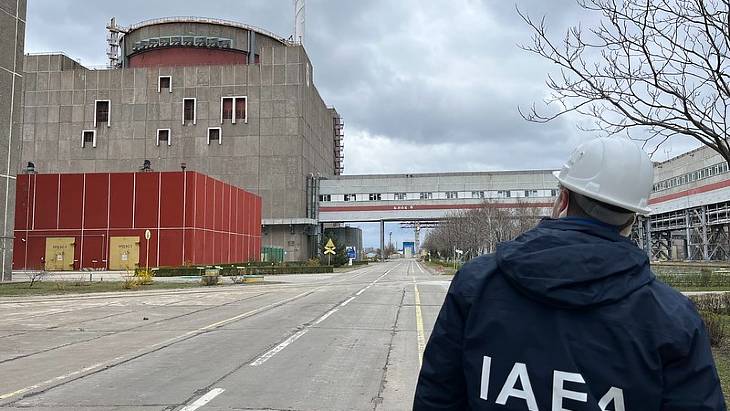
The six-unit plant has been under Russian military control since March 2022. It had 10 external power lines before the war began, but there is currently one line working, and it recently spent a month without external power when that line was lost.
That main external 750 kV power line was fixed last week following an International Atomic Energy Agency (IAEA)-mediated local ceasefire to allow repair works to take place. The backup 330 kV power line was also due to be repaired at the same time, but additional damage was discovered about 1.8 kilometres from the Zaporizhzhia Thermal Power Plant’s switchyard, the IAEA says.
IAEA Director General Rafael Mariano Grossi said: "We continue to work intensively to support the conditions needed for this additional repair work to begin. Restoring this power line is essential to improving the fragile nuclear safety and security situation at the site."
The plant's reactors have been shut down since 2022 but power is still required for safety systems including cooling pumps, the IAEA said. During the loss of external power emergency diesel generators supplied the power but they are not intended to be a long-term solution.
In his latest update on the situation, Grossi also said that there had been the loss of one power line each at South Ukraine Nuclear Power Plant and Khmelnitsky Nuclear Power Plant following military action this week.
Grossi said: "The dangers to nuclear safety continue to be very real and ever-present. I once again call for maximum military restraint in the vicinity of nuclear facilities and full respect of the seven indispensable pillars for nuclear safety and security."
Constellation, Xpansiv team up to launch emission-free energy certificate trading
The utility - which lays claim to being the USA's largest producer of emissions-free energy, with the nation's largest nuclear fleet - will offer emission-free energy certificates from its clean energy centres in the PJM region on Xpansiv’s CBL spot exchange beginning on 2 December. Constellation and Xpansiv also plan to offer hourly EFECs on the platform in the future, the company said.
Xpansiv will further support the emission-free energy market through its North American Renewables Registry (NAR) which will issue nuclear-energy-based zero-emission certificates (ZECs) providing full-lifecycle traceability from issuance to retirement. The North American Renewables Registry is a leading renewable energy certificate registry with more than 89 GW of renewable energy capacity across the USA, Mexico and Canada.
Renewable energy certificates and emission-free energy certificates both offer ways for organisations to reduce their carbon footprint. The latter represent one megawatt-hour of electricity generated from an emission-free source, typically nuclear energy. According to information from Constellation - which has previously offered emission-free energy certificates to customers bilaterally - they allow businesses to quickly begin their process towards achieving and claiming lower emissions: purchasing emission-free energy certificates matching all or a portion of their electricity usage can be particularly attractive for organisations that are not well-positioned to source their power from onsite renewable sources.
Renewable energy certificates represent the environmental benefits of one megawatt-hour of electricity generated by a renewable power plant.
Constellation Chief Commercial Officer Jim McHugh said the company was focused on providing a "comprehensive suite of commercial products that help customers meet their environmental goals" as demand continues to grow. "We believe the most important energy commodity is a reliable and clean megawatt, and our clean energy resources offer more clean, emissions-free energy than any other energy provider in the US," he said.
"Additional carbon-free power sources are in critical need, and clean energy centres will play a key role in meeting the growing demand for years to come," Xpansiv CEO John Melby said. "Our pioneering launch of clean energy certificate solutions across our registry and exchange demonstrates the power of our comprehensive environmental commodity market infrastructure."
European Investment Bank finance for Olkiluoto upgrades
_20015_87706.jpg)
The upgrades are part of Teollisuuden Voima Oyj’s (TVO) long-term investment programme and are needed under Finnish and European Union legislation. The financing follows a EUR75 million loan agreement in April with the Nordic Investment Bank towards the upgrade programme.
European Investment Bank Vice-President Karl Nehammer said: "By supporting safety upgrades at Olkiluoto, we are helping Finland strengthen its energy mix with reliable, low-carbon power. This investment supports Finland's energy independence and contributes to the EU's goals of ensuring secure and clean electricity for homes and businesses."
TVO Senior Vice-President, Treasury Lauri Piekkari, said: "Long-term financing from the EIB is an excellent complement to our capital market-based debt funding."
The upgrades are described as a key part of maintaining high safety standards and reliability at the plant, and follow other European Investment Bank (EIB)-backed enhancements in 2016.
Olkiluoto units I and II - which were first connected to the grid in September 1978 and February 1980, respectively - currently meet 15% of Finland's electricity TVO is considering extending the operating licences by a further 10-20 years and increasing the power output of each reactor from 890 MW to approximately 970 MWe.
TVO submitted the Environmental Impact Assessment (EIA) report for the project to extend the operation of and uprate Olkiluoto I and II to Finland's Ministry of Economic Affairs and Employment in December 2024 and the EIA reporting stage was completed earlier this month with the ministry issuing its Reasoned Conclusion. According to the Conclusion, the EIA Report meets the requirements laid down in EIA legislation.
The EIB is the long-term lending institution of the European Union, owned by its Member States. The upgrade programme fits with the EU’s "strategic objective of having competitive, emissions-free and secure energy" and the EU’s Energy Roadmap 2050, "which foresees nuclear energy continuing to play a role in the energy mix of Member States that choose to use it".
No comments:
Post a Comment