Bulgarian MPs To Form Commission To Investigate George Soros’s Influence
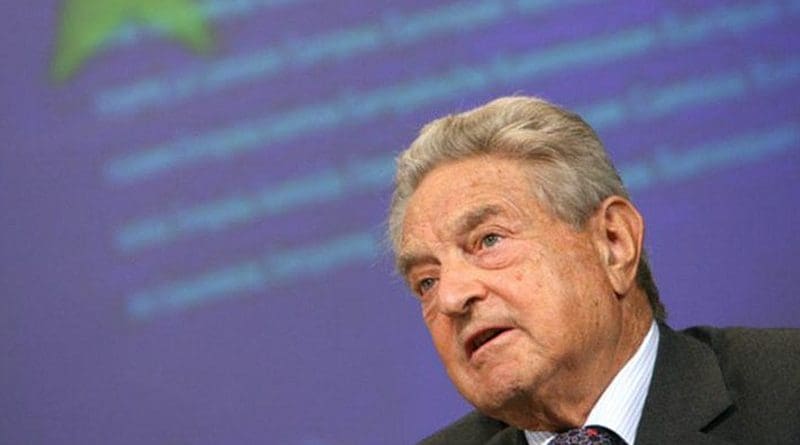
George Soros. Photo credit: European Commission
November 6, 2025
Balkan Insight
The parliamentary probe based on conspiracy theories about the philanthropist’s alleged meddling is backed by Bulgaria’s main pro-Russian and nationalist parties as well as by tycoon Delyan Peevski’s growing party.

By Svetoslav Todorov
Bulgaria’s parliament voted on Wednesday to establish a commission to investigate alleged meddling by NGOs and companies affiliated to the liberal American-Hungarian investor and philanthropist George Soros and his son Alexander.
The move was initiated by the Movement for Rights and Freedoms – New Beginning, a political vehicle for the oligarch and MP Delyan Peevski, by the nationalist parties There’s Such a People and Union, Moral and Honour, as well as by the pro-Kremlin forces Revival and the Bulgarian Socialist Party. Members of the governing party GERB abstained, or voted against.
Despite presenting a pro-Western image, Peevski has been relying on populist anti-Soros conspiracy theories to attack political opponents and media critical of his influence.
Such rhetoric is often aired by pro-Russian propaganda groups in the country, and in most other Eastern and Central European countries; it led to the Soros-backed Central European University relocating from Budapest to Vienna following a legal push by Viktor Orban’s government to drive it out of Hungary.
Last September, Peevski claimed that Soros-affiliated entities had been involved in “replacing values with gender ideology” and in “powerful lobbyist structures”.
The parliamentary commission’s goal is to establish Soros’s “connections with political parties, magistrates, educational institutions, media, business structures and state authorities”.
Revival’s call for the commission to investigate specific NGOs, such as Open Society, America for Bulgaria and the Friedrich Ebert, Hanns Seidel and Konrad Adenauer foundations was not accepted.
Despite this, New Beginning member Yordan Tsonev named the Open Society Foundation, a grant-giving organisation started by Soros in 1993 to help media, culture and educational initiatives – as a source of unregulated influence in Bulgaria.
The Bulgarian Helsinki Committee, a human rights NGO, condemned the move to establish the committee. “The targeting of Soros-funded civil society organisations stems from their work promoting democracy, fair elections, and the fight against endemic corruption. Members of organised crime, now entangled with political parties, are displeased with these activities,” it said in a statement.
The development comes after a controversial privacy bill that could have threatened journalists’ ability to investigate people in power but was eventually dropped after a wave of criticism.
NGOs and media that have benefited from Soros-affiliated financing have also been the target of a draft law filed by the far-right party Revival that would see them designated as ‘foreign agents”. Repeated attempts to pass the legislation, most recently in 2024, have been unsuccessful, however.
However, in 2024, nationalist and pro-Russian forces managed to impose a Kremlin-style legal amendment banning LGBTQ+ “propaganda” and “gender ideology” in schools.
Also on Wednesday, GERB leader Boyko Borissov said he was working on getting sanctions imposed under the US Global Magnitsky Act lifted from Bulgarian politicians, among them Peevski. Borissov hinted at this move back in April, calling the corruption allegations inconsistent.

Balkan Insight
The Balkan Insight (formerly the Balkin Investigative Reporting Network, BIRN) is a close group of editors and trainers that enables journalists in the region to produce in-depth analytical and investigative journalism on complex political, economic and social themes. BIRN emerged from the Balkan programme of the Institute for War & Peace Reporting, IWPR, in 2005. The original IWPR Balkans team was mandated to localise that programme and make it sustainable, in light of changing realities in the region and the maturity of the IWPR intervention. Since then, its work in publishing, media training and public debate activities has become synonymous with quality, reliability and impartiality. A fully-independent and local network, it is now developing as an efficient and self-sustainable regional institution to enhance the capacity for journalism that pushes for public debate on European-oriented political and economic reform.
George Soros. Photo credit: European Commission
November 6, 2025
Balkan Insight
The parliamentary probe based on conspiracy theories about the philanthropist’s alleged meddling is backed by Bulgaria’s main pro-Russian and nationalist parties as well as by tycoon Delyan Peevski’s growing party.

By Svetoslav Todorov
Bulgaria’s parliament voted on Wednesday to establish a commission to investigate alleged meddling by NGOs and companies affiliated to the liberal American-Hungarian investor and philanthropist George Soros and his son Alexander.
The move was initiated by the Movement for Rights and Freedoms – New Beginning, a political vehicle for the oligarch and MP Delyan Peevski, by the nationalist parties There’s Such a People and Union, Moral and Honour, as well as by the pro-Kremlin forces Revival and the Bulgarian Socialist Party. Members of the governing party GERB abstained, or voted against.
Despite presenting a pro-Western image, Peevski has been relying on populist anti-Soros conspiracy theories to attack political opponents and media critical of his influence.
Such rhetoric is often aired by pro-Russian propaganda groups in the country, and in most other Eastern and Central European countries; it led to the Soros-backed Central European University relocating from Budapest to Vienna following a legal push by Viktor Orban’s government to drive it out of Hungary.
Last September, Peevski claimed that Soros-affiliated entities had been involved in “replacing values with gender ideology” and in “powerful lobbyist structures”.
The parliamentary commission’s goal is to establish Soros’s “connections with political parties, magistrates, educational institutions, media, business structures and state authorities”.
Revival’s call for the commission to investigate specific NGOs, such as Open Society, America for Bulgaria and the Friedrich Ebert, Hanns Seidel and Konrad Adenauer foundations was not accepted.
Despite this, New Beginning member Yordan Tsonev named the Open Society Foundation, a grant-giving organisation started by Soros in 1993 to help media, culture and educational initiatives – as a source of unregulated influence in Bulgaria.
The Bulgarian Helsinki Committee, a human rights NGO, condemned the move to establish the committee. “The targeting of Soros-funded civil society organisations stems from their work promoting democracy, fair elections, and the fight against endemic corruption. Members of organised crime, now entangled with political parties, are displeased with these activities,” it said in a statement.
The development comes after a controversial privacy bill that could have threatened journalists’ ability to investigate people in power but was eventually dropped after a wave of criticism.
NGOs and media that have benefited from Soros-affiliated financing have also been the target of a draft law filed by the far-right party Revival that would see them designated as ‘foreign agents”. Repeated attempts to pass the legislation, most recently in 2024, have been unsuccessful, however.
However, in 2024, nationalist and pro-Russian forces managed to impose a Kremlin-style legal amendment banning LGBTQ+ “propaganda” and “gender ideology” in schools.
Also on Wednesday, GERB leader Boyko Borissov said he was working on getting sanctions imposed under the US Global Magnitsky Act lifted from Bulgarian politicians, among them Peevski. Borissov hinted at this move back in April, calling the corruption allegations inconsistent.
Balkan Insight
The Balkan Insight (formerly the Balkin Investigative Reporting Network, BIRN) is a close group of editors and trainers that enables journalists in the region to produce in-depth analytical and investigative journalism on complex political, economic and social themes. BIRN emerged from the Balkan programme of the Institute for War & Peace Reporting, IWPR, in 2005. The original IWPR Balkans team was mandated to localise that programme and make it sustainable, in light of changing realities in the region and the maturity of the IWPR intervention. Since then, its work in publishing, media training and public debate activities has become synonymous with quality, reliability and impartiality. A fully-independent and local network, it is now developing as an efficient and self-sustainable regional institution to enhance the capacity for journalism that pushes for public debate on European-oriented political and economic reform.
No comments:
Post a Comment