Potash political pushback
Canada counters Nutrien’s cross-border plans
Saskatchewan-based Nutrien is in hot water over its decision to build a $1 billion potash export terminal
November 25, 2025
CANADIAN MINING
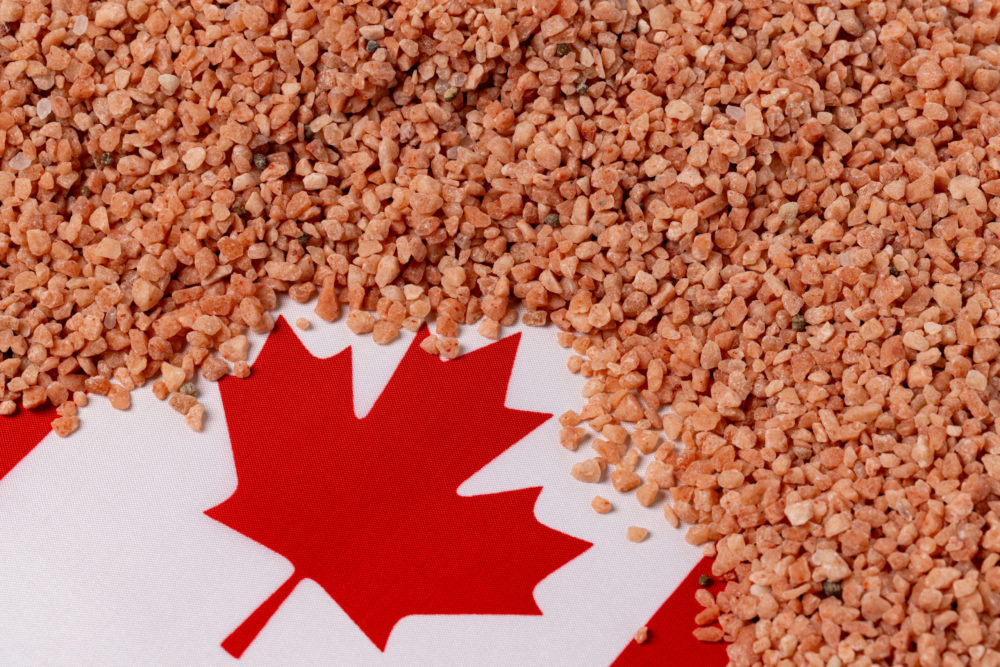
Potash potassium fertilizer with Canada flag. Farm fertilizer production, supply and agriculture tariffs concept. CREDIT: Adobe Stock.
Saskatchewan-based Nutrien is in hot water over its decision to build a $1 billion potash export terminal in Washington state instead of British Columbia. The Prairie company's choice sparked controversy and raised questions about Canada's competitiveness in attracting major investments.
British Columbia Premier David Eby expressed his frustration, stating the decision was disappointing and would potentially leave Saskatchewan's potash exports vulnerable to U.S. trade policies. He argued that a Canadian port location would have benefited the entire country.
The B.C. premier criticized Saskatchewan Premier Scott Moe for not collaborating on efforts to secure the project for Canada. Eby claimed he was unaware of discussions between Moe, Prime Minister Carney, and Alberta Premier Smith regarding an oil pipeline through B.C., further highlighting communication issues between provinces.
Only a few days ago, the Canadian government expressed strong disappointment over Nutrien's recent announcement to construct a US$1-billion potash export terminal in Longview, Washington. This decision dealt a blow to Ottawa's ambitions of expanding Canadian export capacity. Transport Minister Steven MacKinnon attempted to persuade Nutrien to reconsider.
In response to this setback, the federal government signaled its willingness to invest significantly in Canadian port infrastructure. Ottawa specifically highlighted potential improvements to facilities in Vancouver and Saint John, aiming to create more competitive options for major exporters like Nutrien. However, the company stated their decision was thoroughly evaluated.
Nutrien's plan, if implemented, would redirect up to half of its overseas potash exports through U.S. ports by 2031. This shift threatened to undermine Canada's strategic goal of bolstering its own export infrastructure and capabilities.
The company defended its choice, stating that the U.S. option outperformed Canadian alternatives across key metrics. Nutrien cited lower rail costs, reduced construction expenses, and a more favorable regulatory environment as primary factors in its decision.
The company also cited existing relationships in the U.S. Pacific Northwest and concerns about congestion and labour disruptions at Canadian ports as reasons for their decision.
The government's reaction underscored the strategic importance of keeping such large-scale export projects within Canadian borders. It also highlighted the ongoing challenge of competing with U.S. infrastructure and regulatory frameworks in attracting and retaining major investments in the resource sector.
As discussions continue, the outcome of this dispute could have far-reaching implications for Canada's export strategy and its position in the global potash market.
This development raised questions about Canada's ability to attract major investments and the coordination between federal and provincial governments in promoting port expansion and resource development projects. Some observers noted the situation highlighted the need for improved interprovincial cooperation and federal leadership in addressing transportation and infrastructure challenges to remain competitive in global markets.
CANADIAN MINING
Potash potassium fertilizer with Canada flag. Farm fertilizer production, supply and agriculture tariffs concept. CREDIT: Adobe Stock.
Saskatchewan-based Nutrien is in hot water over its decision to build a $1 billion potash export terminal in Washington state instead of British Columbia. The Prairie company's choice sparked controversy and raised questions about Canada's competitiveness in attracting major investments.
British Columbia Premier David Eby expressed his frustration, stating the decision was disappointing and would potentially leave Saskatchewan's potash exports vulnerable to U.S. trade policies. He argued that a Canadian port location would have benefited the entire country.
The B.C. premier criticized Saskatchewan Premier Scott Moe for not collaborating on efforts to secure the project for Canada. Eby claimed he was unaware of discussions between Moe, Prime Minister Carney, and Alberta Premier Smith regarding an oil pipeline through B.C., further highlighting communication issues between provinces.
Only a few days ago, the Canadian government expressed strong disappointment over Nutrien's recent announcement to construct a US$1-billion potash export terminal in Longview, Washington. This decision dealt a blow to Ottawa's ambitions of expanding Canadian export capacity. Transport Minister Steven MacKinnon attempted to persuade Nutrien to reconsider.
In response to this setback, the federal government signaled its willingness to invest significantly in Canadian port infrastructure. Ottawa specifically highlighted potential improvements to facilities in Vancouver and Saint John, aiming to create more competitive options for major exporters like Nutrien. However, the company stated their decision was thoroughly evaluated.
Nutrien's plan, if implemented, would redirect up to half of its overseas potash exports through U.S. ports by 2031. This shift threatened to undermine Canada's strategic goal of bolstering its own export infrastructure and capabilities.
The company defended its choice, stating that the U.S. option outperformed Canadian alternatives across key metrics. Nutrien cited lower rail costs, reduced construction expenses, and a more favorable regulatory environment as primary factors in its decision.
The company also cited existing relationships in the U.S. Pacific Northwest and concerns about congestion and labour disruptions at Canadian ports as reasons for their decision.
The government's reaction underscored the strategic importance of keeping such large-scale export projects within Canadian borders. It also highlighted the ongoing challenge of competing with U.S. infrastructure and regulatory frameworks in attracting and retaining major investments in the resource sector.
As discussions continue, the outcome of this dispute could have far-reaching implications for Canada's export strategy and its position in the global potash market.
This development raised questions about Canada's ability to attract major investments and the coordination between federal and provincial governments in promoting port expansion and resource development projects. Some observers noted the situation highlighted the need for improved interprovincial cooperation and federal leadership in addressing transportation and infrastructure challenges to remain competitive in global markets.
No comments:
Post a Comment