Tanzania's instability could harm trade in southern Africa

A broader disruption in Africa
Tanzania is part of the 16-member Southern African Development Community (SADC) and a key stop on the North-South Corridor (NSC), one of Africa's most important regional trade and transport routes.
The network's ports, roads and railways link the SADC bloc to Africa's Great Lakes region. More than 60% of all SADC trade flows through the corridor. Earlier this year, SADC members Botswana, Democratic Republic of Congo (DRC), Malawi, Mozambique, South Africa, Zambia and Zimbabwe endorsed a plan to develop a "smart corridor" they expect to unlock $16.1 billion in GDP and create 1.6 million jobs.
Tanzania's ports play a critical role in vehicle imports to Zimbabwe, handling about 15,000 units annually.
"The internet blackout in Tanzania was a big problem," Trice Chisamba, a Zimbabwean car importer, told DW. "We couldn't communicate with clearing agents. Some of our vehicles were released and parked outside the port, we feared they could be destroyed in the violence."
Analysts have said importers may need to explore alternative routes through ports in Mozambique or South Africa, although these could be more expensive.
"Players in various industries must act fast to find alternative ports," Mbukwa said.
What SADC election observers said
The SADC election observer mission to Tanzania condemned the disputed election, saying it failed to meet democratic standards. In its preliminary report, the mission said voters in many areas were unable to freely express their will. It also cited restrictions on opposition activity and reports of ballot stuffing.
"Overall, the 2025 general election in the United Republic of Tanzania fell short of the SADC Principles and Guidelines Governing Democratic Elections," the SADC observers said.
Political analysts warn that President Samia Suluhu Hassan's legitimacy may come under scrutiny following SADC's rare criticism.
"SADC is simply saying there was no election in Tanzania — which is a shared sentiment among Tanzanians," Tito Mugoti, a human rights lawyer in Dar es Salaam, told DW.
"The government she forms is illegitimate. Parliament is illegitimate. The people's interests will not be represented," he added.
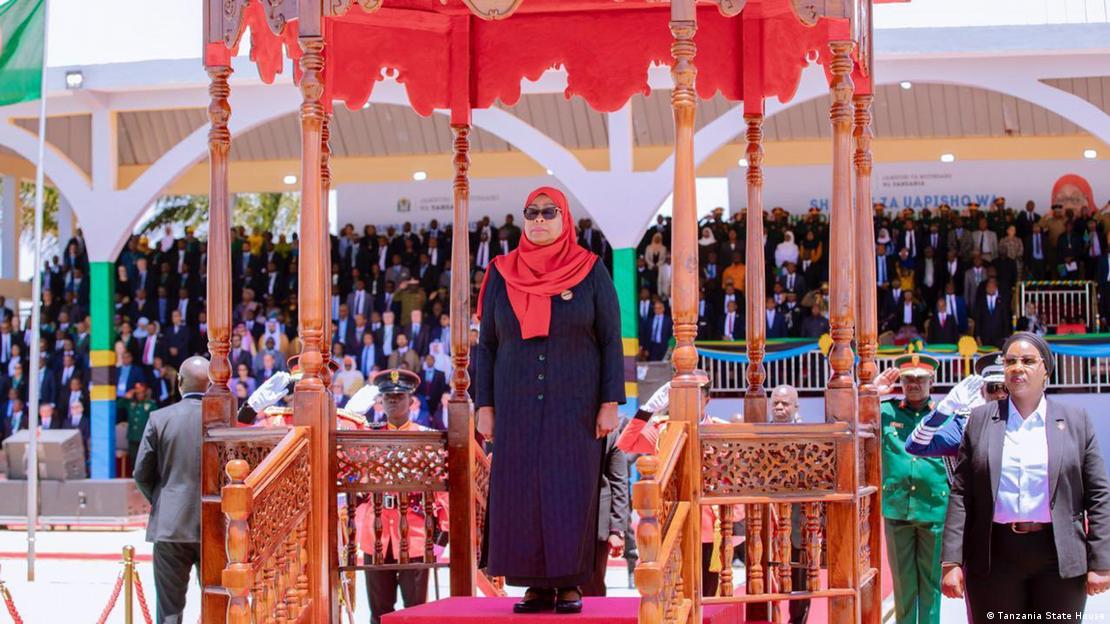
Two SADC leaders at Suluhu Hassan's inauguration
Suluhu Hassan was sworn in on Monday at a private ceremony. Only two leaders from the SADC bloc attended: Presidents Hakainde Hichilema of Zambia and Daniel Chapo of Mozambique.
Some Zambians criticized Hichilema for attending the inauguration, suggesting it amounted to an endorsement of a disputed election.
"Political stance we're pushing for Zambia's presence in Tanzania is the same Kamuzu Banda had in the 1960s," putting trade before freedom, political activist Joseph Kalimbwe wrote on X.
Zimbabwe's President Emmerson Mnangagwa sent his deputy, Constantino Chiwenga. "What has happened in Tanzania is quite disturbing and something that has got to be avoided at all costs," Chiwenga said on state television in Zimbabwe. "I believe Tanzania has come of age and is the mother of all liberation movements. I'm convinced they will iron out their differences and move forward."
Meanwhile, the South African government is yet to comment on the developments in Tanzania. Its president, Cyril Ramaphosa, has just been picked as interim chairperson of SADC. The bloc's 2025 chairperson, Andry Rajoelina, was ousted as president of Madagascar in coup amid political unrest shortly before Tanzania's disputed election.
Edited by: Benita van Eyssen

Privilege Musvanhiri
DW
04/11/2025
The political unrest in Tanzania could potentially disrupt key trade routes and the landlocked economies in southern Africa that rely heavily on the East African country's ports for essential imports.
The political unrest in Tanzania could potentially disrupt key trade routes and the landlocked economies in southern Africa that rely heavily on the East African country's ports for essential imports.

An archive image taken at the port of Dar es Salaam in Tanzania in 2015
Image: Daniel Hayduk/AFP via Getty Images
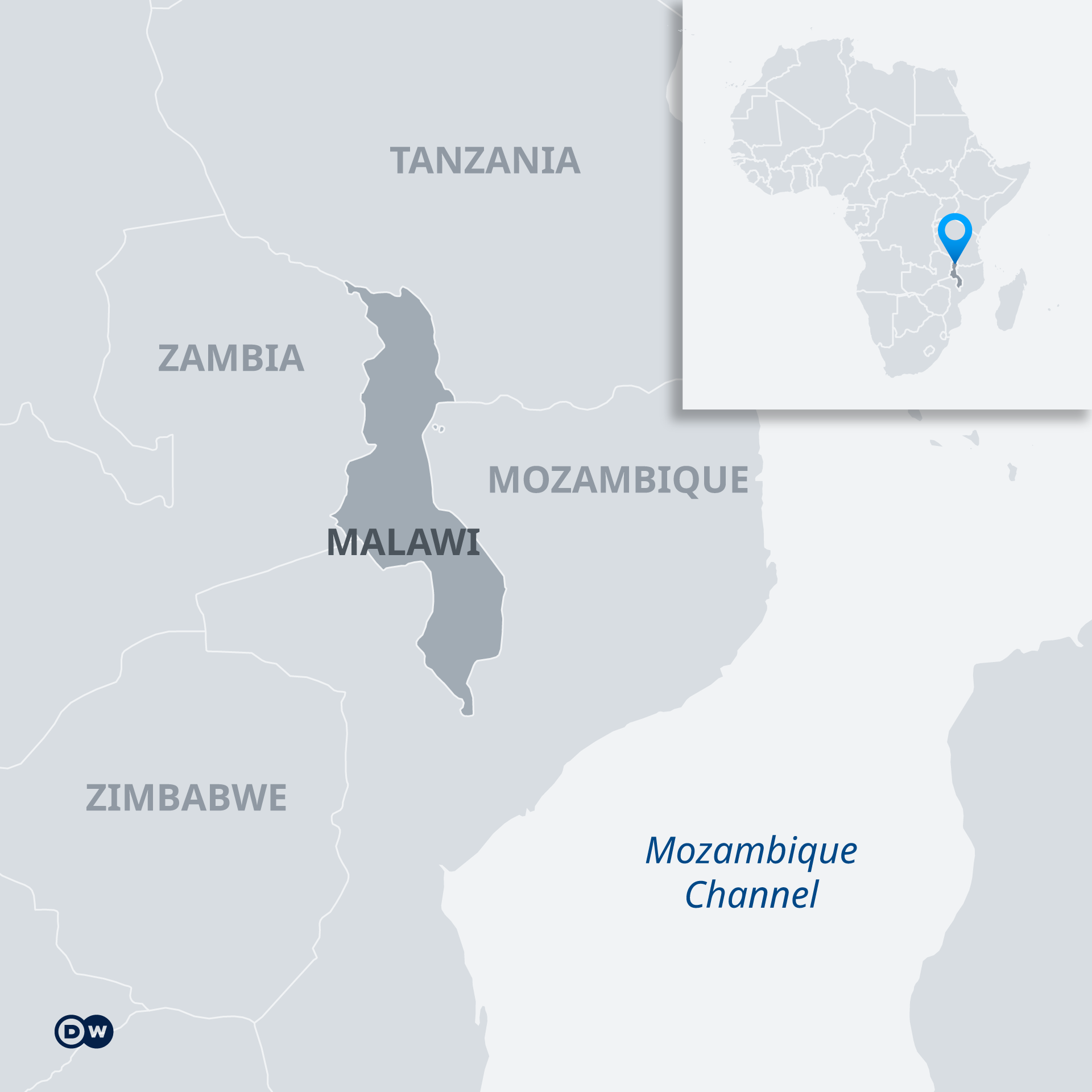
The closure of Dar es Salaam's port in Tanzania amid election unrest hit Malawi hard as inbound trucks were unable to enter the country for several days.
The Malawi–Tanzania border crossings at Songwe and Kasumulu were shut as protesters and police clashed in the days surrounding the October 29 polls. Mobs ransacked Tanzanian government buildings, destroyed customs offices and disrupted communication networks in Songwe. According to the Transporters Association of Malawi, the unrest paralyzed the cargo sector.
"Pumps are dry here. You can hardly get fuel in Lilongwe and Salima," Sydney Chaima told DW in Lilongwe, Malawi.
Meanwhile, experts warn that continued political instability in Tanzania has repercussions beyond the country.
"We could see a rise in inflation and diminished growth. Farmers are going to be the worst affected. We are at a key moment when fertilizers are needed," Christopher Mbukwa, economist and lecturer at Mzuzu University in Malawi, told DW.
Landlocked countries in southern Africa, like Malawi, Zambia and Zimbabwe , rely heavily on Tanzanian ports for fuel, pharmaceuticals, agricultural inputs, vehicles and textiles.
The closure of Dar es Salaam's port in Tanzania amid election unrest hit Malawi hard as inbound trucks were unable to enter the country for several days.
The Malawi–Tanzania border crossings at Songwe and Kasumulu were shut as protesters and police clashed in the days surrounding the October 29 polls. Mobs ransacked Tanzanian government buildings, destroyed customs offices and disrupted communication networks in Songwe. According to the Transporters Association of Malawi, the unrest paralyzed the cargo sector.
"Pumps are dry here. You can hardly get fuel in Lilongwe and Salima," Sydney Chaima told DW in Lilongwe, Malawi.
Meanwhile, experts warn that continued political instability in Tanzania has repercussions beyond the country.
"We could see a rise in inflation and diminished growth. Farmers are going to be the worst affected. We are at a key moment when fertilizers are needed," Christopher Mbukwa, economist and lecturer at Mzuzu University in Malawi, told DW.
Landlocked countries in southern Africa, like Malawi, Zambia and Zimbabwe , rely heavily on Tanzanian ports for fuel, pharmaceuticals, agricultural inputs, vehicles and textiles.
A broader disruption in Africa
Tanzania is part of the 16-member Southern African Development Community (SADC) and a key stop on the North-South Corridor (NSC), one of Africa's most important regional trade and transport routes.
The network's ports, roads and railways link the SADC bloc to Africa's Great Lakes region. More than 60% of all SADC trade flows through the corridor. Earlier this year, SADC members Botswana, Democratic Republic of Congo (DRC), Malawi, Mozambique, South Africa, Zambia and Zimbabwe endorsed a plan to develop a "smart corridor" they expect to unlock $16.1 billion in GDP and create 1.6 million jobs.
Tanzania's ports play a critical role in vehicle imports to Zimbabwe, handling about 15,000 units annually.
"The internet blackout in Tanzania was a big problem," Trice Chisamba, a Zimbabwean car importer, told DW. "We couldn't communicate with clearing agents. Some of our vehicles were released and parked outside the port, we feared they could be destroyed in the violence."
Analysts have said importers may need to explore alternative routes through ports in Mozambique or South Africa, although these could be more expensive.
"Players in various industries must act fast to find alternative ports," Mbukwa said.
What SADC election observers said
The SADC election observer mission to Tanzania condemned the disputed election, saying it failed to meet democratic standards. In its preliminary report, the mission said voters in many areas were unable to freely express their will. It also cited restrictions on opposition activity and reports of ballot stuffing.
"Overall, the 2025 general election in the United Republic of Tanzania fell short of the SADC Principles and Guidelines Governing Democratic Elections," the SADC observers said.
Political analysts warn that President Samia Suluhu Hassan's legitimacy may come under scrutiny following SADC's rare criticism.
"SADC is simply saying there was no election in Tanzania — which is a shared sentiment among Tanzanians," Tito Mugoti, a human rights lawyer in Dar es Salaam, told DW.
"The government she forms is illegitimate. Parliament is illegitimate. The people's interests will not be represented," he added.
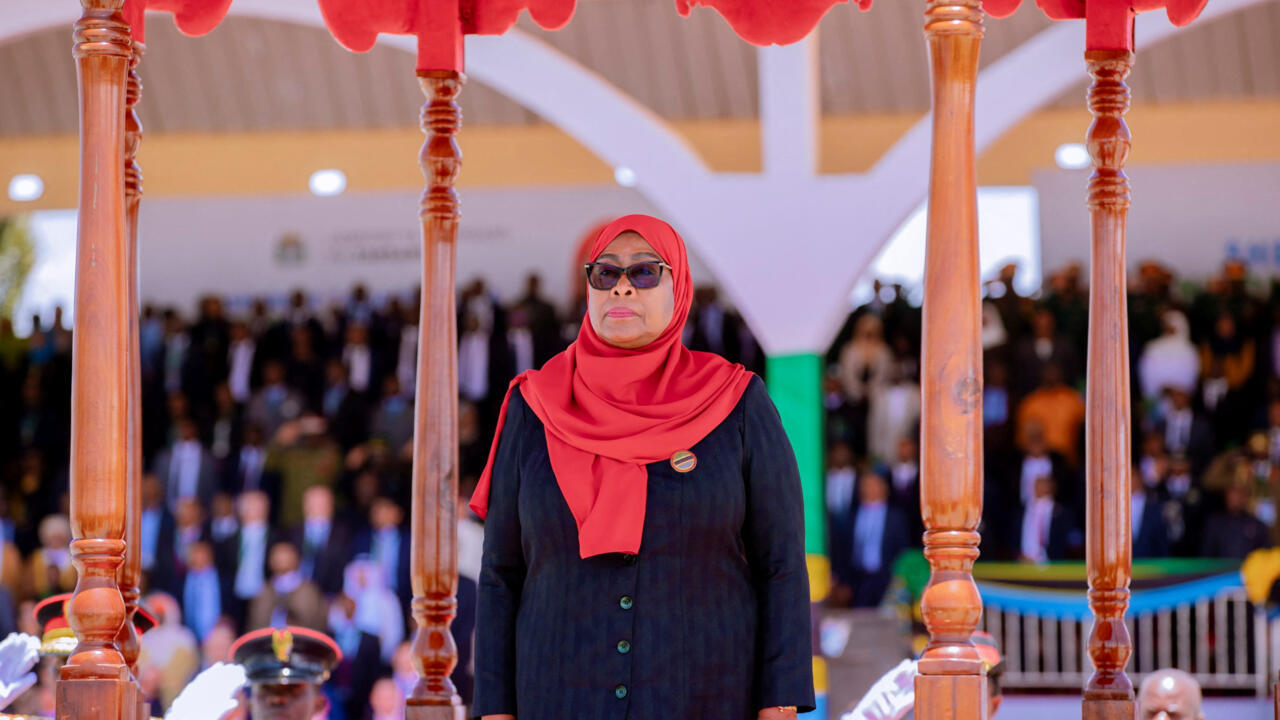
Samia Suluhu Hassan, who was sworn in as Tanzania's president on November 3, blamed 'foreign instigators' for the deadly unrest surrounding the 2025 elections
Image: Tanzania State House
Two SADC leaders at Suluhu Hassan's inauguration
Suluhu Hassan was sworn in on Monday at a private ceremony. Only two leaders from the SADC bloc attended: Presidents Hakainde Hichilema of Zambia and Daniel Chapo of Mozambique.
Some Zambians criticized Hichilema for attending the inauguration, suggesting it amounted to an endorsement of a disputed election.
"Political stance we're pushing for Zambia's presence in Tanzania is the same Kamuzu Banda had in the 1960s," putting trade before freedom, political activist Joseph Kalimbwe wrote on X.
Zimbabwe's President Emmerson Mnangagwa sent his deputy, Constantino Chiwenga. "What has happened in Tanzania is quite disturbing and something that has got to be avoided at all costs," Chiwenga said on state television in Zimbabwe. "I believe Tanzania has come of age and is the mother of all liberation movements. I'm convinced they will iron out their differences and move forward."
Meanwhile, the South African government is yet to comment on the developments in Tanzania. Its president, Cyril Ramaphosa, has just been picked as interim chairperson of SADC. The bloc's 2025 chairperson, Andry Rajoelina, was ousted as president of Madagascar in coup amid political unrest shortly before Tanzania's disputed election.
Military says it's seized power in Madagascar 02:02
Edited by: Benita van Eyssen
Privilege Musvanhiri
Privilege Musvanhiri is a multimedia freelance correspondent based in Harare, Zimbabwe
Tanzania's President Samia Suluhu Hassan was inaugurated on Monday, even as the opposition labelled it a "sham". This comes as African observers said Tanzanian citizens had not been able to "express their democratic will", citing intimidation, censorship, and lack of an opposition.
Issued on: 03/11/2025 - RFI
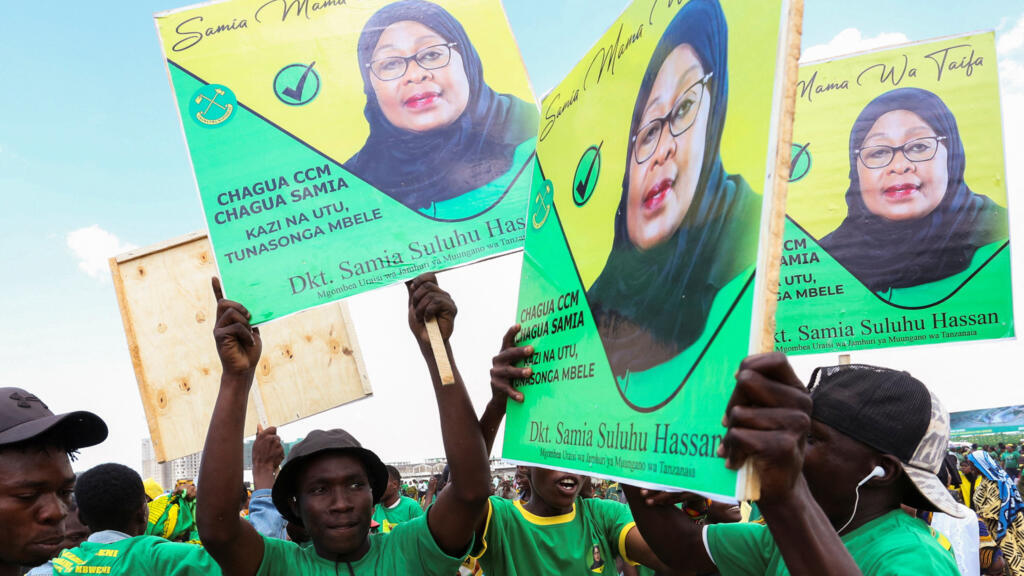
Supporters of Tanzania's President Samia Suluhu Hassan of the ruling Chama Cha Mapinduzi Party (CCM) attend a campaign rally ahead of the forthcoming general election at the Kawe grounds in Kinondoni District of Dar es Salaam, Tanzania 28 August, 2025. REUTERS - Emmanuel Herman
Incumbent leader Samia Suluhu Hassan played down days of bloody protests as she was inaugurated on Monday, at a ceremony in State House, without the public.
Hundreds of people are reported to have died in protests after the east African nation's presidential and parliamentary polls on 29 October, with key candidates either jailed or barred from participating.
The main opposition party, Chadema, which was barred from running, has rejected the results, which saw Hassan win with 98 percent. It has called for fresh elections, saying last Wednesday's vote was a "sham".
In her speech, Hassan called for "unity and solidarity" but also alleged that some of the young protesters came from "outside Tanzania"
"Our defence and security agencies continue to investigate and examine in detail what happened," she said, promising a return to normalcy as she addressed officials and foreign dignitaries in the capital Dodoma.
Incumbent leader Samia Suluhu Hassan played down days of bloody protests as she was inaugurated on Monday, at a ceremony in State House, without the public.
Hundreds of people are reported to have died in protests after the east African nation's presidential and parliamentary polls on 29 October, with key candidates either jailed or barred from participating.
The main opposition party, Chadema, which was barred from running, has rejected the results, which saw Hassan win with 98 percent. It has called for fresh elections, saying last Wednesday's vote was a "sham".
In her speech, Hassan called for "unity and solidarity" but also alleged that some of the young protesters came from "outside Tanzania"
"Our defence and security agencies continue to investigate and examine in detail what happened," she said, promising a return to normalcy as she addressed officials and foreign dignitaries in the capital Dodoma.
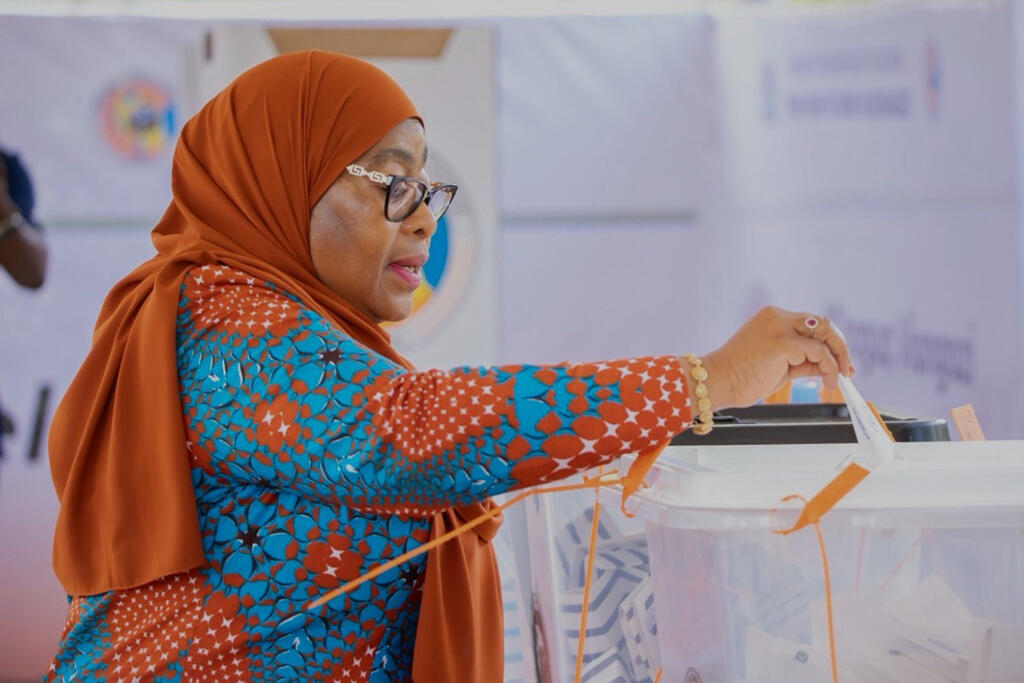
Tanzanian President Samia Suluhu Hassan casts her vote during the general elections at Chamwino polling station in Dodoma, Tanzania, Wednesday, 29 October, 2025. AP
Internet blackout continues
A total internet blackout has been in place since protests broke out on election day, meaning only a trickle of verifiable information has been getting out of the east African country.
A diplomatic source said there were credible reports of hundreds – perhaps even thousands – of deaths registered at hospitals and health clinics around Tanzania.
Chadema told French news agency AFP it had recorded "no less than 800" deaths by Saturday, but none of the figures could be independently verified.
UN 'alarmed' by reports of deadly election violence in Tanzania
The government has not commented on any deaths, except to reject accusations that "excessive force" was used.
Schools and colleges remained closed on Monday, with public transport halted and reports of some church services not taking place on Sunday.
The diplomatic source said there were "concerning reports" that police were using the internet blackout to buy time as they "hunt down opposition members and protesters who might have videos" of atrocities committed last week.
Internet blackout continues
A total internet blackout has been in place since protests broke out on election day, meaning only a trickle of verifiable information has been getting out of the east African country.
A diplomatic source said there were credible reports of hundreds – perhaps even thousands – of deaths registered at hospitals and health clinics around Tanzania.
Chadema told French news agency AFP it had recorded "no less than 800" deaths by Saturday, but none of the figures could be independently verified.
UN 'alarmed' by reports of deadly election violence in Tanzania
The government has not commented on any deaths, except to reject accusations that "excessive force" was used.
Schools and colleges remained closed on Monday, with public transport halted and reports of some church services not taking place on Sunday.
The diplomatic source said there were "concerning reports" that police were using the internet blackout to buy time as they "hunt down opposition members and protesters who might have videos" of atrocities committed last week.
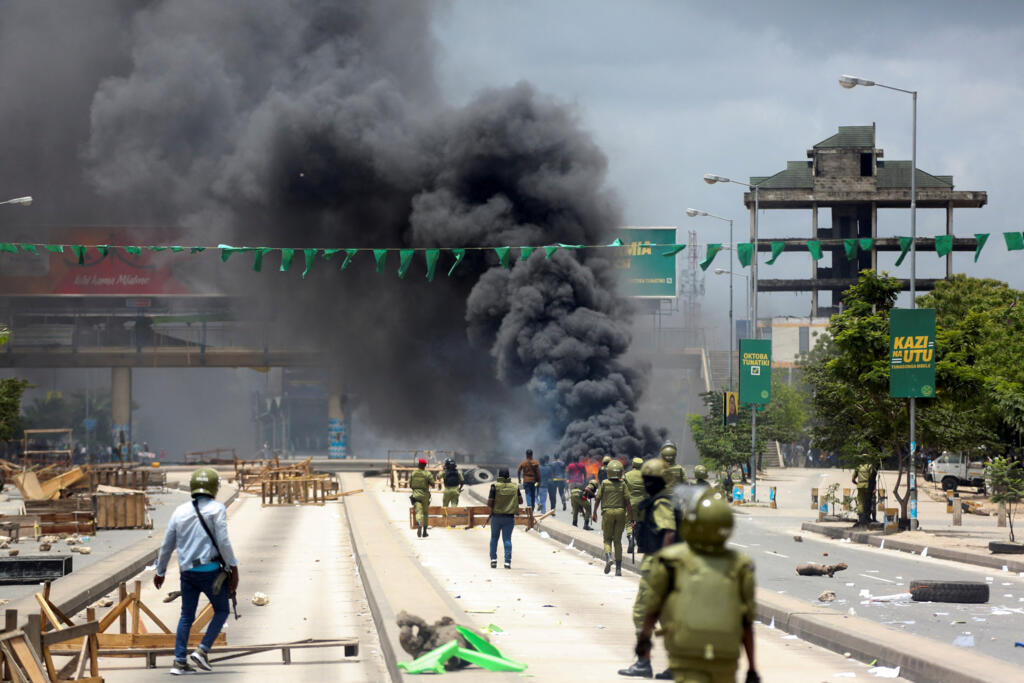
Tanzanian riot police disperse demonstrators during violent protests that marred the election following the disqualification of the two leading opposition candidates in Dar es Salaam, Tanzania, 29 October, 2025. © Onsase Ochando / Reuters
Meanwhile African observers on Monday filed their first report on the election.
In a statement, Richard Msowoya, the head of the Southern African Development Community Electoral Observation Mission (SEOM), said it was their "tentative conclusion that, in most areas, voters could not express their democratic will".
Tanzanian opposition leader to represent himself in court over treason charges
The 66 observers came from 10 countries – Eswatini, Lesotho, Botswana, Namibia, Malawi, Mozambique, Seychelles, South Africa, Zambia, and Zimbabwe – and were deployed across 27 of 31 Tanzanian regions.
The report said stakeholders warned the election-day quiet "belies covert acts of general intimidation of the population and opposition".
"They also described a tense and intimidating political atmosphere," noting a rise in political abductions.
Heavy censorship
Tanzania's Tanganyika Law Society said before the polls it had confirmed 83 abductions since Hassan came to power in 2021, with another 20 reported in recent weeks.
SEOM said turnout was "very low", noting a visible security and police presence throughout the day.
"In some polling stations, they [police officers] were more than the number of voters," they said.
Tanzania's electoral commission claimed turnout was 87 percent.
Tanzania's opposition rallies against 'cosmetic' electoral reforms
The report said in some polling stations, "there were multiple orderly stacked ballots in the ballot box during voting, which created a perception of ballot stuffing".
It added there were impressions some people "cast more than one vote at a time with the intention to cheat the election system".
It noted violence in Mbeya, Dodoma, Arusha, and in the largest city of Dar es Salaam.
SEOM also noted concern that there was "increasing covert and overt limitations on the right to freedom of expression", and that there was "heavy censorship of online information platforms".
(with AFP)
Meanwhile African observers on Monday filed their first report on the election.
In a statement, Richard Msowoya, the head of the Southern African Development Community Electoral Observation Mission (SEOM), said it was their "tentative conclusion that, in most areas, voters could not express their democratic will".
Tanzanian opposition leader to represent himself in court over treason charges
The 66 observers came from 10 countries – Eswatini, Lesotho, Botswana, Namibia, Malawi, Mozambique, Seychelles, South Africa, Zambia, and Zimbabwe – and were deployed across 27 of 31 Tanzanian regions.
The report said stakeholders warned the election-day quiet "belies covert acts of general intimidation of the population and opposition".
"They also described a tense and intimidating political atmosphere," noting a rise in political abductions.
Heavy censorship
Tanzania's Tanganyika Law Society said before the polls it had confirmed 83 abductions since Hassan came to power in 2021, with another 20 reported in recent weeks.
SEOM said turnout was "very low", noting a visible security and police presence throughout the day.
"In some polling stations, they [police officers] were more than the number of voters," they said.
Tanzania's electoral commission claimed turnout was 87 percent.
Tanzania's opposition rallies against 'cosmetic' electoral reforms
The report said in some polling stations, "there were multiple orderly stacked ballots in the ballot box during voting, which created a perception of ballot stuffing".
It added there were impressions some people "cast more than one vote at a time with the intention to cheat the election system".
It noted violence in Mbeya, Dodoma, Arusha, and in the largest city of Dar es Salaam.
SEOM also noted concern that there was "increasing covert and overt limitations on the right to freedom of expression", and that there was "heavy censorship of online information platforms".
(with AFP)
How Tanzania’s President Samia Suluhu Hassan went from reform to repression
Samia Suluhu Hassan was sworn in as Tanzania’s president on Monday after winning an election in which her main rivals had been prevented from running. Once seen as a new democratic hope after first rising to the presidency in 2021, Hassan now stands accused of being at the head of a repressive regime that has violently suppressed historic protests.
Issued on: 04/11/2025 - FRAHCE24
By:Mehdi BOUZOUINA
Samia Suluhu Hassan was sworn in as Tanzania’s president on Monday after winning an election in which her main rivals had been prevented from running. Once seen as a new democratic hope after first rising to the presidency in 2021, Hassan now stands accused of being at the head of a repressive regime that has violently suppressed historic protests.
Issued on: 04/11/2025 - FRAHCE24
By:Mehdi BOUZOUINA
Tanzania's President Samia Suluhu Hassan attends her swearing-in ceremony in Dodoma, Tanzania November 3, 2025. © Tanzania Presidential Press Unit via Reuters
Wearing her usual tinted sunglasses and with her nose buried in her notes, Samia Suluhu Hassan was sworn in as Tanzania’s president for the second time on Monday. Speaking before an audience of soldiers and politicians in a closed-door ceremony, “Mama Samia” – as her supporters affectionately call her – stressed the need for “unity and solidarity”.
The words seemed apt for the moment – in the five days leading up to her inauguration, unprecedented protests against her government shook the country and left potentially hundreds of people dead.
The country’s two main opposition leaders were both prevented from running, having been jailed or disqualified in the lead-up to the vote. Opposition groups estimated that 700 were killed in electoral violence while government authorities downplayed the unrest, blaming “criminals” for what they called “isolated incidents”.
Hassan, the 65-year-old incumbent, won nearly 98 percent of ballots cast with turnout estimated at 87 percent, according to Tanzania’s electoral commission.
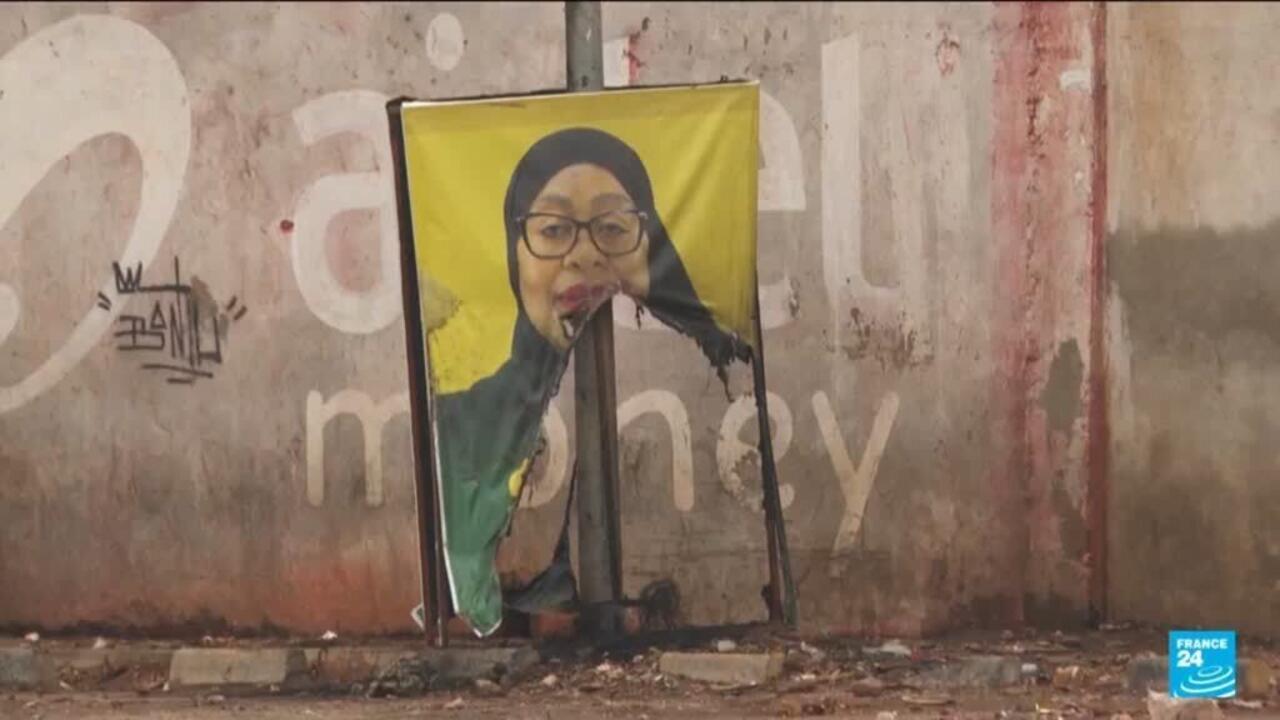
Tanzania rocked with post-election violence
Presidential candidate John Magufuli chose her as his running mate in 2015. For many observers, the accomplished technocrat’s rise to the vice-presidency was an unexpected choice – and one that would have significant consequences after Magufuli’s death in March 2021 propelled her into the presidency.
Having steered the country through the shock of the Covid-19 pandemic, she promised to open Tanzania back up to the world with her “4R” doctrine – reconciliation, resilience, rebuilding and reform.
“She arrived at a dark moment for Tanzania, from a democratic perspective, and presented herself as a reformer, starting with marginal measures,” Paget said.
Distancing herself from the country’s long-running repression of opposition movements, Hassan lifted a ban on political rallies and loosened the state’s grip on the media.
“But the more profound constitutional reform she called for has been slow to get off the ground,” Paget said. “She set up a committee, said we had to wait for the results of an institutional dialogue ... Years went by, but nothing happened. We realised that it was all just a smokescreen.”
Watch moreTanzanian opposition leader Tundu Lissu stands trial
For critics, the record speaks for itself. The government continues to choose judges and regional representatives, the need for media outlets to periodically renew their licenses keeps them squarely under the government’s thumb, and laws of defamation and sedition – widely used to suppress political opponents – remain in place. Meanwhile, instituting a genuine separation of powers continues to be elusive.
With these tools in hand, Hassan’s main rival, Tundu Lissu – a lawyer belonging to Chadema, the “Party for Democracy and Progress” – was arrested and charged with treason and spreading false information just six months out from the election. Placed into isolation one week before the vote, he called on his supporters to boycott the election.
A ‘pure product’ of the ruling party
“It is important to bear in mind that Samia Suluhu Hassan is a pure product of the CCM, the party that, in its various forms, has remained in power for the longest period of time in Africa without interruption,” Paget said. “She has evolved for decades within this partisan system and climbed the ranks.”
“It is not certain that the opposition would have won [under different circumstances], but the president's popularity has declined significantly over the past two years,” said Nicodemus Minde, a researcher at the Institute for Security Studies in Nairobi, Kenya.
“These historic protests are the culmination of long periods during which Tanzanian citizens were unable to express themselves freely. They also reflect economic discontent against a backdrop of corruption.”
Wearing her usual tinted sunglasses and with her nose buried in her notes, Samia Suluhu Hassan was sworn in as Tanzania’s president for the second time on Monday. Speaking before an audience of soldiers and politicians in a closed-door ceremony, “Mama Samia” – as her supporters affectionately call her – stressed the need for “unity and solidarity”.
The words seemed apt for the moment – in the five days leading up to her inauguration, unprecedented protests against her government shook the country and left potentially hundreds of people dead.
The country’s two main opposition leaders were both prevented from running, having been jailed or disqualified in the lead-up to the vote. Opposition groups estimated that 700 were killed in electoral violence while government authorities downplayed the unrest, blaming “criminals” for what they called “isolated incidents”.
Hassan, the 65-year-old incumbent, won nearly 98 percent of ballots cast with turnout estimated at 87 percent, according to Tanzania’s electoral commission.
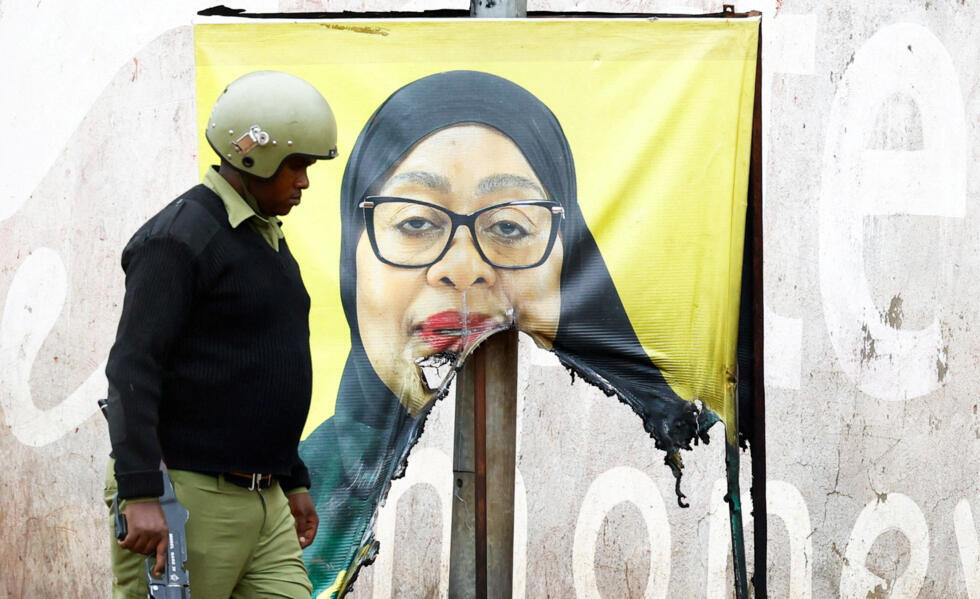
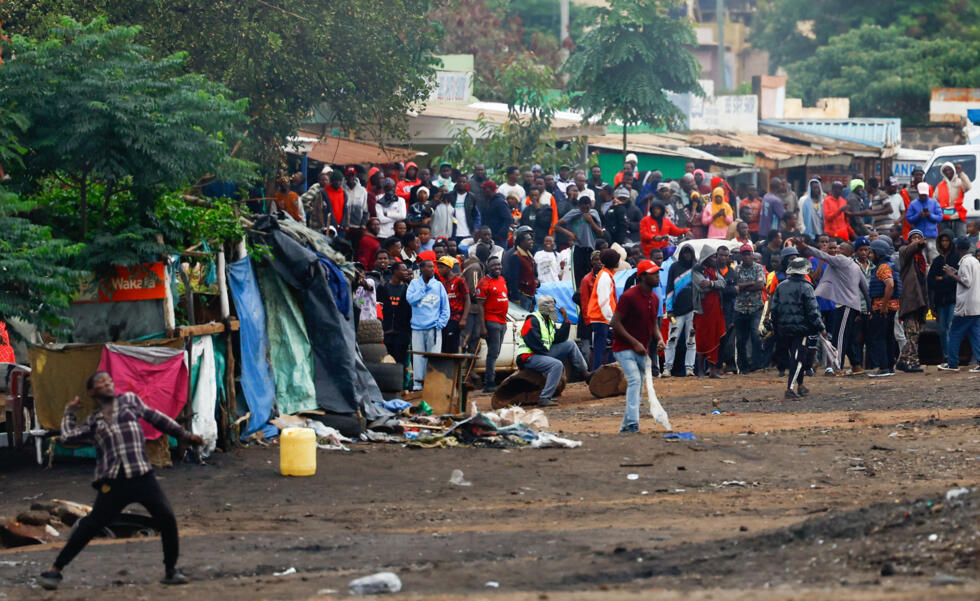
A Tanzanian riot police officer walks past a vandalised campaign poster of President Samia Suluhu Hassan, following a protest a day after a general election marred by violent demonstrations over the exclusion of two leading opposition candidates at the Namanga One-Post Border crossing point between Kenya and Tanzania, October 30, 2025.
© Thomas Mukoya, Reuters
For Dan Paget, professor of political science at the University of Sussex, the unconvincing numbers were meant to send a strong statement to the restless public.
“By claiming these results, the regime wants to send a message: ‘Don't try to resist us, we are moving forward in broad daylight,’” he said.
Hassan’s apparently crushing victory was swiftly denounced by regional election observers, who criticised the absence of a genuine opposition.
“In most areas, voters could not express their democratic will,” Richard Msowoya, head of the electoral observer mission for the Southern Africa Development Community, said in a statement Monday.
Human rights NGO Amnesty International denounced what it described as a “wave of terror” in the leadup to the elections, accusing Tanzanian authorities of carrying out “enforced disappearances, arbitrary arrests, torture and other ill-treatment, and extrajudicial killings”.
Smoke screen
The daughter of a teacher and a stay-at-home mother, Hassan had built a promising reputation when she first took public office.
Born in 1960 in Zanzibar, she received a master’s degree in community economic development through a joint programme between Open University Tanzania and Southern New Hampshire University in the US. She started out in the semi-autonomous island’s local government administration, serving as a development officer in the public service.
She would go on to become a project manager at the UN World Food Programme before taking the reins of Angoza, Zanzibar’s main umbrella body for NGOs.
Hassan joined Chama Cha Mapinduzi (CCM) – the “Party of the Revolution” in English – in the 1980s. The CCM, which arose from a 1977 merger between Julius Nyerere’s Tanganyika African National Union and the Zanzibar-based Afro-Shirazi Party, has governed the country in one form or another ever since.
The party appointed Hassan to a special seat in the Zanzibar House of Representatives in 2000. She would go on to be elected to Tanzania’s National Assembly, where she held several ministerial positions and was eventually named minister of state for union affairs under president Jakaya Kikwete.
For Dan Paget, professor of political science at the University of Sussex, the unconvincing numbers were meant to send a strong statement to the restless public.
“By claiming these results, the regime wants to send a message: ‘Don't try to resist us, we are moving forward in broad daylight,’” he said.
Hassan’s apparently crushing victory was swiftly denounced by regional election observers, who criticised the absence of a genuine opposition.
“In most areas, voters could not express their democratic will,” Richard Msowoya, head of the electoral observer mission for the Southern Africa Development Community, said in a statement Monday.
Human rights NGO Amnesty International denounced what it described as a “wave of terror” in the leadup to the elections, accusing Tanzanian authorities of carrying out “enforced disappearances, arbitrary arrests, torture and other ill-treatment, and extrajudicial killings”.
Smoke screen
The daughter of a teacher and a stay-at-home mother, Hassan had built a promising reputation when she first took public office.
Born in 1960 in Zanzibar, she received a master’s degree in community economic development through a joint programme between Open University Tanzania and Southern New Hampshire University in the US. She started out in the semi-autonomous island’s local government administration, serving as a development officer in the public service.
She would go on to become a project manager at the UN World Food Programme before taking the reins of Angoza, Zanzibar’s main umbrella body for NGOs.
Hassan joined Chama Cha Mapinduzi (CCM) – the “Party of the Revolution” in English – in the 1980s. The CCM, which arose from a 1977 merger between Julius Nyerere’s Tanganyika African National Union and the Zanzibar-based Afro-Shirazi Party, has governed the country in one form or another ever since.
The party appointed Hassan to a special seat in the Zanzibar House of Representatives in 2000. She would go on to be elected to Tanzania’s National Assembly, where she held several ministerial positions and was eventually named minister of state for union affairs under president Jakaya Kikwete.
Tanzania rocked with post-election violence
© France 24
01:52
01:52
Presidential candidate John Magufuli chose her as his running mate in 2015. For many observers, the accomplished technocrat’s rise to the vice-presidency was an unexpected choice – and one that would have significant consequences after Magufuli’s death in March 2021 propelled her into the presidency.
Having steered the country through the shock of the Covid-19 pandemic, she promised to open Tanzania back up to the world with her “4R” doctrine – reconciliation, resilience, rebuilding and reform.
“She arrived at a dark moment for Tanzania, from a democratic perspective, and presented herself as a reformer, starting with marginal measures,” Paget said.
Distancing herself from the country’s long-running repression of opposition movements, Hassan lifted a ban on political rallies and loosened the state’s grip on the media.
“But the more profound constitutional reform she called for has been slow to get off the ground,” Paget said. “She set up a committee, said we had to wait for the results of an institutional dialogue ... Years went by, but nothing happened. We realised that it was all just a smokescreen.”
Watch moreTanzanian opposition leader Tundu Lissu stands trial
For critics, the record speaks for itself. The government continues to choose judges and regional representatives, the need for media outlets to periodically renew their licenses keeps them squarely under the government’s thumb, and laws of defamation and sedition – widely used to suppress political opponents – remain in place. Meanwhile, instituting a genuine separation of powers continues to be elusive.
With these tools in hand, Hassan’s main rival, Tundu Lissu – a lawyer belonging to Chadema, the “Party for Democracy and Progress” – was arrested and charged with treason and spreading false information just six months out from the election. Placed into isolation one week before the vote, he called on his supporters to boycott the election.
A ‘pure product’ of the ruling party
“It is important to bear in mind that Samia Suluhu Hassan is a pure product of the CCM, the party that, in its various forms, has remained in power for the longest period of time in Africa without interruption,” Paget said. “She has evolved for decades within this partisan system and climbed the ranks.”
“It is not certain that the opposition would have won [under different circumstances], but the president's popularity has declined significantly over the past two years,” said Nicodemus Minde, a researcher at the Institute for Security Studies in Nairobi, Kenya.
“These historic protests are the culmination of long periods during which Tanzanian citizens were unable to express themselves freely. They also reflect economic discontent against a backdrop of corruption.”
Demonstrators participate in a protest a day after a general election marred by violent demonstrations over the exclusion of two leading opposition candidates at the Namanga One-Post Border crossing point between Kenya and Tanzania, as seen from Namanga, Kenya October 30, 2025. © Thomas Mukoya, Reuters
Minde said that the president’s apparent inertia in the face of mounting public frustration could set off internal power struggles within the ruling party.
“There’s a conservative fringe and a progressive fringe,” he said. “Samia Suluhu Hassa is caught in a vice between them.”
The situation in Tanzania remains tense following the violence that broke out around the October 29 elections. Demonstrations in major cities across the country gave way to chaotic scenes as thousands of protesters called for the vote count to be stopped.
Having put in place an internet blackout and nation-wide curfew in the wake of the violence, the government was slowly easing these restrictions on Tuesday. Journalists in the economic hub of Dar es Salaam reported that the public was slowly venturing outside again after days of lockdown and a near-total information blackout.
This article has been adapted from the original in French.
Minde said that the president’s apparent inertia in the face of mounting public frustration could set off internal power struggles within the ruling party.
“There’s a conservative fringe and a progressive fringe,” he said. “Samia Suluhu Hassa is caught in a vice between them.”
The situation in Tanzania remains tense following the violence that broke out around the October 29 elections. Demonstrations in major cities across the country gave way to chaotic scenes as thousands of protesters called for the vote count to be stopped.
Having put in place an internet blackout and nation-wide curfew in the wake of the violence, the government was slowly easing these restrictions on Tuesday. Journalists in the economic hub of Dar es Salaam reported that the public was slowly venturing outside again after days of lockdown and a near-total information blackout.
This article has been adapted from the original in French.
No comments:
Post a Comment